The phrase frack meaning is worth unpicking carefully, because the word “frack” lives in two quite different worlds. In one world, it is a technical term from the energy industry, short for hydraulic fracturing, a method used to extract oil and natural gas from rock deep underground. In the other world, it is a piece of slang, used as a mild substitute for a much stronger swear word, and it is also entangled with an older expression, “Frick and Frack”, meaning two people who are inseparable or who always appear together. This guide explains all of these senses factually and neutrally, so that you can recognise which meaning is intended whenever you meet the word.
Context is everything for frack meaning. In a news report about energy, shale gas or drilling, it almost certainly means hydraulic fracturing. In a television script, a comic or a casual conversation, it is more likely to be the euphemistic swear word. In a description of two colleagues who are never seen apart, it may be echoing “Frick and Frack”. Learning to spot the context is the quickest way to grasp frack meaning — the topic, the speaker and the sentence around the word — is the quickest way to understand frack meaning in any given case.
Frack Meaning in the Energy Industry
In its technical sense, “frack” is a verb, and “fracking” is the noun for the process. Hydraulic fracturing involves pumping a mixture of water, sand and a small proportion of chemicals at high pressure into a borehole, in order to create tiny fractures in rock formations deep below the surface. Those fractures allow oil or natural gas trapped in the rock, particularly in shale rock, to flow more freely towards the well. The sand, often called proppant, helps to hold the fractures open once the pressure is released.
The technique has been used in various forms since the mid-twentieth century, but it became widely known in the twenty-first century with the expansion of shale gas and tight oil production, especially in the United States. Supporters argue that it has increased energy supply, reduced dependence on imports in some countries, and, where gas has replaced coal in electricity generation, reduced certain emissions per unit of electricity. Critics raise concerns about groundwater, induced seismicity — small earth tremors linked in some cases to wastewater injection and, more rarely, to fracturing itself — methane leakage, water use, and the wider question of continued fossil-fuel production during a transition to lower-carbon energy. Regulatory approaches differ sharply between countries and regions: some permit the technique under strict controls, others restrict it, and some ban it altogether. Readers who want current policy for a particular place should check the official regulator for that jurisdiction, since rules change and this article does not attempt to state them as current fact.
Language around the industry term is itself interesting for frack meaning. The full phrase is “hydraulic fracturing”, from which “fracking” is derived. The shortened spelling “fracking” is far more common in news and public debate than the full term, and “frack” as a verb — “to frack a well” — follows naturally. The word is pronounced with a short “a”, rhyming with “back” and “track”. In formal technical writing, “hydraulic fracturing” remains the preferred term, while “fracking” dominates in journalism and everyday discussion. Both refer to the same process, but the shorter form carries more political and cultural baggage, because it is the word used in campaigns, protests and headlines on both sides of the debate.
Frack Meaning as Slang
In its slang sense, “frack” is a euphemism: a milder word used in place of a stronger, taboo word. It is constructed to sound similar to the swear word it replaces, while remaining acceptable in contexts where that word would not be, such as family television, school-friendly books or workplace conversation. The most famous example comes from the science-fiction television series Battlestar Galactica, in its reimagined version, where “frak” — spelled with one “c” in the show, but often spelled “frack” by viewers — was used as an all-purpose expletive by the characters. The show’s writers chose a invented-sounding word so that characters could swear convincingly without the programme breaching broadcast standards.
That television use gave frack meaning a second life. Fans adopted “frak” and “frack” as playful, knowing expletives, and the spelling with two letters became common online. In this sense, the word can express frustration, surprise, emphasis or disbelief, exactly as the stronger word would, but without the same offence. It is still informal and emphatic, so it suits casual conversation, comedy and fan culture far better than formal writing, a job interview or a professional email. Understanding this sense matters for reading modern fiction and social media, where “what the frack?” is instantly recognisable as a softened exclamation.
The slang side of frack meaning is also an example of a wider linguistic pattern. English speakers constantly invent minced oaths — softened versions of swear words — from “darn” and “heck” to “shoot” and “fudge”. These words let speakers express strong feeling while staying within the norms of a particular audience. “Frack” fits that pattern neatly, and its popularity shows how a word invented for a television show can enter general slang when it fills a gap that speakers actually feel.
Frick and Frack Meaning
“Frick and Frack” is a separate but related expression, and it explains part of the title of this guide. It originally referred to a Swiss comedy ice-skating duo, Werner Groebli and Hans Mauch, who performed as Frick and Frack in the mid-twentieth century, famous for their comic routines in ice shows. Because the two performers were always together, their names became a general idiom for any pair of people who are inseparable, who always appear as a duo, or who are seen as a matching, slightly comic pair.
In modern usage, calling two people “Frick and Frack” is usually light-hearted, sometimes gently teasing. It might describe two colleagues who always take lunch together, two friends who are never seen apart, or two politicians who always vote together. The tone depends on context: between friends it is affectionate, while in a critical article it can imply that the pair are indistinguishable or that one merely follows the other. It is not normally a serious insult, but like any nickname, it should be used with awareness of how the people described might receive it.
The confusion between “Frick and Frack” and “frack” is understandable. The names sound similar, and the spelling overlaps. They are, however, different words with different origins: one is a pair of stage names that became an idiom, the other is a technical term and a slang euphemism. Keeping them apart is a good test of careful reading. If a sentence is about two people who are always together, it is Frick and Frack. If it is about drilling, shale or energy, it is fracking. If it is an exclamation of frustration, it is slang.
Frack Meaning: How to Tell Which Sense Is Meant
Disambiguating frack meaning is usually quick if you ask three questions. First, what is the topic? Energy, geology, drilling, gas prices or environmental regulation points to hydraulic fracturing. Television, gaming, comedy or a frustrated exclamation points to slang. A description of an inseparable pair points to Frick and Frack. Second, what is the grammar? “Fracking” as a noun or gerund, as in “a ban on fracking”, is almost always the industrial sense. “Frack” as an exclamation, as in “oh, frack!”, is slang. Third, who is speaking, and where? A regulator, a geologist or an energy journalist is using the technical sense, while a character in a science-fiction show or a friend in a group chat is using the slang sense.
Spelling can help with frack meaning but is not decisive. The industrial term is normally spelled “fracking” with a double “c” and a “k”, while the Battlestar Galactica term was spelled “frak” in the show itself. In practice, many writers spell the slang term as “frack” as well, so spelling alone cannot be relied on. Context remains the best guide, which is true of many English words that carry both a technical and an informal sense.
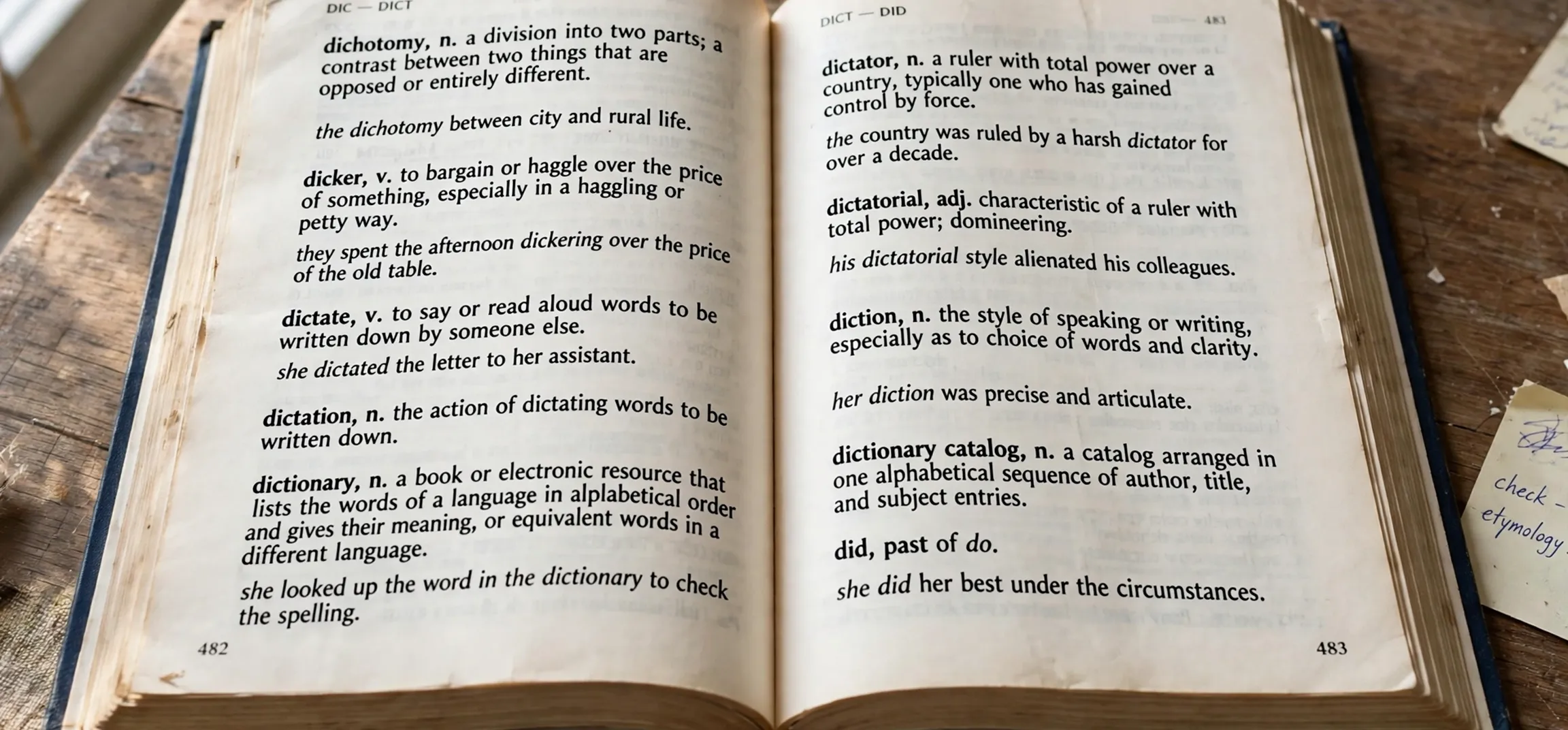
For learners of English, frack meaning is a useful reminder that dictionaries list senses in order of frequency or history, not in order of importance, and that a word’s meaning is fixed by its use in a sentence, not by the word alone. Checking a reputable dictionary entry for “frack” and for “hydraulic fracturing” side by side shows the split clearly: a technical definition on one side, a slang definition on the other, and a note about the fictional origin of the slang sense.
Frack Meaning in Public Debate
Because the industrial sense of fracking is politically contested, frack meaning itself has become loaded. Supporters and opponents often use different language for the same process: supporters may prefer “hydraulic fracturing” or “natural gas development”, while opponents may prefer “fracking” in headlines that emphasise risk. Neither choice changes the underlying technique, but each frames it differently. Readers of news coverage should therefore notice not only what a report says about fracking but also which term it chooses, because that choice can signal the outlet’s stance or its intended audience.
The slang side of frack meaning, by contrast, is politically neutral and culturally playful. It appears in merchandise, memes, fan fiction and comedy, where its appeal lies precisely in being recognisable without being offensive. The coexistence of a contested industrial term and a playful slang term in frack meaning in a single short word is unusual, and it is one reason “frack” attracts so much curiosity. People encounter frack meaning in a news headline one day and in a joke the next, and naturally wonder whether the two uses are connected. Apart from the similarity in sound, they are not: the industrial term comes from “fracturing”, while the slang term was coined as a broadcast-safe substitute.
Readers interested in how other words develop multiple senses will find similar patterns elsewhere. The guide to the meaning of goad, for instance, traces a concrete farming tool becoming a metaphor for provocation, while the guide to spam meaning in text shows how a brand name became a general term for unwanted messages. “Frack” follows the same broad pattern: a word gains new senses as it moves into new contexts, and dictionaries eventually record all of them.
Frequently Asked Questions
What does frack mean?
“Frack” most commonly means hydraulic fracturing, a technique for extracting oil and gas from rock. As slang, it is also a mild substitute for a stronger swear word, popularised by Battlestar Galactica.
What does Frick and Frack mean?
“Frick and Frack” means two people who are inseparable or who always appear together, named after a famous comedy ice-skating duo. It is usually light-hearted or gently teasing.
Are frack and Frick and Frack related?
No, apart from sounding similar. “Frack” comes from “fracturing” in the industrial sense, and from a coined euphemism in the slang sense, while “Frick and Frack” comes from stage names.
Is fracking the same as hydraulic fracturing?
Yes. “Fracking” is the common short form of “hydraulic fracturing”, the process of fracturing rock at high pressure to release oil or natural gas.
Can I use “frack” in formal writing?
Use “hydraulic fracturing” in formal or technical writing. Reserve “frack” as slang for informal, casual contexts where a mild exclamation is appropriate.
Conclusion
Frack meaning depends on context, and that is the whole lesson of this guide. In energy and geology, it means hydraulic fracturing, a technique that remains widely debated for its benefits and its risks. In slang, it is a playful, broadcast-safe exclamation with roots in science-fiction television. And in the older idiom Frick and Frack, a similar-sounding pair of names describes two people who are never apart. Recognising which sense of frack meaning is in play — by topic, grammar and speaker — will prevent confusion and help you to use the word accurately, whether you are reading a news report, watching a show, or describing an inseparable duo.



