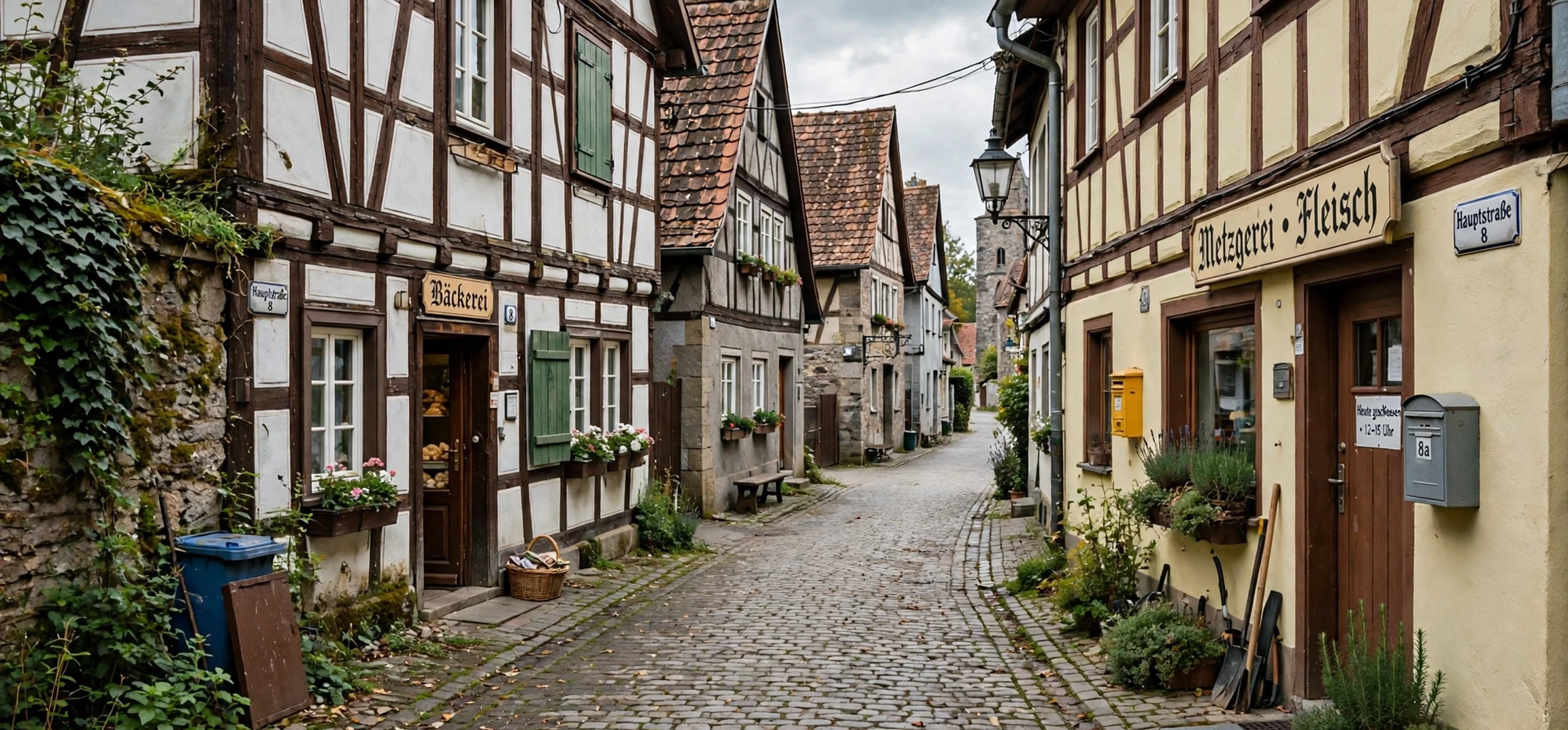
If you are looking for a german name for grandma, the short answer is most often Oma, with Omi as a close and affectionate second choice. Families with German roots use these names every day, in birthday cards, in phone calls, and in stories told at the kitchen table. A german name for grandma can sound warm and familiar even to people who do not speak German, which is one reason these names travel so well across countries and generations. Whether your grandmother was born in Germany, grew up in a German-speaking household abroad, or simply loves the sound of the language, choosing the right name is a small decision that can carry a great deal of feeling.
This guide gathers the best-known German names for grandmothers, explains what each one means, and shows how families actually use them. You will find the standard words, the loving nicknames, the regional forms, and the playful variations that grandchildren invent. You will also find pronunciation help, spelling notes, and ideas for picking a name that feels natural for your own family. By the end, you should be able to choose a german name for grandma with confidence, and to understand why one family says Oma while another insists on Omi, Omama, or something entirely their own.
What Is the German Name for Grandma?
The standard german name for grandma is Oma. It is the everyday, informal word that most German-speaking children use, much like the English word Granny or Grandma. The more formal word is Grossmutter, which literally means grand-mother. Grossmutter appears in official documents, in formal writing, and in careful speech, but it is rarely what a small child calls out across a garden. In daily life, Oma does almost all of the work, and it is the name most families reach for first.
Omi is the other extremely common form. It is a shortened, softened version of Oma, often used by younger children because it is easy to say, and kept by adults because it sounds tender and close. Some families use Oma for one grandmother and Omi for the other, which neatly solves the problem of having two grandmothers with the same title. Other families use Oma in general conversation and Omi as a private pet name, saved for hugs, greetings, and bedtime stories. Both are correct, both are widely understood, and neither will sound strange to a German speaker.
A german name for grandma can also be a little longer and more musical. Omama is one such form, built by doubling the warm Oma sound, and it is especially popular with very young children. Omi and Omama both show a pattern that runs through German family language: take a simple base, soften it, repeat a sound, and you get a name that feels like home. Grandchildren often create these forms by accident, mispronouncing a longer word or shortening a name they hear, and the family then keeps the accident because it fits.
Oma Versus Grossmutter
Think of Oma as the name you use, and Grossmutter as the word you write on a form. If you are introducing your grandmother to a German-speaking friend, you would normally say, this is my Oma. If you are filling in a family tree or writing a formal biography, Grossmutter is the precise term. The distinction matters less in English, where Grandmother and Grandma overlap more freely, but in German the formal and informal registers are clearly felt. A german name for grandma chosen for everyday family use will almost always be Oma, Omi, or a variation of them, rather than Grossmutter.
There is also a useful plural to know. More than one grandmother, or grandmothers in general, are Omas. A child with two grandmothers might talk about both of their Omas, and a family gathering might be described as a weekend with the Omas. The spelling is simple, the pronunciation stays close to the singular, and the word is instantly clear in conversation. Knowing the plural helps when you are writing cards, captions, or family updates that mention both grandmothers together.
The Most Common German Name for Grandma Choices
The table below collects the names you are most likely to hear, with a plain explanation of each one. Use it as a starting list, not as a strict rulebook, because every family bends these names a little. A name that one family treats as formal, another family treats as a joke, and a third family treats as sacred. That flexibility is part of the charm, and it is why a german name for grandma often tells you as much about a family as it does about the language.
| Name | How it is used | Feeling |
|---|---|---|
| Oma | The standard everyday name for a grandmother | Warm, familiar, universal |
| Omi | A shorter, softer form of Oma, popular with young children | Tender, affectionate, easy to say |
| Omama | A doubled, musical form often used by toddlers | Sweet, playful, childlike |
| Grossmutter | The formal word for grandmother | Respectful, official, precise |
| Omma | A regional spelling and pronunciation variant of Oma | Homely, regional, traditional |
| Oma dearest in English use | An English-language blend used in mixed-language families | Bridge between two languages |
| Uroma | The word for a great-grandmother | Honouring, generational, clear |
| Uromi | A softer form for a great-grandmother | Gentle, affectionate, respectful |
Uroma deserves a special note, because it answers a question many families ask once the generations stretch further. The prefix Ur in German marks something original or earlier, so Uroma means great-grandmother, the mother of your grandmother or grandfather. Uromi follows the same softening pattern as Omi, and it lets a great-grandmother have her own distinct name rather than sharing Oma with her daughter. In the same way, Ururgrossmutter is the formal term for a great-great-grandmother, although in everyday speech families usually keep it simple and use a nickname instead.
Another point worth knowing is that German family names often come in pairs. Oma pairs naturally with Opa, the everyday word for grandfather, just as Grossmutter pairs with Grossvater. Children learn the pair together, and the rhythm of Oma and Opa is one of the most recognisable sounds in German family life. If you are choosing a german name for grandma for a new baby in the family, it can help to think about the grandfather name at the same time, so the two names sound balanced when they are said together.
Regional and Dialect Variations of the German Name for Grandma
Germany is not one single speech community, and neither are Austria and the German-speaking parts of Switzerland. Regional pronunciation changes how a german name for grandma sounds, and in some areas it changes the spelling too. Omma, for example, is heard in parts of northern and western Germany, where the double m gives the word a slightly different weight. In southern Germany and Austria, the vowel may sound a little rounder, and the word may be said more slowly, with extra warmth on the first syllable. None of these differences changes the meaning, but they can matter a great deal to a grandmother who grew up hearing one particular version.
In Bavaria and Austria, dialect adds further colour. Some families use forms shaped by local speech, and a grandmother may be known by a dialect nickname that outsiders would not immediately recognise as a grandmother name at all. That is normal. Dialect nicknames often grow out of a childhood mispronunciation, a family joke, or a word from the local dialect for a dear old woman, and they stick because they belong to one family alone. If your grandmother has a dialect name she loves, that name is the right german name for grandma for your family, even if it does not appear in any dictionary list.
German-speaking Switzerland adds its own layer. Swiss German pronunciation differs noticeably from standard German, and family words can sound quite different while meaning exactly the same thing. A family that moved from Switzerland may keep a Swiss-sounding form, while a family from Berlin keeps a northern form, and both are simply speaking their own history. When you are choosing a name, it is worth asking older relatives which version they remember from their own childhood, because that memory is often the most authentic guide you will find.
Names in Mixed-Language Families
Many families today speak two or more languages at home, and the german name for grandma often lives happily alongside an English, Spanish, or other-language name. One grandmother may be Oma and the other may be Grandma, Nana, or Abuela, and children switch between them without confusion. This is a practical solution as well as a cultural one, because it gives each grandmother a distinct identity and lets children honour both sides of the family. Some families even blend the names, using Oma in German sentences and Grandma in English ones, depending on who is listening.
Mixed-language families also invent hybrids. A child might call a grandmother Oma-Mama, or combine Oma with a first name, as in Oma Anna or Oma Greta, to tell two grandmothers apart. These combinations are clear, respectful, and easy for visitors to follow, and they are widely used in German-speaking families too, not only in families living abroad. If you need a german name for grandma that works in school, on cards, and in two languages, a combination form is often the simplest answer.
Choosing a German Name for Grandma That Fits Your Family
Choosing a german name for grandma is best done together, with the grandmother herself at the centre of the decision. Some grandmothers have a strong preference, perhaps because they were called Omi by their own grandchildren, or because they always imagined being an Oma. Others are happy to let the grandchildren decide, and the name that emerges naturally from a toddler first attempts is often the one that lasts. There is no wrong choice here, only a choice that feels right when it is said aloud in your house.
It can help to test a name before it becomes permanent. Try using it in a greeting, in a story, and in a card, and notice whether it feels comfortable for both the grandmother and the children. Does it sound warm when a child shouts it across a room? Does it fit in a formal introduction as well as in a private joke? Does it distinguish this grandmother clearly from the other grandmother, if there are two? A name that passes those small tests will usually settle in quickly and stay for years.
Consider also how the name will travel. If the family lives far from German-speaking relatives, a simple name like Oma is easy for teachers, friends, and neighbours to pronounce and spell. A more unusual dialect form may need a little explanation, but that explanation can itself become a lovely story about where the family comes from. Either path works. The goal is a german name for grandma that the grandmother is proud to answer to, and that the grandchildren love to say.
For more ideas about family names in other traditions, you may enjoy reading about the Indian name for grandma, which shows how another culture solves the same happy problem of naming two grandmothers. You can also explore general family language in the guide to family-oriented meaning, which looks at how family words shape everyday conversation.
Pronunciation and Spelling Help
Pronunciation is simpler than it looks. Oma is said as OH-mah, with the stress on the first syllable and a soft, open ah at the end. Omi is OH-mee, again stressed on the first syllable, with a bright ee sound to finish. Grossmutter is GROSS-moo-ter, with the oo sound as in food, and the final er soft and quick. Omama is OH-mah-mah, a gentle three-beat rhythm that toddlers find easy. Practise each one slowly, then at normal speed, and you will sound natural very quickly.
Spelling follows pronunciation closely, which helps. Oma, Omi, and Omama are spelled exactly as they sound, with no silent letters to trap you. Grossmutter is the only one that needs care, because of the double s and the double t, and because some writers use the older spelling with a special character. In modern everyday writing, Grossmutter is the standard form you will see most often. When in doubt, Oma is always a safe spelling, and it will be understood everywhere German is spoken.
Capitalisation is another small detail worth getting right. In German, all nouns are capitalised, so Oma, Omi, and Grossmutter all begin with a capital letter, even in the middle of a sentence. In English writing about a german name for grandma, the same capitalisation is usually kept, because the word is being used as a name. So you would write, we are visiting Oma on Sunday, with a capital O, just as you would write Grandma. This small habit signals respect and makes the name stand out as a title.
Using the Name in Cards and Messages
Once you have chosen a name, use it consistently in cards, messages, and gifts. A birthday card addressed to Oma feels personal in a way that a card addressed to Grandmother does not, and a message that begins with a warm Omi immediately tells the reader who is being honoured. Children can practise writing the name, drawing pictures labelled with it, and using it in thank-you notes. These small acts build the name into family life, so that it becomes not just a word, but a relationship.
Grandparents often keep these cards for years, so spelling the chosen name correctly matters. If the family uses Omi, do not switch to Oma in a formal card unless the grandmother uses both. If the family uses a dialect form, copy it exactly as the grandmother spells it. Consistency shows care, and it helps younger children learn the name without confusion. Over time, the name becomes part of the family archive, appearing in photo albums, school projects, and holiday letters.
German Name for Grandma: A Quick Recap
To recap, the most useful german name for grandma for everyday family life is Oma, with Omi as the softer alternative that many children prefer. If you remember only one german name for grandma from this guide, make it Oma, because it is understood everywhere German is spoken and it works in cards, greetings, and introductions alike.
A second point to remember is that a german name for grandma is rarely chosen from a dictionary alone. Families weigh regional sound, the other grandmother name in use, and the grandmother own preference, and the final german name for grandma often emerges from that combination. That is why two families can both be right while using different names, and why asking older relatives about their childhood name is such a helpful step.
Frequently Asked Questions
What is the most common german name for grandma?
Oma is the most common, followed closely by Omi. Grossmutter is the formal word, but Oma is the name used in everyday family life across Germany, Austria, and German-speaking Switzerland.
Is Omi the same as Oma?
Yes, Omi is a softer, shorter form of Oma. Many families use both, with Omi as the more affectionate version, or use Oma for one grandmother and Omi for the other.
What do you call a great-grandmother in German?
Uroma is the everyday word for a great-grandmother, and Uromi is its softer form. The formal word is Urgrossmutter.
Can two grandmothers both be Oma?
Yes, but many families add a first name, as in Oma Anna, or use Oma for one and Omi for the other, so children can tell them apart easily in conversation.
Is it okay to use Oma if we are not German?
Yes, if the name is chosen with respect and affection, and especially if the family has German heritage or a German-speaking grandmother. Names travel between cultures, and Oma is widely recognised as a warm grandmother name.
German Name for Grandma: Key Takeaways
Remember that a german name for grandma works best when it is used consistently, spoken with warmth, and chosen with the grandmother herself. Whether your german name for grandma is Oma, Omi, or a family invention, consistency is what turns a word into a tradition.
Conclusion
A german name for grandma is a small word with a large heart. Oma remains the classic choice, Omi offers a softer alternative, Omama brings a childlike musicality, and Grossmutter provides the formal register for writing and official occasions. Regional forms like Omma, generational forms like Uroma, and family combinations like Oma Anna all show how flexible and personal this naming tradition can be. The best name is the one your grandmother loves, your children enjoy saying, and your family uses with warmth and consistency.
Take time to ask, to listen, and to try a name aloud before settling on it. Whether you choose the familiar Oma, the tender Omi, or a dialect treasure passed down through your own family, you are giving a grandmother a title she can carry with pride. For a related look at how names change over a lifetime, see the guide on how to change your name on a social security card. Above all, remember that the name matters less than the love behind it, and that every time a child says Oma, a whole family history is speaking at once.