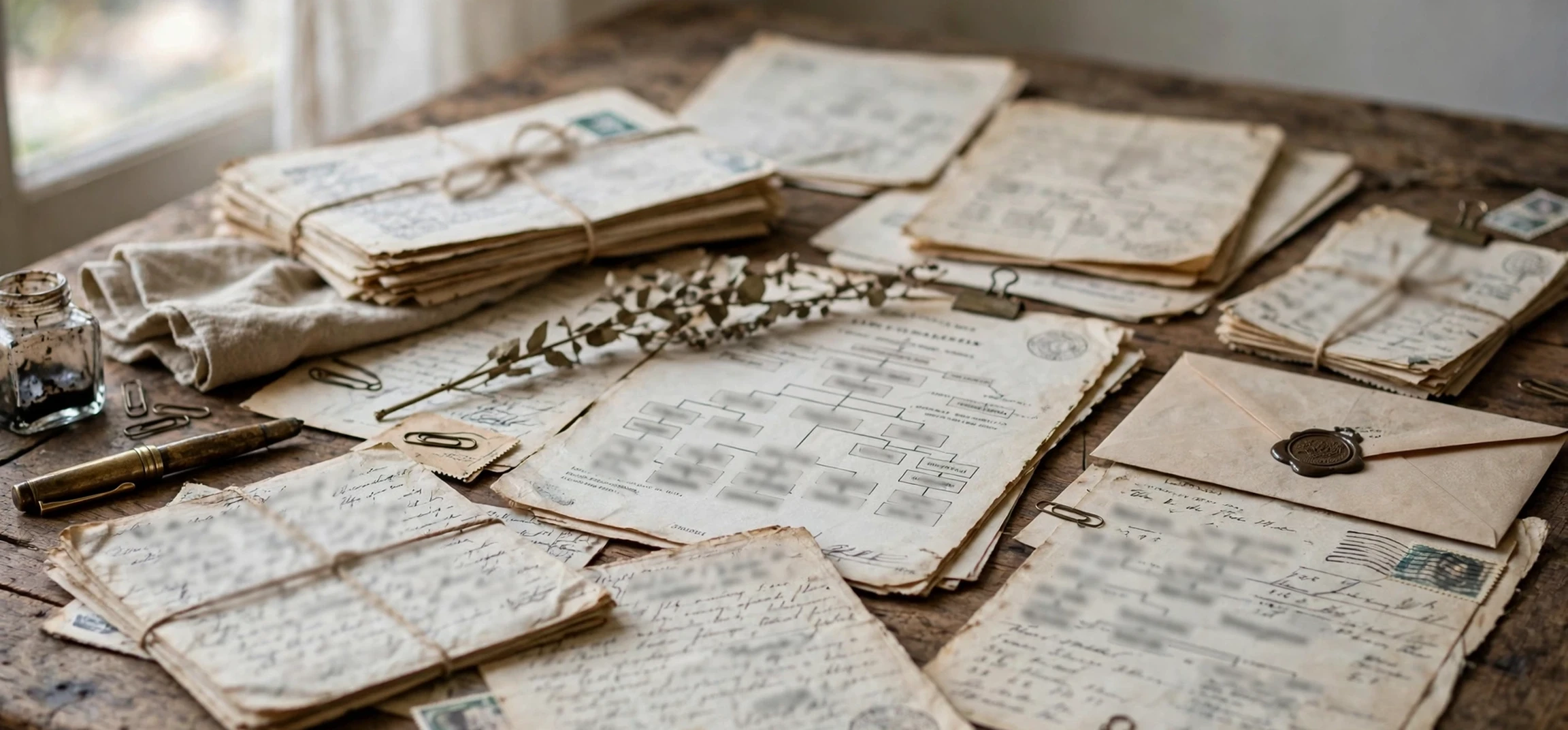
The origin of surname Goodman is a story rooted in medieval England, where surnames were still taking shape and a person’s name often described their character, their work, or their place in a community. If you carry the name Goodman today, or you are researching it for family history, the first question is usually a simple one: what did Goodman actually mean when it was first used, and how did it become a hereditary family name? The origin of surname Goodman points to a descriptive nickname rather than a place or a single ancestor, and that distinction explains why the name appears in many different counties and family lines rather than tracing back to one village or one founding family.
In medieval England, most people were known by a single given name, and extra descriptions were added only when they were needed to tell two people apart. A man called John who was respected by his neighbours might be called John the good man, meaning a decent, trustworthy, or upstanding man. Over time, that descriptive phrase hardened into a surname, and Good Man became Goodman. This kind of surname is called a nickname surname, and it is one of the oldest layers of English family names. Unlike names drawn from a trade, such as Smith or Baker, Goodman described reputation and conduct, which is why it feels warm and positive even centuries later. That context helps explain why the origin of surname Goodman still fascinates family historians.
The Origin of Surname Goodman in Medieval England
The origin of surname Goodman belongs to the period between the twelfth and fourteenth centuries, when hereditary surnames became common across England. Before that change, a son did not automatically inherit his father’s descriptive name. A father known as a good man might have a son known by a completely different description, depending on the son’s own trade or appearance. As records improved, as parishes kept registers, and as land and tax records demanded stable identification, families began to pass the same surname from one generation to the next. Goodman was well suited to that shift because it was easy to say, easy to spell in its basic form, and widely understood.
Early spellings show the name in forms such as Godman, Gudman, and Goodeman, reflecting the way local scribes heard and wrote the words. Spelling was not standardised in the Middle Ages, so the same family could appear under two or three spellings in different documents. The Godman form is especially interesting because it hints at a second possible influence: in Old English, God was sometimes used in personal names and phrases, and some scholars have suggested that an early form could have carried a religious sense, meaning a godly man or a man of God. Most surname historians, however, treat the straightforward reading as the main one, namely a good man in the ordinary moral sense, a person of honest character and fair dealing. Such details add depth to any study of the origin of surname Goodman.
Goodman as a Descriptive Nickname
Nickname surnames in medieval England covered a wide range of human qualities. Some were flattering, some were teasing, and some were simply practical. Goodman sits firmly on the flattering side. It suggested reliability, hospitality, and good standing in the community. In a small village, where everyone knew everyone else, being called the good man was a public mark of trust. It might have marked a householder who kept a fair table, a neighbour who settled disputes honestly, or a tenant farmer who paid his dues and helped others in hard seasons. The name therefore tells us less about one job and more about social standing.
It is also worth noting that Goodman was sometimes used as a polite form of address, much like master or sir in later centuries. A man of modest but respectable rank might be addressed as goodman, especially by people of higher rank or by officials. That everyday usage helped the word stay familiar, and familiarity helped it survive as a surname when many rarer nicknames faded away. The origin of surname Goodman is therefore not only a linguistic story but a social one, reflecting how medieval communities judged and labelled the people around them. Researchers who grasp this point understand the origin of surname Goodman far more clearly.
What the Origin of Surname Goodman Reveals About Occupations
Although the origin of surname Goodman is primarily descriptive, the name also turns up in records connected with particular roles. In some documents, a goodman was a householder or a head of a household, a man responsible for a home, a farm, or a small business. In Scottish records, the term gudeman carried a similar sense, referring to the master of a house or a husband. These uses reinforce the idea that Goodman marked a settled, responsible adult rather than a wandering labourer or a youth. For family historians, that context can help explain why early Goodmans often appear as tenants, yeomen, craftsmen, and small landholders rather than as nobles or great landowners.
At the same time, researchers should be careful not to assume that every early Goodman shared one occupation. Because the name arose independently in different places, one Goodman family might have farmed in Yorkshire while another worked as a merchant in London and a third served as a churchwarden in a southern county. The shared surname does not prove a shared ancestor. That is a common trap in surname research, and it is especially important with descriptive names. Occupational surnames such as Fletcher or Cooper also arose in many places at once, and Goodman follows the same pattern. The name describes a quality that many different men could possess, so many unrelated families adopted it. This pattern is central to the origin of surname Goodman and to similar descriptive names.
Goodman in Early Records
Goodman appears in English tax rolls, court records, wills, and parish registers from the medieval and early modern periods. These records are valuable because they often give a place, a trade, and a family relationship alongside the name. A will might name a wife, children, and land, while a court record might describe a dispute over a boundary or a debt. Piece by piece, such documents let researchers build a picture of one particular Goodman family, even though the surname itself is widespread. The key is to follow the place and the family group, not the surname alone.
Migration carried the name far beyond England. Goodmans travelled to Wales, Scotland, and Ireland, and later to North America, Australia, New Zealand, and other parts of the world during the great migrations of the seventeenth, eighteenth, and nineteenth centuries. In each new place, the name kept its spelling more often than many surnames did, because it was made of two familiar English words. Even so, local pronunciation and spelling habits produced variants, and researchers tracing a family across an ocean should check Godman, Gudman, and Goodeman as well as Goodman itself. Local records often shed fresh light on the origin of surname Goodman in a given county.
Spelling Variations and Regional Spread
The origin of surname Goodman is closely tied to its spelling history. In the Middle Ages, spelling followed sound, and scribes wrote what they heard. A clerk in one county might write Godman while a clerk in another wrote Goodman, and neither spelling was considered wrong. By the time spelling began to settle in the sixteenth and seventeenth centuries, Goodman had become the dominant form in England, while Godman survived as a rarer variant. Families that emigrated sometimes kept the variant they arrived with, which is why both forms appear in records in the United States and elsewhere today.
Regional spread also matters. Goodman is found across England rather than concentrated in a single county, which supports the theory of multiple independent origins. A name tied to one village usually stays clustered near that village for generations, while a descriptive name spreads wherever the language is spoken. Goodman behaves like the second type. Researchers who find early Goodmans in several counties should therefore treat each county group as potentially separate unless documents link them through marriage, migration, or inheritance. Taken together, these clues build a fuller picture of the origin of surname Goodman.
| Period | What Changed | What It Means for Researchers |
|---|---|---|
| 1100s to 1300s | Descriptive phrases become hereditary surnames | Goodman begins to pass from parent to child |
| 1300s to 1500s | Spelling varies by scribe and region | Check Godman, Gudman, and Goodeman forms |
| 1500s to 1700s | Parish registers and wills give family detail | Place and family group matter more than surname alone |
| 1600s onward | Migration carries the name overseas | Follow ship, census, and land records across borders |
How to Research a Goodman Family Line
Because the origin of surname Goodman involves many unrelated families, good research starts with what you already know and works backward one generation at a time. Begin with recent records, such as census entries, birth and marriage certificates, and family papers, and confirm each link before moving further back. Resist the temptation to jump straight to a famous or early Goodman and assume a connection. The most rewarding family histories are built slowly, with each generation supported by documents rather than by a shared surname.
Place is your best friend in this kind of research. If your Goodmans lived in one town for several generations, the parish registers, land records, and local trade directories for that town will usually tell you more than a national surname study can. Occupations help too. If the men in your line were consistently farmers, tailors, or merchants, that pattern can help you separate your family from other Goodman families in the same county. Wills are especially useful, because they name relatives and property and often reveal relationships that birth records alone do not show. Anyone tracing a family line benefits from understanding the origin of surname Goodman in this way.
For readers interested in how other family names took shape, this guide to another name history offers a useful comparison, showing how a single name can carry a different kind of story from Goodman. You can read about the origin of the name Anton to see how given names and surnames followed different paths. A second helpful comparison is the way middle names were recorded in historical families, as explored in the story behind a famous middle name, which shows how naming customs changed over time.
Frequently Asked Questions About the Goodman Surname
What does the surname Goodman mean?
Goodman most likely means a good man, in the sense of an honest, respectable, and trustworthy person. The origin of surname Goodman is descriptive, so the name originally praised character rather than naming a place or a trade. A secondary theory links an early Godman spelling to a godly man, but the ordinary sense of a good man remains the leading explanation among surname historians. That social background is inseparable from the origin of surname Goodman.
Do all Goodmans descend from one family?
No. Because the name is descriptive, it arose independently in many places. Two Goodman families from different counties may have no connection at all, even if they share the same surname. Family historians should prove links with documents covering place, dates, and relationships rather than assuming a shared ancestor from the name alone.
What spelling variants should researchers check?
Check Godman, Gudman, and Goodeman alongside Goodman, especially in records before 1700. Scribes spelled by sound, and the same person can appear under different spellings in different documents. Later records are more consistent, but variant spellings still appear in census and immigration records. For beginners, the origin of surname Goodman is an ideal introduction to surname history.
Is Goodman an English surname?
Yes, Goodman is primarily an English surname, with related usage in Scotland where gudeman meant the master of a house. The name later spread widely through migration, so Goodmans today live in many countries, but the linguistic roots of the name are English.
Conclusion
The origin of surname Goodman reminds us that surnames were once living descriptions, spoken by neighbours before they were written by clerks. A good man was someone trusted, respected, and settled in his community, and that everyday compliment became a lasting family name. Its spread across counties and continents shows how a simple, positive description could take root in many places at once, creating many separate Goodman families rather than one single line. For anyone researching the name, the most reliable path is patient, document by document, following place and family group rather than chasing the surname alone. That careful approach honours the real history of the name, which is not the story of one person but the story of a quality that communities valued enough to remember.