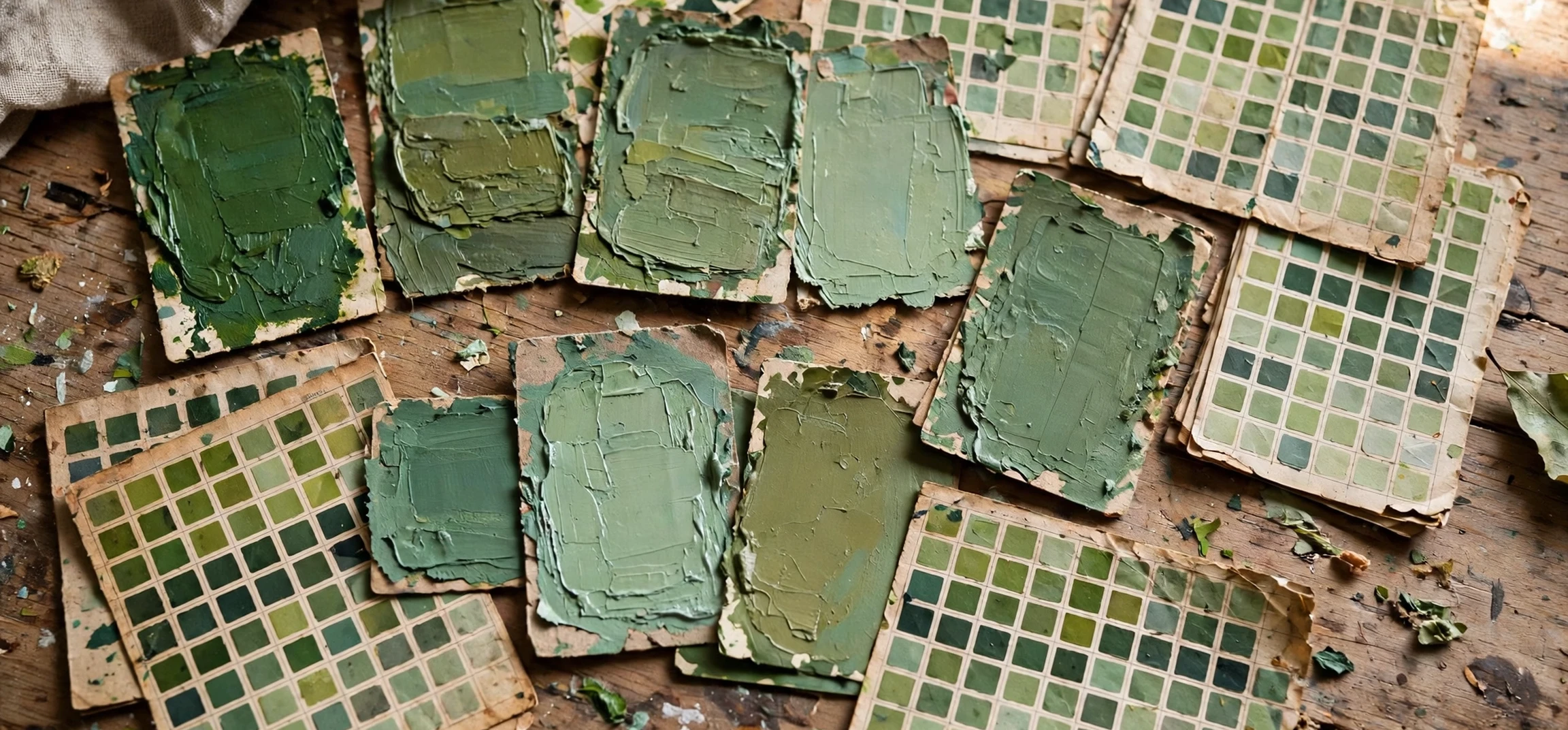
If you have ever stared at a paint chart, a fabric swatch, or a vintage car catalogue and wondered why one green is called hunter while another is called sage, you are exploring different names for green colors. Green has one of the richest vocabularies of any colour, because for centuries people have named greens after the plants, stones, places, and everyday objects that showed them that exact shade. This guide takes the retro and classic route through that vocabulary: the heritage names that have survived from old paint shops, country houses, military uniforms, and mid-century kitchens, and what each one actually looks like, so you can recognise them, describe them, and choose between them with confidence.
Green is a particularly name-rich colour because it sits in the middle of the visible spectrum, where the human eye is most sensitive to small changes. A tiny shift towards yellow makes a green feel warm and spring-like; a tiny shift towards blue makes it feel cool and deep. Our ancestors noticed those shifts long before colour charts existed, and they named what they saw: the green of moss after rain, the green of a hunting jacket, the green of a particular gemstone, the green of a racing car. Those names stuck because they carried a picture in the word itself. Say “forest green” and almost everyone pictures the same dark, shaded woodland, even if they have never seen a formal colour swatch.
Table of Contents
- What ‘different names for green colors’ Means
- Why ‘different names for green colors’ Endure
- Woodland and Countryside Greens
- Jewel and Gemstone Greens
- Retro Kitchen and Mid-Century Greens
- Uniform, Racing, and Working Greens
- Pale, Misty, and Garden Greens
- Choosing a Classic Green for Your Home or Wardrobe
- Frequently Asked Questions
- Conclusion
What ‘different names for green colors’ Means
When people search for different names for green colors, they are usually looking for a list they can use: a name for the green in a photograph, a paint colour to ask for in a shop, a word for a dress colour in a story, or a label for a design project. The names fall into families based on what inspired them. Nature names come from plants, trees, and landscapes. Gemstone names come from minerals. Food names come from herbs, fruits, and drinks. Place names come from countries, cities, and landscapes associated with a particular shade. Understanding the family helps you guess what a name means even if you have never seen that exact shade before.
It also helps to know that the same name can vary slightly between paint brands, fabric makers, and digital colour systems. Hunter green from one paint company may be a touch darker than hunter green from another, and a fabric called sage may be greyer than a paint called sage. The names are guides, not laboratory measurements. When accuracy matters, such as matching a wall colour or a bridesmaid dress, always compare a physical swatch in the light where it will be used, rather than trusting a name alone. The name gets you to the right family; the swatch gets you to the right shade.
Why ‘different names for green colors’ Endure Across Generations
Classic green names endure because they are tied to things people still recognise. Hunter green endures because hunting jackets, riding boots, and country clothing still use that deep, muted green. Racing green endures because British racing cars made it famous, and it still appears on classic cars, leather goods, and formal menswear. Olive green endures because military uniforms and the olive fruit both keep it in everyday view. These names survive not because a committee preserved them, but because the objects they describe are still part of daily life, and each generation relearns the name by seeing the object.
Retro names also carry nostalgia, which gives them a second life in design. Avocado green instantly recalls 1970s kitchens, with their matching appliances and patterned wallpaper. Mint green recalls 1950s diners, pastel bathrooms, and vintage refrigerators. Seafoam recalls seaside holidays, beach houses, and retro swimwear. When designers revive a period look, they reach for these names because the name itself does part of the storytelling. A room described as avocado and cream tells you its era before you see a photograph, in a way that a technical colour code never could.
There is a practical reason too. In conversation, a name is faster than a description. Saying “sage” is quicker than saying “a soft grey-green with a slightly warm, dusty quality”. For writers, decorators, shop assistants, and anyone describing a colour over the phone, that shorthand is invaluable. The classic names have been tested by decades of use, and the ones that survived are the ones that most people picture in roughly the same way. That shared understanding is what makes a colour name useful, and it is why new names are constantly invented while old ones refuse to disappear.
Woodland and Countryside Greens
Woodland greens are the oldest family of green names, and they remain the most intuitive. Forest green is the archetype: a deep, dark green like the shaded interior of a dense wood, with a cool, blue-leaning undertone. It is darker than most people expect when they first hear the name, and it works beautifully as a statement colour on a front door, a velvet sofa, or a winter coat, because its depth reads as rich rather than bright. Moss green is softer and greyer, like moss on a stone wall after rain, with a muted, earthy quality that suits natural fabrics, camouflage-inspired fashion, and rustic interiors.
Fern green is brighter and fresher than forest or moss, like the unfurling fronds of a fern in spring. It has a yellow-leaning warmth that makes it feel alive and outdoorsy, and it appears often in botanical prints, garden clothing, and children’s rooms. Pine green is darker and cooler again, like the needles of a pine tree in winter, with a hint of blue that gives it a crisp, almost formal quality. It is a favourite for Christmas decoration, tailored clothing, and traditional kitchens, where it pairs well with cream, brass, and natural wood.
Hunter, Laurel, and Ivy
Hunter green deserves its own mention, because it is one of the most asked-for classic greens and one of the most misunderstood. It is a dark, muted green with a slightly grey or brown undertone, originally associated with hunting and country clothing, where a quiet, non-reflective colour was practical. It is darker than fern, less blue than pine, and more sober than emerald. Laurel green is lighter and greyer, like the leaves of a laurel bush, with a dusty, elegant quality that suits wedding flowers, stationery, and soft furnishings. Ivy green is similar but slightly deeper and glossier in feel, like the leaves climbing a brick wall, and it carries a sense of tradition and academia, appearing on university scarves, blazers, and heritage branding.
Jewel and Gemstone Greens
Gemstone names give green its glamour. Emerald green is the most famous: a rich, vivid, slightly blue-leaning green named after the emerald stone, associated with luxury, evening wear, and jewellery. It is brighter and more saturated than forest green, and it demands attention, which is why it works so well as an accent colour: an emerald dress, a pair of emerald curtains, or a single emerald wall in an otherwise neutral room. Jade green is softer and more opaque in feel, like carved jade stone, with a milky, slightly grey quality that makes it calmer than emerald and easier to live with in large areas.
Malachite green is deeper and more dramatic, named after the banded green mineral, with a rich, almost black-green depth that suits statement furniture and Art Deco interiors. Peridot green is the opposite: a light, yellow-leaning, almost lime-like green named after the peridot gem, fresh and sunny, often used in spring fashion and light jewellery. Tourmaline green covers a range, because tourmaline stones themselves vary, but the name usually suggests a medium, slightly blue green with a clear, glassy quality. Together, these gemstone names let a designer or writer signal luxury, clarity, and colour intensity with a single word.
Why Gemstone Names Feel Luxurious
Gemstone names feel luxurious because they borrow the associations of the stones themselves: rarity, craftsmanship, and preciousness. A paint called emerald sounds more special than a paint called medium dark green, even if the two are similar, because the name invites you to picture a jewel rather than a chart. That is not a trick; it is how language works. Names carry stories, and gemstone names carry stories of mines, cutters, royal collections, and heirlooms. When you choose a gemstone green for a room or an outfit, you are choosing that story as well as that shade.
Retro Kitchen and Mid-Century Greens
No tour of classic greens is complete without the retro kitchen family, because these are the greens most people recognise from their grandparents’ homes. Avocado green is the star: a muted, yellow-leaning olive green that dominated 1970s kitchens, bathrooms, and appliances. It is warmer and more yellow than sage, and greener than mustard, sitting in a distinctive retro zone that is instantly datable. Used today, it works best as a deliberate vintage accent, paired with cream, warm wood, and brass, rather than as a whole-room colour, unless you are committing fully to a period restoration.
Mint green is the 1950s counterpart: a pale, cool, slightly blue pastel green, like mint leaves or mint ice cream, associated with diners, pastel bathrooms, and vintage refrigerators. It is fresher and lighter than sage, and it suits small spaces, because pale colours reflect light and make a room feel larger. Seafoam green is close to mint but slightly greener and softer, like the foam at the edge of the sea, with a beach-house, coastal quality that pairs beautifully with white, sand, and driftwood tones. Pistachio green is warmer and nuttier, like the inside of a pistachio nut, a pale yellow-green that feels creamy and appetising, which is why it appears in kitchens, cafes, and food packaging.
Celadon green belongs in this family too, although its history is far older. Named after a type of Chinese glazed pottery, celadon is a pale, grey-green with a delicate, almost translucent quality. It is quieter than mint and greyer than seafoam, and it has been a favourite for ceramics, bedrooms, and calm interiors for centuries. Its survival from ancient pottery to modern paint charts shows how a good green name, tied to a beautiful object, can last for hundreds of years.
Uniform, Racing, and Working Greens
Some classic greens come from work rather than nature. Olive green, named after the olive fruit, is the most versatile of these: a muted, yellow-brown green that appears in military uniforms, workwear, cargo trousers, and utility jackets. Its muted quality makes it practical, because it does not show dirt easily and it blends with natural surroundings, and its warmth makes it flattering to wear. Olive drab is a specific military variant, greyer and browner than everyday olive, with a distinctly utilitarian feel that fashion periodically revives.
Racing green, often called British racing green, is a very dark, rich green with a deep, almost black depth, made famous by British racing cars in the early twentieth century. It is darker than hunter green and cooler than forest green, with a formal, heritage quality that suits classic cars, leather briefcases, and formal evening wear. Bottle green is a close cousin: a very dark green like old glass bottles, with a glossy, deep quality that appears in school uniforms, traditional blazers, and vintage glassware. Both names survive because they describe colours that are still made, still worn, and still admired for their restraint.
Lincoln green is an older working name, associated with the cloth worn by foresters and archers in English legend, a medium, slightly yellow green that feels folkloric and outdoorsy. Sherwood green is a similar heritage name, evoking the same woodland tradition. These names are less common in modern paint shops, but they live on in historical clothing, theatre costume, and heritage branding, where the story matters as much as the shade.
Pale, Misty, and Garden Greens
Pale greens complete the classic vocabulary, and they are the ones most often used in bedrooms, bathrooms, and spring fashion. Sage green is the most popular pale classic: a soft, grey-green like sage leaves, dusty and calming, with a slightly warm undertone that makes it easy to pair with cream, white, linen, and natural wood. It is the go-to green for people who want colour without boldness, and it has become a modern neutral in its own right. Eucalyptus green is similar but slightly cooler and bluer, like eucalyptus leaves, with a fresh, spa-like quality.
Tea green, sometimes called green tea, is a very pale, yellow-leaning green, like brewed green tea, almost neutral in feel and excellent for small rooms and delicate fabrics. Willow green is a soft, grey-green like willow leaves, with a weeping, graceful quality that suits romantic interiors and garden-inspired fashion. Honeydew green is paler still, like the flesh of a honeydew melon, a creamy pale green that works as a near-neutral in nurseries, kitchens, and summer clothing. Together, these pale names give you a full scale from barely-there green to soft statement green, without ever leaving the classic family.
| Classic green name | What it looks like | Where you meet it |
|---|---|---|
| Forest green | Deep, dark, cool woodland green | Front doors, velvet, winter coats |
| Hunter green | Dark, muted, slightly grey country green | Country clothing, riding gear, heritage brands |
| Emerald green | Rich, vivid, jewel-bright green | Evening wear, jewellery, statement rooms |
| Sage green | Soft, dusty grey-green | Bedrooms, kitchens, wedding palettes |
| Olive green | Muted yellow-brown green | Workwear, military style, cargo fashion |
| Avocado green | Warm, yellow-leaning retro green | 1970s kitchens, vintage appliances |
| Mint green | Pale, cool pastel green | 1950s diners, bathrooms, spring fashion |
| Racing green | Very dark, formal heritage green | Classic cars, leather goods, formal wear |
For more colour reading, see our guides on colour guides, analogous colours, and colour and background text combinations.
Choosing a Classic Green for Your Home or Wardrobe
Choosing between classic greens comes down to three questions: how dark do you want it, how warm or cool should it feel, and how much attention should it demand. Dark greens such as forest, hunter, racing, and bottle green demand attention through depth; they suit feature walls, front doors, and statement furniture, but they can darken a small room, so pair them with plenty of light, cream, or white. Medium greens such as emerald, fern, and olive are versatile all-rounders; they work on clothing, upholstery, and kitchen cabinets without overwhelming a space. Pale greens such as sage, mint, seafoam, and celadon are the safest for large areas, because they add colour while keeping a room light and calm.
Warmth matters too. Warm greens lean towards yellow: olive, avocado, pistachio, fern, and peridot. They suit rooms with warm wood, brass, and cream, and they flatter warm skin tones in clothing. Cool greens lean towards blue: pine, emerald, racing, eucalyptus, and mint. They suit rooms with white, chrome, and cool grey, and they flatter cool skin tones. If you are unsure, hold the swatch next to your existing furniture or clothing in daylight, because artificial light can shift a green noticeably, turning a sage into a grey or an olive into a brown.
A Simple Test Before You Commit
Before painting a wall or ordering a large quantity of fabric, test the colour at scale. Paint a large sample board and move it around the room at different times of day, or drape a fabric sample over a chair for a few days. Live with it through morning light, evening light, and lamplight before deciding. Classic greens are forgiving, but they are also sensitive to light, and a shade that looks perfect in a shop can look different at home. The test takes a little time, but it is far cheaper than repainting a room or returning a sofa.
Frequently Asked Questions
What is the difference between hunter green and forest green?
Hunter green is a dark, muted green with a slightly grey or brown undertone, associated with country clothing. Forest green is a deep, dark green with a cooler, more shaded woodland feel. Hunter is generally more muted; forest is generally deeper and cooler.
What is sage green?
Sage green is a soft, dusty grey-green named after sage leaves. It is pale, calming, and versatile, and it pairs well with cream, white, linen, and natural wood in interiors and fashion.
What is avocado green?
Avocado green is a warm, muted, yellow-leaning green made famous by 1970s kitchens and appliances. Today it is used mainly as a deliberate retro accent, paired with cream and warm wood.
Is emerald green the same as forest green?
No. Emerald green is brighter, more vivid, and more jewel-like, while forest green is darker and more muted. Emerald demands attention as an accent; forest provides depth as a statement colour.
Which classic green suits a small room?
Pale classics such as sage, mint, seafoam, celadon, and tea green suit small rooms best, because they reflect light and keep the space feeling open while still adding colour.
Conclusion
The classic names for green are a kind of cultural memory: forest and fern from the woods, emerald and jade from gemstones, avocado and mint from retro kitchens, olive and racing green from work and sport, sage and celadon from gardens and pottery. Each name carries a picture, a history, and a feeling, which is why they have survived long after the paint charts that first listed them were thrown away. When you need a green, start with the family that matches your mood, narrow it by darkness and warmth, and confirm it with a swatch in real light. The right classic green will feel less like a colour choice and more like a recognition, as if you had known its name all along.