Learning how to write an address correctly is a small skill that prevents big problems, from delayed parcels to returned letters and missed deliveries. When you write an address, you are giving a delivery system a set of instructions in a specific order, and even a small mistake in that order can send your mail to the wrong place or hold it up for days. This guide explains how to write an address for envelopes, parcels, and online forms, using placeholder formats only, so you can follow the pattern with your own details. It covers the standard layout, common mistakes, and answers to the questions people ask most often.
Addresses look simple, but they follow rules that vary by country and by purpose. A home address, a business address, and a return address all share the same basic building blocks, yet they are arranged differently depending on where the mail is going. The good news is that once you learn the standard pattern, you can adapt it anywhere. The key is to put the most specific information first for the recipient, then work outward to the wider area, and finish with the postal code and country for international mail.
How to Write an Address: The Basic Layout
To write an address correctly, start with the recipient’s full name on the first line. The second line holds the street number and street name, plus any apartment, suite, or unit number. The third line holds the city or town, followed by the state, province, or region where applicable. The final line holds the postal code, and for international mail, the country name in capital letters on its own last line. Each piece of information goes on its own line, written clearly, with no extra punctuation that could confuse a sorting machine.
A typical placeholder example looks like this in structure: recipient name, then street address, then city and region, then postal code. Apartment or unit numbers usually follow the street address on the same line or directly below it, depending on local convention. Business names go above the recipient’s name or in place of it when mail is addressed to an organisation. If you are unsure, the recipient’s name plus the full street address is almost always the safest choice.
When you write an address by hand, use capital letters for the city and country, keep your writing clear, and avoid abbreviations that could be misread. When you type an address into an online form, copy it exactly as the recipient provided it, including apartment numbers and postal codes. Delivery systems match typed addresses against databases, so even one wrong digit in a postal code can cause a failed delivery.
How to Write an Address on an Envelope
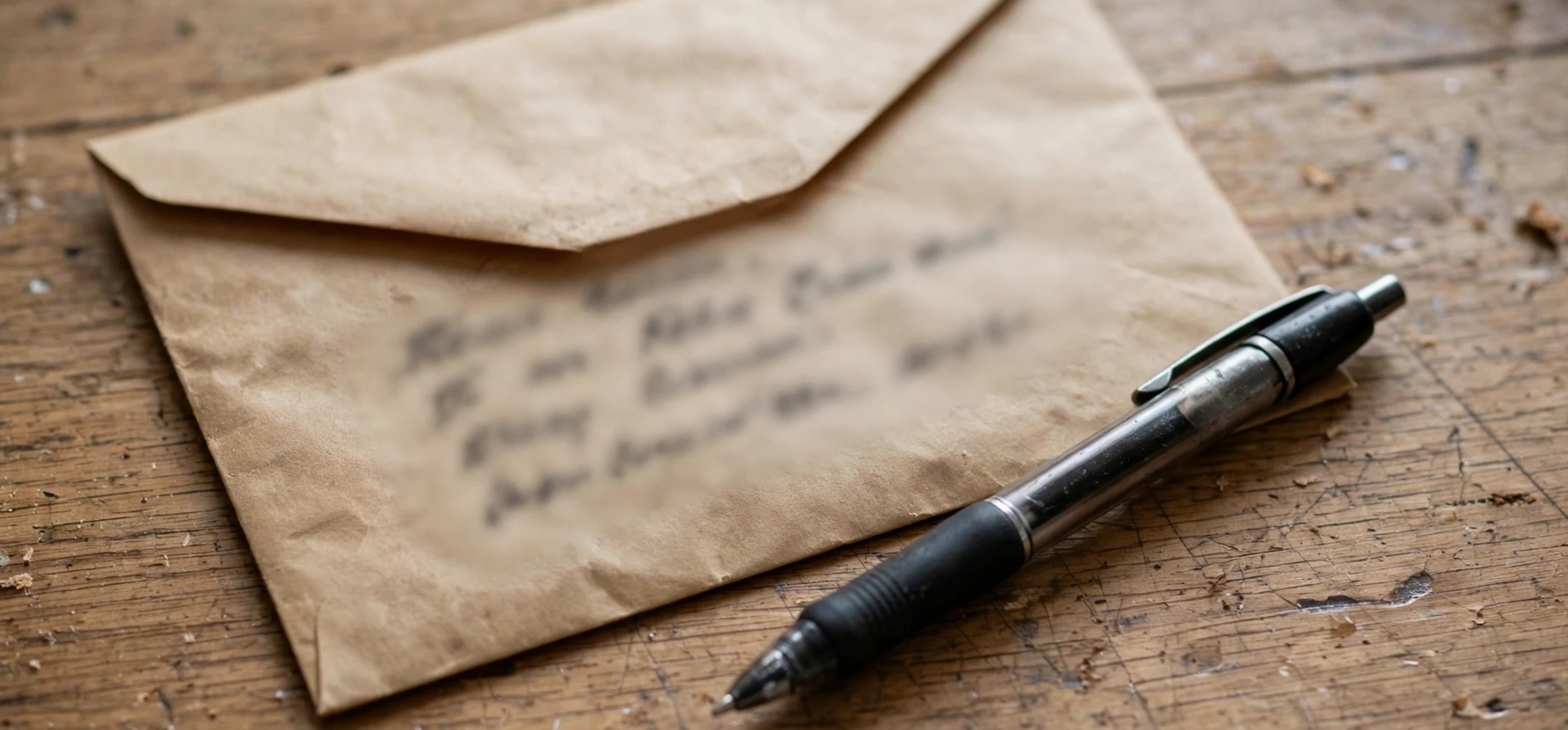
Writing an address on an envelope follows the same pattern, with placement as important as content. Put the recipient’s address in the centre of the envelope, and your return address in the top left corner. The stamp goes in the top right corner. This placement matters because sorting machines and postal workers look for the delivery address in the centre, and a return address in the wrong place can cause confusion.
For a standard letter, write the recipient’s name first, then the street address, then the city, region, and postal code. If the letter is going abroad, add the country name in capital letters as the final line. Do not add extra notes, drawings, or decorations near the address block, since these can interfere with machine reading. Keep the address block neat, left-aligned, and free of crossed-out words.
For parcels, the same rules apply, but clarity matters even more, because parcels pass through more hands and more machines. Print the label if possible, rather than handwriting it, and make sure the label is flat, fully visible, and not wrapped around a corner. If you reuse a box, remove or cover old labels completely. A second visible address on a parcel is one of the most common causes of misdelivery, and it is entirely avoidable.
Address Formats for Different Situations
Different situations call for small changes to the basic format. A residential address uses the occupant’s name and street address. A business address adds the company name and sometimes a department or floor. A post office box address replaces the street address with the box number and the name of the post office. A rural address may include a route number instead of a street name. In each case, the order stays the same: specific details first, general details last.
| Situation | First Lines | Key Tip |
|---|---|---|
| Home letter | Recipient name, street address | Include the apartment number if there is one |
| Business letter | Company name, recipient or department | Add floor or suite details where needed |
| Parcel delivery | Recipient name, street address | Print the label and remove old labels |
| International mail | Recipient name, street address, city | Country name in capitals on the last line |
| Return address | Your name, your street address | Place it in the top left corner |
When you write an address for an online order, follow the form fields in order rather than copying a letter layout. Online forms often split the address into separate boxes for street, city, region, and postal code, and they may validate each box separately. If a form rejects your entry, check for extra spaces, missing apartment numbers, or a postal code in the wrong format. Many delivery problems begin with a form field that was left blank or filled in the wrong box.
International addresses deserve extra care. Some countries put the postal code before the city, others put the house number after the street name, and some use no postal code system at all. When you write an address for another country, follow that country’s convention, which you can confirm through its official postal service guidance. Using your own country’s format for foreign mail is a common and avoidable error.
Common Mistakes When You Write an Address
The most common mistake is leaving out the apartment, suite, or unit number. In a large building, a street address alone is not enough, and mail without a unit number is often returned or delayed. The second most common mistake is an incorrect postal code, often caused by transposing two digits. Always double-check the postal code against the recipient’s own version, not your memory of it.
Other frequent errors include misspelled street names, missing region or state details, and using a nickname instead of the recipient’s full name. Nicknames can cause problems with secure deliveries that require identification. Similarly, abbreviating a city name or writing it in a non-standard way can confuse sorting systems. When in doubt, write the full, official version of every part of the address.
Another mistake is writing the return address in the wrong place or leaving it off entirely. The return address is your safety net: if delivery fails, the item comes back to you instead of being lost. Always include it on letters and parcels, especially for anything valuable or time-sensitive. A complete return address also signals to the recipient that the mail is genuine. Readers who deal with official mail may also find our guide to the address used for tax return mail useful for understanding how official addresses are presented.
How to Write an Address on Online Forms
Online forms have their own quirks. Some forms ask for the address in two lines, with the second line reserved for apartment or suite numbers. Others combine everything into one field. Read the labels carefully, and do not put the city in the street field or the postal code in the city field. If a form has a country dropdown, select the country before entering the rest, since the form may change its validation rules based on that choice.
Autocomplete tools can help, but they can also introduce errors. If an autocomplete suggestion changes your street name or postal code, check it before accepting. Autocomplete databases are not always up to date, especially for new buildings. After submitting a form, review the confirmation page or email, since that is your last chance to catch a mistake before the item ships. Many retailers allow address changes only before dispatch, so early checking saves time and cost.
For business addresses, include the company name exactly as registered, plus any department or mail stop the recipient specifies. Large organisations often have internal mail systems, and a missing department name can delay internal delivery by days. If the recipient gives you a specific format, follow it exactly, even if it looks unusual. They know their own mail system better than any general guide can. Location-based lookups work differently from postal addresses, as explained in our article on finding an address from map coordinates.
Practical Tips for Clear and Reliable Addresses
Clarity is the single most important quality of a good address. Use a standard font and size when printing, avoid fancy scripts, and make sure there is strong contrast between the text and the background. On handwritten mail, print in block capitals if your handwriting is hard to read. On parcels, protect the label with clear tape if the parcel may get wet, but do not cover barcodes with tape that creates glare.
Consistency also matters. Use the same address format everywhere you share it, so that friends, businesses, and delivery services all hold the same version. If you move, update your address promptly with banks, employers, and subscription services, and set up mail forwarding where available. A surprising amount of lost mail comes not from writing errors but from outdated addresses held by senders.
Finally, keep a copy of any address you send something important to, along with the tracking number if one is provided. Tracking lets you see where a parcel stalls, and a saved address lets you resend quickly if needed. These small habits turn address writing from a guessing game into a reliable routine. Property and address records also follow formal systems, which you can read about in our overview of property address searches.
One more habit worth building is a final read-through every time you write an address, because the moment you write an address is the moment errors are cheapest to fix. Read the name, street, city, region, and postal code aloud, and compare each part with the version the recipient gave you. When you write an address for a parcel, also check that the label matches the order form exactly, since a label copied from memory is a common source of mistakes. The few seconds it takes to verify that you write an address correctly will save days of chasing a lost item, and it turns a routine task into a reliable one.
Frequently Asked Questions About How to Write an Address
Where does the recipient’s name go?
The recipient’s full name goes on the first line of the address block, above the street address. For business mail, put the company name first, then the recipient or department on the next line. Using a full name rather than a nickname helps with deliveries that require identification.
Do I need a return address?
Yes, whenever possible. The return address goes in the top left corner of an envelope and lets the item come back to you if delivery fails. It is especially important for valuable, time-sensitive, or international mail, where redelivery without it may be impossible.
What if I do not know the apartment number?
Ask the recipient before sending. Mail to a large building without a unit number is frequently delayed or returned. If you cannot obtain it, consider an alternative delivery method, such as a parcel locker or collection point, rather than risking a failed delivery.
How do I write an address for another country?
Follow the destination country’s format and put the country name in capital letters on the final line. Check the official postal guidance for that country, since the order of postal code, city, and house number varies. Do not simply reuse your own country’s layout for foreign mail.
Conclusion
When you write an address, you are writing instructions for a complex delivery system, and clarity is what makes those instructions work. Start with the recipient’s name, add the street address and unit number, then the city, region, and postal code, and finish with the country for international mail. Place it correctly on the envelope, include a return address, and double-check every digit before sending.
Mastering this simple pattern saves time, money, and frustration. Parcels arrive faster, letters are not returned, and recipients are not left chasing missing mail. Keep the format consistent, update it when you move, and review online forms before submitting. With those habits, writing an address becomes a quick, reliable task rather than a source of delivery problems.