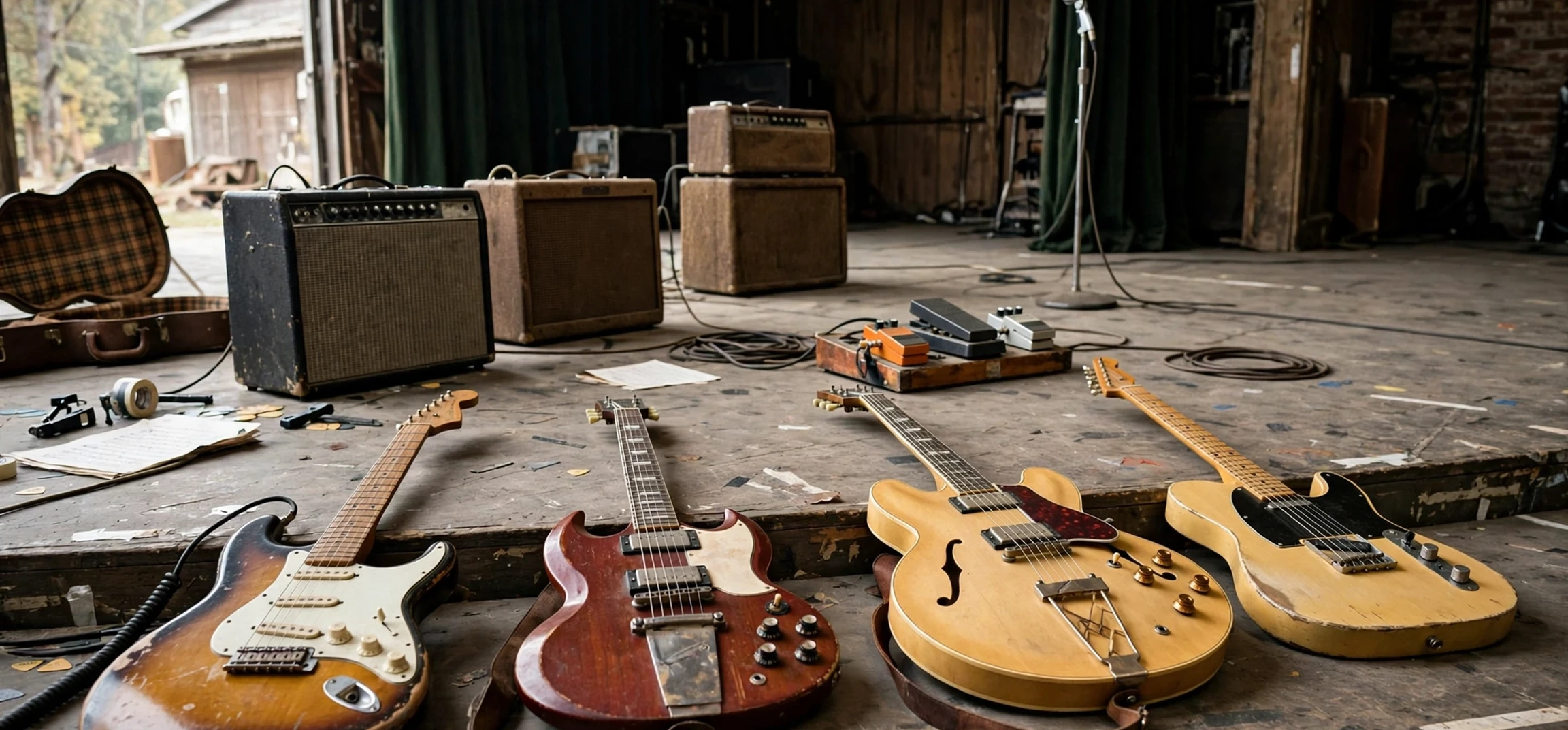
It is one of the most famous band names in history, and one of the most asked-about: where did the beatles name come from? The answer is a small story about Liverpool in the late 1950s, a young group searching for an identity, a love of American rock and roll, and a pun that only works when you say it aloud. Where did the beatles name come from is not a mystery with a single secret document behind it; it is a piece of public band history, told and retold by the musicians themselves and by the people around them, with a few details that remain charmingly disputed. This guide sets out that history clearly, separates what is well established from what is still debated, and explains why the name was such a brilliant choice.
A note on method first. This article sticks to public band history: the group’s early line-ups, their performances in Liverpool and Hamburg, their recordings, and the accounts given in interviews and reputable histories. It does not speculate about private lives or repeat unverified personal stories. The story of a band name is interesting enough without invention, and the Beatles’ name has a documented evolution that can be followed step by step, from schoolboy skiffle group to the most famous band in the world.
Where Did the Beatles Name Come From? The Short Answer
The short answer to where did the beatles name come from is that the name evolved from earlier group names and was settled in 1960, when the Liverpool group began calling itself the Beatles — spelled B-E-A-T-L-E-S, with an “a” instead of the “ee” in the insect word “beetles”. The spelling was a pun: it nodded to “beat”, as in beat music and the beat of rock and roll, while sounding exactly like “beetles”. That double meaning was deliberate and clever. It linked the group to the driving rhythm of the music they loved, and it gave them an animal name in the style of other American groups of the era, most famously Buddy Holly and the Crickets.
The pun matters because it captures the group’s identity at that moment. They were not a traditional pop vocal group, and they were not a jazz band. They were a beat group: young musicians playing loud, rhythmic, guitar-based music in Liverpool clubs and, soon afterwards, in Hamburg. The name said that in a single word, and it was memorable, easy to chant, and easy to put on a poster. It also left room for the group to grow. A name tied too tightly to one town, one style or one line-up would have dated quickly; “the Beatles” was flexible enough to carry them from the Cavern Club to the world.
From the Quarrymen to the Beatles
To understand where did the beatles name come from, you need to start a few years earlier, with a school group called the Quarrymen. In 1957, John Lennon formed the Quarrymen, a skiffle group named after his school, Quarry Bank High School in Liverpool. Skiffle was a lively, do-it-yourself style popular in Britain at the time, mixing folk, blues and jazz with homemade instruments alongside guitars. Paul McCartney joined the Quarrymen later in 1957, and George Harrison joined in 1958. The group played at school events, church halls, parties and local competitions, gradually moving from skiffle towards rock and roll as American records reached Liverpool.
As the group’s ambitions grew, the school name began to feel limiting. The Quarrymen went through several short-lived names and line-up changes around 1959 and 1960, reflecting their search for a more professional identity. Accounts differ on the exact sequence — band histories are honest about this, because the group was young, informal and not yet keeping records for posterity — but the direction of travel is clear: away from a school joke and towards a name that sounded like a real rock and roll band. Names tried or considered in this period included variations on “Beatals”, a spelling that made the “beat” pun even more explicit, before the group settled on the now-famous spelling.
By the summer of 1960, the group was performing as the Beatles, with a line-up that included John Lennon, Paul McCartney, George Harrison, Stuart Sutcliffe on bass, and Pete Best on drums. That line-up would change again — Ringo Starr replaced Pete Best in 1962, and Stuart Sutcliffe had left the group in 1961 — but the name stayed. That stability is telling: once the group found the Beatles name, it stuck through line-up changes, through Hamburg residencies, through their first recordings, and through the explosion of fame that followed.
The Influences Behind the Beatles Name
Several influences converged in the Beatles name, and each one helps answer where did the beatles name come from. The first is Buddy Holly and the Crickets. The Crickets were an American rock and roll group whose insect name, combined with their guitar-based sound, was much admired by the young Liverpool musicians. Naming themselves after another insect was both a tribute and a statement of intent: we play that kind of music, in that kind of group. The Beatles themselves acknowledged the Crickets as an inspiration for the animal-name idea.
The second influence is beat music itself. Liverpool in the late 1950s and early 1960s was a thriving centre for beat groups: guitar bands playing a rhythmic, energetic style that blended rock and roll, rhythm and blues and pop. The word “beat” was everywhere in that scene, and a name that contained “beat” placed the group firmly inside it. The punning spelling — Beatles rather than Beetles — made that connection visible in print, on posters and record labels, even before anyone heard the group play.
The third influence is a wider cultural fashion for playful, slightly rebellious group names. Rock and roll groups of the era often chose names that were short, striking and a little cheeky, a break from the formal dance-band names of an earlier generation. “The Beatles” fitted that fashion perfectly: it was fun to say, it looked good in print, and it suggested energy and youth. It also had the advantage of being distinctive. Once you had heard it, you were unlikely to confuse it with another group.
Who Chose the Name, and What Is Still Debated?
Band histories generally credit John Lennon and Stuart Sutcliffe with playing a central role in choosing the Beatles name, with the other members involved in the discussion. Lennon later described the process in interviews with characteristic humour, including a famous joke that the name came to him in a vision involving a man on a flaming pie — a story that should be read as a joke, not as a literal account, and which Lennon himself presented playfully. The serious point behind the joke is that the name was a group decision, made by young musicians experimenting with words they liked, rather than a name imposed by a manager or a record company.
What remains debated is the precise order of the intermediate names and who suggested which spelling first. That is normal for a story from a period when the group was not yet famous and no one was documenting every rehearsal. Historians weigh interviews, letters, posters and contemporary accounts, and they are open about where those sources disagree. The important facts are not in dispute: the group evolved from the Quarrymen, tried beat-related names, and settled on “the Beatles” in 1960, with the “a” spelling as a pun on “beat”. The minor details — who said what on which evening in Liverpool — are the kind of friendly argument that keeps music history lively, not a reason to doubt the overall story.
It is also worth noting what the name did not come from. It was not a record-company invention, it was not chosen by a marketing team, and it was not a reference to a single song or film. It grew organically from the group’s own musical world: the beat scene they played in, the American groups they admired, and their own wordplay. That organic origin is part of why the name has lasted so well. It was not a slogan for a moment; it was an identity the group chose for itself.
Where Did the Beatles Name Come From? Why It Worked So Well
A great band name does several jobs at once, and the Beatles name did all of them. It was short and memorable, which mattered for posters, radio announcements and word of mouth. It was distinctive, which mattered as the group began to compete for attention in Liverpool, Hamburg and then nationally. It was flexible, which mattered as the group’s music changed from early rock and roll covers to original songs, from beat music to folk, psychedelia and beyond. A name that had locked them into one style would have become a burden; “the Beatles” grew with them.
The name also worked visually. The “Beatles” spelling, with its unusual “a”, stood out in print and became a recognisable logo in itself, especially once it was paired with the group’s image and, later, with distinctive album artwork. Fans could recognise the word at a glance, and the misspelling became a mark of authenticity: anyone can spell “beetles”, but only one group spelled it “Beatles”. That visual identity helped the group as they moved from clubs to television to film, where a name must work on a screen as well as on a stage.
Finally, the name worked because the music lived up to it. A clever name alone does not make a great band, and many groups with clever names are forgotten. The Beatles name is remembered because the songs, the performances and the cultural impact that followed gave it meaning far beyond the original pun. When people ask where did the beatles name come from today, they are usually not just asking about spelling: they are asking about the beginning of a story that changed popular music, and the name is the doorway into that story.
| Stage | Period | What happened |
|---|---|---|
| The Quarrymen | 1957 onwards | School skiffle group formed by John Lennon; Paul McCartney and George Harrison join |
| Searching for a new name | 1959–1960 | Group tries beat-related names as it moves towards rock and roll |
| The Beatles | 1960 | Name settled, spelled with an “a” as a pun on “beat” |
| Hamburg and Liverpool clubs | 1960–1962 | Group builds a reputation under the Beatles name |
| Breakthrough | 1962–1964 | Ringo Starr joins; first hits and international fame follow |
Beatles Names and Other Famous Band Names
The Beatles are part of a wider tradition of memorable band names, and comparing them with other groups shows why naming matters. Some bands take their name from a place, some from a person, some from a song or a book, and some, like the Beatles, from wordplay. What successful names share is memorability and fit: they sound like the music, they are easy to remember, and they do not date too quickly. Guides to other groups’ names — for example, pages on KISS band members and their stage names and on the names of the KISS band members — show a different approach to naming, where stage personas and theatrical identity are central, while a guide to the meaning of the song Glycerine by Bush shows how a single song title can also become a talking point for fans. The Beatles’ approach was simpler and, in the end, more durable: one punning word that said everything about their sound.
When you retell this story, keep the question itself in mind: where did the beatles name come from, and what does the answer actually prove? The answer to where did the beatles name come from shows a group choosing its own identity from its own musical world, and where did the beatles name come from is therefore a story about Liverpool, beat music and wordplay, not about marketing. If someone asks you where did the beatles name come from in future, you can answer with confidence: where did the beatles name come from is answered by the Quarrymen, the beat scene, the Crickets, and a pun on beat that turned beetles into Beatles. That is why where did the beatles name come from remains such a satisfying question — and why where did the beatles name come from will keep being asked by each new generation of fans.
That is the heart of it: where did the beatles name come from is not a trick question, and where did the beatles name come from has a documented, public answer. Anyone researching where did the beatles name come from will find the same trail — Quarrymen to Beatals to Beatles — and where did the beatles name come from will always lead back to Liverpool and beat music. Keep that trail in mind, and where did the beatles name come from becomes easy to explain to the next fan who asks.
Conclusion
So, where did the beatles name come from? It came from Liverpool, from the beat music scene of the late 1950s, from admiration for American groups such as Buddy Holly and the Crickets, and from the young group’s own wordplay — turning “beetles” into “Beatles” to put the beat of their music into their name. It evolved from the Quarrymen, was settled in 1960, and survived line-up changes, Hamburg residencies and the journey to worldwide fame. The pun was clever, the name was memorable, and the music that followed gave it a meaning no one could have predicted in 1960. That is why, more than sixty years later, people still ask where did the beatles name come from — and why the answer still delights them.
Frequently Asked Questions
Where did the Beatles name come from?
It evolved from the group’s earlier names, including the Quarrymen, and was settled in 1960 as “the Beatles”, spelled with an “a” as a pun on “beat” music, inspired in part by insect-named American groups such as Buddy Holly and the Crickets.
Why is Beatles spelled with an “a”?
The “a” spelling is a deliberate pun on “beat”, linking the group to beat music and the rhythm of rock and roll, while still sounding like “beetles”.
What was the Beatles’ group called before?
The group began as the Quarrymen in 1957, named after Quarry Bank High School in Liverpool, before trying beat-related names and settling on the Beatles in 1960.
Did a manager choose the Beatles name?
No. The name was chosen by the group members themselves in 1960, before they had a manager or a record deal.



