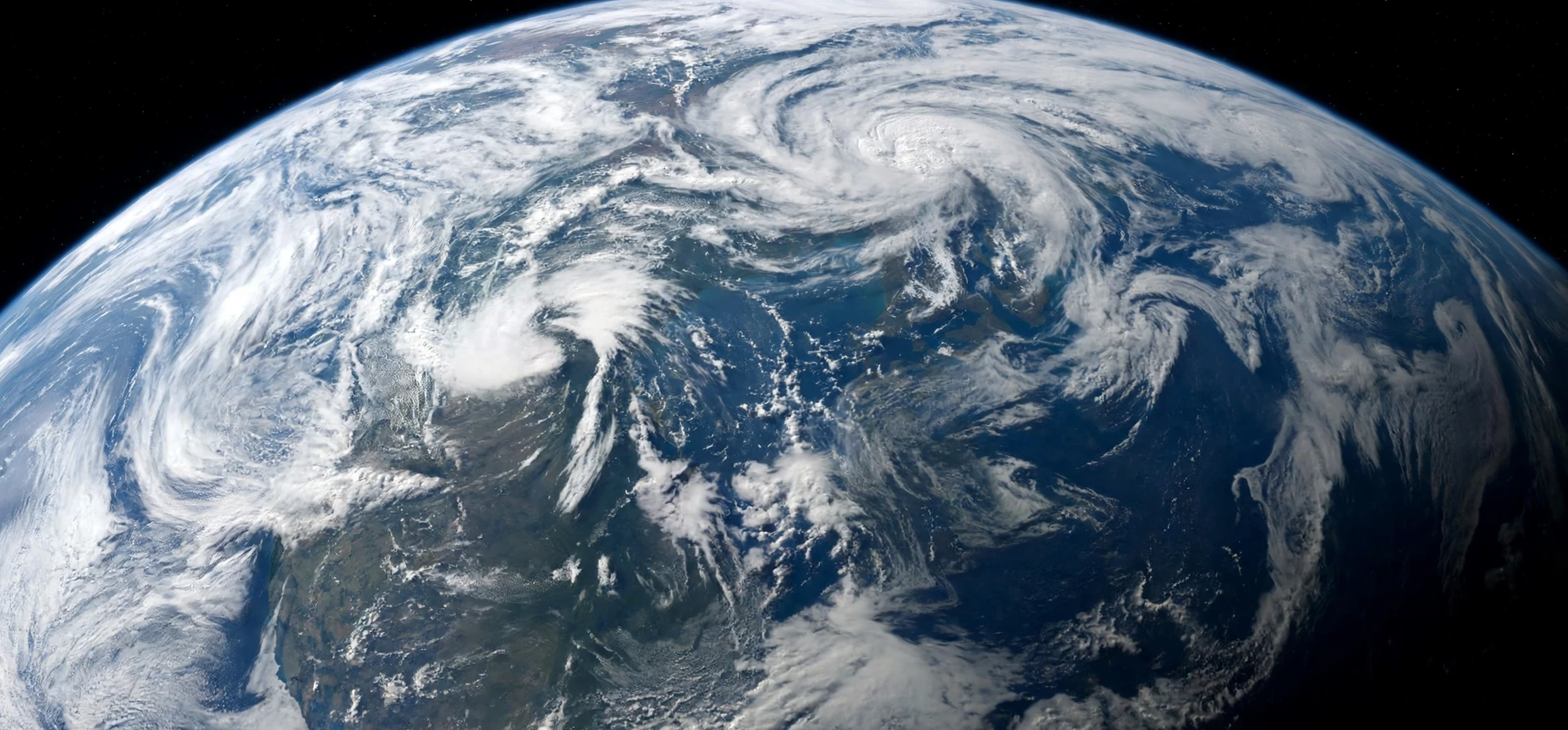
If you have ever wondered how the earth got its name, you have stumbled on one of the quiet oddities of astronomy: Earth is the only planet in our solar system that is not named after a god or goddess from Greek or Roman mythology. Mercury, Venus, Mars, Jupiter, Saturn, Uranus and Neptune all carry divine names, but our own world is called something far humbler, a word that originally meant soil, ground or dry land. This guide explains how the earth got its name, tracing it from Old English and Germanic roots through Latin and Greek alternatives, and shows why a plain, practical word survived for the most important place in the known universe.
The short answer to how the earth got its name is that Earth was not named by an astronomer at all. It was named by ordinary people, long before anyone knew it was a planet. For most of human history, Earth was not one world among many: it was the ground beneath your feet, the soil you farmed and the land you walked on. The word grew up as a common noun for that ground, and only later, when science recognised our world as a planet, did that everyday word become its proper name. That history explains both its modesty and its staying power.
How the Earth Got Its Name: The Old English Roots
The story of how the earth got its name begins in Old English, the language spoken in England roughly a thousand years ago. The Old English word was eorþe, pronounced roughly like “air-thuh”, and it meant ground, soil, dry land or the world as opposed to the heavens. It was a workaday word, used by farmers talking about fields, by poets describing the land, and by anyone who needed to distinguish the solid ground from the sea or the sky.
Eorþe itself came from an older Germanic root, and its cousins survive across northern Europe. In modern German, the word Erde still means earth, ground or soil, and in Dutch, aarde carries the same meaning. The Old Norse word jörð, also meaning earth, is the source of the name of the Norse earth goddess Jörð, which shows how closely the ideas of land and divinity were linked in Germanic culture, even though the English word itself remained a plain noun rather than a goddess’s name.
As English evolved, eorþe became erthe in Middle English and then earth in modern English. The spelling changed, the pronunciation shifted, and the meaning widened, but the core idea never left: earth is the ground, the solid place where we live. When English speakers later needed a name for their planet, they did not invent one. They simply capitalised the word they already had.
How the Earth Got Its Name in Greek and Latin
Other languages took different routes in answering how the earth got its name, and comparing them shows why the English story is unusual. In ancient Greek, the word for earth was Gaia or Ge, which was also the name of the primordial goddess who personified the Earth itself. Greek myth treated Gaia as a divine ancestor, mother of the Titans and grandmother of the Olympian gods, and the scientific prefix geo-, found in geology, geography and geometry, comes from her name. In Latin, the equivalent was Terra, also a goddess in Roman religion, and the word terra also meant land, soil or territory in everyday speech.
Both Gaia and Terra therefore did double duty: they were ordinary words for land and also names of goddesses. English, by contrast, borrowed terra only for scientific and poetic use, as in terrestrial, terrain and territory, while keeping its own Germanic word for the planet itself. That is why scientists can speak of terrestrial planets, meaning rocky worlds like Earth, Mars and Venus, while the planet we live on keeps its plain Germanic name in everyday English.
This split also explains a familiar puzzle: why do we say “the Earth” with a definite article, while we say “Mars” or “Venus” without one? The answer is that Earth began as a common noun, and the article stuck even after it became a proper name. We say “the Earth” for the same reason we might say “the ground” or “the world”: it was once a description before it was a name, and old habits of language are hard to break.
How the Earth Got Its Name Compared With Other Planets
The contrast at the heart of how the earth got its name is striking, and it comes down to when each world was recognised as a planet. Mercury, Venus, Mars, Jupiter and Saturn have been visible to the naked eye since antiquity, and ancient civilisations named them after gods because they moved across the sky like divine beings. The Romans gave them the names we still use: Mercury the messenger, Venus the goddess of love, Mars the god of war, Jupiter the king of the gods, and Saturn the god of agriculture and time.
Uranus and Neptune, discovered later with telescopes, followed the same classical pattern. Uranus was named after the Greek god of the sky, and Neptune after the Roman god of the sea, keeping the mythological tradition alive into the modern era. Earth alone breaks the pattern, because Earth was never a wandering light in the sky to be named after a god. It was home, and home already had a name: the ground itself.
The realisation that Earth is a planet came gradually, through the work of astronomers such as Copernicus, who placed the Sun at the centre of the solar system, and Galileo, whose telescope observations supported that view. By the time that idea became accepted, in the seventeenth century, the word earth was already thousands of years old, and nobody saw any reason to replace it with a god’s name. The planet kept the name its inhabitants had always used for the land beneath their feet.
How the Earth Got Its Name in Other Languages
Every language tells its own version of how the earth got its name, and the variety is fascinating. In French, the planet is la Terre, from Latin terra. In Spanish it is la Tierra, and in Italian la Terra, all from the same Latin root. In German it is die Erde, from the Germanic root shared with English. In Russian it is Zemlya, a Slavic word meaning land or soil, and in Arabic it is al-Ard, also meaning the land or the ground. Across languages, the pattern is consistent: the planet’s name comes from the local word for soil or land, not from a god.
Some languages preserve poetic alternatives. In English literature, you will meet Mother Earth, a personification of the planet as a nurturing figure, and in older poetry, phrases such as “this earthly sphere” or “the globe” were common. Science fiction has added its own variants: Terra is the standard science-fiction name for Earth, borrowed from Latin, and it appears in countless novels and films as the formal name of our world among the stars. But in everyday speech, in news reports and in classrooms, the planet remains simply Earth.
Even the scientific name of our planet’s story reflects this humility. Geologists study the Earth, geographers map it, and astronomers classify it as a terrestrial planet, all using words that trace back to Gaia, Terra or eorþe. Three different ancient words for the same patch of ground have all survived into modern science, each in a different corner of the vocabulary.
| Planet | Named after | Origin of the name |
|---|---|---|
| Earth | The ground itself | Old English eorþe, meaning soil or land |
| Mercury | Roman messenger god | Visible since antiquity, fast-moving |
| Venus | Roman goddess of love | Brightest object after Sun and Moon |
| Mars | Roman god of war | Distinctive red colour |
| Jupiter | King of the Roman gods | Largest planet in the solar system |
| Saturn | Roman god of agriculture | Slow movement across the sky |
| Neptune | Roman god of the sea | Blue colour, named in the telescope era |
How the Earth Got Its Name and Why It Still Matters
There is something fitting, in the story of how the earth got its name, about the fact that the only known world with life is named after dirt. The name Earth reminds us that our planet was understood first as a place to live, not as an object to observe. Long before telescopes, people knew the earth as the soil that fed them, the ground that held their homes, and the land they travelled across. Science later revealed that this ground is a planet spinning through space, but the name never changed, and that continuity connects modern astronomy to the everyday experience of every generation before it.
The name also carries a quiet lesson about language. Words that begin as ordinary descriptions can become proper names simply by being used long enough and widely enough. Earth, the Moon and the Sun all followed this path: they were once common nouns for things everyone could see, and they became names by capitalisation and habit rather than by decree. No committee voted on them, no astronomer proposed them, and no mythology supplied them. They are names that grew, like the languages that carry them.
If you enjoy the stories behind everyday words, you may also like our guides to name meanings, including the meaning of the name Bowen, the meaning of the name Cassian, and the meaning of the name Adrian.
How the Earth Got Its Name: Questions Children Ask
Teachers report that how the earth got its name is one of the most common questions children ask in astronomy lessons, and it is a good one, because it opens up bigger ideas about language and science. A useful classroom answer is to start with the ground itself: ask pupils what they call the soil in a garden, and then explain that the people who first used the word earth meant exactly that. The story of how the earth got its name is therefore a story about how ordinary words grow into scientific ones, and it helps children see that science does not invent all of its vocabulary from scratch.
Another question that follows naturally is why the other planets have grander names, and here the story of how the earth got its name becomes a history lesson too. Ancient peoples named the bright wandering lights after gods because those lights seemed divine, but they never needed a god’s name for the ground beneath their feet. Explaining how the earth got its name in those terms gives pupils a memorable reason to remember both the planets’ names and the difference between the world we live on and the worlds we observe.
How the Earth Got Its Name: Frequently Asked Questions
How did the planet Earth get its name?
Earth takes its name from the Old English word eorþe, meaning ground, soil or dry land. Because people knew the ground long before they knew Earth was a planet, the everyday word for land simply became the planet’s proper name.
Why is Earth not named after a god like other planets?
The other planets were named after gods because ancient peoples saw them as wandering lights in the sky. Earth was never a light in the sky to its inhabitants: it was home, and it already had a name, the word for the ground itself.
What is Earth called in Latin and Greek?
In Latin, Earth is Terra, and in Greek it is Gaia or Ge. Both words also mean land or soil, and both survive in modern English in words such as terrestrial, terrain, geology and geography.
Why do we say “the Earth” but just “Mars”?
Because Earth began as a common noun, the definite article stuck even after it became a proper name. Mars and Venus were proper names of gods from the start, so they never needed an article.
Conclusion
How the earth got its name turns out to be a story about ordinary language doing an extraordinary job. A Germanic word for soil, spoken by farmers and poets a thousand years ago, survived spelling changes, the Norman Conquest and the scientific revolution to become the name of a planet. It stands alone among the planets, unconnected to any god, and that is precisely its charm: our world is named after the ground we stand on, the soil that grows our food, and the land we call home. The next time you look up at Mars or Venus in the night sky, remember that the planet beneath your feet carries the humblest name of all, and that it earned that name simply by being the place where human life began.



