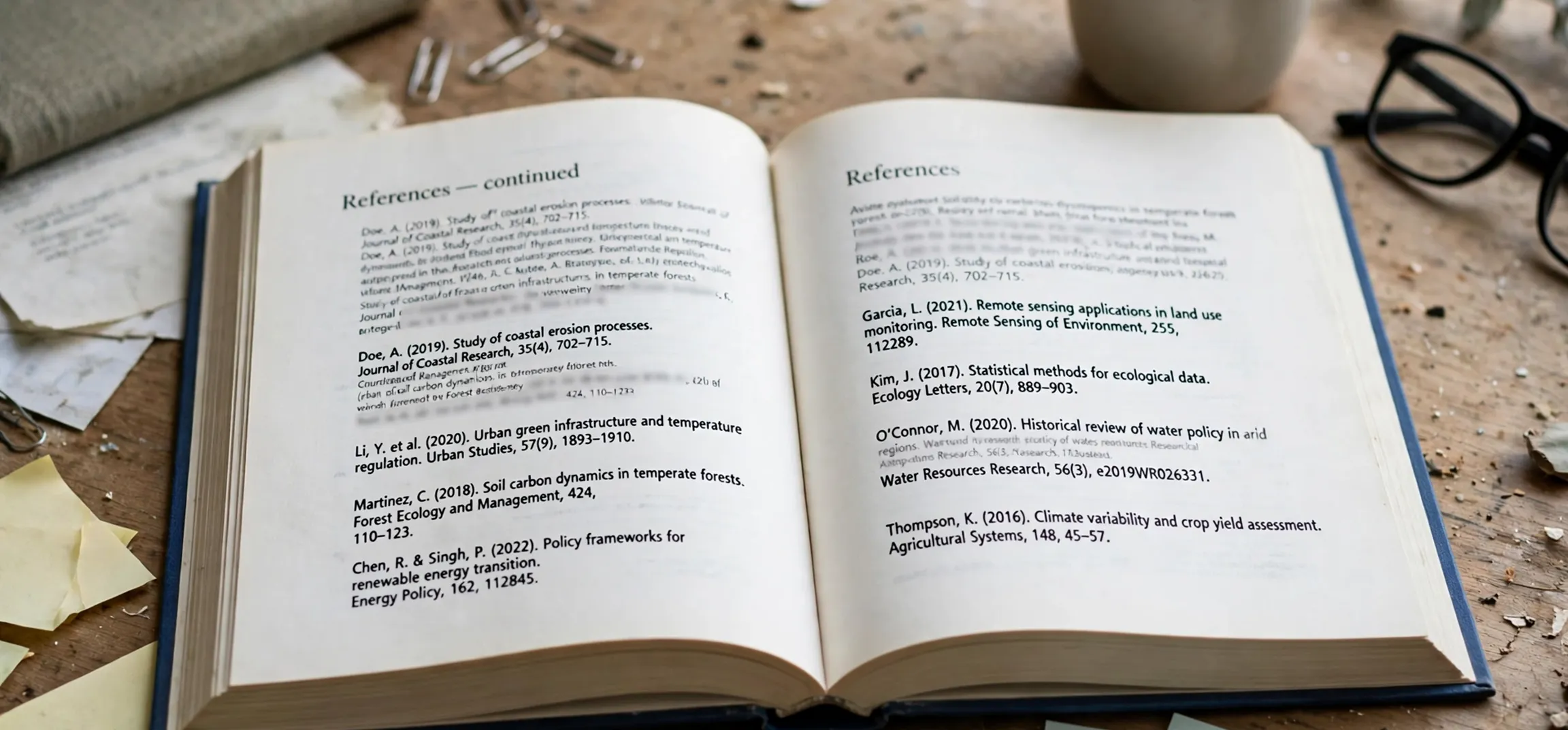
Learning how to cite a movie APA style is an essential skill for students, researchers and anyone writing academic work that references film. The American Psychological Association (APA) format treats a film as a work with a director, a production company and a year of release, and it gives clear rules for both the in-text citation and the reference list entry. This guide walks through the rules step by step, with examples for films, streaming releases, and films with more than one director.
When you cite a movie APA style, the two parts of the citation work together. The in-text citation is a brief note inside your writing that points the reader to the full entry, while the reference list entry at the end of your work gives the complete details. Both must match: the name and year in your text must be the same name and year that begin the reference entry. Getting this pairing right is the most common stumbling block, and it is easy to fix once you know the pattern.
Cite a Movie APA: In-Text Citation
The basic APA in-text citation for a film uses the director’s surname and the year of release, in parentheses at the end of the sentence or in the narrative of the sentence itself. For example, a parenthetical citation looks like this: (Nolan, 2010). A narrative citation weaves the name into the sentence: Nolan (2010) uses shifting timelines to explore memory and guilt. Both forms are correct, and the choice depends on the flow of your writing.
If the film has two directors, name both in every citation, joined by an ampersand in parentheses or the word “and” in narrative text: (Coen & Coen, 2007) or Coen and Coen (2007) argue through character rather than exposition. For three or more directors, APA style uses the first director’s surname followed by “et al.” from the first citation onwards: (Russo et al., 2019). This keeps long credits manageable while still pointing clearly to the reference entry.
When you quote or refer to a specific moment in a film, add a timestamp to help your reader find the scene. APA style recommends a timestamp in the format hours:minutes:seconds, for example (Nolan, 2010, 1:12:30). Timestamps are particularly useful for long films and for scenes that carry the weight of your argument. They are not required for general references to a whole film, but they strengthen any close analysis.
Cite a Movie APA: Reference List Entry
The reference list entry for a film follows a fixed order: director, year, title in italics, format description in square brackets, and production company. The standard template is: Director, A. A. (Director). (Year). Title of film [Film]. Production Company. Notice that only the director is named as author, even though hundreds of people worked on the film. APA style assigns authorship of a film to its director.
Here is a worked example: Nolan, C. (Director). (2010). Inception [Film]. Warner Bros. Pictures. The director’s surname comes first, followed by initials. The year appears in parentheses immediately after the director credit. The film title is italicised and written in sentence case, meaning only the first word and proper nouns are capitalised. The bracketed description “[Film]” tells the reader the medium, and the production company closes the entry.
For a film with two directors, list both names in the order they appear in the credits: Coen, J., & Coen, E. (Directors). (2007). No Country for Old Men [Film]. Paramount Vantage. Note that the credit changes from “(Director)” to “(Directors)” when more than one director is named. For three or more directors, list up to twenty names in the reference entry, following the same pattern used for multi-author books and articles.
Citing Films From Streaming Services
Streaming has changed how most people watch films, but the APA rules stay largely the same. If you watched a film on a streaming platform, you still cite the director, year and production company, and you do not need to name the streaming service in most cases. The production company is the organisation that made the film, not the platform that delivered it.
There is one exception worth knowing. If the film was produced by the streaming service itself, that service is the production company. A film released as a streaming original would therefore name the platform as the production company in the reference entry. In all other cases, the original production company is the correct credit, even if you personally watched the film online.
Some students wonder whether to add a URL for a streaming film. APA style does not require a URL for a film, because films are widely available works rather than web pages. Adding a link to a streaming catalogue page can be helpful in informal writing, but it is not part of the standard reference format and should not replace the production company credit.
Common Film Citation Situations
| Situation | In-text citation | Reference entry approach |
|---|---|---|
| One director | (Nolan, 2010) | Director, A. A. (Director). (Year). |
| Two directors | (Coen & Coen, 2007) | Both names, credit “(Directors)”. |
| Three or more directors | (Russo et al., 2019) | List up to twenty directors. |
| Specific scene | (Nolan, 2010, 1:12:30) | Add timestamp in text only. |
| Streaming original | (Director, Year) | Streaming service as production company. |
| Film with a different release year | Use the year of the version watched | Match the year to the version cited. |
Release years can cause confusion when a film premiered at a festival in one year and reached general release in the next. APA style advises using the year of the version you watched. If you are unsure, the year shown in the film’s credits or on the distributor’s catalogue page is a reliable guide. Consistency matters more than anything: the year in your text and the year in your reference list must always agree.
Mistakes to Avoid When You Cite a Movie APA
The most frequent mistake is crediting the wrong person as author. Actors, screenwriters and producers all contribute to a film, but APA style names the director as the author of the reference entry. Another common error is italicising the wrong element: the film title is italicised, but the bracketed format description is not. A third error is forgetting the production company, which leaves the entry incomplete.
Students also sometimes confuse APA film citations with citations for television episodes. A television episode is cited with the writer and director, the episode title, and the series title, which is a different pattern. If your source is a single episode rather than a complete film, check the television episode rules separately rather than forcing the film template to fit.
Finally, remember that every in-text citation must have a matching reference entry, and every reference entry must be cited somewhere in your text. Orphan entries and uncited references are among the easiest marks to lose in academic writing, and a final cross-check before submission will catch them.
Citing a Film You Discuss at Length
When a film is central to your essay, you will cite it many times, and a few habits will keep your writing clean. Cite the film in full the first time you mention it, then use short parenthetical reminders only where the reader might lose track of which work you mean. If you discuss two films by the same director from the same year, add a distinguishing letter to the year in both the text and the reference list, for example (Nolan, 2010a) and (Nolan, 2010b), with matching letters in the entries.
It is also good practice to name the film in your prose on first mention, rather than relying on the citation alone. A sentence such as “In Inception (Nolan, 2010), dreams become architecture” is clearer than a bare citation attached to a general claim. Your reader should never have to guess which film a paragraph is about, especially in essays that compare several works.
When you analyse dialogue, describe the scene in your own words first and then quote only the lines that matter. Long transcribed passages rarely strengthen an argument, and they can raise questions about accuracy if the transcription differs from the released subtitles. A short, well-chosen quotation with a timestamp is more persuasive than a page of dialogue, and it keeps the focus on your analysis rather than on the film’s script.
Ordering Your Reference List
Reference lists in APA style are ordered alphabetically by the first author’s surname. Films sit in the same alphabetical sequence as books and articles, so a film directed by Nolan appears under N alongside any other works by authors with that surname. If you cite several works by the same director, order them by year, earliest first, and add the letter suffixes described above when years repeat.
Double-check the spelling of every director’s name against the film’s credits. Accented characters and hyphenated surnames should be reproduced exactly as credited, because the reference list is alphabetical and a misspelling can place an entry in the wrong position. A final alphabetical read-through of the list, comparing each entry against its in-text citations, is one of the most valuable proofreading steps in any academic paper.
Frequently Asked Questions
Do I cite the director or the production company in the text?
You cite the director’s surname and the year in the text. The production company appears only in the reference list entry.
How do I cite a movie APA style if I watched it on a streaming service?
Use the standard film format with the director, year and original production company. Name the streaming service as the production company only if it produced the film.
What if a film has no clear single director?
List the directors who are credited, up to twenty names, and use the first name plus “et al.” in the text for three or more directors.
Should I include a timestamp in every film citation?
No. Timestamps are recommended when you refer to a specific scene, but they are not needed for general references to a whole film.
Conclusion
To cite a movie APA style, name the director and year in your text and give the full director, year, italicised title, format and production company in your reference list. Keep the two parts consistent, add timestamps for specific scenes, and remember that the director — not the cast — is the author of the entry. With those rules in place, film citations become one of the simplest parts of academic writing.
For more help with academic writing, see our guides on word meanings in context, literary terms explained, and name meanings and origins.