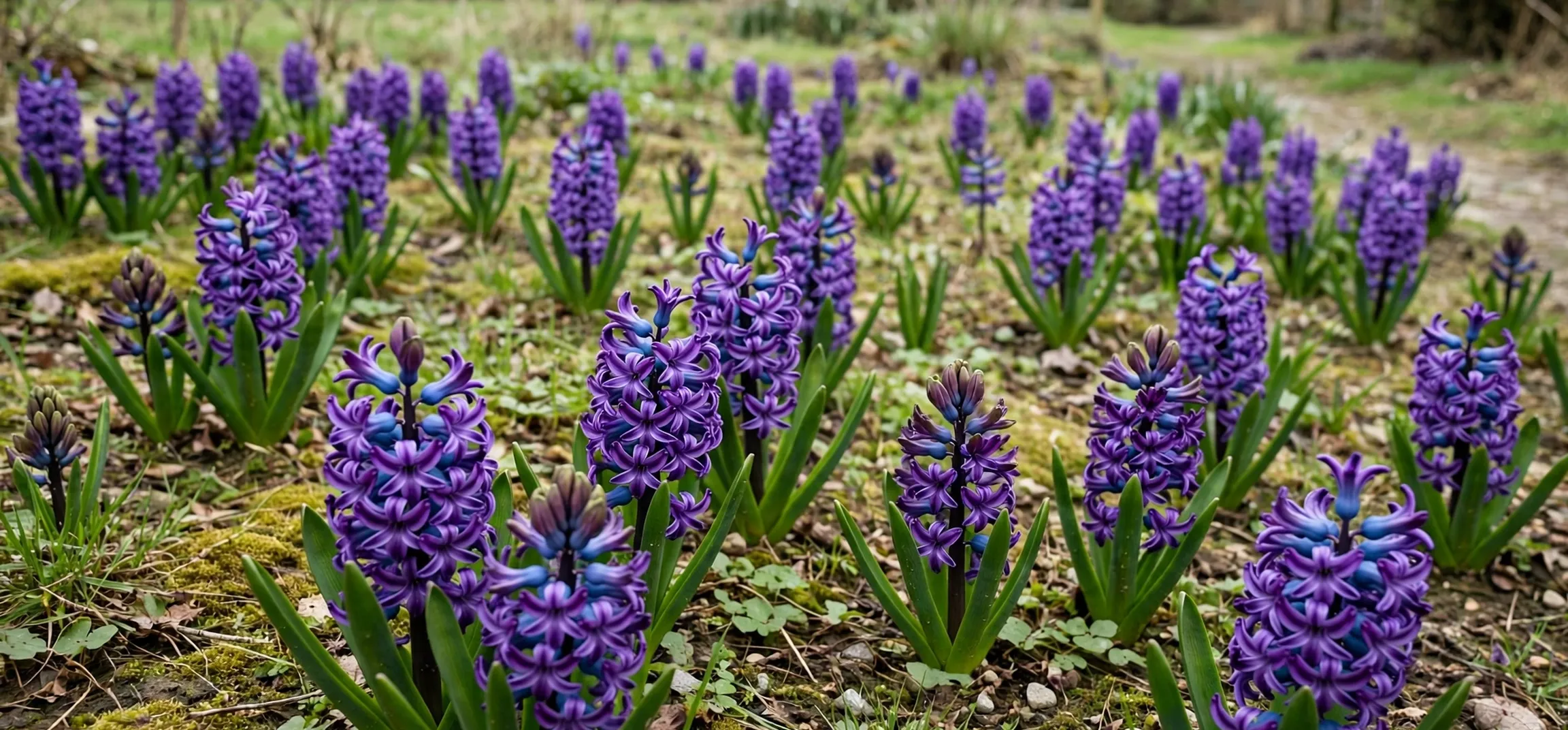
If you have ever searched for the meaning of hyacinth name, you are probably looking for more than a one-line definition. The meaning of hyacinth name reaches back to ancient Greek myth, to a much-loved spring flower, and to centuries of use as a given name in several cultures. In short, Hyacinth is a flower name with Greek roots, closely linked to the myth of Hyacinthus, and it carries associations with beauty, sincerity, constancy and spring renewal. This guide explains the meaning of hyacinth name in full, from its origin and pronunciation to its symbolism, colour meanings, variants, famous bearers in public record, and practical points for parents who are considering the name today.
Hyacinth is unusual among flower names because it began as a masculine name in Greek legend and only later became widely used for girls as well. That long history gives it a depth that many modern flower names do not have. It sounds elegant, it is easy to recognise, and it has a clear story behind it, which is part of its lasting appeal. Readers who want a quick answer can stop at the summary below, while readers who want the full picture will find the history, the language notes and the symbolism explained in the sections that follow.
Meaning of Hyacinth Name at a Glance
At its simplest, the meaning of hyacinth name is the name of the hyacinth flower, which takes its name from the Greek Hyakinthos. In Greek myth, Hyacinthus was a beautiful youth loved by the god Apollo, and after his death a flower sprang from his blood. The flower was said to bear markings that recalled grief and remembrance. Over time, the flower name became a personal name, first in the ancient world and later in Christian tradition, where several saints bore the name Hyacinth. In modern English use, Hyacinth is most often understood as a refined, old-fashioned flower name with classical roots.
| Feature | Detail |
|---|---|
| Origin | Greek, from Hyakinthos |
| Core meaning | The hyacinth flower; linked in myth to beauty and remembrance |
| Gender use | Historically masculine in Greek and saintly tradition; now used for girls and boys |
| Pronunciation | HY-a-sinth |
| Common short forms | Hyacinth is usually used in full, with Hy as an informal short form |
| Flower symbolism | Sincerity, constancy, playfulness and spring renewal, varying by colour |
The table above gives the essential facts, but the meaning of hyacinth name is richer than a single dictionary entry. The sections below look at where the name came from, how it changed over time, and what the flower itself symbolises in different traditions.
Origin and History of the Name Hyacinth
The name Hyacinth comes from the Greek Hyakinthos, the name of the youth in myth and of the flower associated with him. Scholars note that the word itself may be older than Greek, possibly borrowed from an earlier language of the eastern Mediterranean, which is true of several plant names. What is certain is that by the classical period the name was firmly attached to both the myth and the flower, and it entered Latin as Hyacinthus before passing into English and other European languages.
In the ancient world, Hyacinthus was a Spartan prince of great beauty. The best-known version of his story, told by the Roman poet Ovid, says that Apollo and Hyacinthus were playing at throwing the discus when the discus struck Hyacinthus and killed him. Apollo, grief-stricken, caused a flower to grow from the youth’s blood. The flower’s petals were said to carry markings shaped like the Greek letters for a cry of grief. Whether or not readers take the myth literally, it explains why the hyacinth has long been linked with sorrow, remembrance and the return of life in spring.
Later, the name Hyacinth appears in Christian history. Saint Hyacinth of Poland, a thirteenth-century Dominican missionary, is the best-known bearer, and his name helped to keep Hyacinth in use in Poland and elsewhere in Europe. In Poland the masculine form Jacek is the familiar equivalent, while Hyacinth itself remained the formal, Latinate form. This saintly connection gave the name a second life quite separate from the flower, and it helps to explain why Hyacinth has survived for so many centuries rather than fading as a purely mythological curiosity.
Meaning of Hyacinth Name in Language and Pronunciation
In everyday English, the meaning of hyacinth name is simply understood as a flower name, much like Rose, Lily or Violet. When parents choose it today, they usually mean the flower first and the myth second, even if they are aware of both. The pronunciation is HY-a-sinth, with the stress on the first syllable and a soft final sound. Some speakers soften the middle syllable further, but the three-syllable form is standard in British English.
Spelling variants are limited, which is an advantage for a child who will often have to spell the name aloud. Hyacinth is the standard English spelling. Hyacinthus is the Latin and Greek form, used in classical and botanical contexts. In French the form is Hyacinthe, and in some older English records the name appears as Hyacintha for girls. The flower itself is a member of the asparagus family in modern botany, grown from bulbs and prized for its dense spikes of fragrant flowers in spring. That botanical identity matters, because many people meet the name first as a garden plant and only later learn its mythological background.
For readers comparing flower names, it is worth noting that Hyacinth sits in a different register from short, everyday flower names. It is longer, more formal and more literary. That formality is part of its charm for parents who want a distinctive name that still has an obvious, pleasant meaning. It also pairs well with short middle names, which balance its three syllables, and it shortens naturally in family use, though most bearers in public record are known by the full form.
Symbolism and Colour Meanings of the Hyacinth Flower
Flower symbolism, sometimes called the language of flowers, gave the hyacinth a set of meanings in the Victorian period that still influence how the flower is understood today. In general, the hyacinth stands for sincerity and constancy, a fitting pair of qualities for a spring flower that returns reliably year after year from the same bulb. It is also linked with playfulness and sport, a direct echo of the discus game in the myth of Hyacinthus.
Colour changes the message, as it does with many flowers. Purple hyacinths are traditionally linked with sorrow and with asking forgiveness, which reflects the grief in the myth. White hyacinths suggest loveliness, purity and prayer. Pink hyacinths are linked with playfulness and light-hearted affection. Blue hyacinths suggest constancy and sincerity, while yellow hyacinths are linked with jealousy in older flower books, a meaning that modern gardeners rarely observe. None of these meanings is a fixed rule, and different flower guides disagree on details, but together they show why the hyacinth has been a favourite for bouquets, spring displays and remembrance planting.
In the garden, hyacinths are among the most fragrant spring bulbs. They are forced indoors for winter colour in many households, and they are planted in borders and containers for a strong display in March and April. Their scent is sweet and powerful, so a small number of stems can fill a room. That sensory quality reinforces the name’s associations: a Hyacinth is expected, in the popular imagination, to be vivid, memorable and full of presence, much like the flower itself.
Hyacinth in Literature and Popular Culture
Hyacinth has appeared in literature and on screen as a name chosen to suggest refinement, sometimes with gentle comedy. The best-known fictional bearer in British culture is Hyacinth Bucket, the social-climbing central character of the sitcom Keeping Up Appearances, who insists that her surname is pronounced Bouquet. The character made the name familiar to a whole generation of viewers, and she also gave it a comic association that parents should be aware of. For some families that association is a drawback, while for others it is simply part of the name’s cultural history and no barrier at all.
Beyond that famous example, Hyacinth appears in classical retellings, in poetry about spring, and in garden writing. Poets have used the hyacinth as an image of spring beauty and of brief, intense life, echoing the myth in which a young life ends suddenly and a flower takes its place. That literary life keeps the name in circulation even when it is not high on popularity lists, and it gives a child named Hyacinth a ready answer to the question of where the name comes from.
Hyacinth as a Baby Name Today
As a baby name today, Hyacinth is rare, distinctive and unmistakably classical. It does not appear near the top of popularity lists in the United Kingdom or the United States, which is precisely why some parents choose it. A rare name avoids the problem of several children in the same class sharing a name, and it gives a child a name with a story to tell. The trade-off is that the name will sometimes need spelling and explaining, and the Keeping Up Appearances association may come up in conversation.
Parents weighing the name often consider its versatility. Hyacinth works as a first name with a short, plain middle name, and it also works as a middle name alongside a shorter first name. Sibling names that sit well with it tend to be other classical or flower names, such as Iris, Calla, Daphne, Jasper or Felix, though there is no rule here and personal taste matters most. The name suits a formal style, and it ages well: it sounds as appropriate for an adult professional as it does for a child, which is not true of every distinctive name.
If you are comparing similar names, you may find our guides to other name meanings helpful, including the meaning of the name Blaise and the meaning of the name Annalise. For another elegant classical choice, see also the meaning of the name Madeline. Each of these guides follows the same approach as this one, giving origin, history and symbolism rather than a bare definition.
Frequently Asked Questions About the Meaning of Hyacinth Name
What does the name Hyacinth mean?
The meaning of hyacinth name is the hyacinth flower, from the Greek Hyakinthos. In myth the flower grew from the blood of Hyacinthus, a youth loved by Apollo, so the name also carries associations with beauty, grief and spring renewal.
Is Hyacinth a boy name or a girl name?
Historically Hyacinth was masculine, in Greek myth and in the tradition of Saint Hyacinth. In modern English use it is given to both girls and boys, though in recent decades it has been more often used for girls in English-speaking countries.
How do you pronounce Hyacinth?
Hyacinth is pronounced HY-a-sinth, with the stress on the first syllable. The final sound is a soft th, as in the flower name, not a hard t.
What does a purple hyacinth symbolise?
In the traditional language of flowers, a purple hyacinth symbolises sorrow and asking forgiveness. White hyacinths suggest loveliness and prayer, pink hyacinths suggest playfulness, and blue hyacinths suggest constancy.
Meaning of Hyacinth Name: Choosing It With Confidence
Anyone still weighing the choice should return to the central question behind the meaning of hyacinth name: does the story matter to you, or only the sound? If the story matters, Hyacinth is a strong choice, because few flower names carry a myth, a saint and a garden tradition at once. The meaning of hyacinth name also helps in practical ways, since it gives a child a ready explanation for assemblies, forms and introductions, and it gives family members a flower to plant as a living link to the name. A spring bulb, a bunch of cut hyacinths in season, or a photograph of the flower in bloom can all make the meaning tangible for a young child. Finally, remember that the meaning of hyacinth name is not a burden of formality: like many classical names, it shortens easily at home, lengthens gracefully in formal settings, and travels well across English-speaking countries, where the flower is widely recognised.
Conclusion
The meaning of hyacinth name is a flower name with a classical soul. From the Greek Hyakinthos and the myth of Apollo and Hyacinthus, through Saint Hyacinth and centuries of garden use, the name has kept its link to beauty, sincerity and the return of spring. It is rare enough to feel distinctive, familiar enough to be recognised at once, and rich enough in story to reward anyone who asks where it comes from. Whether you are choosing a name, researching a family name, or simply curious about a spring flower, Hyacinth offers a history that is as colourful as the flower itself, and a meaning that has endured for more than two thousand years.