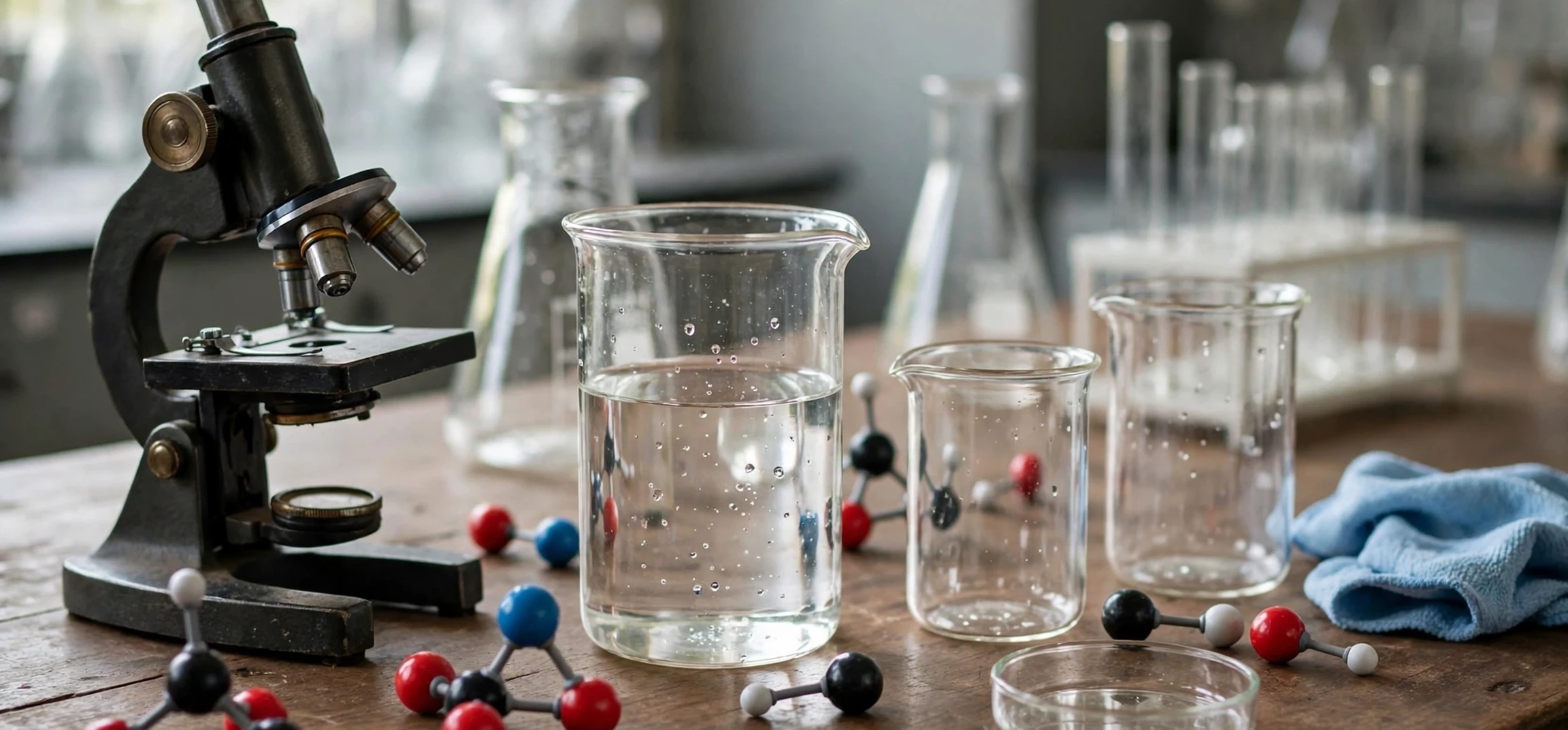
Inhibitor definition biology is a phrase that students meet early in science lessons, and it returns again and again in topics ranging from enzymes to cell signalling and medicine. Inhibitor definition biology, in plain language, is the definition of an inhibitor in a biological context: a substance, molecule, or condition that slows down, reduces, or blocks a biological process. The process may be a chemical reaction carried out by an enzyme, a signal passed between cells, or the growth and activity of an organism. This guide explains inhibitor definition biology clearly, with examples, types, and common confusions, in general educational language that supports classroom learning without giving medical or treatment advice.
It helps to start with the everyday sense of the word inhibit, which means to hold back or restrain. In biology, that holding back is specific: something interferes with a normal biological activity so that the activity happens more slowly, less strongly, or not at all. The inhibitor itself may be a natural molecule made by a living thing, a substance produced in a laboratory, or even a change in conditions such as temperature or acidity. What matters is the effect: the biological process is reduced compared with what would happen without the inhibitor. Keeping that effect-based definition in mind makes the many examples easier to understand.
Inhibitor Definition Biology: The Core Idea
The core inhibitor definition biology can be stated in one sentence: an inhibitor is an agent that decreases or prevents the rate or extent of a biological process. In enzyme biology, the most common context, an inhibitor is a molecule that binds to an enzyme and reduces its activity. Enzymes are proteins that speed up chemical reactions in living things, and they do so by providing a suitable site where reactants, called substrates, can bind and react. An inhibitor interferes with that process, so fewer reactions happen in a given time, or the reactions happen more slowly. That interference can be temporary or long-lasting, weak or strong, depending on the inhibitor and the enzyme.
Beyond enzymes, the same idea applies more widely. In cell signalling, an inhibitor may block a receptor so that a signal cannot be received. In gene regulation, an inhibitor may prevent a gene from being switched on. In ecology and microbiology, an inhibitor may slow the growth of bacteria or other organisms. In each case, the inhibitor definition biology remains the same in structure: something reduces a biological activity. The details change with the system, but the central concept of holding back a process does not.
Why Inhibitors Matter in Living Systems
Living systems need both acceleration and restraint. Enzymes accelerate reactions that would otherwise be too slow for life, but those reactions must also be controlled, switched off when they are not needed, and balanced against other reactions. Inhibitors are part of that control system. Natural inhibitors inside cells help regulate metabolism, prevent wasteful activity, and protect cells from damage. Without such restraint, processes could run unchecked, use up resources, or produce harmful amounts of products. Inhibitors therefore belong to the normal toolkit of regulation, not only to medicine or laboratory work.
Inhibitor Definition Biology: Types of Enzyme Inhibition
Enzyme inhibition is usually divided into two broad types, competitive and non-competitive, and understanding the difference is a key part of inhibitor definition biology. In competitive inhibition, the inhibitor competes with the substrate for the same binding site on the enzyme, called the active site. Because the inhibitor occupies that site, the substrate cannot bind as easily, and the reaction slows down. If more substrate is added, it can sometimes outcompete the inhibitor, which is why competitive inhibition is often described as reversible by increasing substrate concentration. The inhibitor and substrate are, in effect, rivals for the same place.
In non-competitive inhibition, the inhibitor binds to a different site on the enzyme, called an allosteric site, and changes the shape of the enzyme so that it works less well, even when the substrate is bound. Adding more substrate does not fully overcome this effect, because the problem is not competition for the active site but a change in the enzyme itself. Some textbooks also describe uncompetitive inhibition, in which the inhibitor binds only to the enzyme-substrate complex, and mixed inhibition, which combines features of both types. For general learning, the competitive versus non-competitive contrast is the most useful starting point, and the other types can be seen as variations on those themes.
Reversible and Irreversible Inhibition
Another useful distinction is between reversible and irreversible inhibition. A reversible inhibitor binds temporarily and can detach, allowing the enzyme to work again. An irreversible inhibitor binds strongly or permanently, often by forming a lasting chemical bond, so the enzyme remains inactive until it is replaced by new enzyme molecules. Many natural regulatory inhibitors are reversible, because cells need to switch processes on and off. Some laboratory and medical inhibitors are designed to be long-lasting, but the general educational point is simpler: reversibility describes whether the effect can be undone by removing the inhibitor.
Inhibitor Definition Biology: Everyday and Classroom Examples
Classroom examples make the concept concrete. One classic example is the way certain substances slow enzyme activity in digestion or metabolism experiments, allowing students to measure reaction rates with and without the inhibitor. Another example is feedback inhibition, in which the end product of a metabolic pathway inhibits an earlier enzyme in that pathway. That feedback loop prevents overproduction: when enough product has been made, the pathway slows down, and when product levels fall, the pathway speeds up again. Feedback inhibition is a clear illustration of how inhibitors support balance in living systems.
In wider biology, inhibitors appear in many contexts. Some plants produce chemicals that inhibit the growth of competing plants nearby. Some microbes produce substances that inhibit other microbes, an idea that underlies the discovery of many antibiotics in general terms. In the human body, natural inhibitors help regulate blood clotting, digestion, and hormone signalling, ensuring that powerful processes do not continue unchecked. These examples share the same logic: an inhibitor reduces a process that would otherwise continue, and that reduction serves a regulatory or protective purpose. This article gives general education only and does not recommend any substance for health purposes.
Inhibitors in Medicine: General Education Only
In medicine, the idea of inhibition is widely used in general terms. Many medicines work by inhibiting an enzyme, a receptor, or another biological target, thereby reducing a process that contributes to symptoms or disease progression. For example, general educational discussions often mention medicines that inhibit enzymes involved in cholesterol production, blood clotting, or inflammation, without naming specific treatments for any reader. The key point for learners is conceptual: if a process is overactive or harmful, inhibiting it can be a useful strategy, provided the inhibition is selective, controlled, and studied for safety.
That general point must not be turned into personal advice. Whether any inhibitor is suitable for a particular person depends on diagnosis, other conditions, medicines, and clinical judgement, and only a qualified clinician can make that assessment. Readers should never start, stop, or change a medicine based on a general article about inhibitor definition biology. If you have questions about a medicine you take, discuss them with your clinician or pharmacist, who can explain how it works in your case and what to watch for. General education explains concepts; personal care requires individual assessment.
| Type of Inhibition | Where the Inhibitor Binds | Effect in Plain Language |
|---|---|---|
| Competitive | The active site, competing with the substrate | Reaction slows; more substrate can sometimes overcome it |
| Non-competitive | A different site, changing enzyme shape | Reaction slows even when substrate is present |
| Uncompetitive | Only the enzyme-substrate complex | Reaction slows as the complex is trapped |
| Feedback inhibition | An earlier enzyme in a pathway | End product signals the pathway to slow down |
Inhibitor Definition Biology: Common Confusions to Avoid
Several confusions arise when students first meet inhibitor definition biology. One is confusing an inhibitor with a substrate. A substrate is the molecule that an enzyme acts upon, while an inhibitor is the molecule that reduces the enzyme activity. Another confusion is between inhibition and denaturation. Denaturation means that a protein loses its shape due to heat, acidity, or other harsh conditions, which may also stop it working, but it is a structural change rather than the specific binding effect usually meant by inhibition. A third confusion is assuming that all inhibitors are harmful. In living systems, many inhibitors are normal regulators, and in medicine, inhibition is a common therapeutic strategy when carefully controlled.
Another confusion involves activators, which do the opposite of inhibitors. An activator increases enzyme activity or promotes a biological process, while an inhibitor decreases it. Keeping those two words apart helps when reading diagrams of metabolic pathways, where plus signs often mark activation and minus signs mark inhibition. Students should also note that the same substance can inhibit one process and have no effect, or a different effect, on another, because inhibition depends on the specific target. That specificity is why general definitions must be paired with the particular system being studied. For a related science term in plain language, see our guide to technical meaning explained.
Inhibitor Definition Biology: Frequently Asked Questions
What is inhibitor definition biology in one sentence?
Inhibitor definition biology is the definition of an inhibitor as an agent that slows down, reduces, or blocks a biological process, most commonly by reducing enzyme activity.
What is the difference between competitive and non-competitive inhibition?
Competitive inhibition involves competition for the active site, while non-competitive inhibition involves binding elsewhere and changing the enzyme shape, so adding more substrate does not fully overcome it.
Are inhibitors always artificial?
No. Many inhibitors are natural molecules made by living things for regulation and protection, while others are designed in laboratories for research or medicine.
Does inhibition always mean complete blocking?
No. Inhibitor definition biology covers a range from slight slowing to complete blocking, depending on the inhibitor, its concentration, and the target process.
Conclusion: Inhibitor Definition Biology in Plain Terms
In summary, inhibitor definition biology describes any agent that holds back a biological process, whether by competing for an enzyme active site, changing enzyme shape, blocking a receptor, or regulating a pathway through feedback. The concept unifies examples from metabolism, cell signalling, ecology, and medicine, and it highlights a central theme of biology: living systems need restraint as much as acceleration. Understanding competitive and non-competitive inhibition, reversible and irreversible effects, and the difference between inhibitors, substrates, and activators gives learners a strong foundation for more advanced topics. Remember that this guide is general education only, and questions about personal health or medicines belong with a qualified clinician. For further context on enzyme-related language, you may also read our guide to elevated liver enzymes meaning. With the core inhibitor definition biology clear, the many examples in textbooks and lessons should now fit into a single, coherent picture.



