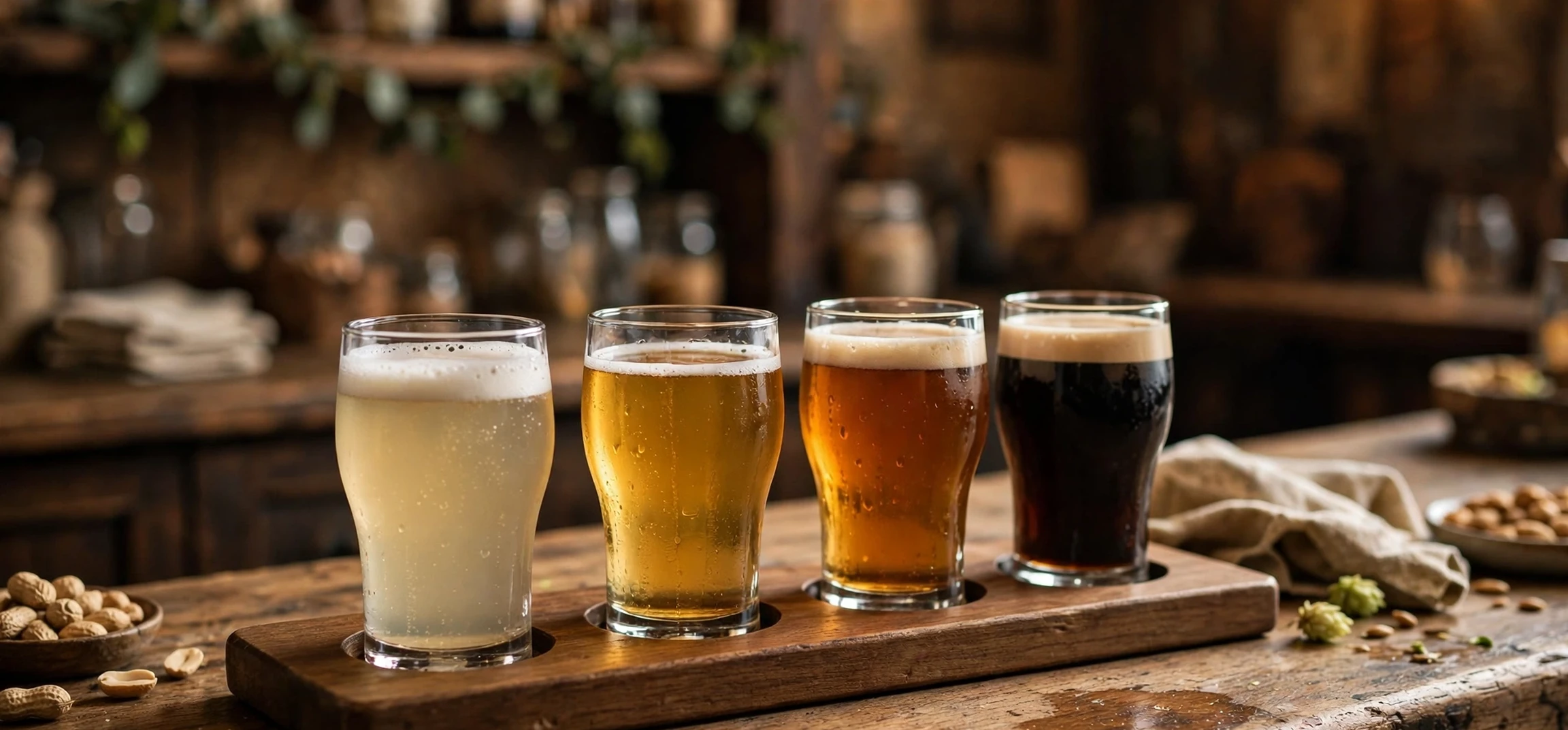
Many readers search for what is ipa beer mean because they see the letters IPA on a menu, a bottle label, or a bar list and want a plain explanation without jargon. In short, IPA stands for India Pale Ale, a style of pale ale known for a pronounced hop character, a firmer bitterness than many lighter beers, and aromas that are often described as citrus, pine, floral, or tropical, depending on the hops used. This guide explains what is ipa beer mean in general educational terms: where the style came from, how it tastes in broad terms, how its main substyles differ, and how to read a label without any encouragement to drink or any endorsement of a particular brand.
The letters themselves are the starting point, but they do not tell the whole story. Pale ale is a broad family of beers brewed with pale malt, and India Pale Ale developed as a stronger, more heavily hopped version within that family. Over time, brewers in different countries adapted the idea, so the modern IPA shelf includes a wide range of strengths, colours, and hop expressions. Understanding the style therefore means understanding a family of related beers, not a single fixed recipe, and this guide keeps that family view throughout.
A short answer to what is ipa beer mean is India Pale Ale, but the style behind the letters is what this guide explores.
Explaining what is ipa beer mean letter by letter
Explaining what is ipa beer mean letter by letter begins with India, which refers to the historical trade route and export story associated with the style, rather than to a claim that the beer is brewed in India today. Pale refers to the paler malt used, which gives a lighter colour than dark beers brewed with roasted malt. Ale refers to the fermentation family: ales are fermented with yeast that works at warmer temperatures than lager yeast, which tends to produce fruitier, more expressive flavours. Put together, India Pale Ale is a historical style name that has survived long after its original trade context changed.
That history is worth stating carefully, because popular summaries sometimes simplify it into a single neat story. The broad outline found in brewing histories is that heavily hopped pale ales were well suited to long sea voyages and export markets, and that the style later became a lasting category in its own right. Details of individual brewers, dates, and recipes vary between sources, and this guide does not present any single anecdote as settled fact. What matters for a modern reader is the style that resulted: a pale ale in which hops play a leading role.
The role of hops in an IPA
Hops are the flowers of a climbing plant, used in brewing for bitterness, aroma, and preservation. In many lighter beer styles, hops sit in the background, balancing the sweetness of the malt. In an IPA, hops move to the foreground. Bitterness is more noticeable, aroma is more assertive, and the finish is often drier and longer. Different hop varieties contribute different impressions: some are described as citrus or grapefruit-like, some as pine or resin-like, some as floral, and some as tropical or stone-fruit-like. Those words are tasting descriptions, not guarantees, because the same hop can smell different depending on the recipe, the brewing process, and the freshness of the beer.
Brewers also use hops at different stages. Hops added early in the boil contribute mainly bitterness, while hops added late, or after fermentation in a process called dry hopping, contribute mainly aroma. Modern IPAs often use both techniques, which is why a beer can be both bitter and highly aromatic at the same time. For a reader learning the style, the useful distinction is between bitterness you taste and aroma you smell: an IPA may be strong in one, both, or neither to the same degree, and that balance is what separates one example from another.
Balance is the key idea when learning what is ipa beer mean, because hops, malt, and finish must support each other.
Malt balance and why it matters
Malt provides the body, sweetness, and colour that balance hop bitterness. In a classic IPA, pale malt gives a biscuity or lightly caramel background without dominating the hops. In hazier modern versions, oats or wheat may be added to give a softer, fuller mouthfeel. If the malt is too light for the hop load, the beer can taste harsh; if it is too heavy, the beer can taste sweet and muddled. Good examples, in general tasting terms, are those where bitterness, aroma, and malt support each other rather than competing for attention.
Taste varies so widely that what is ipa beer mean is best answered as a family description, not a single flavour.
What an IPA generally tastes like
In general terms, an IPA is more bitter, more aromatic, and often stronger than a standard light lager or a mild pale ale, but the range inside the style is wide. Colour can run from pale gold to deep amber, and in hazy versions the beer looks cloudy rather than clear. Carbonation is usually moderate to lively, and the finish is often described as dry, meaning the sweetness fades rather than lingering. None of those traits is a rule for every IPA, and a reader who tries one example should not assume the next will taste the same.
Strength also varies. Some IPAs are sessionable, meaning lower in alcohol and designed for easier drinking in general terms, while others are double or imperial versions with noticeably higher alcohol content. Labels usually state alcohol by volume, and readers who want to compare examples should check that figure rather than guessing from the style name alone. This guide gives no recommendation about how much to drink, and it does not suggest that a stronger version is better: strength is a style fact to be read on the label, not a quality ranking.
Food pairing descriptions are common in beer writing, and they follow a simple logic: bitterness cuts through rich or fatty food, hop aroma complements spicy or citrus-led dishes, and a drier finish can refresh the palate. Those are general tasting observations, not instructions, and personal taste varies widely. A reader who does not enjoy bitterness may prefer a hazier, softer version, while a reader who enjoys assertive flavour may prefer a clearer, more bitter version. Either preference is a reasonable way into the style.
For readers studying what is ipa beer mean, food context helps too, as in our healthy snack guide, which shows how flavour descriptions are built in general terms.
The main IPA substyles explained
The IPA family has grown into several recognised substyles, and knowing their names makes menus much easier to read. A West Coast style IPA is traditionally clear, bitter, and pine- or citrus-led, with a drier finish. A New England style IPA, often called hazy IPA, is cloudy, softer in bitterness, and strongly aromatic, with a fuller, juicier impression. An English style IPA tends to be more malt-balanced and restrained, reflecting the older tradition from which the style developed. A double IPA uses more malt and hops for a stronger, more intense version, while a session IPA aims for IPA flavour at a lower strength.
Other variations include black IPA, which adds dark malt colour while keeping hop character, and fruit or milkshake versions, which add fruit or lactose for a different texture and sweetness. Those variations show how flexible the IPA idea has become: the letters now signal a hop-forward approach more than a single recipe. When a menu lists an unfamiliar variation, the most useful question is not the exact substyle name but the balance it promises: is it described as bitter or soft, clear or hazy, strong or sessionable? Those three answers usually tell you more than the label alone.
Labels answer what is ipa beer mean in practical form: style name, strength, hops, and freshness information together.
How to read an IPA label
A label usually gives the style name, the alcohol by volume, and sometimes the hop varieties, the bitterness level, and tasting notes. Bitterness is sometimes shown as IBU, or International Bitterness Units, a scale on which higher numbers generally mean more bitterness, although perceived bitterness also depends on malt sweetness and other factors. Hop names on a label are useful for readers who learn their own preferences over time: if you enjoy one hop variety, you may enjoy other beers that feature it, even in a different substyle.
Freshness matters more for hop-forward beers than for many other styles, because hop aroma fades with time, heat, and light. That is why many IPA labels carry a brewed-on or best-before date, and why storage guidance usually recommends a cool, dark place. A reader comparing two examples should consider freshness alongside style, because an older, warm-stored example may taste muted even if its recipe is well regarded. Again, this is general product information, not a recommendation to buy or drink any particular product.
Comparing styles clarifies what is ipa beer mean, since pale ale and lager each frame hop character differently.
IPA compared with pale ale and lager
Compared with a standard pale ale, an IPA is usually hoppier, more bitter, and often stronger, although the boundary is not sharp and some pale ales approach IPA intensity. Compared with a lager, the difference is broader: lagers are fermented cooler, tend to be cleaner and crisper, and usually let malt and subtle hop character speak more quietly. An IPA, by contrast, is designed for hop expression to lead. Those comparisons help a reader who knows one style to place the other, without needing a technical brewing background.
It is also worth noting that no brand is endorsed in this guide, and no example is singled out as the best. The IPA shelf is large, regional, and constantly changing, and a recommendation tied to one market would quickly become unhelpful elsewhere. Readers who want to explore should use style descriptions, label information, and reputable tasting guides, and should always follow local laws and personal health considerations. The aim of this guide is understanding, not consumption advice.
The table below summarises what is ipa beer mean across the five substyles readers meet most often.
IPA substyles at a glance
Use the table below to compare answers to what is ipa beer mean across substyles at a glance.
| Substyle | Appearance | General character |
|---|---|---|
| West Coast IPA | Clear, gold to amber | Bitter, pine and citrus led, drier finish |
| New England or hazy IPA | Cloudy, pale to gold | Softer bitterness, strongly aromatic, fuller feel |
| English IPA | Clear, gold to amber | More malt balanced, restrained hop character |
| Double IPA | Clear or hazy, deeper gold | Stronger and more intense, hop and malt both higher |
| Session IPA | Clear or hazy, pale gold | IPA flavour at lower strength, lighter body |
These questions return to what is ipa beer mean directly, in the short form readers usually want first.
Frequently asked questions about what is ipa beer mean
The letters in what is ipa beer mean stand for India Pale Ale, a historical name for a hop-forward pale ale.
What do the letters IPA stand for?
IPA stands for India Pale Ale, a hop-forward style within the pale ale family. The name reflects a historical export story, while the modern style is defined by pronounced hop bitterness and aroma rather than by any single place of brewing.
Bitterness in what is ipa beer mean depends on substyle, recipe, and malt balance, not on the letters alone.
Are all IPAs very bitter?
No. Bitterness varies widely by substyle and recipe. West Coast versions are traditionally more bitter, while hazy versions are usually softer, and the balance of malt, hop variety, and brewing technique matters as much as the style name.
Haze is one modern answer to what is ipa beer mean, emphasising aroma and softness over sharp bitterness.
What is a hazy IPA?
A hazy IPA is a New England style IPA that looks cloudy, feels softer and fuller, and emphasises hop aroma over sharp bitterness. The haze comes from ingredients and brewing methods that leave more protein and hop material in suspension.
Strength is not fixed by what is ipa beer mean: session and double versions sit at opposite ends of the range.
Are IPAs always strong?
No. Strength varies, and session IPAs are made at lower alcohol levels while double IPAs are made at higher levels. Always check the alcohol by volume on the label rather than assuming strength from the letters IPA alone.
General food and recipe writing, such as our recipe guide, uses the same plain-description approach this guide applies to beer styles.
Before the conclusion, it helps to restate what is ipa beer mean simply: a pale ale family led by hop character.
Conclusion
To return to the question of what is ipa beer mean: it means India Pale Ale, a pale ale style in which hops take the leading role, producing bitterness, aroma, and a drier finish than many lighter beers. The style spans clear and hazy versions, restrained English examples and intense double versions, and that range is the point: the letters describe a family approach, not a single taste. Readers who understand the hop, malt, and strength balance behind the label will find menus far easier to read, whether they are comparing substyles, checking a label, or simply learning the vocabulary of beer styles in general educational terms. No brand is endorsed here, and no drinking is encouraged; the value of the guide is in the explanation itself, and in the confidence it gives a reader the next time those three letters appear on a list.



