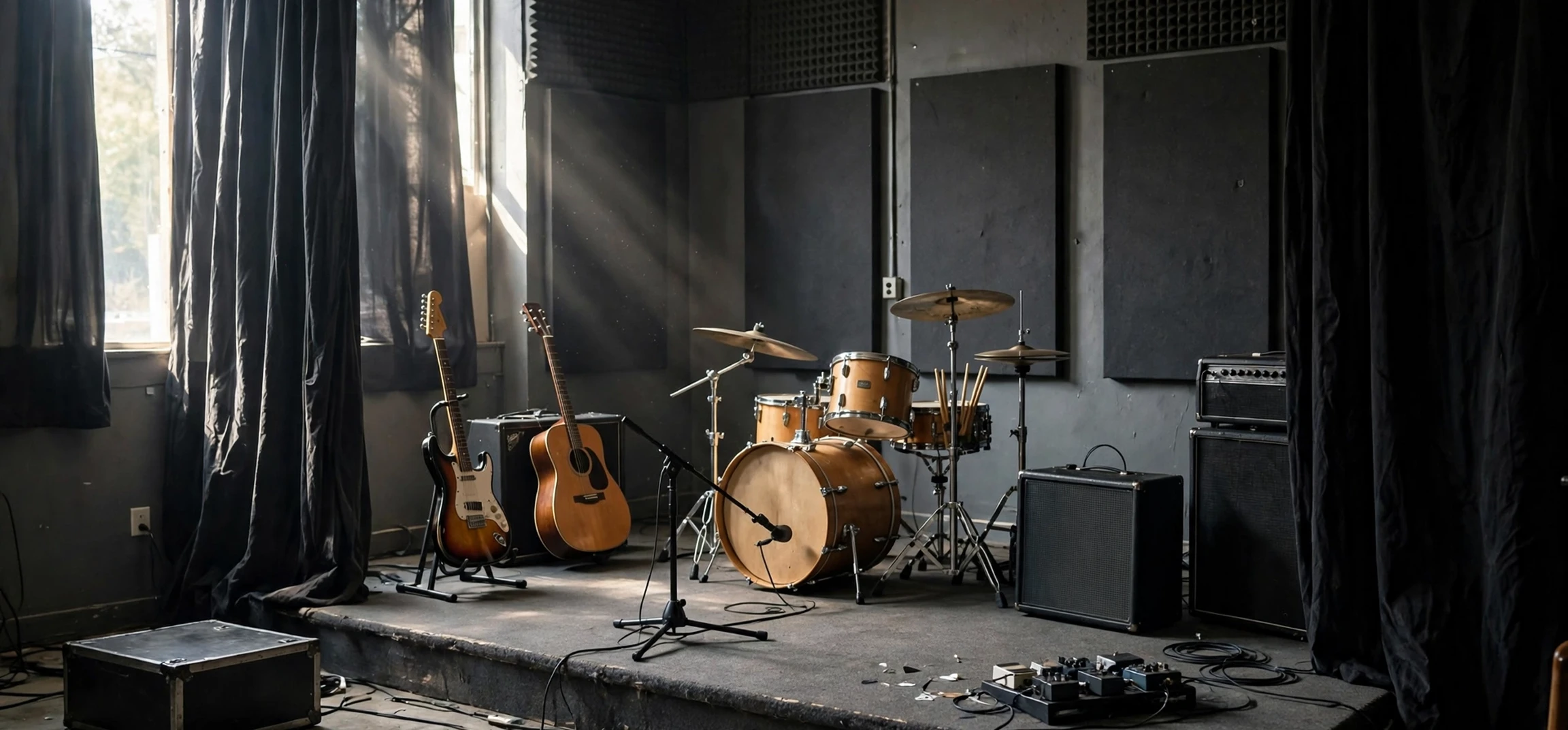
Jamming meaning in music is a phrase that covers more ground than many listeners realise, because jamming can refer to informal improvisation, to a rehearsal method, to a live performance style, and, in some genres, to a specific kind of musical conversation between players. At its core, jamming means making music spontaneously, without a fully written score or a fixed arrangement, usually in a group, and usually with an emphasis on listening, responding, and exploring ideas in real time. This guide explains what jamming involves, how it differs across genres, and why musicians value it as both a creative practice and a social one.
The word jam in this musical sense probably comes from the idea of pressing or crowding together, as musicians crowd around to play, though its exact origin is debated. By the early twentieth century, jazz musicians were using jam session to describe informal gatherings where players improvised together, often after formal performances, and the term spread from jazz into rock, blues, folk, funk, and many other styles. In each genre, the details differ, but the central idea remains: players create music together in the moment, rather than reproducing a predetermined arrangement.
Jamming Meaning in Music: What Happens in a Jam Session
A typical jam session begins with a shared starting point, such as a chord progression, a melody, a groove, or simply a key and a tempo. One player introduces an idea, others join in, and the music develops through listening and response. A guitarist might play a riff, a bassist might anchor it with a repeating pattern, a drummer might establish a groove, and a keyboard player or horn player might add melodic ideas on top. No single player controls the whole session; instead, leadership shifts as different musicians take solos, suggest changes, or signal a move to a new section.
That shifting leadership is part of what makes jamming both exciting and demanding. Players must listen constantly, not only to their own parts but to the whole ensemble, and they must be ready to adapt when the music changes direction. A good jammer knows when to play more, when to play less, and when to leave space for others. Space is as important as sound in a jam: a session in which everyone plays loudly all the time quickly becomes chaotic, while a session in which players leave gaps allows ideas to breathe and develop.
Jamming Meaning in Music: Jamming in Jazz, Blues and Rock
In jazz, jamming is closely linked to improvisation over standard chord progressions, often called changes. Jazz musicians learn a repertoire of standards, each with a melody and a harmonic structure, and a jam session may involve playing through a standard’s changes while each soloist improvises in turn. The skill lies in creating coherent, expressive melodies over changing harmonies, in real time, while maintaining the swing and feel of the piece. Jazz jamming is therefore both highly structured, because the harmony is agreed in advance, and highly free, because the solos are invented on the spot.
In blues, jamming often centres on the twelve-bar blues progression, a repeating harmonic pattern that provides a familiar framework for improvisation. Blues players trade solos, respond to vocal phrases with instrumental answers in a call-and-response pattern, and build intensity through repetition and variation. In rock, jamming can be looser, sometimes growing out of a riff or a groove during rehearsal, and sometimes extending a song in live performance into a long improvisational section. Rock bands such as the Grateful Dead and Phish built reputations on extended live jams, in which songs became starting points for lengthy collective exploration.
Jamming as Practice and Rehearsal
For many musicians, jamming is also a practice method. Rather than rehearsing a fixed set list, a band may jam to develop new material, test musical ideas, and build rapport between players. A riff discovered during a jam can become the basis of a song, a groove can suggest a new arrangement, and a chord change stumbled upon by accident can open up a new direction. Recording jams, even informally on a phone, allows musicians to revisit promising moments later and develop them into finished pieces.
Jamming as practice also builds skills that formal rehearsal alone does not. It trains the ear, because players must recognise chords and keys by listening rather than reading; it trains timing, because players must stay together without a conductor; and it trains confidence, because players must be willing to try ideas that might not work. Teachers often encourage students to jam early, even with limited technique, because the experience of making music with others is motivating and because it teaches musical communication more directly than exercises alone.
Jam Sessions as Social Events
Jam sessions are social as well as musical events, and their etiquette matters. In many cities, open jam sessions take place in pubs, clubs, community halls, and music schools, where musicians of varying abilities gather to play together. Regular participants often know unwritten rules: take turns soloing, do not play over someone else’s solo, keep volumes balanced, and welcome newcomers rather than showing off. A session that follows those rules is enjoyable for players and listeners alike, while a session that ignores them can feel exclusive or chaotic.
For newcomers, joining a jam can feel daunting, but most sessions welcome players who listen, play simply, and show willingness to learn. Starting with a simple part, such as holding down a steady rhythm or playing a basic chord pattern, is more useful than attempting a complex solo immediately. Asking the session leader or regulars about the format, the repertoire, and the expectations before playing is also sensible. Over time, regular attendance builds familiarity with other players, with common tunes, and with the unspoken cues that keep a session flowing.
Jamming and Recording Technology
Recording technology has changed how jamming works, particularly for musicians who cannot meet in person. Online jamming platforms, loop stations, and digital audio workstations allow players to record parts separately and combine them, or to jam in real time over the internet, subject to latency limitations. Looping, in which a player records a short phrase and repeats it while adding new layers, is itself a form of solo jamming, and it has become a popular performance technique for solo musicians.
Technology also makes it easier to preserve jams that would once have vanished. A band that records its rehearsals can review jams, identify strong ideas, and develop them into songs, while a solo player can build a library of loops and sketches to draw on later. At the same time, the ease of recording raises questions about ownership and credit when a jam leads to a finished song, since ideas may have come from several players. Bands that jam regularly often discuss those questions in advance, agreeing how songwriting credit will be shared, to avoid disputes later.
Getting Started With Jamming
If you want to start jamming, begin with what you already know. Learn a few common chord progressions in your genre, practise playing along with recordings, and focus on listening as much as playing. Find a local session or a group of friends at a similar level, and start with simple tunes or grooves rather than complex pieces. Bring your instrument, a tuner, and a willingness to make mistakes, which are a normal part of improvisation and a necessary step towards fluency.
It also helps to learn the vocabulary of jamming: terms such as changes, groove, solo, comping, trading fours, and head, which refer to the melody of a tune, are used constantly in sessions. Knowing those terms makes it easier to follow instructions and to communicate with other players. Most importantly, remember that jamming is meant to be enjoyable. The goal is not perfection, but musical conversation, and the best sessions are those in which players listen, respond, and create something together that none of them would have made alone.
| Genre | Typical jam framework | Key skill emphasised |
|---|---|---|
| Jazz | Standards and chord changes, solos in turn | Melodic improvisation over harmony |
| Blues | Twelve-bar progression, call and response | Feeling, phrasing, and dynamics |
| Rock | Riffs and grooves, extended live sections | Collective exploration and energy |
| Folk | Shared tunes, communal playing | Listening and ensemble blending |
| Funk | Repeating grooves, rhythmic interplay | Timing, pocket, and rhythmic precision |
Frequently Asked Questions
What does jamming mean in music?
It means making music spontaneously in a group, usually by improvising over a shared chord progression, groove, or melody, rather than playing a fully written arrangement.
Do I need to be an expert to join a jam session?
No. Most open sessions welcome players of varying abilities, provided they listen, play simply to start with, and follow the session’s etiquette about taking turns and balancing volume.
How is jamming different from rehearsing?
Rehearsing usually involves practising fixed arrangements, while jamming involves creating music in the moment. Bands often do both, using jams to generate ideas that rehearsals then refine into songs.
Conclusion
Jamming meaning in music comes down to spontaneous, collective creation: players start from a shared groove, progression, or melody, and build music together through listening, response, and improvisation. Across jazz, blues, rock, folk, and funk, the details vary, but the core practice remains a powerful way to develop skill, generate new material, and enjoy music socially. Whether you join a local session, jam with friends, or experiment with looping on your own, the essential habits are the same: listen closely, leave space, take turns, and embrace the unexpected. For related reading, see our guides on musical and literary terms, everyday word meanings, and names and meanings explained.