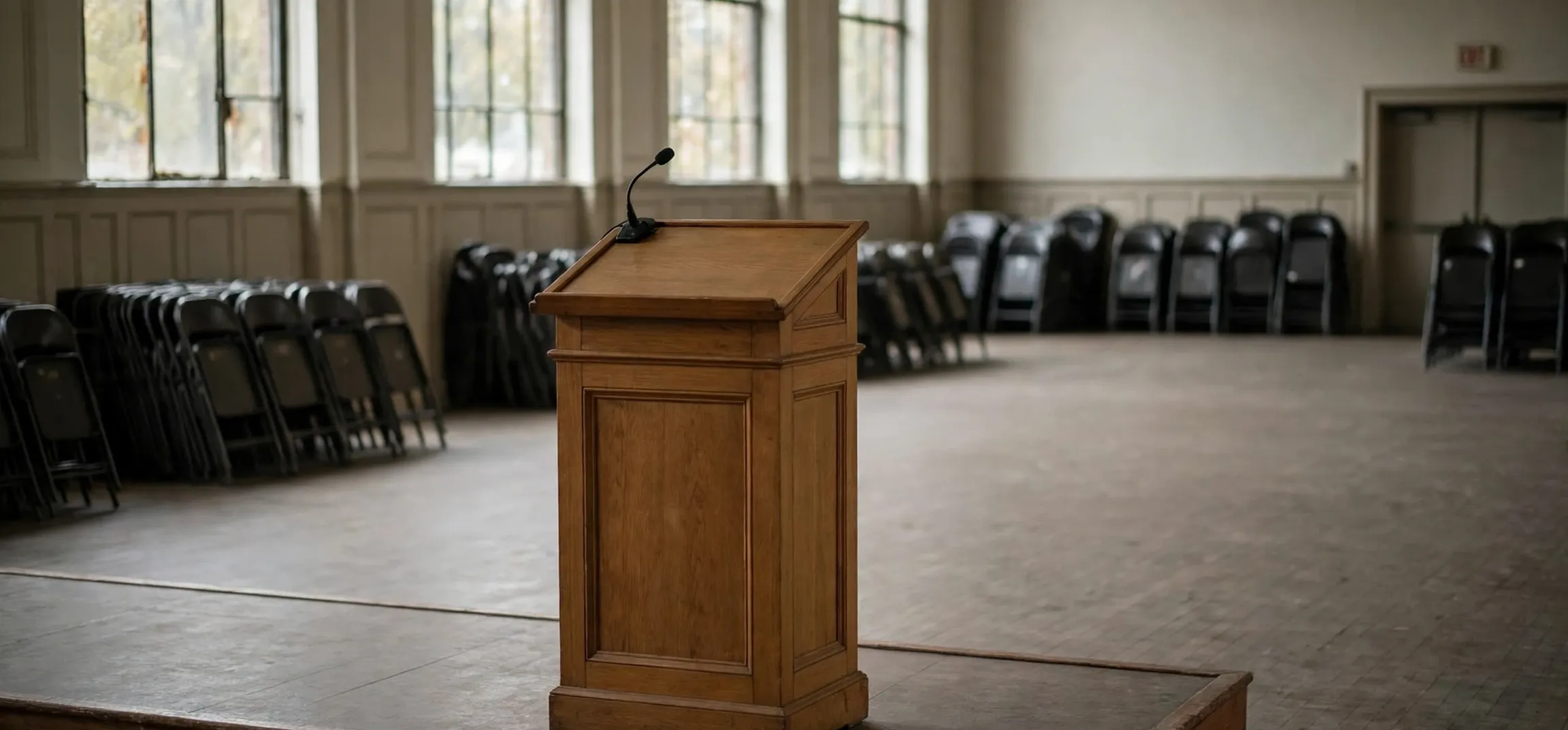
The lectern meaning is simple: a lectern is a stand with a slanted top that holds a book, notes, or a script at a comfortable reading height for someone who is standing and speaking. You will see lecterns in churches, classrooms, lecture halls, conference stages, and courtrooms, wherever a speaker needs to read or refer to notes while facing an audience. The word is often confused with podium, pulpit, and dais, and those mix-ups cause most of the confusion in everyday use. This guide explains the definition in plain English, where the word comes from, how a lectern differs from its close cousins, the main types you will encounter, and how to use the word correctly in speech and writing.
Why does a piece of furniture deserve a definition guide? Because the words around public speaking are used loosely, and loose usage creates real misunderstandings. A conference organizer who asks for a podium may receive a raised platform instead of a reading stand. A student who writes about a pulpit in a secular lecture hall may puzzle a reader who associates the word with a church. A buyer who searches for a lectern without knowing the types available may order a heavy wooden church lectern for a portable classroom need. Getting the word right saves time, money, and embarrassment, and it makes descriptions of rooms, ceremonies, and events clearer for everyone.
Lectern Meaning in Plain English
In plain English, the lectern meaning is a tall, freestanding reading desk for a standing speaker. It typically has a slanted surface, a small ledge or lip to stop papers or a book from sliding off, and a post or column that raises the surface to elbow or chest height. Some lecterns include a shelf below for extra notes, a microphone mount, a light for reading in a dim hall, or wheels for moving between rooms. The defining feature is not the material or the decoration. It is the function: the lectern holds reading material so the speaker can look down at notes and up at the audience without holding a book in both hands.
The word itself comes from the Latin verb legere, meaning to read, through a medieval Latin word for a reading desk. That history explains why the lectern is associated with reading aloud rather than with standing on a platform. A reader in a church reads scripture from a lectern. A lecturer reads notes from a lectern. A conference speaker glances at a lectern while addressing the room. In each case, the lectern is the furniture that supports the text, not the platform that raises the speaker.
How to Pronounce Lectern
Lectern is pronounced with three syllables, roughly lek-turn, with the stress on the first syllable. The middle vowel is short and unstressed, which is why the word is sometimes misheard as two syllables in fast speech. In writing, the spelling is l-e-c-t-e-r-n, and it should not be confused with lecture, the talk itself, or lecturer, the person giving the talk. A lecturer stands at a lectern to give a lecture. Keeping those three related words distinct is half the battle in using lectern correctly.
Using Lectern in a Sentence
Natural examples make the meaning clear. The speaker placed her notes on the lectern and adjusted the microphone before beginning. The church lectern stood to one side of the altar, facing the congregation. The conference hall provided a lectern with a reading light for evening sessions. In each sentence, the lectern is a piece of furniture that holds material for a standing reader. Each of these examples shows the lectern meaning in action. If the sentence would still make sense with reading desk substituted, lectern is almost certainly the right word.
Lectern Meaning in Churches, Classrooms, and Conferences
The lectern meaning shifts slightly with the setting, because each setting uses the reading desk for a different kind of text. In a church, the lectern is usually where scripture is read aloud during a service, and it may be an ornate wooden or metal stand, sometimes topped with an eagle or another symbol, placed where the reader faces the congregation. In some traditions, the lectern is distinct from the pulpit, which is where the sermon is preached, and the two pieces of furniture stand in different positions with different purposes. Knowing that distinction helps visitors understand the layout of a church interior and the order of a service.
In a classroom or lecture hall, the lectern is a practical teaching tool. A teacher places lecture notes, a textbook, or a tablet on the slanted surface and moves between the lectern, the board, and the students. University lecture theatres often have larger lecterns with space for a laptop, a document camera, and audiovisual controls, reflecting how teaching has changed while the basic furniture has stayed the same. In a conference hall, the lectern is part of the stage set: it gives the speaker a home base, a place for notes and water, and a visual anchor that keeps the speaker facing the audience rather than wandering the stage.
Lecterns in Courtrooms and Ceremonies
Courtrooms use lecterns for advocates addressing the bench, and the formality of the setting usually means a solid, understated design. Ceremonies such as graduations, award presentations, and memorial services use lecterns for readers, announcers, and speakers, and the lectern often carries a logo or emblem for the occasion. In all these settings, the lectern meaning stays the same: a stable, well-positioned surface for reading material, placed so the speaker can be seen and heard clearly.
Lectern Versus Podium Versus Pulpit
The confusion between lectern, podium, and pulpit is the most common question about this word, and it is worth settling carefully. A lectern is a reading stand. A podium, in its strict traditional sense, is a raised platform that a person stands on, such as the low platform a conductor stands on or the raised area for winners at a sporting event. In American usage, podium is often used loosely to mean the reading stand itself, which is why many people say podium when they mean lectern. Strictly speaking, you stand on a podium and behind a lectern, and careful writers keep that distinction even when everyday speech blurs it.
A pulpit is a raised enclosed platform or structure in a church from which sermons are preached. It is usually larger and more architectural than a lectern, often with steps, a rail, and a sounding board above. A dais is a raised platform at the end of a hall, often holding a table for several speakers or dignitaries, and it is not a piece of furniture for one reader. A rostrum is a raised platform for a speaker, similar to a podium, and the word is more common in formal or academic contexts. Keeping these five words apart makes descriptions of stages, churches, and halls far more precise.
| Word | What it is | You stand | Typical setting |
|---|---|---|---|
| Lectern | Slanted reading stand for notes or a book | Behind it | Church, classroom, conference stage |
| Podium (strict sense) | Raised platform for one person | On it | Concert hall, sports ceremony |
| Podium (loose US sense) | Often used to mean a reading stand | Behind it | Conferences and events in the US |
| Pulpit | Raised enclosed preaching structure | In it | Church |
| Dais | Raised platform for a group or table | On it | Banquet hall, conference stage |
| Rostrum | Raised platform for a speaker | On it | Formal and academic events |
Types of Lectern You Will Encounter
Lecterns come in several broad types, and the right type depends on the setting. Traditional wooden lecterns, often in oak or walnut, suit churches, libraries, and formal halls, where appearance matters as much as function. Metal lecterns, in steel or aluminium, suit schools and conference venues, where durability and a modern look matter more. Acrylic lecterns, made from clear plastic, suit stages and television studios, because they look light on camera and do not block the speaker from the audience. Portable and folding lecterns suit travelling speakers, trainers, and community halls, where the stand must pack down and move between rooms.
Features vary as much as materials. A basic lectern is a slanted surface on a post with a base. A fuller model adds a shelf, a cup holder, a microphone holder, a reading light, cable management for a laptop, or lockable castors for moving across a stage. Digital lecterns, sometimes called smart lecterns, integrate a screen, a sound system, and audiovisual controls into the stand, and they are common in modern lecture theatres and large conference centres. When choosing a lectern, and applying the lectern meaning to the room in question, the practical questions come first: how heavy is it, how easily does it move, does the surface suit a book, papers, or a tablet, and can the height be adjusted for different speakers.
Choosing the Right Lectern for a Room
For a small classroom, a light portable lectern with a shelf is usually enough, and a heavy wooden model may dominate the room. For a church, a traditional wooden lectern that matches the other furniture is usually the right choice, and its position relative to the pulpit should be planned with the service order in mind. For a conference stage, a lectern with a microphone mount, a reading light, and a tidy cable route keeps the stage looking professional on camera. For a travelling speaker, weight and folding size matter more than appearance, and a padded carry case is worth its cost after the first few trips.
Caring for a Lectern
Wooden lecterns need occasional polishing and protection from damp and direct sunlight, which can warp a slanted surface over time. Metal lecterns need a wipe down and a check that fixings stay tight, especially on portable models that are folded and unfolded often. Acrylic lecterns scratch easily, so they should be cleaned with a soft cloth and a cleaner suited to acrylic rather than an abrasive product. In every case, the lip or ledge that holds books deserves a check, because a loose ledge is the most common small failure on a well-used lectern.
Frequently Asked Questions
Is a lectern the same as a podium?
Not strictly. A lectern is a reading stand you stand behind, while a podium in the strict sense is a raised platform you stand on. In loose American usage, podium is often used for the reading stand, but careful writing keeps the two words distinct.
What is the difference between a lectern and a pulpit?
A lectern holds reading material, usually scripture in a church, while a pulpit is a larger raised structure from which sermons are preached. Many churches have both, in different positions and for different parts of the service.
What is the plural of lectern?
The plural is lecterns. The word follows the regular pattern, so a hall with three reading stands has three lecterns.
What height should a lectern be?
It should place the reading surface at a comfortable height for a standing speaker, roughly elbow to chest height, with the slant angled so the text is easy to read without stooping. Adjustable models suit rooms used by speakers of different heights.
Conclusion
The lectern meaning is a reading stand for a standing speaker, a piece of furniture defined by its function rather than its material or decoration. It holds a book, notes, or a script on a slanted surface so the speaker can read and face the audience at the same time. It is not a platform to stand on, which is a podium in the strict sense, and it is not a preaching structure, which is a pulpit. Remember that lectern meaning distinction, match the type of lectern to the room, and the word will serve you well in churches, classrooms, conference halls, and anywhere else a speaker needs a reliable place for their notes. For more word meanings, see our guides to the meaning of acceded, the meaning of a tattoo number, and a popular series guide.



