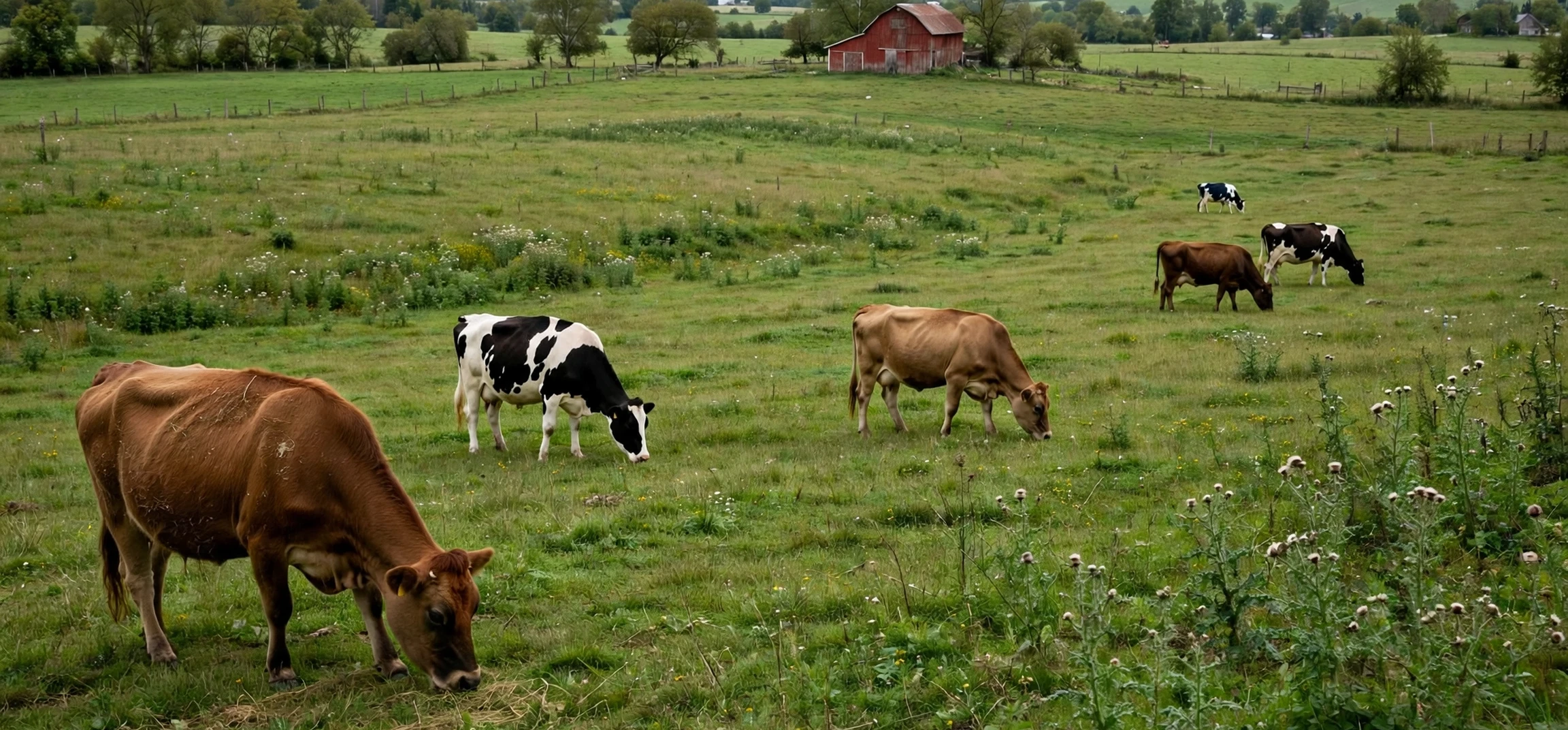
Animal husbandry is one of the oldest organised human activities, and the definition of animal husbandry is, in its simplest form, the science and practice of breeding, raising, and caring for domesticated animals, usually livestock, for useful purposes such as food, fibre, labour, and companionship. When people ask for the definition of animal husbandry, they are usually asking about more than a dictionary entry: they want to understand what the field actually involves, which animals it covers, how it differs from related fields such as veterinary medicine or wildlife management, and why it still matters in a world of modern farms, smallholdings, and urban food systems. This guide answers all of those questions in plain language, covering the history, the main branches, the daily work, the welfare and sustainability questions, and the careers that keep the field moving forward.
The word husbandry itself comes from an older English term for household management, and that origin is revealing. Animal husbandry was never only about owning animals; it was about managing them well over time, through breeding choices, feeding, housing, health care, and record keeping. A good husbandman, in the historical sense, was a careful manager of a household’s living resources, someone who planned for seasons ahead, protected animals from disease and harsh weather, and passed knowledge to the next generation. That managerial meaning survives in the modern field, even though the tools have changed dramatically, from hand tools and local knowledge to genetics, nutrition science, data systems, and climate-controlled housing. Students looking up the definition of animal husbandry often want a practical picture, not just a dictionary sentence.
Today, the definition of animal husbandry covers a wide range of animals and settings. On large commercial farms, it may involve thousands of cattle, sheep, pigs, goats, or poultry, managed with specialised staff and equipment. On small family farms, it may involve a handful of animals raised for household use and local sale. In pastoral and nomadic systems, it may involve moving herds across seasonal grazing lands, following rainfall and pasture growth. In each setting, the core tasks remain recognisably similar: select animals for breeding, provide adequate nutrition and water, protect health, manage reproduction, handle animals safely, and produce food or other products in a way that can be sustained year after year.
The definition of animal husbandry in Core Terms
Formally, the definition of animal husbandry can be stated as the branch of agriculture concerned with the breeding, care, and management of domestic animals, with the aim of producing food, fibre, draught power, or other useful outputs while maintaining animal health and welfare. That definition contains four important ideas. First, the animals are domesticated, meaning they have been selectively bred over generations to live alongside humans and to provide particular traits, such as milk yield, growth rate, wool quality, or temperament. Second, the work is systematic, involving planned breeding, feeding, and health programmes rather than casual keeping. Third, the outputs are useful to humans, whether as milk, meat, eggs, wool, leather, or labour. Fourth, the system must be sustainable, because animals that are poorly fed, poorly housed, or poorly cared for cannot produce reliably over time.
It is also important to say what animal husbandry is not. It is not the same as veterinary medicine, although the two fields work closely together. Veterinary medicine focuses on diagnosing and treating disease, while husbandry focuses on the whole system of care that prevents disease and supports productivity, including nutrition, housing, breeding, and daily management. Animal husbandry is not wildlife management either, because wildlife management concerns wild populations in natural habitats, while husbandry concerns domestic animals under human care. And it is not simply pet keeping, although pet care shares some principles, such as feeding, health checks, and responsible breeding, because husbandry is primarily organised around agricultural production and the management of groups of animals rather than individual companions. The definition of animal husbandry becomes clearer when it is linked to daily tasks such as feeding, housing, and health care.
Domestication as the Foundation
Domestication is the foundation on which all animal husbandry rests. Over thousands of years, humans selected animals that tolerated human presence, reproduced in captivity, and provided useful traits, gradually shaping wild ancestors into domestic species. Cattle, sheep, goats, and pigs were among the earliest domesticated livestock, followed by poultry, horses, and other species in different regions. Each domestication story reflects local geography, climate, and human needs: animals suited to dry grasslands differ from animals suited to wet, cold, or mountainous regions, and husbandry systems developed to match those differences. Understanding domestication helps explain why husbandry is not a single method applied everywhere, but a family of methods adapted to animals, landscapes, and cultures. A clear grasp of the definition of animal husbandry helps readers see how breeding, feeding, housing, and health care form one connected system.
Main Branches of Animal Husbandry
Animal husbandry is usually divided by species or by product. Dairy husbandry focuses on milk-producing animals, especially cattle, goats, and sheep, and it involves milking routines, udder health, calf rearing, and milk quality. Beef husbandry focuses on cattle raised for meat, with attention to growth, feed conversion, and carcass quality. Sheep and goat husbandry covers wool, meat, and milk, often in extensive grazing systems. Pig husbandry focuses on efficient growth and reproduction in more intensive systems. Poultry husbandry covers chickens, ducks, turkeys, and other birds for eggs and meat. Equine husbandry covers horses, donkeys, and mules, historically for labour and transport and today more often for sport, recreation, and therapy. Each branch has its own knowledge base, but all share the same core principles of breeding, nutrition, health, and welfare. A clear grasp of the definition of animal husbandry helps readers see how breeding, feeding, housing, and health care form one connected system.
Daily Work Covered by the definition of animal husbandry
The daily work described by the definition of animal husbandry is practical, seasonal, and highly skilled. Feeding is central: animals need diets matched to their species, age, reproductive stage, and production level, with adequate energy, protein, minerals, vitamins, and clean water. Poor nutrition shows quickly in reduced growth, lower milk or egg production, and weaker resistance to disease, so feeding programmes are planned carefully and adjusted as conditions change. Housing is equally important: shelters must protect animals from extreme heat, cold, wind, and rain, while providing ventilation, dry bedding, and enough space for natural behaviour. Good housing reduces stress and disease, while poor housing increases both.
Breeding and reproduction form another core area. Husbandry involves selecting breeding animals for desirable traits, managing mating or artificial insemination where used, caring for pregnant animals, assisting at birth when needed, and raising young animals through their vulnerable early weeks. Record keeping supports all of this work: births, deaths, treatments, feed use, and production figures are recorded so that managers can spot problems early, compare performance across seasons, and make evidence-based decisions. Health management ties the system together, through vaccination programmes, parasite control, biosecurity measures that limit disease introduction, and prompt veterinary attention when animals show signs of illness. For readers interested in how definitions are framed in other fields, this guide to another definition explained shows a similar plain-language approach. A working knowledge of the definition of animal husbandry helps new farmers plan breeding, nutrition, and record keeping together.
Nutrition, Health, and Welfare Together
Modern animal husbandry treats nutrition, health, and welfare as connected rather than separate concerns. An animal that is well fed but housed in stressful conditions may still become ill, just as an animal that is well housed but poorly fed will fail to thrive. Welfare in husbandry means more than avoiding cruelty; it means providing conditions in which animals can eat, rest, move, socialise in species-appropriate ways, and avoid unnecessary pain, fear, and distress. Welfare standards vary by country and by production system, and they are the subject of ongoing public debate, but the principle that good welfare supports good husbandry is widely accepted: healthy, comfortable animals are generally more productive and more resilient than stressed, unhealthy ones. A clear grasp of the definition of animal husbandry helps readers see how breeding, feeding, housing, and health care form one connected system.
Technology and Modern Husbandry
Technology has transformed animal husbandry without changing its core definition. Electronic identification, automated milking, climate sensors, feed monitoring, and genetic testing now help managers track individual animals, detect illness earlier, and select breeding stock more accurately. Data from these tools can reveal patterns that would be invisible in a small herd observed by eye alone, such as gradual changes in milk yield or activity that signal early illness. At the same time, technology does not replace stockmanship, the experienced eye and judgement of a person who knows animals well. The best modern systems combine both: data to flag issues early, and skilled people to interpret the data, handle animals calmly, and make decisions that no sensor can make alone. A clear grasp of the definition of animal husbandry helps readers see how breeding, feeding, housing, and health care form one connected system.
| Husbandry area | Main tasks | Why it matters |
|---|---|---|
| Breeding | Selecting parents, managing reproduction, raising young | Improves productivity and resilience over generations |
| Nutrition | Balanced diets, clean water, seasonal adjustment | Supports growth, production, and disease resistance |
| Housing | Shelter, ventilation, bedding, space | Protects welfare and reduces stress and illness |
| Health | Vaccination, parasite control, biosecurity, veterinary care | Prevents outbreaks and protects herds and flocks |
| Records | Births, treatments, feed, production figures | Enables early problem detection and planning |
Sustainability, Environment, and the Future of the definition of animal husbandry
Any complete discussion of the definition of animal husbandry today must address sustainability and the environment. Livestock systems use land, water, and feed, and they produce emissions, manure, and other outputs that must be managed responsibly. Sustainable husbandry seeks to balance production with environmental care, through efficient feed use, pasture management that protects soil, manure handling that recycles nutrients rather than polluting water, and breeding for animals suited to local conditions rather than animals that require heavy resource inputs to survive. Different regions face different trade-offs: intensive systems may use less land per unit of output but more energy and infrastructure, while extensive grazing systems may use more land but support biodiversity and rural livelihoods in landscapes where cropping is difficult.
The future of animal husbandry is likely to involve continued debate about those trade-offs, alongside innovation in areas such as alternative feeds, disease resistance, precision monitoring, and improved welfare standards. Smallholder systems in many parts of the world will remain vital for food security and income, especially where livestock provide milk, meat, draught power, and a form of savings that can be drawn on in hard times. Larger commercial systems will continue to focus on efficiency, consistency, and food safety for urban markets. In both cases, the core definition remains stable: the careful, knowledgeable management of domestic animals for human benefit, carried out in a way that respects animal welfare and can be sustained over time. For another example of a concept defined in plain terms, see this guide to a mathematical definition explained. The definition of animal husbandry also highlights sustainability, since a system that harms animals or land cannot endure.
Careers and Learning in Animal Husbandry
Careers in animal husbandry span farm management, animal nutrition, breeding and genetics, veterinary support, agricultural extension, research, and food production. Some roles are hands-on and farm-based, requiring practical stockmanship and physical work in all weathers. Others are laboratory or office based, focusing on genetics, feed formulation, data analysis, or policy. Education routes include agricultural colleges, university degrees in animal science, and apprenticeships that combine classroom learning with farm experience. Whatever the route, the most valued qualities remain consistent: observation, patience, practical judgement, respect for animals, and a willingness to keep learning as science and standards evolve.
Frequently Asked Questions About the definition of animal husbandry
What is the simple definition of animal husbandry?
The definition of animal husbandry is the science and practice of breeding, raising, and caring for domesticated animals, especially livestock, for food, fibre, labour, and other useful purposes, through planned nutrition, housing, health care, and reproduction.
Which animals does animal husbandry cover?
It most commonly covers cattle, sheep, goats, pigs, and poultry, and it can also include horses, donkeys, rabbits, and other domesticated species, depending on region and production system. The principles are similar across species, while the details vary by animal.
How does animal husbandry differ from veterinary medicine?
Veterinary medicine focuses on diagnosing and treating disease in individual animals, while husbandry focuses on the whole management system, including breeding, feeding, housing, and prevention, that keeps groups of animals healthy and productive. The two fields work together closely on real farms.
Why is animal husbandry important?
It underpins much of the world’s milk, meat, egg, wool, and leather production, supports rural livelihoods and food security, and shapes how domestic animals are cared for, bred, and housed. Good husbandry links animal welfare, productivity, and sustainability in a single system of care.
Conclusion
The definition of animal husbandry, at its clearest, describes a field that is both ancient and urgently modern: the knowledgeable breeding, raising, and care of domestic animals for human benefit, carried out through nutrition, housing, health management, reproduction, and careful record keeping. From early pastoral herds to today’s data-assisted farms, the core task has remained the same, even as the tools, the scale, and the sustainability questions have changed. Understanding the definition of animal husbandry therefore means understanding more than a single sentence; it means appreciating a whole system in which animal welfare, human livelihoods, food production, and environmental care are bound together. When that system is managed well, animals thrive, farms endure, and communities gain a reliable source of food and income, which is why husbandry has remained central to agriculture for thousands of years and will remain central for years to come.