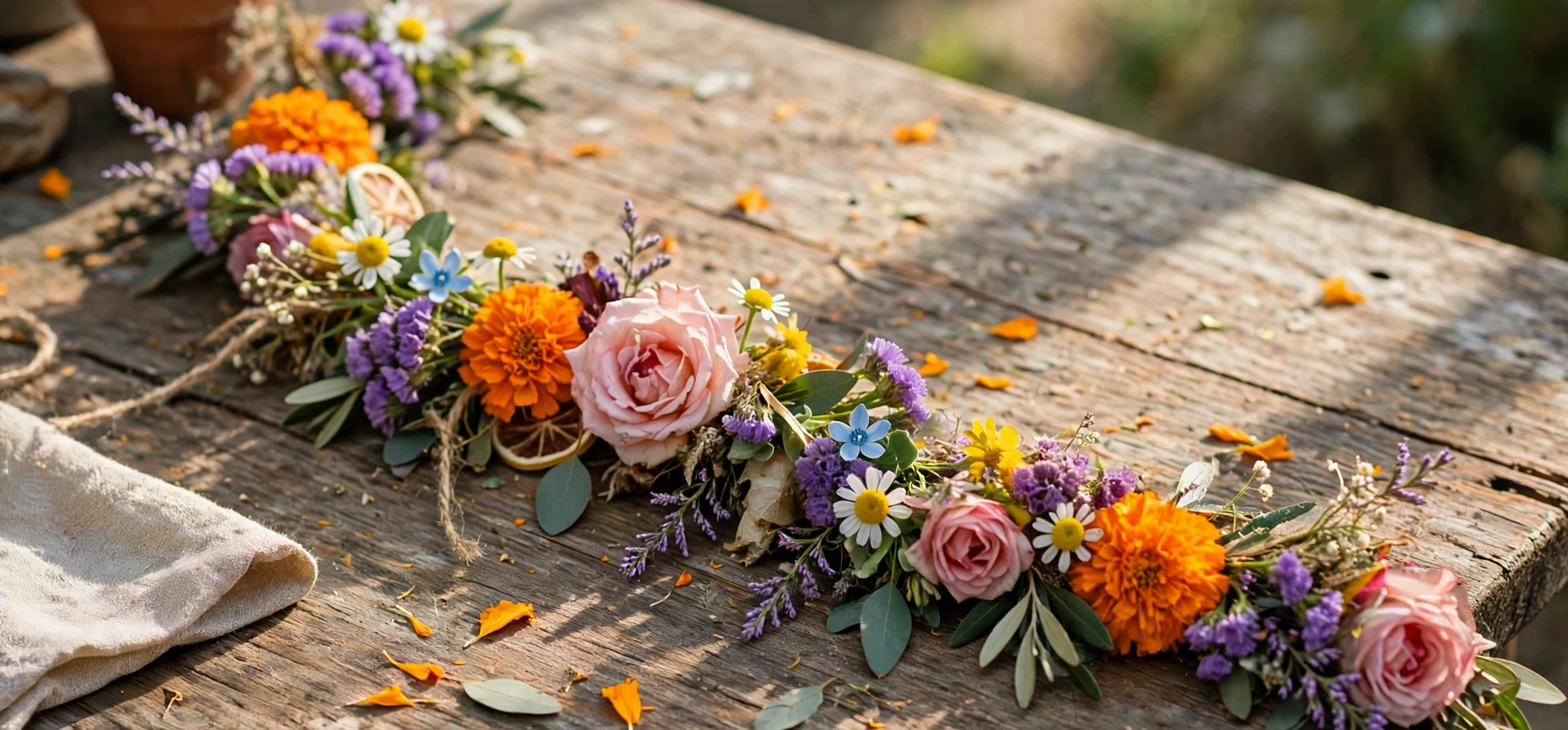
Garlanded is one of those words that instantly paints a picture — flowers, celebration, honour — but pinning down its exact meaning repays a closer look. The garlanded definition is straightforward at first glance: garlanded means decorated or adorned with a garland, which is a wreath or chain of flowers, leaves, or other materials worn or hung as a decoration. Yet the word carries cultural, literary, and figurative layers that make it richer than a simple dictionary entry suggests. This guide explains what garlanded means, where the word comes from, how it is used literally and figuratively, and why it still appears in writing today.
Garlanded Definition: The Literal Meaning
The garlanded definition begins with the noun garland. A garland is a circular arrangement of flowers, foliage, or other decorative material, traditionally worn around the neck or head, hung on a door, or draped over a monument. To garland something is to decorate it with such an arrangement, and garlanded is the past participle and adjective describing the result: a garlanded doorway, a garlanded statue, a garlanded winner. The word is most often used in descriptions of ceremonies, festivals, and celebrations, where flowers mark honour, welcome, or festivity.
Garlands appear in cultures around the world. In India, flower garlands (malas) are offered to deities, guests, and honoured visitors, and marigold garlands are central to weddings and festivals. In Hawaii, the lei — a garland of flowers, shells, or leaves — is given as a welcome, a farewell, and a mark of affection. In ancient Greece and Rome, victors in athletic games and military triumphs were crowned with laurel garlands, a tradition that survives in the word “laureate” and in the laurel wreaths still used for academic and sporting honours. In Mexico, marigold garlands decorate Day of the Dead altars. The shared thread is that garlands mark something or someone as special, set apart from the everyday.
Garland versus wreath versus lei
Garland, wreath, and lei overlap but are not identical. A wreath is typically a circular arrangement hung on a wall or door, often made of evergreen at Christmas or poppies at remembrance ceremonies. A lei is specifically a Hawaiian garland worn around the neck. A garland is the broadest term, covering chains, circles, and draped arrangements in any material, worn or displayed. When writers choose “garlanded”, they usually mean the decorative, celebratory sense rather than the memorial sense of a wreath, though context always decides.
Origins and History of the Word Garlanded
Garland entered English in the fourteenth century from Old French “garlande”, meaning a wreath or crown, possibly of Germanic origin. Its early uses were tied to crowns and chaplets worn at feasts and ceremonies, and the verb “to garland” followed naturally. The adjective garlanded has been in steady, if not frequent, use ever since, appearing in poetry, travel writing, and journalism whenever a scene calls for festive decoration. Its relative rarity in everyday speech is part of its charm: when a writer chooses garlanded over “decorated with flowers”, the choice signals a deliberate, slightly elevated tone.
Literary uses abound. Poets garland their heroes, their altars, and their verses — the word lends itself to metaphor because flowers suggest beauty, transience, and honour all at once. A garlanded doorway in a novel signals welcome and celebration; a garlanded grave signals remembrance and respect. The image works because readers already know, from weddings, festivals, and ceremonies in their own lives, what garlands mean. Writers who want to evoke celebration without explaining it can rely on that shared knowledge, much as they rely on other evocative vocabulary that carries cultural associations.
Garlanded Definition: Figurative and Modern Uses
Beyond literal flowers, garlanded is used figuratively for anything adorned or honoured. A writer might describe a speech as “garlanded with praise”, meaning it was lavishly complimented, or a town as “garlanded with bunting” during a festival, where the bunting plays the role of flowers. Sports journalism still uses the image: a “garlanded champion” is one crowned with honours, echoing the laurel tradition. In these figurative uses, the word retains its celebratory charge — garlanded things are honoured things, not merely decorated ones.
Modern usage also includes commercial and event contexts. Wedding planners describe garlanded arches and tables; hotels advertise garlanded entrances at Christmas; tourism writing describes garlanded streets during festivals from Diwali to Mardi Gras. The word’s visual immediacy makes it useful for marketing copy, where a single adjective must conjure an atmosphere. It also appears in academic and historical writing about ritual and material culture, where precision about garland types — flower, leaf, paper, bead — matters for understanding ceremonies.
How to Use Garlanded Correctly
Use garlanded when the decoration is wreath-like or chain-like and the occasion is festive, honouring, or ceremonial. “The bride walked beneath a garlanded arch” is natural; “the garlanded spreadsheet” is not, unless you are deliberately being playful. The word pairs naturally with nouns like arch, doorway, statue, winner, hero, street, and altar. It can take an adverb of material — “garlanded with marigolds”, “garlanded with laurel”, “garlanded with lights” — which adds specificity and colour. Avoid overusing it: because it is a slightly literary word, one garlanded image per passage is usually enough, and a second can feel mannered.
For learners of English, garlanded is a useful vocabulary item for descriptive writing, especially for festivals, travel, and cultural topics. It belongs to the same family of precise, visual adjectives that examiners reward: concrete, evocative, and correctly used. Pairing it with a material phrase — garlanded with jasmine, garlanded with roses — demonstrates both vocabulary range and cultural awareness, and it works across formal and creative registers.
| Garland type | Material | Typical occasion |
|---|---|---|
| Flower mala | Marigold, jasmine, rose | Indian weddings, festivals, worship |
| Lei | Flowers, shells, leaves | Hawaiian welcome, farewell, celebration |
| Laurel wreath | Laurel leaves | Victory, academic and sporting honours |
| Christmas garland | Evergreen, lights, ornaments | Festive home and street decoration |
| Marigold garland | Marigold flowers | Day of the Dead, Diwali, weddings |
Frequently Asked Questions About Garlanded
What does garlanded mean?
Garlanded means decorated or adorned with a garland — a wreath or chain of flowers, leaves, or other decorative material.
Is garlanded a formal word?
It is slightly literary and descriptive, common in travel writing, journalism, and creative prose, but less common in casual conversation.
What is the difference between garlanded and wreathed?
Both mean decorated with a circular arrangement, but garlanded suggests festive, celebratory decoration, while wreathed is often used for memorial or seasonal wreaths.
Can garlanded be used figuratively?
Yes. Phrases like “garlanded with praise” use the word figuratively for lavish honour or adornment.
Garlanded Moments: Weddings, Festivals, and Memorials
Garlands mark life passages more visibly than almost any other decoration. At weddings across South Asia, the exchange of garlands — the varmala or jaimala ceremony — is the moment the couple publicly accepts one another, and the garlands themselves, heavy with marigold and jasmine, are photographed as symbols of the union. In Hawaii, a departing visitor garlanded with leis carries a visible sign of affection that lasts long after the flowers fade. At state funerals and war memorials, wreaths and garlands laid at monuments turn flowers into a language of respect, where the choice of flower, colour, and arrangement all carry meaning. Even in sport, the garlanded victor on the podium, draped with flowers or a laurel wreath, inherits a ritual that reaches back to ancient Olympia.
These ceremonies share a logic: flowers are perishable, and that perishability is part of the point. A garland honours someone in the present moment, beautifully and temporarily, rather than with a permanent monument. That is why garlanded occasions feel warm rather than grand, and why the word itself carries a human scale that grander words like monumental lack. When writers describe a garlanded scene, they are invoking that whole world of welcome, honour, and fleeting beauty in a single adjective.
Making a garland is itself a craft worth appreciating. Traditional garland-makers string flowers by hand, choosing blooms for colour, fragrance, and durability, and balancing the weight so the garland sits comfortably when worn. Marigolds are favoured in many traditions because they are sturdy, vivid, and long-lasting; jasmine for fragrance; roses for romance and honour. The skill lies in combining these qualities so the finished garland is beautiful, comfortable, and appropriate to the occasion — a small art form that turns perishable flowers into a durable symbol, if only for a day.
Whether the garland is made of fresh flowers, evergreen branches, paper, or beads, its message remains constant across cultures and centuries: this person, this place, this moment is honoured. That is why the word garlanded continues to appear in writing long after many other decorative terms have faded, and why it deserves a place in any descriptive vocabulary.
Conclusion
The garlanded definition is simple — adorned with a garland — but the word opens onto a world of celebration, honour, and cultural tradition, from Indian malas and Hawaiian leis to laurel crowns and Christmas doorways. Used literally, it paints an immediate festive picture; used figuratively, it lends honour to praise and achievement. Keep it in your descriptive vocabulary for occasions that deserve flowers, and use it precisely, with a material or an occasion attached, for maximum effect. For more word-meaning guides, browse the vocabulary explainers on this site.



