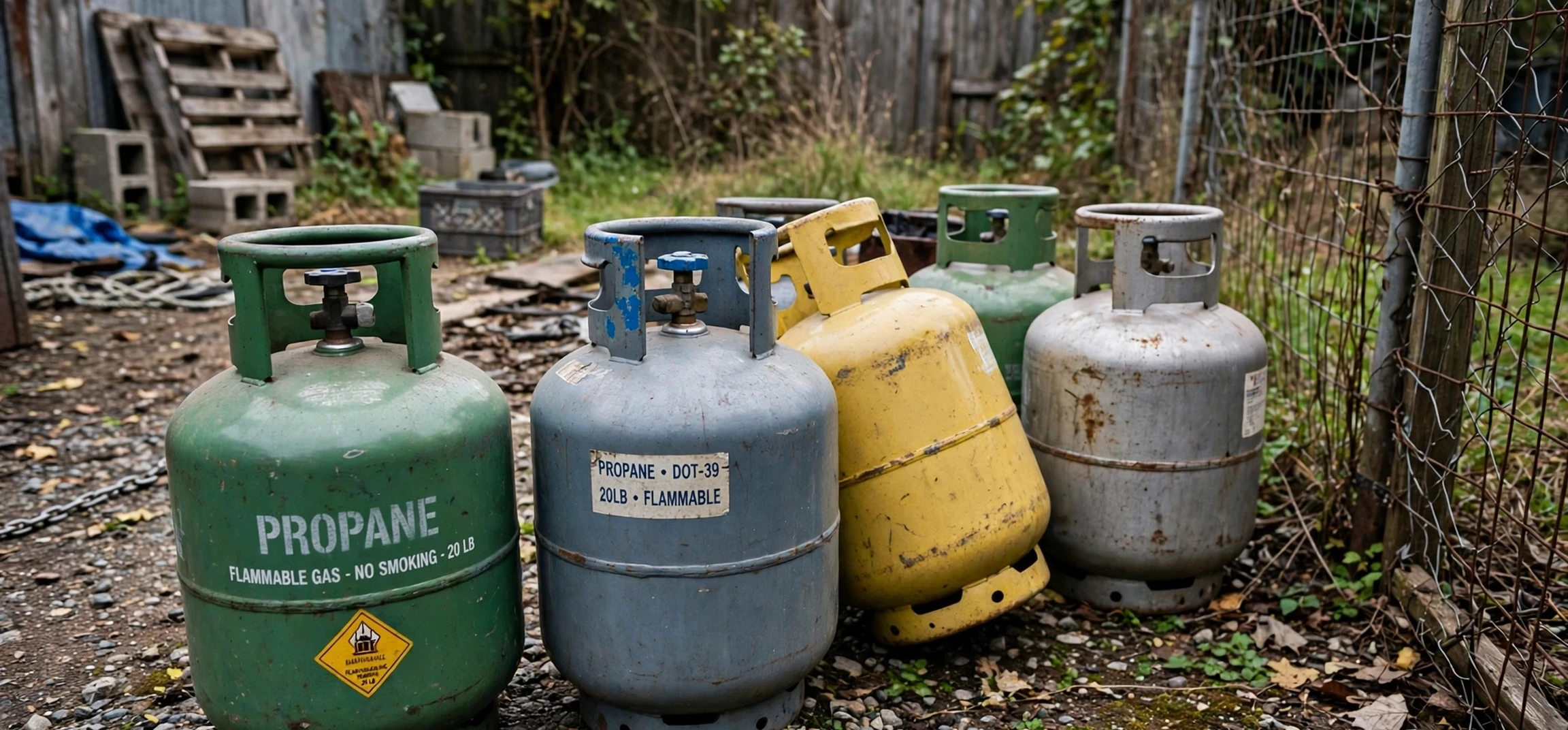
What is lp-gas? LP-gas, short for liquefied petroleum gas, is a flammable fuel made from propane, butane, or a mixture of the two, stored and transported as a liquid under pressure and used as a gas when released. If you have ever asked what is lp-gas while reading a fuel label, a heater manual, or a camping guide, this article gives you the complete answer. It explains what is lp-gas in plain language, how it is made, where it is used, how it differs from natural gas, and how to handle it safely. By the end, you will understand one of the world’s most versatile fuels and why it powers everything from home heating to forklifts and barbecues.
LP-gas belongs to a family of hydrocarbon fuels derived from natural gas processing and petroleum refining. At normal temperature and pressure, propane and butane are gases, but under moderate pressure they become liquids, which makes them far easier to store and transport than gas alone. A steel cylinder or bulk tank holds LP-gas as a liquid, and when a valve opens, the pressure drops and the liquid turns back into vapour that can be burned in a stove, heater, engine, or boiler. That simple principle, liquefaction under pressure, is the key to the fuel’s usefulness around the world.
What Is LP-Gas? The Full Definition
To answer what is lp-gas precisely, start with the name. Liquefied petroleum gas is a term for hydrocarbon gases that are liquefied by pressurisation. In most countries, LP-gas means propane, butane, or a propane-butane blend. Propane dominates in colder climates and in North America because it vaporises reliably at low temperatures. Butane is common in warmer regions and in smaller portable cartridges, because it is slightly cheaper and well suited to mild weather. Many commercial blends combine the two to balance performance, cost, and seasonal conditions.
Chemically, propane has three carbon atoms and butane has four, and both burn cleanly compared with many other fossil fuels, producing mainly carbon dioxide and water vapour when combustion is complete. That relatively clean burn is one reason LP-gas is popular for cooking, heating, and transport where mains gas is unavailable. It is not, however, a renewable fuel in its conventional form, although renewable versions made from waste oils and residues, often called bio-LPG or renewable LPG, are increasingly available and chemically similar.
LP-gas is colourless and odourless in its natural state, so suppliers add a distinctive smelling agent, usually ethyl mercaptan, to make leaks detectable by smell. That safety measure is essential, because undetected gas can accumulate and create a fire or explosion risk. The strong, unpleasant odour is deliberately designed to alert users immediately, and anyone who notices it should treat it as a warning, ventilate the area if it is safe to do so, avoid operating electrical switches or naked flames, and contact their supplier or emergency services for advice.
What Is LP-Gas Made From and How Is It Produced?
LP-gas is produced in two main ways. First, it is separated during natural gas processing, where raw natural gas from wells is treated to remove heavier hydrocarbons, including propane and butane, before the remaining methane is sent into pipelines. Second, it is produced during petroleum refining, where crude oil is distilled and cracked into different fractions, and propane and butane emerge as by-products of making petrol, diesel, and other fuels. In both cases, the resulting gases are compressed and cooled until they liquefy, then stored in pressurised tanks for distribution.
From production plants, LP-gas travels by pipeline, ship, rail, or road tanker to bulk storage terminals, then to distributors who fill cylinders or deliver to bulk tanks at homes, farms, and businesses. That distribution chain is one of LP-gas’s greatest strengths. Unlike mains natural gas, which requires a pipeline network, LP-gas can reach rural homes, remote work sites, islands, and vehicles far from any grid. That portability explains why what is lp-gas is such a common question in rural and off-grid communities, where cylinders and bulk tanks are everyday sights.
Quality and composition are regulated in most countries, with standards specifying the allowable proportions of propane, butane, and other hydrocarbons, as well as limits on impurities such as sulphur compounds. Suppliers must also follow strict rules for cylinder testing, filling, labelling, and transport. Those regulations protect consumers and ensure that appliances designed for LP-gas receive fuel of consistent quality and pressure characteristics.
Propane Versus Butane: What Is the Difference?
Propane and butane are similar but not interchangeable in every appliance. Propane has a lower boiling point, around minus 42 degrees Celsius, so it vaporises even in very cold weather, making it the standard choice for outdoor use in winter and for bulk tanks in cold climates. Butane boils at around zero degrees Celsius, so it performs well in warm conditions but may fail to vaporise on a cold day, which is why butane cartridges are mainly used indoors or in summer camping.
Appliances are designed for a specific gas and pressure, and regulators control the pressure at which gas reaches the burner. Using the wrong gas, or the wrong regulator, can cause poor performance, soot, or safety hazards. Always check the appliance manual and the cylinder label to confirm that the gas type matches the appliance, and never attempt to adapt a cylinder or regulator yourself. When in doubt, ask your supplier, who can confirm the correct product for your heater, cooker, or engine.
| Property | Propane | Butane |
|---|---|---|
| Boiling point | Around minus 42 degrees Celsius | Around zero degrees Celsius |
| Best climate | Cold and all-season outdoor use | Warm weather and indoor use |
| Common uses | Home heating, bulk tanks, vehicles, winter camping | Portable stoves, indoor heaters, lighters |
| Storage | Pressurised cylinders and bulk tanks | Smaller cartridges and cylinders |
| Energy content | High per unit weight, slightly lower per litre than butane | High per litre, excellent for portable use |
What Is LP-Gas Used For?
The uses of LP-gas are remarkably broad. In homes, it fuels cookers, water heaters, central heating boilers, and gas fires, especially where mains gas is unavailable. In rural areas, a bulk tank in the garden can supply a whole house, with a supplier refilling it on a schedule or when a gauge shows it is running low. In cooking, LP-gas is prized for instant heat control, which is why it powers restaurant kitchens, food stalls, and home barbecues around the world.
In industry and agriculture, LP-gas powers forklifts, grain dryers, greenhouses, and flame weeders, and it provides process heat for manufacturing. In transport, LP-gas, often called autogas in this context, fuels cars, buses, and fleet vehicles that have been converted or manufactured to run on it. Autogas typically costs less than petrol or diesel and produces lower emissions of some pollutants, which is why it remains popular for taxis, delivery fleets, and other high-mileage vehicles in many countries.
For leisure and outdoor life, LP-gas is almost indispensable. Camping stoves, lanterns, portable heaters, and caravan cookers commonly run on small propane or butane cartridges, giving travellers reliable heat and cooking far from any mains supply. Understanding fuel terminology helps in all these contexts, and general guides to word meanings, such as an explainer on how formal words are defined and a guide to broad descriptive terms, show how precise definitions prevent costly confusion when choosing equipment.
LP-Gas Versus Natural Gas: Key Differences
People often confuse LP-gas with natural gas, but they are different fuels with different properties. Natural gas is mainly methane, delivered by pipeline as a gas at low pressure, and it is lighter than air, so a leak tends to rise and disperse. LP-gas is mainly propane or butane, delivered in cylinders or bulk tanks as a liquid, and its vapour is heavier than air, so a leak tends to sink and collect in low areas such as basements, drains, and pits. That difference has important safety implications and is one reason LP-gas appliances and natural gas appliances are not interchangeable.
The two fuels also differ in energy content and pressure. LP-gas contains more energy per unit volume than natural gas, which is why smaller quantities can deliver substantial heat. However, burners, jets, and regulators must be matched to the fuel, because the two gases burn at different rates and require different air mixtures. Converting an appliance from one fuel to the other is a job for a qualified professional, not a do-it-yourself task, and it may require different parts and safety checks.
Cost and availability also differ. Natural gas is usually cheaper where pipelines exist, but it is unavailable in many rural and remote areas. LP-gas fills that gap, offering a flexible, storable fuel that can be delivered anywhere a tanker or cylinder can reach. For many households, the choice is not between the two fuels on price alone, but between LP-gas and alternatives such as oil, electricity, or solid fuel, depending on local infrastructure.
LP-Gas Safety: Storage, Handling, and Leak Response
LP-gas is safe when handled correctly, but it demands respect because it is flammable and stored under pressure. Cylinders should always be stored upright, outdoors or in a well-ventilated area, away from heat sources, drains, and ignition risks, and never in a basement or enclosed pit where heavier-than-air vapour could collect. Bulk tanks require professional installation with proper clearances from buildings, boundaries, and ignition sources, and they must be inspected and maintained according to local regulations.
When using LP-gas appliances, follow the manufacturer’s instructions, keep ventilation openings clear, and have appliances serviced regularly by a qualified technician. Check hoses and regulators for damage, cracks, or wear, and replace them when recommended or when they show signs of deterioration. Never use a damaged cylinder, never attempt to refill a disposable cartridge, and never store spare cylinders indoors near living spaces. Safety guidance for other equipment follows the same principle of proper fitting and regular checks, as seen in guides to fitting safety equipment correctly, where correct setup prevents accidents.
If you smell gas, act calmly and quickly. Do not switch lights or appliances on or off, do not use a mobile phone in the affected area, and do not try to find the leak with a flame. Open doors and windows if it is safe to do so, turn off the gas supply at the cylinder or tank if you can do so safely, leave the area, and call your supplier or emergency services from a safe location. Carbon monoxide is another risk with any fuel-burning appliance, so install carbon monoxide alarms where recommended and never use outdoor LP-gas heaters or barbecues indoors.
What Is LP-Gas? Quick Facts to Remember
For a fast recap, what is lp-gas can be answered in one sentence: it is liquefied petroleum gas, made from propane, butane, or a blend, stored as a liquid and used as a gas. Readers who ask what is lp-gas should remember three points: it is portable, it is heavier than air as a vapour, and it needs the correct regulator for each appliance. The question what is lp-gas also comes up when comparing fuels, and the key distinction is that LP-gas arrives in cylinders or bulk tanks, while natural gas arrives by pipeline. Anyone who can answer what is lp-gas can also explain why it suits rural homes, camping, and vehicles so well. Finally, when someone asks what is lp-gas in a safety context, the answer should always include outdoor storage, good ventilation, and prompt action if a leak is smelled. Keeping those facts together makes what is lp-gas easy to recall, and it makes what is lp-gas a practical question rather than a confusing one. In short, what is lp-gas is a question about a versatile, pressurised fuel, and what is lp-gas deserves a clear, safety-first answer every time.
Frequently Asked Questions
What is lp-gas in simple terms?
What is lp-gas in simple terms? LP-gas is liquefied petroleum gas, a fuel made from propane, butane, or a mix of both, stored as a liquid under pressure in cylinders or tanks and used as a gas for cooking, heating, hot water, vehicles, and industry. It is portable, versatile, and widely used where mains gas is unavailable.
Is LP-gas the same as propane?
LP-gas is not exactly the same as propane, although propane is the most common form of LP-gas in many countries. LP-gas is a category that includes propane, butane, and propane-butane blends. Always check whether your appliance requires propane, butane, or a specific blend.
Is LP-gas safe to use at home?
LP-gas is safe when appliances are correctly installed, serviced, and used according to instructions, with proper ventilation and storage. Its vapour is heavier than air, so cylinders must be stored outdoors in ventilated areas, leaks must be taken seriously, and carbon monoxide alarms should be fitted where recommended.
Conclusion
Now you can answer what is lp-gas with confidence. LP-gas is liquefied petroleum gas, a pressurised liquid fuel based on propane and butane that becomes a clean-burning gas when released. It heats homes, cooks food, powers vehicles and forklifts, dries crops, and fuels camping adventures, all without needing a pipeline. Its portability and versatility make it essential for rural homes, remote sites, and outdoor life, while its safety rules, including outdoor storage, correct regulators, and prompt leak response, keep it reliable. Whether you meet LP-gas as a barbecue cylinder, a bulk home tank, or an autogas pump, you now know what it is, how it works, and how to use it safely.