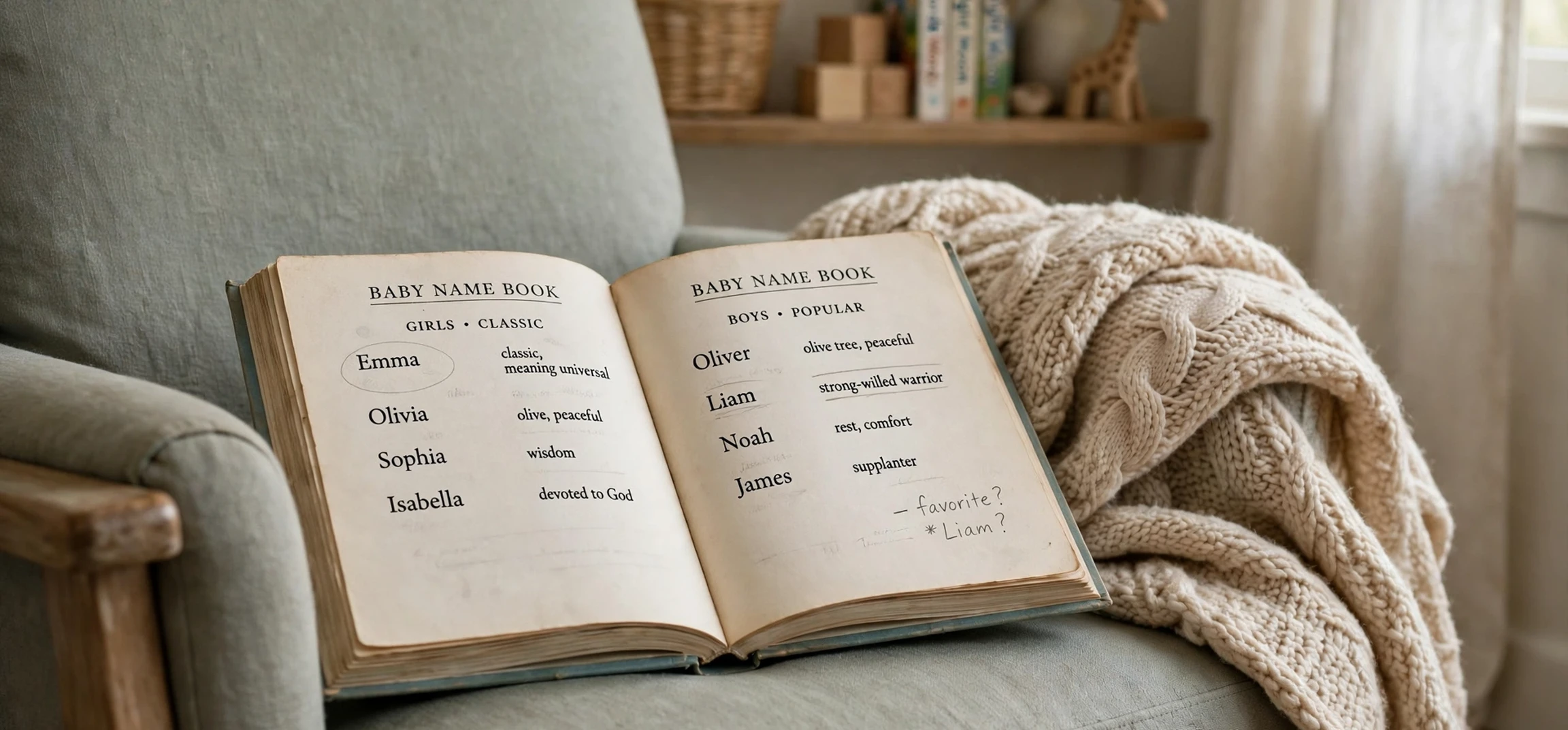
The definition of Blaise is a question many parents ask when they first hear this elegant, single-syllable name and want to know what it actually means. Put simply, the definition of Blaise is a given name of Latin origin, derived from Blasius, that is traditionally explained as meaning “one who stammers” or “one who lisps”. Yet that short dictionary answer only scratches the surface, because the way Blaise is understood today — by families, writers, and name lovers — draws on centuries of saints, scholars, and storytellers as well.
This guide takes a different path from a bare dictionary entry. Instead of stopping at the etymology, it explores what the meaning of the name Blaise feels like in practice: how it is used, why it appeals to modern parents, which names pair well with it, and what cultural associations it carries. If you are weighing Blaise for a child, a character, or a project, this fuller picture should help you decide whether it fits.
Definition of Blaise Explained in Plain Language
When name books give the definition of Blaise, they usually start with Latin. The Roman name Blasius is the ancestor of the modern form, and it is linked to blaesus, a Latin word describing someone who stammers or lisps. In the ancient world, names drawn from speech or appearance were entirely ordinary, and they were not intended as insults. They were identifiers, much like modern surnames drawn from occupations or places.
Over the centuries, the meaning shifted in practice even though the etymology stayed the same. The name became attached to Saint Blaise, a bishop remembered for his care for others, and later to Blaise Pascal, one of the most celebrated thinkers of the seventeenth century. As a result, the everyday meaning of Blaise — what people think of when they hear it — has far more to do with wisdom, clarity, and distinction than with any speech difficulty. Language, in this sense, outgrows its dictionary entry.
It is also worth separating meaning from sound symbolism. Blaise sounds like “blaze”, and many people instinctively connect it with fire, light, and energy. That connection is not part of the formal etymology, but it is a genuine part of how the name is received. A name’s sound shapes first impressions, and Blaise benefits from a sound that feels warm, bold, and modern.
Definition of Blaise in Modern Naming
In modern naming, the definition of Blaise is best understood as a rare but recognisable choice with European heritage. It is not among the most popular boys’ names in English-speaking countries, and that relative rarity is precisely why many parents choose it. It avoids the feeling of a name heard in every classroom, while remaining easy to spell, pronounce, and remember.
Blaise also sits comfortably in several style categories at once. It appears on lists of French names, vintage revivals, short strong boys’ names, and intellectual names inspired by scientists and philosophers. That versatility makes it a good fit for families who want a name that feels both classic and contemporary, traditional without being old-fashioned.
For parents considering international use, Blaise is a practical pick. It is recognised in France, understood across much of Europe, and straightforward for English speakers. Unlike names with complex spellings or unfamiliar sounds, Blaise travels well, which matters for families who live, work, or travel across borders.
The Saint and the Scholar Behind the Name
Two figures dominate the cultural history of Blaise. The first is Saint Blaise, a fourth-century bishop of Sebastea who became one of the most widely venerated saints of the Middle Ages. He is traditionally invoked as a protector of the throat, and the blessing of throats associated with his feast day remains part of church life in many places. For families with a faith background, this connection gives Blaise a gentle, protective resonance.
The second is Blaise Pascal, whose contributions to mathematics, physics, and philosophy were extraordinary. Pascal worked on probability theory, atmospheric pressure, and early calculating devices, and he wrote with a clarity that still impresses readers today. His surname lives on as a unit of pressure, but his first name also gained prestige from his achievements. When people describe Blaise as a clever or thoughtful name, Pascal is usually the reason, whether they realise it or not.
Together, these two figures explain why the definition of Blaise feels richer than its Latin root suggests. One represents compassion and care, the other represents reason and discovery, and both give the name a depth that a single-word translation cannot capture.
Middle Names and Sibling Names That Suit Blaise
Because Blaise has only one syllable, it pairs naturally with longer middle names. Combinations such as Blaise Alexander, Blaise Theodore, Blaise Nathaniel, and Blaise Emmanuel all flow well, giving the full name a pleasing rhythm. Shorter middle names can work too — Blaise James and Blaise Cole have a crisp, modern feel — but a longer middle name often balances the brevity of Blaise most elegantly.
For siblings, names with a similar blend of history and distinctiveness work best. Consider August, Felix, Hugo, Julian, or Silas for brothers, and Cleo, Ines, Margot, Odette, or Vivienne for sisters. These names share Blaise’s European flavour and its balance of familiarity and rarity, without sounding like copies of one another.
If you are exploring other names in the same spirit, our guide to the origin of the name Anton is a good next read, since Anton shares a classical European background. The meaning of the name Cassian offers another Latin-derived option with a similarly refined sound, and the meaning of the name Bowen shows how a name with a very different origin can still complement Blaise as a sibling choice.
Blaise in Fiction and Popular Culture
Writers have long favoured Blaise for characters who are intelligent, observant, or slightly apart from the crowd. The name’s rarity makes a character memorable, while its scholarly associations suggest depth. In fantasy and historical fiction in particular, Blaise often belongs to a mentor, a scholar, or a quietly determined hero — a figure whose judgement matters to the story.
This fictional use, in turn, reinforces the name’s real-world appeal. Parents who encounter Blaise in a favourite book or series may carry a warm association with it for years, and when they later choose names, that fictional character can tip the balance. Names and stories feed each other in this way, and Blaise is a good example of the process.
| Aspect | What it means for Blaise |
|---|---|
| Origin | Latin, from Blasius |
| Traditional meaning | One who stammers or lisps |
| Modern impression | Bright, clever, distinctive |
| Pronunciation | “Blayz” in English |
| Best paired with | Longer middle names and classic surnames |
Common Questions About the Name
Is Blaise difficult to pronounce or spell?
No. Blaise is spelled as it sounds in English once the “ai” vowel is learned, and most people recognise it on first hearing. Its single syllable makes it one of the easier distinctive names to use.
Does the traditional meaning put people off?
Rarely. Most people are unaware of the Latin connection to stammering, and the name’s cultural associations with a saint and a great scholar are far more prominent in everyday life.
Can Blaise be used for a girl?
Yes, though it is traditionally masculine. Some families use Blaise for girls, while others prefer the spelling Blaze. Either way, the sound and history remain the same.
What nicknames go with Blaise?
Blaise is already short, so nicknames are uncommon. Some families use “Blaze” informally, while others simply use the full name, which is brief enough to need no shortening.
Definition of Blaise: A Summary for Name Seekers
Returning to the core question, the definition of Blaise can be summarised in two layers. The dictionary layer says it is a Latin-derived name meaning one who stammers or lisps. The lived layer says it is a distinctive, elegant name associated with a revered saint, a brilliant scholar, and a bright, confident sound. Both layers are true, and both are useful, but for most families the lived layer matters more.
Names are chosen for how they feel as much as for what they meant two thousand years ago. Blaise feels thoughtful, warm, and individual. It honours a long European tradition while sounding entirely at home in the present day. That combination — old roots, fresh sound — is why it continues to attract parents who want something meaningful without choosing something common.
Reading Further on the Definition of Blaise
Anyone who wants to go deeper into the definition of Blaise will find that name dictionaries, histories of French naming, and biographies of Blaise Pascal each add a different piece. Dictionaries give the Latin root and the traditional translation, histories show how the definition of Blaise spread through saints’ calendars and parish records across Europe, and biographies show how one remarkable bearer reshaped what the name suggests. Reading all three kinds of source together is the best way to move beyond a one-line answer. The definition of Blaise that emerges is not a single fact but a small history in itself, and that history is part of what makes the name rewarding to choose and to study.
It is also worth comparing Blaise with names from other traditions before deciding. A name’s definition matters, but so do its sound, its length, and its associations in the community where a child will grow up. The definition of Blaise scores well on all of these measures: it is brief, distinctive, easy to pronounce, and backed by a story that parents can explain with pride.
Conclusion
Ultimately, the definition of Blaise is more than a translation. It is the story of a Latin name that passed through saints’ legends and scientific history to become a modern favourite for families seeking distinction with depth. Whether you value its etymology, its cultural heroes, or simply its striking sound, Blaise offers a rare balance of brevity and richness. If you are searching for a name that is short to say, easy to remember, and full of history, Blaise deserves a place at the top of your list.