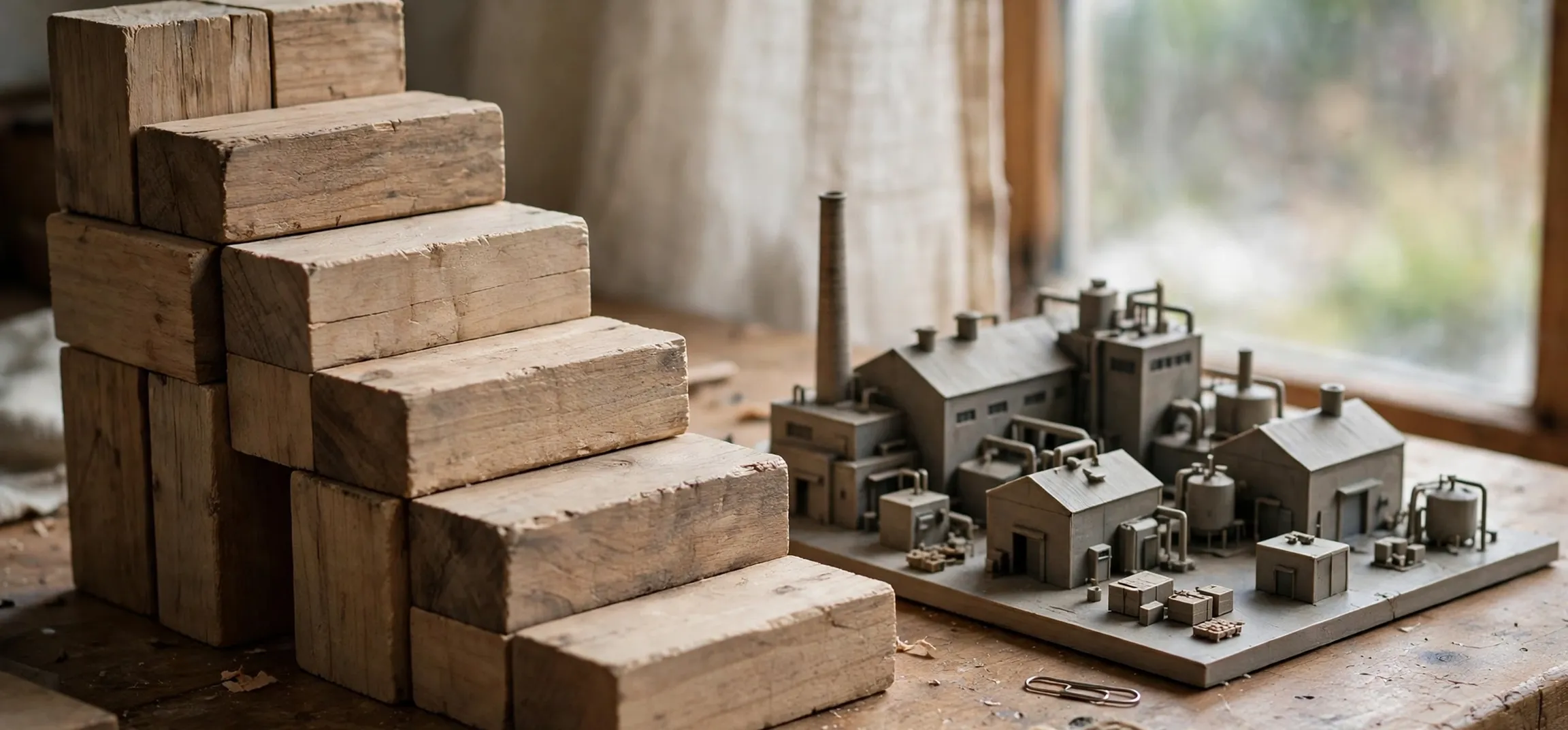
The vertical integration definition is simple at its core: it describes a business strategy in which one company owns or controls more than one stage of its own supply chain, instead of buying every input or service from outside firms. A coffee company that grows its own beans, roasts them, and sells the finished drink in its own shops is vertically integrated. So is a carmaker that makes its own batteries rather than ordering them from a supplier. The vertical integration definition matters because it explains how some companies gain control over costs, quality, and timing, while also taking on risks that more specialised firms avoid.
Students, founders, and investors meet this idea in textbooks, business news, and company reports, and it is often contrasted with outsourcing, franchising, and horizontal expansion. Understanding the vertical integration definition helps you read those stories with sharper eyes: when a retailer buys a factory, when a studio buys a cinema chain, or when a food brand buys a farm, the same strategic logic is usually at work. This guide explains the idea in plain language, works through forward and backward integration, weighs the benefits and drawbacks, and shows how to judge whether the strategy fits a particular business.
What the Vertical Integration Definition Covers
A full vertical integration definition starts with the supply chain itself. Most products pass through several stages: raw materials are sourced, components are made, goods are assembled, and finished products are distributed and sold. A company that operates at only one of those stages depends on other firms for everything before and after it. A vertically integrated company brings two or more of those stages under one roof, under common ownership or tight contractual control. The key word is control. Owning a stage outright is the strongest form, but long-term exclusive contracts and joint ventures can create a similar effect, and textbooks sometimes count those looser arrangements as partial integration.
It helps to picture a clothing brand. A non-integrated brand might buy fabric from one supplier, hire a factory to sew garments, and sell through independent shops. A vertically integrated brand might own the textile mill, run its own factories, and operate its own stores. Each extra stage it absorbs changes its cost structure, its staffing needs, and its exposure to disruption. If fabric prices spike, the integrated brand feels it differently from a brand that can switch suppliers quickly. If a factory closes, the integrated brand cannot simply place an order elsewhere. That trade-off between control and flexibility sits at the heart of every decision about integration, and it is why the strategy suits some industries far better than others.
Vertical Integration Definition: Backward Integration
Backward integration means moving upstream, toward the raw materials and inputs a company needs. A bakery that buys a flour mill, a smartphone maker that acquires a chip designer, or a furniture company that buys a timber supplier has integrated backward. The usual motives are security of supply, steadier input prices, and quality control. A firm that has suffered shortages, sudden price rises, or inconsistent quality from suppliers often looks upstream for a fix. Owning the input can also protect a trade secret, since a sensitive component no longer has to be described to an outside manufacturer.
Backward integration also brings new management problems. Running a mill, a mine, or a chip plant is a different business from baking bread or assembling phones, and it demands different skills, capital, and safety standards. A company can therefore solve a supply problem while creating a management problem, and the investment may be hard to reverse if the market changes. Smart firms test the move carefully: they compare the cost of ownership with the cost of a strong long-term supply contract, they check whether the upstream business can survive on its own merits, and they ask what happens if demand for the final product falls. Backward integration works best when the input is scarce, specialised, or central to the product’s quality.
Forward Integration and Full Integration
Forward integration moves in the opposite direction, downstream toward the customer. A manufacturer that opens its own retail shops, a farm that sells direct to households, or a software company that builds its own sales and support channel has integrated forward. The rewards are closer contact with customers, control over pricing and presentation, and a larger share of the final sale price. A brand that once depended on retailers to display its products well can now guarantee the experience, gather customer feedback directly, and launch new products without negotiating shelf space.
Full integration combines both directions: a company controls stages from raw material to final sale. Classic examples include large oil companies that extract, refine, transport, and sell fuel, and some food and drink groups that farm, process, package, and retail. Full integration offers the greatest control and the greatest complexity. It needs deep capital, broad management talent, and patience, because a weakness at any stage can drag on the whole chain. Many modern firms prefer a hybrid: they own the stages where control matters most, such as design or customer relationships, and partner with specialists elsewhere. That selective approach keeps the spirit of integration without the burden of owning everything.
Benefits of Vertical Integration
The most cited benefit is cost control. Cutting out middlemen can remove markups at each stage, and coordinating production, transport, and sales inside one company can reduce delays and duplicated effort. Quality control is a close second: when one firm oversees several stages, it can set consistent standards, trace faults quickly, and protect its reputation. A third benefit is speed. Decisions that would require negotiation between separate firms can be made internally, which helps when launching products, fixing problems, or responding to a shortage. Companies also gain bargaining power and a clearer view of their whole chain, from input costs to customer complaints.
There are strategic benefits too. Integration can raise barriers for competitors, since a rival must now match not just one product but an entire chain. It can secure scarce inputs in a tight market, and it can stabilise supply during disruption, when outside suppliers prioritise their largest customers. For small businesses, even modest integration helps: a cafe that roasts its own beans, a jeweller who repairs in-house, or a bakery that delivers its own goods can differentiate itself and protect margins. The lesson is that integration is not only a strategy for giants; at a smaller scale, owning one extra stage can be enough to change a business’s fortunes.
Risks and Drawbacks to Weigh
Integration concentrates risk. A company that owns its supply chain cannot easily walk away from a failing stage, and a downturn in the final market leaves it carrying factories, warehouses, and staff it no longer needs. Capital demands are heavy: buying or building upstream and downstream capacity ties up money that might earn more elsewhere. Management stretch is another danger, since each new stage adds regulation, expertise, and operational complexity. A firm that excels at design may struggle with logistics, and a firm that excels at manufacturing may struggle with retail.
There is also a flexibility cost. Independent suppliers compete, innovate, and serve many customers, which keeps them sharp and spreads their fixed costs. An in-house unit with a guaranteed internal customer can grow complacent, and its costs may quietly rise above market rates. Regulators may also take an interest when integration reduces competition in a market, particularly if a dominant firm buys a key supplier or distributor that rivals depend on. The prudent question is therefore not whether integration sounds impressive, but whether each stage earns its keep against outside alternatives, and whether the company has an exit plan if conditions change.
Vertical Integration Examples in Plain Terms
Consider a streaming-era film studio that also owns cinemas, or a book publisher that owns printing presses and bookshops. In each case the company captures value at several stages and controls how its product reaches the audience. In manufacturing, an electric vehicle maker that builds its own batteries and charging network is integrating around the scarcest and most customer-visible parts of its product. In food, a farm-to-table restaurant group that grows produce, processes it centrally, and serves it in its own venues follows the same pattern at a local scale. None of these firms integrated for the sake of size alone; each targeted a stage where outside dependence was costly, unreliable, or strategically risky.
For readers running smaller ventures, the parallels are direct. A craft business that moves from buying finished packaging to printing its own labels, or from selling through marketplaces to running its own online shop, is integrating forward or backward in miniature. Guides for small firms often stress the same discipline: start with one stage, measure the true cost including management time, and keep the outside option alive as a benchmark. You can find related small-business reading in this guide to tools for small business outreach, and a broader markets perspective in this overview of long-run stock market returns. Both show how operational choices and market context interact.
| Strategy | Direction | Example | Main risk |
|---|---|---|---|
| Backward integration | Toward suppliers and inputs | Bakery buys a flour mill | Running an unfamiliar business |
| Forward integration | Toward customers and retail | Maker opens its own shops | Retail costs and complexity |
| Full integration | Both directions | Oil firm from extraction to pump | Heavy capital and rigidity |
| Selective integration | Chosen stages only | Brand owns design and stores | Dependence on partners elsewhere |
How to Judge Whether Integration Fits
A practical test has four questions. First, is the stage strategically critical: does it affect quality, cost, or availability in a way customers notice? Second, is the outside market failing you, through shortages, price swings, or poor quality that contracts cannot fix? Third, can your firm run the stage at least as efficiently as a specialist, once management time and capital costs are counted honestly? Fourth, can you reverse the move if you are wrong, by selling the unit or returning to outside suppliers? If the answers are mostly yes, integration deserves serious study. If they are mostly no, a tighter contract, a partnership, or a second supplier may deliver most of the benefit at a fraction of the risk.
Timing matters as well. Integrating during rapid growth can lock in capacity that later sits idle, while integrating during a supply crisis can mean paying peak prices for assets. Many firms therefore stage the move: a minority investment, a joint venture, or a trial contract first, followed by full ownership only when the economics are proven. Others integrate through technology rather than ownership, using shared systems and data to coordinate tightly with suppliers while keeping them independent. The vertical integration definition covers the ownership end of that spectrum, but in practice the smartest strategies often sit in the middle, combining ownership where it counts with partnership where specialists do the job better.
Key Points on the Vertical Integration Definition
The vertical integration definition is most useful when you apply it as a test, not as a label. Ask which stages a firm owns, why it owns them, and what it gave up to own them, and the vertical integration definition turns from a textbook phrase into a practical lens. A company that owns a stage because outside suppliers failed it has a different story from a company that bought a stage simply because it had cash to spend, and the vertical integration definition helps you tell those stories apart.
A second key point from the vertical integration definition is that partial control often beats full ownership. Contracts, joint ventures, and minority stakes can deliver much of the coordination benefit of the vertical integration definition without the full capital burden, and many successful firms mix ownership with partnership deliberately. The vertical integration definition therefore describes a spectrum, from loose coordination to full ownership, and the right position on that spectrum depends on how critical the stage is, how reliable outside suppliers are, and how well the firm can manage an unfamiliar business.
Finally, the vertical integration definition rewards readers who check numbers, not slogans. When a company announces a new acquisition, ask whether the vertical integration definition fits what actually changed, whether the acquired stage was a bottleneck, and whether the vertical integration definition would still look attractive if demand fell by a fifth. The vertical integration definition is a starting point for those questions, and the answers, found in costs, contracts, and capacity, decide whether integration creates value or merely creates size.
Frequently Asked Questions
What is vertical integration in one sentence?
The vertical integration definition in one sentence is that a single company owns or controls multiple stages of its own supply chain, from inputs through production to distribution or retail, rather than buying each stage from separate firms.
What is the difference between vertical and horizontal integration?
Vertical integration expands up or down a supply chain, while horizontal integration expands at the same stage, for example one retailer buying another retailer. The first changes how much of the chain a firm controls; the second changes how much of one market it holds.
Is vertical integration always profitable?
No. It can cut costs and secure supply, but it also ties up capital, adds management complexity, and reduces flexibility. Whether it pays depends on the industry, the stage being absorbed, and how efficiently the firm can run it compared with outside specialists.
Conclusion
In short, the vertical integration definition describes ownership across the stages of a supply chain, and its value depends entirely on execution. Backward integration secures inputs, forward integration reaches customers directly, and full integration does both at considerable cost and complexity. The firms that benefit most are those that integrate selectively, target stages where outside markets fail them, and keep testing their in-house costs against outside alternatives. Used that way, integration is a disciplined tool for control and resilience, not a badge of size, and it remains one of the most useful concepts for reading how modern companies are built.



