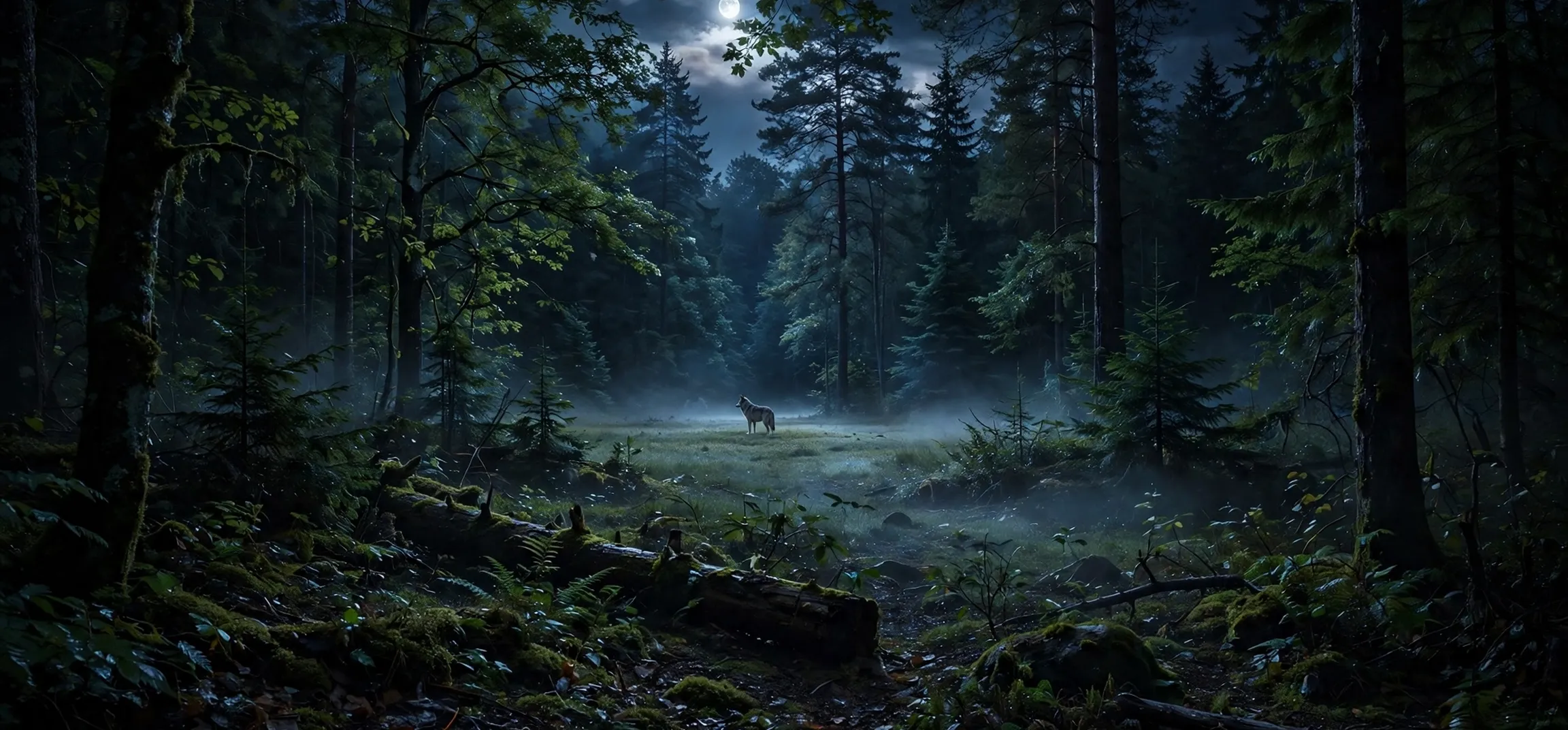
The phrase wolf in dream meaning is searched by people who have woken from a vivid dream about a wolf and want to know what it might suggest. In dream interpretation, there is no single proven answer. Wolves appear in folklore, stories, and cultural traditions around the world, and the ideas linked to them vary widely. This article explains wolf in dream meaning as a matter of cultural interpretation and symbolism, not as a scientific fact or a prediction about the future. What a wolf dream suggests, in these traditions, depends on the behaviour of the wolf, whether it was alone or in a pack, how the dreamer felt, and the dreamer’s own life and associations.
Dreams are personal, and the same image can feel threatening to one person and comforting to another. A person who grew up hearing wolf stories as tales of danger may react very differently from someone who admires wolves for loyalty and teamwork. For that reason, dream guides usually treat symbols as starting points for reflection, rather than fixed messages. The sections below walk through the most common interpretations, the main dream scenarios, and questions that can help a reader reflect on their own dream without treating any single reading as certain.
Wolf in Dream Meaning: The Core Symbols
In many cultural traditions, the wolf is linked to instinct, independence, loyalty, and the wild parts of human nature. A wolf in a dream is often read as a symbol of something untamed: a feeling, an impulse, or a part of life that is not fully under control. At the same time, wolves are social animals that live and hunt in packs, so they are also linked to family, friendship, teamwork, and belonging. This tension between independence and belonging is one reason why wolf in dream meaning can feel both exciting and unsettling.
Some interpretations focus on protection. A wolf standing guard, walking beside the dreamer, or leading the way is sometimes read as a guardian figure or as a sign of inner strength. Other interpretations focus on threat. A wolf that chases, growls, or bares its teeth is often read as a symbol of conflict, pressure, or a fear that has not been faced directly. Neither reading is a diagnosis, and neither should be taken as a warning about a real person or event. They are simply patterns that appear again and again in dream lore.
Common Themes Linked to Wolves
Across folklore and modern dream guides, wolves are linked to freedom, loyalty, intuition, courage, and survival. They are also linked to loneliness, because the image of a lone wolf is a powerful cultural shorthand for someone who stands apart from a group. A dreamer who feels isolated at work or at home may therefore notice wolf imagery more readily, although that does not prove a connection. The value of these themes is that they give the dreamer language for feelings that are otherwise hard to name.
Wolf in Dream Meaning by Scenario
The details of a dream often matter more than the animal alone. A friendly wolf, a distant wolf, a howling wolf, and a wolf pack can each carry different associations in traditional interpretation. The list below covers the scenarios people report most often, with the usual symbolic reading attached to each one. Remember that these are cultural readings, not facts, and that personal context should always come first.
A wolf that appears calm and watches from a distance is sometimes read as a sign of awareness: something in the dreamer’s life is being noticed more clearly, or an instinct is asking for attention. A wolf that howls is often linked to communication, loneliness, or a call for connection, because howling is how wolves stay in touch across distance. A wolf that runs freely may be read as a wish for freedom or movement, while a wolf that is trapped or injured may be read as a feeling of restriction or vulnerability.
A Wolf Pack Versus a Lone Wolf
A pack in a dream is often linked to community, family, and teamwork. Dream guides sometimes read a supportive pack as a reminder of the people who stand with the dreamer, and a hostile pack as a feeling of being outnumbered or judged by a group. A lone wolf, by contrast, is often linked to independence, self-reliance, or isolation. Whether the lone wolf feels strong or lonely in the dream is usually treated as the key detail, because the same image can carry opposite emotional tones.
Being Chased or Threatened by a Wolf
Dreams of being chased are common across many animals, not only wolves, and dream guides often read them as symbols of avoidance: a problem, a conversation, or a decision that the dreamer has been putting off. A wolf that attacks in a dream is sometimes read as a symbol of conflict or of anger, either the dreamer’s own anger or anger directed at them. Again, this is interpretation, not evidence. If a dream leaves a person distressed, talking it through with someone they trust is more useful than searching for a single hidden message.
Wolf Colour, Behaviour, and Setting
Some dream guides attach extra layers of meaning to colour and behaviour. A white wolf is often described as a symbol of purity, guidance, or spiritual protection in folklore, while a black wolf is sometimes described as a symbol of mystery, shadow feelings, or the unknown. A grey wolf, the most familiar in nature, is often treated as the neutral form, linked to balance and instinct. These colour readings come from storytelling traditions, not from science, and they vary from culture to culture.
Setting matters too. A wolf in a forest may be read as a journey into the unknown, a wolf near a home may be read as something close to daily life, and a wolf in snow or at night may be read as a feeling of coldness, distance, or uncertainty. None of these readings is fixed. A reader who loves winter walks may feel calm about snow, while another reader may feel exposed. Personal feeling is the most reliable guide to what a dream meant to the dreamer.
Cultural Views of Wolves in Dreams
In some Native American traditions, the wolf is respected as a teacher, a pathfinder, and a symbol of loyalty to family, and dream imagery is treated with care and respect. In European folklore, wolves have a darker reputation, appearing in fairy tales as figures of danger and cunning, which may explain why some dreamers feel fear even when the wolf in the dream does nothing threatening. In modern popular culture, wolves appear as heroes, villains, and shapeshifters, adding further layers to how people imagine them.
Because these traditions differ, wolf in dream meaning cannot be reduced to one universal message. A reader in one culture may associate wolves with wisdom, while a reader in another may associate them with risk. Both associations are valid as cultural readings. The important point is to notice which tradition feels closest to the dreamer’s own background and feelings, rather than accepting a single online list as authoritative.
Common Wolf Dream Scenarios at a Glance
The table below summarises the most common scenarios and the traditional symbolic readings linked to them. Use it as a reflection aid, not as a set of predictions.
| Dream scenario | Traditional symbolic reading | Question to reflect on |
|---|---|---|
| Friendly wolf beside you | Loyalty, guidance, inner strength | Who or what feels supportive right now? |
| Howling wolf | Communication, longing, connection | Is there something you need to say? |
| Wolf pack | Community, belonging, or group pressure | Do you feel supported or outnumbered? |
| Lone wolf | Independence, self-reliance, or isolation | Did the wolf feel free or lonely? |
| Wolf chasing you | Avoidance, pressure, or unresolved conflict | What have you been putting off? |
| White wolf | Guidance, clarity, or protection in folklore | Did the dream feel calm or mysterious? |
Readers interested in other dream topics can explore related guides on this site, including meaning of tigers in dreams, dream about zombies meaning, and dream of blood means.
How to Reflect on Your Own Wolf Dream
A useful approach is to write down the dream soon after waking, while details are still fresh. Note the wolf’s behaviour, the setting, the other people or animals present, and above all, how you felt during the dream and after waking. Feelings often reveal more than symbols: a dream that felt joyful is unlikely to carry the same personal meaning as a dream that felt frightening, even if the wolf behaved the same way in both.
Next, consider recent life events without forcing a connection. Stress, change, travel, family events, and even a film or book about wolves can all feed into dreams. Dream researchers note that dreams often recombine recent experiences and memories, which is why a wolf seen on television can appear in a dream that night without any deeper message. Keeping a simple dream journal for a few weeks can show whether wolf imagery repeats or whether it was a one-off image.
When a Dream Keeps Disturbing You
Most vivid dreams fade within a day or two. If nightmares repeat often, disrupt sleep, or cause lasting distress, it is sensible to speak to a doctor or a qualified health professional about sleep, rather than relying on dream interpretation alone. This article offers cultural background only and is not health advice. Good sleep habits, a calm bedtime routine, and reducing stimulating media before bed help many people, but persistent sleep problems deserve proper professional attention.
Frequently Asked Questions About Wolf Dreams
Is dreaming of a wolf good or bad?
In dream lore, it is neither automatically good nor bad. A calm or protective wolf is often read positively, while an aggressive wolf is often read as a symbol of conflict or fear. The dreamer’s feelings in the dream are usually treated as the most important clue.
Do wolf dreams have a spiritual meaning?
Some spiritual traditions treat the wolf as a spirit guide or teacher, while other traditions treat it purely as folklore. Whether a reader gives a dream a spiritual reading is a personal choice, and no single tradition speaks for everyone.
What does a recurring wolf dream mean?
Recurring dreams are often read in dream lore as a sign that a theme keeps returning to the dreamer’s mind, such as independence, loyalty, or a difficult relationship. From a research view, recurring dreams may also reflect stress or repeated daily experiences. Either way, they are worth noting, not fearing.
Wolf in Dream Meaning: Putting the Symbols Together
When readers search for wolf in dream meaning, they are often looking for one answer, but the traditions behind wolf in dream meaning offer a set of related ideas instead. The core of wolf in dream meaning is the balance between wild instinct and social loyalty, between standing alone and belonging to a pack. A calm wolf, a howling wolf, and a chasing wolf can each point to a different feeling, and the dreamer’s own emotions during the dream are usually the best guide to which reading fits.
That is why a careful approach to wolf in dream meaning always returns to personal context. The same wolf image may feel protective to one dreamer and threatening to another, depending on life experience, culture, and recent events. Treating wolf in dream meaning as cultural symbolism, rather than as a fixed prediction, keeps the interpretation honest and useful, and it leaves room for the dreamer to decide what, if anything, the dream brings to mind.
For quick revision, remember that wolf in dream meaning is a cultural reading, not a proven message. The idea of wolf in dream meaning changes with the wolf’s behaviour, with the dreamer’s feelings, and with wolf in dream meaning traditions in different cultures. A single list of wolf in dream meaning symbols cannot replace personal reflection, and wolf in dream meaning should always be read alongside the dreamer’s own life. Used in that careful way, wolf in dream meaning becomes a useful prompt for reflection rather than a prediction.
Finally, any guide to wolf in dream meaning should end where it began: with the dreamer’s own feelings. That personal check is what turns wolf in dream meaning from a list of symbols into a useful reflection.
Conclusion
To sum up, wolf in dream meaning is best treated as a rich set of cultural symbols rather than a fixed code. Wolves can suggest instinct, loyalty, freedom, protection, loneliness, or conflict, depending on the dream’s details and the dreamer’s own feelings. A pack may point to community, a lone wolf may point to independence, and a howling wolf may point to a wish to be heard. None of these readings is a proven fact, and none should be used to predict events or to judge another person. The most helpful way to use this guide is as a starting point for reflection: notice what the wolf did, notice how you felt, and notice what in your own life those feelings bring to mind.