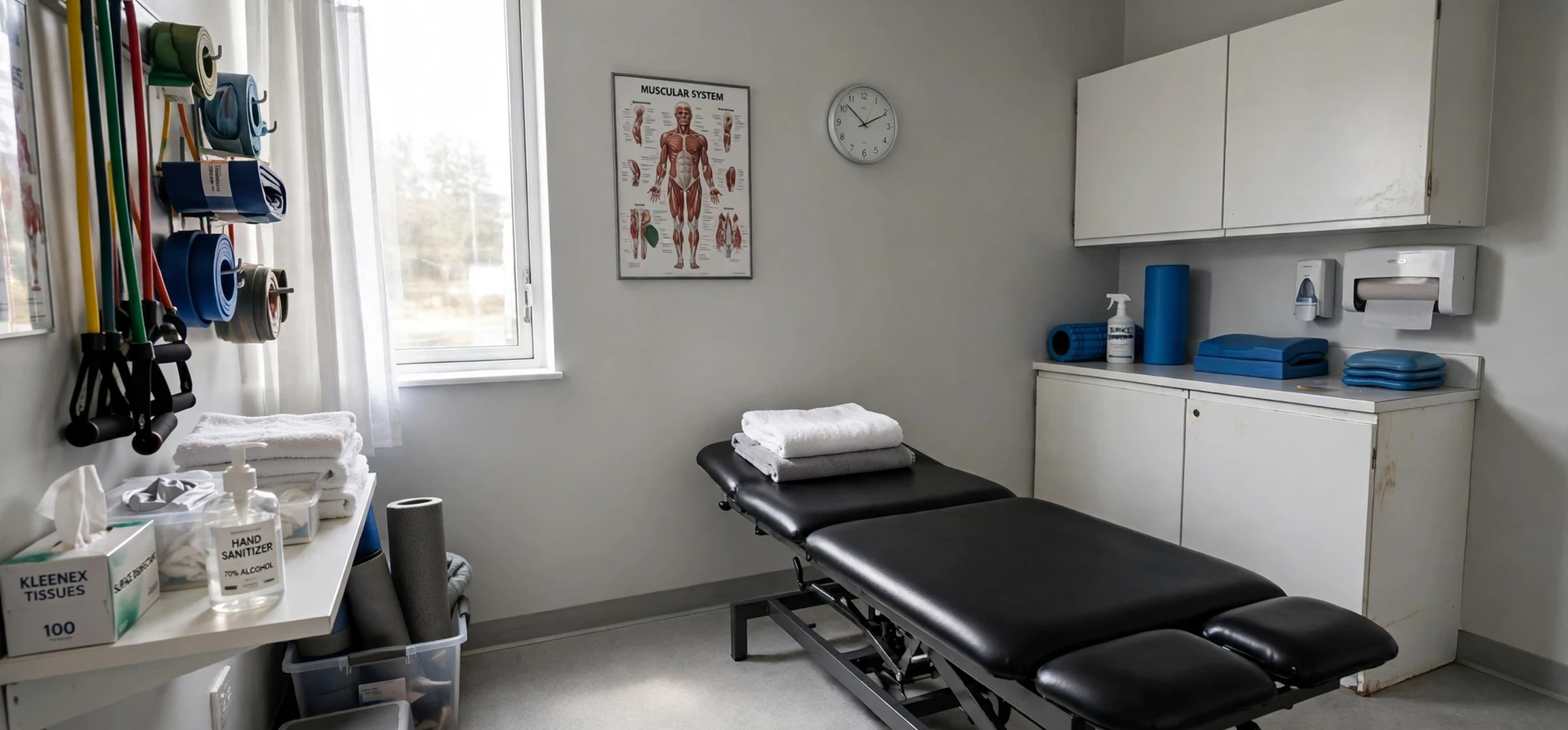
This guide offers general educational information about the definition of radiculopathy, with a particular focus on how clinicians approach assessment, what kinds of investigations are commonly described in educational sources, and when people are generally advised to seek care. The definition of radiculopathy itself is straightforward: it describes a disorder of a spinal nerve root that produces symptoms along the distribution of that nerve. What is less straightforward, and what this article explores, is how that general definition is applied to an individual person, what information a clinician gathers, and why the process often involves several steps rather than a single test. This article is educational only. It does not diagnose, it does not recommend any treatment, and it is not a substitute for advice from a qualified clinician who can assess an individual case.
Readers often arrive at this topic after seeing the term in a medical report, a referral letter or a search result, and their first question is usually practical: what happens next? The honest general answer is that what happens next depends on the person’s history, examination findings and, where appropriate, investigation results, all interpreted together. No article can replicate that process, but understanding its usual shape can make appointments less daunting, help readers prepare useful questions, and clarify why a clinician may order one investigation rather than another, or none at all.
Definition of Radiculopathy: How Assessment Is Generally Approached
Clinical assessment for suspected radiculopathy generally begins with a detailed history. A clinician will typically ask when symptoms began, whether they came on suddenly or gradually, exactly where they are felt, and whether they travel along a limb or stay in one place. They may ask about the character of any pain or altered sensation — whether it is sharp, burning, tingling or numb — and about any weakness, such as difficulty with grip, walking or lifting the foot. They will also ask about factors that seem to influence symptoms, about previous spinal problems, about general health, and about any other symptoms that might be relevant. That history is not small talk; it is the foundation on which the rest of the assessment is built, because the pattern of symptoms often points towards a particular nerve root or region.
The physical examination that follows generally includes checks of sensation, muscle strength and reflexes, alongside an examination of the spine and the affected limb. Sensation may be tested with light touch or other stimuli in different areas, to map where feeling is altered and whether that map matches a nerve root’s distribution. Strength may be tested movement by movement, because different muscles are supplied by different roots, and a pattern of weakness can therefore be informative. Reflexes, such as the knee or ankle reflex, may be checked because a reduced reflex can accompany involvement of the root that supplies that reflex arc. None of these tests is diagnostic on its own; together, they build a picture that the clinician compares with the history.
Clinicians also consider other conditions that can produce similar symptoms. Pain travelling down a leg, for example, can arise from structures other than a nerve root, and numbness or weakness can have causes outside the spine altogether. Part of the assessment is therefore about ruling out or recognising those alternatives, which may involve questions about general health, medication, and other symptoms, and sometimes referral to another specialty. That breadth is a strength of clinical assessment, and it is why a single symptom, viewed in isolation, rarely points to a single conclusion.
Definition of Radiculopathy: Investigations Described in General Terms
When investigations are used, their purpose is to add information to the history and examination, not to replace them. Magnetic resonance imaging, commonly known as MRI, is frequently described in educational sources as an investigation that can show the spinal cord, nerve roots, discs and surrounding soft tissues in detail. It is often used when a clinician needs to see whether a disc, a narrowing, or another structural change corresponds to the nerve root suggested by the history and examination. MRI does not involve ionising radiation, but it does require lying still in a scanner, and it may not be suitable for everyone, which a clinician will consider.
Computed tomography, or CT scanning, is another imaging technique that is sometimes described, particularly for showing bony structures of the spine in detail. It may be used when MRI is not available or not suitable, or when bony detail is the main question. Plain X-rays, which show bones but not nerves or discs in detail, may be used to assess alignment, bony changes or previous injury, but they cannot by themselves confirm or exclude nerve-root involvement. The choice among these techniques depends on the clinical question, the person’s circumstances, and what information is already available.
Electrodiagnostic studies, including nerve conduction studies and electromyography, are sometimes described as investigations that assess how nerves and muscles function electrically. In general terms, nerve conduction studies measure how signals travel along a nerve, while electromyography records electrical activity in muscles. These studies can provide information about whether a nerve is functioning normally and, if not, where along its course the problem may lie. They are specialised investigations, usually performed by clinicians with specific training, and their results are interpreted alongside the history, examination and imaging, not in isolation.
Blood tests and other laboratory investigations do not diagnose radiculopathy directly, but they may be used when a clinician is considering other causes of symptoms, such as inflammatory, metabolic or infectious processes. A reader who encounters unfamiliar laboratory terms in reports may find our general guides helpful, including our explainer on what a high RDW level means in blood tests and our guide to the meaning of TSH in a blood test, both of which explain terms in general educational language.
Why Imaging Results Need Careful Interpretation
One of the most important general points about investigations is that imaging findings and symptoms do not always match neatly. Age-related changes in discs and joints are common in people without any symptoms, and a person with clear symptoms may have imaging that looks relatively unremarkable. Conversely, a striking finding on an image may not be the cause of a person’s symptoms if its location does not match the pattern of those symptoms. Clinicians are trained to interpret images in context, and a report’s wording — including terms that sound alarming to a lay reader — may have a more measured meaning in clinical use. Our guide to what unremarkable means in a medical report illustrates how easily report language can be misread without that context.
That is also why clinicians may sometimes decide that no imaging is needed at a particular stage, or that imaging should wait until other information is gathered. Investigations carry costs, practical burdens and, in some cases, risks, and they are most useful when they are likely to change management or clarify a specific question. A decision not to image immediately is not the same as dismissing symptoms; it is often a judgement about timing and about which information will be most helpful. Readers who are unsure why a particular investigation has or has not been ordered should feel able to ask their clinician to explain the reasoning.
| Investigation type | What it generally shows | General limitations |
|---|---|---|
| History and examination | Symptom pattern, sensation, strength, reflexes | Depends on the person’s description and the examiner’s findings |
| MRI scan | Nerve roots, discs and soft tissues in detail | Findings may not match symptoms; not suitable for everyone |
| CT scan | Bony structures of the spine in detail | Less detail on nerves and discs; involves radiation |
| X-ray | Bones, alignment and bony changes | Does not show nerves or discs directly |
| Electrodiagnostic studies | Electrical function of nerves and muscles | Specialised; results need clinical interpretation |
Definition of Radiculopathy: When to Seek Care
General guidance in educational sources is consistent on one point: new, persistent, worsening or worrying symptoms should prompt a conversation with a qualified clinician, rather than self-assessment. That applies to travelling pain, numbness, tingling or weakness that does not settle, to symptoms that interfere with everyday activities, and to any pattern that is new or unfamiliar. Early assessment does not imply that something serious is wrong; it simply ensures that symptoms are properly understood and that any condition requiring attention is identified in good time.
Certain features are generally described as reasons to seek care promptly or urgently. These include sudden or rapidly worsening weakness, symptoms affecting both legs, changes in bladder or bowel function, numbness in the saddle region, severe or worsening pain that does not ease, symptoms following a significant injury, and symptoms accompanied by fever, unexplained weight loss or a history of cancer. This list is educational, not a personal triage tool: if any of these features are present, or if you are worried for any reason, seek medical attention promptly and describe what you are experiencing clearly, rather than trying to judge urgency yourself.
It is also worth seeking care if symptoms recur after a previous episode, if they change in character or distribution, or if they begin to affect sleep, work or mobility in a way they did not before. Changes in a familiar pattern can be as informative as a new pattern, and clinicians would rather hear about a change early than late. Keeping a simple, factual record — when symptoms started, where they are felt, what they feel like, and what seems to influence them — can help make that conversation more productive.
Preparing for an Appointment
Preparing for an appointment can reduce anxiety and improve the quality of the assessment. Useful preparation includes noting the timeline of symptoms, listing current medications and relevant medical history, bringing any previous imaging reports or referral letters, and writing down questions in advance. Questions might cover what the clinician thinks is happening, what investigations, if any, are being considered and why, what the next steps are, and when to return or seek further advice. There is no need to arrive with a diagnosis in mind; arriving with a clear description of experience is more helpful than arriving with a label.
During the appointment, it is reasonable to ask for explanations in plain language, to ask what terms in a report mean, and to ask for written information to review afterwards. If a term such as radiculopathy appears in a letter, asking the clinician to explain which nerve root is involved, which region of the spine is being discussed, and how that relates to the symptoms described, can turn an abstract term into a concrete understanding. Good communication is part of good care, and clinicians generally welcome questions that show a patient is engaged with their own health.
Frequently Asked Questions
Is there a single test that proves radiculopathy?
No. Assessment generally combines history, examination and, where appropriate, imaging or electrodiagnostic studies, interpreted together. The definition of radiculopathy describes a pattern, not a test result, so no single test can by itself establish the definition of radiculopathy in an individual case. A clinician’s judgement about the overall pattern is central.
Does everyone with suspected radiculopathy need an MRI scan?
Not necessarily. Whether imaging is needed, and which type, depends on the clinical question, the examination findings, and individual circumstances. Even when the definition of radiculopathy is being considered, a clinician can explain why imaging is or is not being recommended at a particular stage, and how the definition of radiculopathy relates to the investigation chosen.
What symptoms should prompt urgent care?
In general educational terms, sudden weakness, symptoms affecting both legs, changes in bladder or bowel function, saddle numbness, symptoms after significant injury, or symptoms with fever or unexplained weight loss are described as reasons to seek prompt or urgent medical attention, whether or not the definition of radiculopathy ultimately applies. When in doubt, seek care promptly rather than waiting, and mention the definition of radiculopathy only as a term you have read about, not as a self-diagnosis.
Definition of Radiculopathy: Assessment in Summary
In summary, applying the definition of radiculopathy to an individual person involves more than naming the term. The definition of radiculopathy guides clinicians to ask about symptom patterns, to examine sensation, strength and reflexes, and, where appropriate, to use imaging or electrodiagnostic investigations. The definition of radiculopathy also reminds readers why investigations must be interpreted in context: findings on an image do not always match symptoms, and symptoms alone do not establish a cause. The definition of radiculopathy therefore works best as shared language between patients and clinicians, helping both sides describe what is happening clearly. The definition of radiculopathy does not, on its own, diagnose anyone, and this guide’s educational discussion of the definition of radiculopathy should always be followed, where relevant, by advice from a qualified clinician.
Conclusion
The definition of radiculopathy — a disorder of a spinal nerve root producing symptoms along that nerve’s distribution — is only the beginning of understanding how the term is used in practice. Assessment involves a careful history, an examination of sensation, strength and reflexes, and, where appropriate, imaging or electrodiagnostic investigations, all interpreted together by a clinician. Knowing when to seek care, and how to prepare for an appointment, helps readers navigate that process with greater confidence. This guide has provided general educational information only, without diagnosis or treatment advice. If you are experiencing symptoms described here, or if you are worried about a term in a medical report, speak to a qualified clinician, who can assess your individual situation and explain the next steps.



