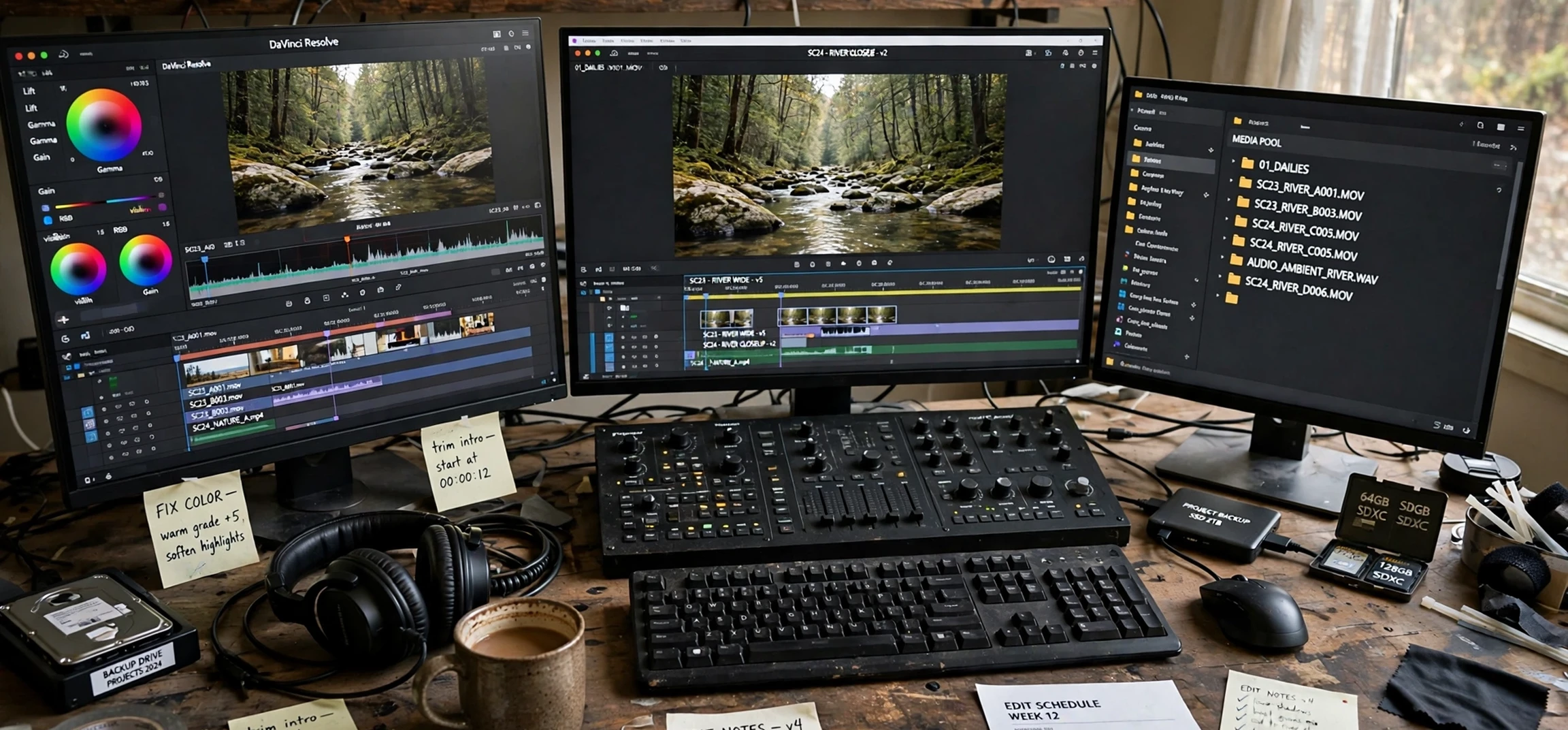
The meaning of montage is easiest to grasp when you think of it as a sequence of short images, sounds, or moments placed together so that their combination tells a story faster, and more powerfully, than any single shot could on its own. In film, a montage compresses time: a character trains for weeks, a city changes across seasons, or a relationship grows, all in a minute or two of carefully edited footage. In music, a montage can be a medley or a layered arrangement that brings separate sounds into one flowing piece. In everyday speech, people use the word for any collection of pictures, clips, or memories assembled into a single display. At its heart, the meaning of montage is about assembly with intention. The pieces are not random. They are chosen, ordered, and timed so that the viewer or listener understands something new from the whole that no individual piece could express alone.
Understanding the meaning of montage matters because the technique is everywhere in modern media. You see it in movie trailers, sports highlights, wedding videos, social media reels, video game cutscenes, and even news recaps. Editors use montages to show progress, contrast, emotion, and change without wasting the audience’s time on every small step in between. A training montage in a sports film, for example, does not need to show every workout in full. Instead, quick cuts of running, lifting, failing, and improving tell the audience that the character is becoming stronger and more determined. That shortcut is not laziness; it is storytelling craft. When you learn to spot a montage, you start to understand how editors shape your feelings, pace your attention, and guide you toward a conclusion without saying a word.
What the meaning of montage Really Covers
The meaning of montage in its broadest sense covers any deliberate joining of separate elements into a unified work. The word comes from French, where monter means to mount or assemble, and it originally described the physical act of cutting and joining film. Over time, the idea expanded far beyond the editing room. Photographers create photo montages by layering or arranging images. Musicians build sound montages from samples, loops, and recorded fragments. Writers and teachers sometimes describe a montage of memories, meaning a series of vivid recollections presented one after another. In each case, the same principle applies: separate parts gain new significance when placed side by side. A single image of a sunrise is pleasant; a sequence showing sunrise, a busy street, a classroom, and a quiet evening tells the story of a whole day.
There is also an important distinction worth keeping in mind. A montage is not simply a long video or a random slideshow. The selection and the order matter. Editors think about rhythm, contrast, repetition, and progression. A montage that moves from struggle to success feels uplifting because the order creates that arc. Reverse the order, and the same clips would feel like a decline. Similarly, a montage that alternates between two places can suggest that events are happening at the same time, or that two characters share a connection even when they are apart. This is why film scholars treat montage as a language of its own, with its own grammar of cuts, juxtapositions, and pacing choices that audiences learn to read almost without noticing.
The meaning of montage in Film and Editing
In cinema, the meaning of montage is most closely tied to editing theory. Early Soviet filmmakers such as Sergei Eisenstein argued that meaning is created not inside a single shot but in the collision between two shots. Show a hungry person, then show a bowl of food, and the audience understands hunger and desire without any dialogue. Show a peaceful crowd, then a charging army, and tension appears instantly. This idea, often called intellectual montage, showed that editing is not just a technical job of joining scenes; it is a creative act that produces ideas, emotions, and arguments. Modern filmmakers still rely on this principle, even in films that never draw attention to their editing.
Film montages take several common forms. A narrative montage compresses story time, showing weeks of travel, study, or preparation in a few minutes. A rhythmic montage uses the beat of music or the pace of cuts to create energy, which is why training sequences and chase recaps feel so exciting. A contrast montage places opposing images together, such as wealth beside poverty or celebration beside mourning, to make a point without narration. A parallel montage, also called cross-cutting, alternates between two storylines to build suspense or show connection. Each form serves a different purpose, but all of them depend on the audience’s ability to fill in the gaps. Viewers do not need every detail explained; they infer the missing steps from the sequence, which is exactly what makes montage such an efficient storytelling tool.
Classic Examples Audiences Recognise Instantly
You have almost certainly seen famous montages even if you never knew the term for them. The training sequence in a boxing film, where the hero runs through city streets at dawn while music swells, is a textbook example. So is the opening of a film that shows a couple falling in love through a series of dates, seasons, and small shared moments. Animated films often use montages to show a character growing up, a house being built, or a journey unfolding across a map. These sequences work because they respect the audience’s intelligence. Rather than spelling out every change, they trust viewers to understand growth, time passing, and emotional change from a well-chosen handful of images.
The meaning of montage in Music and Sound
In music, the meaning of montage shifts slightly but keeps the same core idea: separate sounds are combined into a single listening experience. A musical montage might blend samples from different recordings, layer a spoken voice over an instrumental track, or move quickly through several melodies to suggest a journey through different moods. DJs and producers often build montages for live sets, moving from one track into another so smoothly that the audience hears a continuous flow rather than a series of disconnected songs. In film scores, a musical montage pairs a changing piece of music with changing images, so that the music itself tells part of the story, rising during triumph and softening during reflection.
Sound montages also appear in radio, podcasts, and theatre. A documentary might open with a montage of street sounds, news clips, and interview fragments that together establish a place and a mood before any narrator speaks. A stage production might use a sound montage to move the audience from one location to another without changing the set. In each case, the technique works because human hearing is good at recognising patterns and contrasts. A sudden silence after a loud passage feels dramatic. A repeated melody returning after a long absence feels like homecoming. Composers and sound designers use these responses deliberately, assembling sound the way film editors assemble images.
Montage in Everyday Life, Photography, and Games
Beyond film and music, the meaning of montage shows up in everyday creative life. A photo montage on a wall might combine childhood pictures, travel snapshots, and recent portraits to tell a family’s story at a glance. A wedding video montage pairs music with highlights from the day so that guests who missed a moment can still feel its joy. A student portfolio might present a montage of projects to show range and growth over time. Social media creators assemble montages of workout progress, cooking steps, travel highlights, or behind-the-scenes clips, because short, fast sequences hold attention far better than long, unedited footage.
Video games use montage in cutscenes and trailers too. A game trailer often strings together its most dramatic moments, boss battles, landscapes, and character reveals into a short montage that gives players a sense of the world without spoiling the full story. In gameplay videos, creators edit hours of play into a highlight montage of wins, funny failures, and impressive moves. The principle is identical to film: choose the moments that matter, cut the rest, and order the survivors so that the result feels exciting, coherent, and true to the experience. Even in a business presentation, a montage of product photos, customer moments, and team milestones can communicate progress more vividly than a list of bullet points.
How to Create a Good Montage Yourself
Creating a strong montage starts with a clear purpose. Decide what feeling or idea the sequence should leave behind: growth, nostalgia, excitement, contrast, or change. Then gather far more material than you will use, and be ruthless in selecting only the clips or images that serve that purpose. Order them so that there is a sense of movement, whether that is from problem to solution, from past to present, or from quiet to loud. Pay attention to rhythm: cuts that match the music feel natural, while a sudden long shot after many fast cuts can create emphasis. Finally, test the montage on someone who has not seen the raw material. If they understand the story or feeling without an explanation, the montage is working. If they feel confused, the selection or the order probably needs adjusting.
Montage Versus Collage, Compilation, and Slideshow
People often confuse montage with similar terms, so it helps to draw clear lines. A collage usually arranges images spatially, side by side or layered on a single surface, while a montage usually unfolds over time, with one element following another. A compilation gathers material together, but it does not always shape it into a new argument or emotional arc; a montage does. A slideshow simply presents images in order, often at a steady pace, whereas a montage uses pace, music, contrast, and juxtaposition as expressive tools. These distinctions are not rigid rules for everyday conversation, but they help creators and critics describe what a piece is actually doing. When someone calls a video a montage, they usually mean it has been edited with intention, not merely collected.
| Form | How It Works | Best Used For |
|---|---|---|
| Film montage | Short shots edited in sequence to compress time or build an idea | Training, travel, growth, and emotional change |
| Musical montage | Samples, melodies, and sounds layered or sequenced | Medleys, DJ sets, and scored sequences |
| Photo montage | Images arranged or layered into one display | Memories, portfolios, and celebrations |
| Video game montage | Highlights edited into a fast, exciting sequence | Trailers and gameplay highlights |
| Sound montage | Recorded fragments combined to set a scene or mood | Documentaries, podcasts, and theatre |
Why the meaning of montage Still Matters Today
The meaning of montage matters more today than ever because short-form video has made everyone an editor. Millions of people now cut clips, add music, and share sequences daily, often without realising they are practising a century-old film technique. Understanding montage helps viewers become more thoughtful consumers of media as well. When you notice that a news recap, an advertisement, or a political video has selected only certain moments and ordered them in a particular way, you can ask what was left out and what effect the order creates. That critical awareness does not spoil enjoyment; it deepens it, because you can appreciate both the craft and the choices behind it.
For creators, montage is also a practical skill with real value. Teachers use it to summarise lessons. Businesses use it to showcase products. Charities use it to show impact. Families use it to preserve memories. In every case, the same lesson applies: the whole can say more than the sum of its parts, but only when the parts are chosen with care. A montage filled with every available clip feels cluttered, while a montage built from a few strong moments feels memorable. Learning to edit with that discipline is one of the most useful creative skills in a world where attention is short and visual storytelling is everywhere.
Frequently Asked Questions About Montage
What is a montage in simple terms?
In simple terms, a montage is a sequence of short clips, images, or sounds put together to tell a story, show change over time, or create a feeling. The meaning of montage is assembly with purpose: the order and selection create meaning that single pieces alone would not carry.
Is a montage the same as a trailer?
Not exactly. A trailer often contains a montage, but a trailer also includes titles, release information, and a marketing purpose. A montage is the editing technique itself, and it can appear inside trailers, films, videos, music, and photo displays.
Can a montage be used outside film?
Yes. Photo montages, musical montages, sound montages, and video game highlight montages all use the same principle. Anywhere separate moments are assembled into a meaningful sequence, the idea of montage applies.
Why do training montages work so well?
Training montages work because they compress long, repetitive effort into a short, rhythmic sequence. The audience sees struggle turning into skill, and the music and pacing make that progress feel emotional rather than merely informational.
More on the meaning of montage for New Creators
New creators often ask how the meaning of montage should guide their first edits, and the practical answer is to start with a single clear idea before opening any editing software. When the meaning of montage is kept in mind, every cut becomes a choice about story rather than a random trim, and the finished sequence feels intentional even when it is short. A beginner who understands the meaning of montage will also spend less time adding effects, because they know that selection and order carry more weight than filters or transitions.
Practice is the fastest teacher here. Try cutting the same ten clips into two different orders and compare the results: one version might feel hopeful, while the other feels tense, even though no clip changed. That experiment demonstrates the meaning of montage better than any definition, because it shows how sequence creates interpretation. Repeating the exercise with music, with silence, and with different pacing will deepen your sense of how the meaning of montage works in practice, and it will help you recognise the same choices in professional films, advertisements, and online videos. Over time, studying the meaning of montage becomes second nature, and your edits will communicate more with fewer, better-chosen moments.
Finally, remember that the meaning of montage is not limited to professionals. Anyone who selects clips, orders photos, or layers sounds is already working with the meaning of montage, whether they use the term or not. Studying the meaning of montage simply makes those everyday choices more deliberate, and the meaning of montage will keep rewarding that attention every time you watch or create a sequence.
Conclusion
The meaning of montage ultimately comes down to one powerful idea: putting pieces together creates something new. Whether in film, music, photography, games, or everyday videos, a montage takes fragments of time, sound, and image and turns them into a story, a feeling, or an argument. It saves time, builds emotion, and trusts the audience to connect the dots. Next time you watch a training sequence, a wedding video, or a fast-paced highlight reel, notice the choices behind it: which moments were kept, which were cut, and how the order shapes what you feel. That awareness is the real reward of understanding montage, and it will change the way you watch, listen, and create. For more explainers on words and media terms, explore related guides such as this guide to a literary term, this look at a number with symbolic meaning, and this explainer on a broad descriptive phrase.