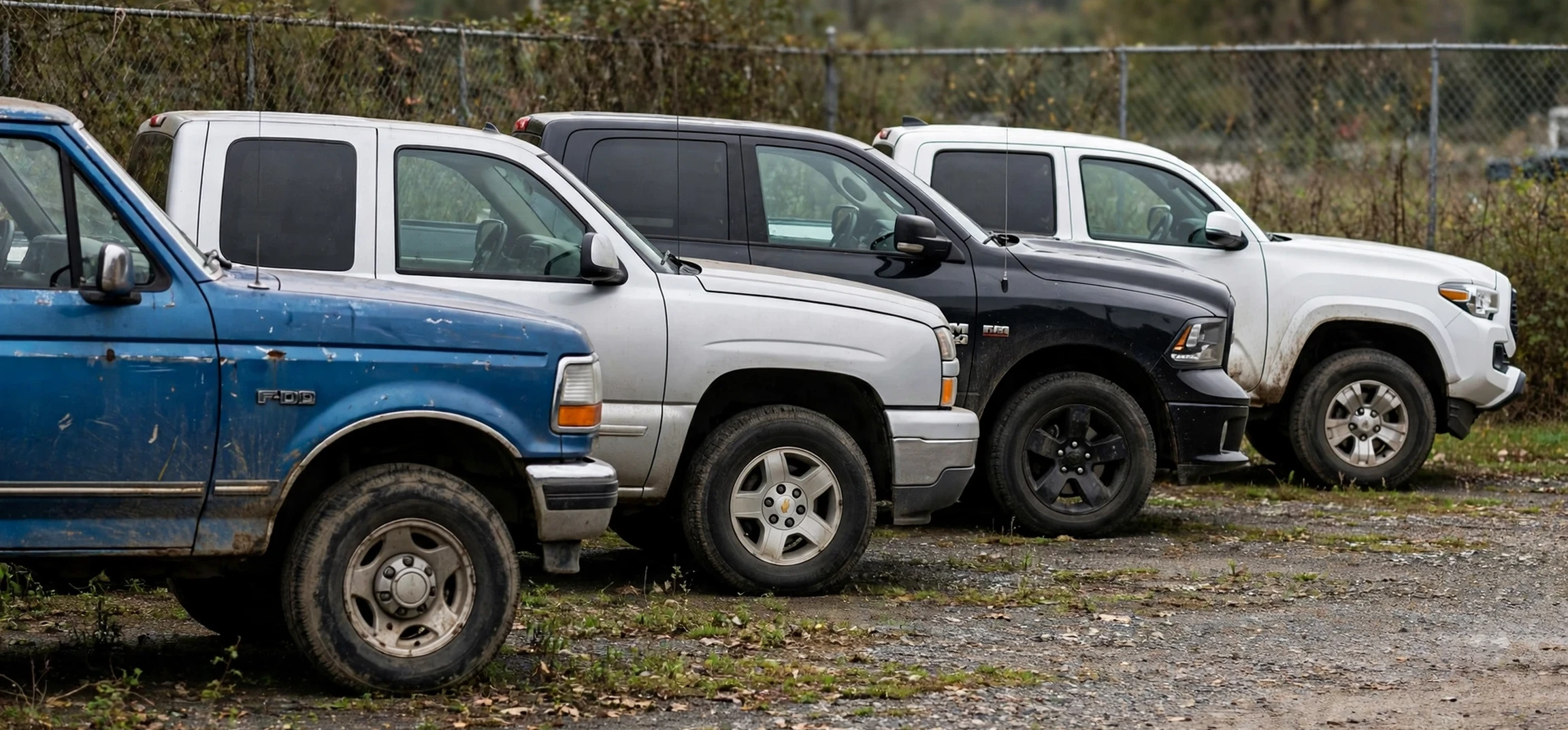
If you have searched for nada used truck prices, you are looking for a reliable way to understand what a used truck may be worth before you buy, sell, trade, or finance one. In plain terms, nada used truck prices are the value estimates published in the official NADA Guides for used trucks, based on factors such as model year, trim, mileage, condition, equipment, and region. Because those values change with the market, this guide never states a price as a current fact; instead, it explains how the guide works, which factors move a value up or down, and how to check the official source at the time you actually need a number.
That approach matters because a used truck is rarely a single, standard product. Two trucks with the same model year can differ widely in cab style, bed length, engine, drivetrain, towing equipment, accident history, and care, and each difference can change the value. A guide gives you a structured starting point for comparing trucks fairly, but the final worth of a particular truck still depends on its actual condition, its history, and what buyers in your area are willing to pay at that moment. Used well, the guide helps you negotiate with confidence; used badly, as a single fixed number, it can mislead both buyers and sellers.
What Nada Used Truck Prices Represent
To understand nada used truck prices, it helps to know what a price guide is and what it is not. A price guide collects large amounts of transaction and market data, organises it by vehicle, and publishes representative values for different condition levels and equipment combinations. It is not a promise that a particular truck will sell for a particular amount, and it is not a quote from a dealer or a lender. It is a reference point, built from market information, that buyers, sellers, dealers, insurers, and lenders can all consult when they need a common language for value.
NADA Guides, long known in the vehicle industry, publish values for cars, trucks, motorcycles, recreational vehicles, and other categories, with separate attention to the features that matter for trucks, such as payload, towing capacity, cab configuration, and four-wheel drive. When you look up a truck, you will usually be asked to select the model year, make, model, body style, and trim, and then to add options and mileage. Each choice narrows the result, which is why a careful, accurate selection matters far more than a quick, approximate one. A guide entry built on the wrong trim or the wrong equipment list will describe a different truck from the one in front of you.
Values in a guide are also time-sensitive. Market demand for trucks rises and falls with fuel prices, work trends, new-model releases, seasonal buying patterns, and the supply of used vehicles, so a value checked months ago may no longer reflect today’s market. That is why every serious use of a guide should include a fresh check at the official source, close to the date of the transaction, rather than reliance on a screenshot, a forum post, or an older article. The guide is most useful when it is current, specific, and matched to the exact truck you are evaluating.
How Nada Used Truck Prices Are Organised
When you open a truck entry in the official guide, you will typically see more than one value, and understanding the difference between those values prevents most confusion. A trade-in value reflects what a dealer might allow when you trade a truck toward another purchase, after accounting for reconditioning and resale risk. A private-party value reflects a sale directly between individuals, without a dealer’s overhead or warranty. A retail value reflects a sale through a dealer, where the price usually includes inspection, reconditioning, and dealer services. The same truck can therefore carry different guide values depending on the type of transaction, and comparing a trade-in figure with a retail asking price is comparing two different things.
Condition is the second organising principle. Guides commonly distinguish between rough, average, clean, and clean retail or similar condition bands, based on appearance, mechanical state, tyre and interior condition, and whether the truck needs work. A truck that runs well but needs bodywork, tyres, and interior repairs belongs in a lower band than a truck of the same year that has been maintained, garaged, and kept in clean cosmetic condition. Being honest about condition is essential: overstating condition does not raise the true worth of the truck, it only creates a gap between the guide figure and what an inspector or buyer will actually offer after seeing the vehicle.
Mileage, equipment, and region form the third layer. Higher mileage generally lowers a value, while lower mileage raises it, but the effect is not a simple straight line, because a well-maintained higher-mileage work truck can still be desirable for its capability. Factory options such as a larger engine, four-wheel drive, a towing package, or a premium cab can add value, while aftermarket additions vary widely in how the market treats them. Regional differences also matter, because demand for work trucks, off-road capability, or fuel-efficient models is not the same everywhere. A guide that lets you adjust for region gives a fairer picture than a single national average alone.
Reading a Guide Entry Step by Step
Start by identifying the truck exactly: model year, make, model, cab and bed configuration, drivetrain, and trim, using the door label, registration, or manufacturer’s information rather than memory. Next, enter the mileage accurately and add only the factory equipment the truck actually has. Then read the condition descriptions carefully and choose the band that matches the truck as it stands today, not as it looked when new or as it might look after repairs. Finally, note the transaction type that matches your plan, whether trade-in, private sale, or dealer retail, and record the date you checked the guide, so you can refresh the figure if the transaction takes time.
Factors That Move Nada Used Truck Prices
Several factors move nada used truck prices more than buyers often expect, and knowing them helps you explain a value rather than simply accept or reject it. Service history is one of the strongest: a complete record of regular maintenance, with receipts and a clean inspection, supports a higher condition band, while gaps in service or unresolved warning lights push the other way. Accident and title history also matter greatly, because a truck with a clean history and no major repairs is easier to finance and insure than one with structural damage or a branded title, even when both trucks look similar at first glance.
Capability and configuration matter in a truck-specific way. A truck bought for towing, hauling, or off-road work is valued partly for what it can do, so its engine, axle ratio, payload rating, and drivetrain are not cosmetic details but core parts of its worth. At the same time, heavy commercial use, such as constant towing at maximum capacity or fleet service, can wear components faster than light personal use, even at similar mileage. A careful buyer therefore looks beyond the headline mileage figure to how the truck was used, and a careful seller documents that use honestly, because a buyer who discovers heavy use later is far less likely to trust the asking figure.
Market timing is the factor no individual owner controls. When new truck supply is tight, used truck demand often rises; when new models arrive with updated features, older models may soften. Seasonal patterns also play a role, with work trucks and four-wheel-drive models sometimes drawing more interest at certain times of year. None of this means you should try to time the market perfectly, but it does mean that a guide value from last season is not a reliable substitute for a fresh check, and that a private sale, a trade-in, and a dealer listing made in the same week can still produce different outcomes. For a related guide to how vehicle values are presented in general, see this overview of the NADA price guide approach.
Using the Guide as a Buyer
As a buyer, the guide is best used before you visit a truck, not after you have already fallen in love with one. Look up the exact configuration, note the range for its condition band and transaction type, and carry that range with you as a reference, not as a script. When you inspect the truck, check the items that determine condition: body panels and paint, frame and underbody, tyres, interior wear, electronics, and any signs of leaks, rust, or previous repairs. A pre-purchase inspection by an independent mechanic is often the best money a buyer spends, because it turns a visual impression into a concrete list of what needs attention and what it may cost to address.
Negotiation works better when it is tied to evidence. If a truck is priced above the guide range for its condition, ask what justifies the difference: recent major service, new tyres, a documented repair, or rare equipment that the guide entry may not fully capture. If the seller cannot point to such evidence, the guide range gives you a calm, factual basis for an offer. If the truck is priced below the range, do not assume a bargain without checking why: title issues, undisclosed damage, or deferred maintenance can all explain a low figure, and an inspection will usually reveal which explanation applies.
Financing adds another reason to check the guide early. Lenders often use guide values when they assess how much they will lend against a used truck, and a purchase figure far above the guide value can affect loan terms or require a larger down payment. Checking the guide, and speaking with your lender about how it treats the truck you have in mind, before you commit, prevents an unpleasant surprise at the paperwork stage. A general explainer on what refinancing a vehicle means can help you understand how lenders think about vehicle value in a related context.
Using the Guide as a Seller
As a seller, the guide helps you set a realistic asking figure and explain it to buyers. Start with the same careful identification and honest condition assessment a buyer would use, then consider how you will sell: privately, where you handle advertising and paperwork yourself, or through a dealer or trade-in, where convenience is traded for a lower net figure. Each route has a different guide value, and choosing the wrong one as your asking figure is a common cause of slow sales or disappointed negotiations.
Preparation also affects the value a buyer perceives, even though it does not change the guide entry itself. A clean truck with a tidy interior, working lights and electronics, fresh fluids, and a folder of service records presents as a higher-condition vehicle than the same truck presented dirty and undocumented. Small, honest repairs, such as replacing worn wipers, fixing a broken trim piece, or addressing a minor leak, can move a truck into a cleaner presentation, while hiding a known fault almost always backfires when an inspector or experienced buyer finds it. Transparency builds trust, and trust is what turns a guide range into a completed sale.
When you advertise, describe the truck with the same precision the guide uses: model year, trim, cab and bed, drivetrain, mileage, major equipment, service history, and any known faults. That precision attracts serious buyers, reduces wasted viewings, and gives you a clear record if a buyer later questions the description. Keep your guide check dated, refresh it if the truck remains unsold for several weeks, and be ready to adjust if the market moves or if an inspection reveals something you had not noticed. Flexibility grounded in fresh guide data is far stronger than a fixed figure defended against all evidence.
| Step | Buyer Action | Seller Action |
|---|---|---|
| Identify the truck | Confirm year, trim, cab, drivetrain | Describe the truck with the same precision |
| Check the official guide | Note the range for the right transaction type | Set an asking figure from the matching range |
| Assess condition honestly | Inspect body, frame, tyres, interior, mechanics | Present service records and disclose faults |
| Verify history | Review title and history reports | Provide history documents willingly |
| Confirm financing | Ask the lender how it treats the guide value | Be ready for a lender valuation check |
| Refresh before closing | Recheck the guide close to purchase date | Update the asking figure if the market moved |
Nada Used Truck Prices: A Buyer Checklist
A checklist turns guide knowledge into action. Before you inspect a truck, check nada used truck prices for the exact configuration and note the range for the transaction type you plan, whether trade-in, private sale, or dealer retail. During the inspection, compare the truck in front of you with the condition band you used, and adjust your expectations if the body, interior, tyres, or mechanical state point to a different band. After the inspection, revisit nada used truck prices with the corrected condition and equipment, and use the updated range as the basis for negotiation, not the first figure you saw.
That discipline protects both sides of a deal. A buyer who checks nada used truck prices carefully can explain an offer with evidence, rather than with a feeling that a truck seems expensive. A seller who checks nada used truck prices before advertising can set a figure that serious buyers recognise as fair, and can answer questions about that figure without defensiveness. In both cases, nada used truck prices work best as a shared, current reference, checked from the official source close to the transaction date, rather than as a single number remembered from an old search. When buyers and sellers start from the same guide, the conversation shifts from arguing about worth to discussing the individual truck, which is where a fair deal is actually made.
Quick recap: nada used truck prices are a reference, not a promise. Check nada used truck prices for the exact configuration, compare nada used truck prices across condition bands and transaction types, and refresh nada used truck prices from the official source before you buy or sell. That fresh, specific check is what turns a guide figure into a useful negotiating tool.
Frequently Asked Questions About Used Truck Values
Is the guide value the selling price?
No. The guide value is a reference range based on market data for a given configuration, condition, and transaction type. The actual selling price depends on the individual truck, its history, local demand, and negotiation, so treat the guide as a starting point for comparison, not as a guaranteed price.
Why do two guides show different values?
Different guides use different data sources, methods, and update schedules, and they may define condition bands or transaction types differently. That is why it is important to know which guide you are using, to check it directly from its official source, and to compare like with like rather than mixing a trade-in figure from one guide with a retail figure from another.
How often should I recheck a value?
Recheck close to the date of your transaction, and again if weeks pass between your first check and the sale or purchase. Truck values move with supply, demand, and seasonal patterns, so a fresh check from the official source is always more reliable than an older figure, however carefully it was recorded.
Where should I check nada used truck prices before buying?
Check them directly from the official guide source, for the exact truck configuration and condition, close to your purchase date. Checking nada used truck prices that way gives you a current, specific range to compare with an asking figure, instead of relying on an older article, a screenshot, or a second-hand summary.
Conclusion: Use the Guide Fresh, Specific, and Honest
In summary, nada used truck prices are most useful when they are fresh, specific to the exact truck, and matched to an honest condition assessment and the right type of transaction. In other words, nada used truck prices help most when they are treated as a current guide, not as a fixed verdict. The official guide gives buyers and sellers a shared reference, but it does not replace inspection, history checks, or a conversation with a lender or dealer about the particular truck in front of you. Use it early, use it accurately, and refresh it before you close.
Whether you are buying your next work truck, selling a long-serving vehicle, or simply trying to understand what a truck in your driveway may be worth, that disciplined approach will serve you well. Check the official source, describe the truck precisely, be honest about condition, and let the guide inform your decision without pretending to make it for you. That is how a price guide earns its place in a fair, confident transaction, and it is why checking nada used truck prices fresh, and checking nada used truck prices for the exact truck, matters more than remembering any single figure.



