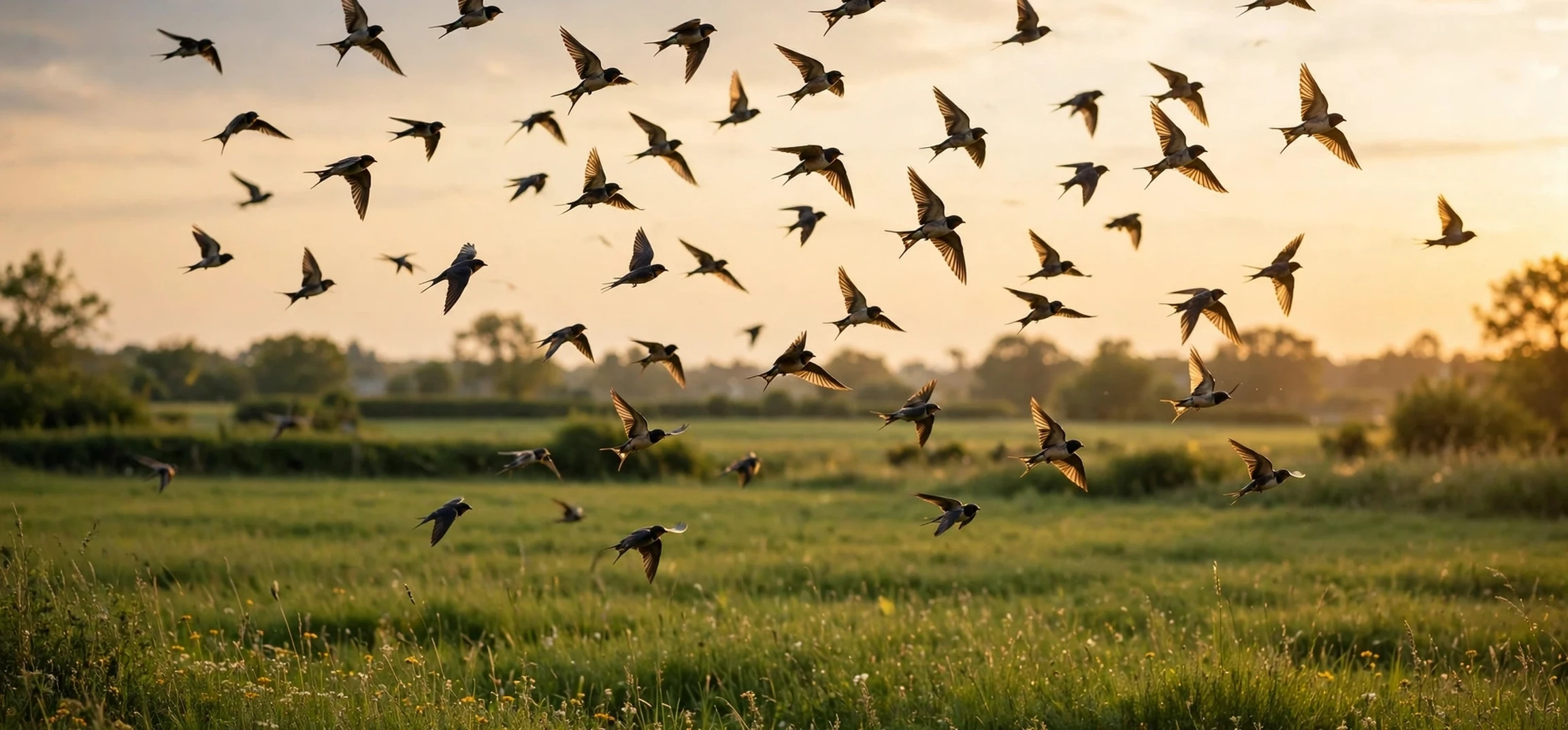
The search phrase words that mean a group of animals points to one of the most enjoyable corners of English vocabulary: collective nouns. A herd of cattle, a flock of sheep, a pack of wolves, and a school of fish are all examples of a single word doing the work of a whole description. Instead of saying many animals of one kind together, English often supplies a special term that also hints at how the animals behave, how they move, or how people have traditionally thought about them.
This guide explains what collective nouns for animals are, where many of them came from, and how to use the common ones correctly. It also covers the less familiar terms that appear in quizzes and word lists, the difference between a true collective noun and an ordinary plural, and the cases where more than one term is acceptable. By the end, you should be able to choose the right word with confidence, and to recognise when a colourful term is traditional, playful, or simply invented for effect.
words that mean a group of animals: the basics
A collective noun is a word that names a group as a single unit. In grammar, it can take a singular or a plural verb depending on whether the group is being treated as one thing or as many individuals. A herd is moving across the field treats the herd as one unit, while the herd are scattered across the field treats the animals as individuals. Both patterns appear in English, and the choice usually follows meaning rather than a strict rule.
Animal collective nouns are a subset of this larger category. People, objects, and places have collective nouns too: a team of players, a bunch of keys, a range of mountains. Animal terms attract special attention because so many of them are vivid and specific. English does not settle for one generic word for every animal group. It offers a herd for cattle, a flock for sheep, a pack for wolves, a pride for lions, a swarm for bees, and dozens more, each carrying its own associations.
The specificity is part of the pleasure. Saying a pride of lions suggests more than number. It suggests social structure, a family group, and a certain dignity that the word pride carries in ordinary English. Saying a swarm of bees suggests movement, noise, and a dense cloud of insects. The collective noun therefore does two jobs at once: it counts, and it characterises.
Group words versus ordinary plurals
It is important to distinguish a collective noun from a simple plural. Cows is a plural. A herd of cows is a collective phrase, in which herd is the collective noun and of cows tells you which animals form the group. The same distinction applies to sheep, which is both singular and plural, and to fish, where a school of fish is the collective phrase and fish alone is simply the plural. Many word lists blur this distinction, but keeping it clear helps you use the terms correctly in writing.
words that mean a group of animals: the common terms
Some collective nouns are in daily use and should be learned first, because they appear in news reports, nature writing, and school materials. A herd is used for cattle, elephants, deer, and other grazing animals that move together. A flock is used for sheep, goats, and many birds, especially when they are kept or herded by people. A pack is used for wolves and dogs, and by extension for other animals that hunt or travel as a coordinated group. A school is used for fish and for some sea mammals, such as dolphins, when they move together in a coordinated mass.
A pride is used for lions, and it is one of the best-known terms because lions are social cats that live in family groups. A troop is used for monkeys and baboons, and also for some other primates. A colony is used for ants, bees in some contexts, and for seabirds that nest together in large numbers. A swarm is used for bees, locusts, and other insects that gather in a dense, moving mass. A gaggle is used for geese on the ground, while a skein is used for geese in flight, a distinction that shows how precise these terms can be.
Other everyday terms include a litter for a group of young animals born at the same time, especially puppies and kittens; a brood for young birds hatched together, and by extension for other young animals under a parent’s care; a drove for cattle or sheep being moved together, often over a distance; and a shoal for fish, which is close to school but is often used for a looser grouping. The difference between school and shoal is a matter of usage rather than a strict scientific boundary, and both appear in reputable sources.
| Animal | Common group word | What it suggests |
|---|---|---|
| Cattle | Herd | Grazing animals moving together |
| Sheep | Flock | Animals kept or herded together |
| Wolves | Pack | Coordinated hunting or travelling group |
| Lions | Pride | Social family group |
| Fish | School or shoal | Coordinated or loose mass in water |
| Bees | Swarm or colony | Dense moving mass, or settled hive group |
| Geese on the ground | Gaggle | Noisy, loosely grouped birds |
| Geese in flight | Skein | Ordered formation in the air |
| Monkeys | Troop | Social group travelling together |
| Elephants | Herd | Family groups moving together |
Learning these ten terms covers most everyday situations. If you know herd, flock, pack, pride, school, swarm, colony, troop, gaggle, and litter, you can describe the majority of animal groups you are likely to meet in reading or conversation without reaching for a specialised list.
Where many animal group terms came from
Many of the most colourful collective nouns trace back to late medieval England, and in particular to hunting and country life. A famous fifteenth-century work on hunting, commonly associated with the Book of Saint Albans, listed terms of venery, which were the proper names for groups of animals and for other hunting matters. Some of those terms survived into modern English, some were revived by later writers, and some were invented in imitation of the medieval lists.
That history explains why the lists feel both systematic and playful. A murder of crows, a parliament of owls, and an unkindness of ravens are vivid, memorable, and slightly humorous, and they have been repeated so often that they now feel traditional. Whether every one of them was in genuine medieval use is a separate question from whether it is recognised today. Language works by repetition: a term that is widely repeated becomes usable, even if its pedigree is more recent than its fans suppose.
Later writers, especially in the nineteenth and twentieth centuries, added to the lists with enthusiasm, sometimes inventing terms for animals that had none. Those inventions are not wrong in the sense of breaking a rule, because there is no official body that approves collective nouns. They are, however, less established than herd, flock, and pack, and a careful writer will recognise the difference between a term in general use and a term that appears mainly in novelty lists.
Traditional, playful, and invented terms
A useful way to sort the lists is into three groups. The first group contains terms in genuine general use, such as herd, flock, pack, and school. The second group contains terms that are traditional or widely recognised but mainly used for colour, such as a murder of crows and a parliament of owls. The third group contains terms that appear only in novelty lists and are rarely used outside them, such as some of the more elaborate inventions for small or obscure animals. All three groups can be fun, but only the first group is essential for clear communication.
When you are writing for a general audience, prefer the first group. When you are writing for entertainment, a quiz, or a word game, the second group adds charm. When you meet a term from the third group, enjoy it, but check whether it is actually used before relying on it in formal writing.
Less familiar terms worth knowing
Beyond the common terms, a number of less familiar collective nouns are worth knowing because they appear frequently in quizzes, crosswords, and nature writing. A crash of rhinoceroses, a tower of giraffes, a bloat of hippopotamuses, and a dazzle of zebras all follow the same pattern: a vivid noun that captures something about the animal. A tower suggests height, a dazzle suggests the visual effect of stripes in motion, and a crash suggests weight and force.
Other examples include a pod of whales or dolphins, a raft of otters, a romp of otters on land in some lists, a business of ferrets, a muster of storks, a convocation of eagles, and a kettle of hawks in flight. Some of these are well attested, and some are more playful than practical. A pod is genuinely standard for whales and dolphins, while a business of ferrets is a traditional curiosity that most people meet only in lists.
Birds supply a particularly rich set of terms. A murmuration of starlings describes the shifting, cloud-like flocks that starlings form at dusk, and it is now widely used in nature writing. A charm of finches, a tidings of magpies, and a conspiracy of lemurs, which are primates rather than birds, show the same inventive spirit. The charm of these terms lies in the metaphor: the group word paints a picture, and the picture helps the term stick in memory.
Insects and small animals have their own terms as well. A colony of ants, a swarm of locusts, a nest of snakes in some lists, a knot of frogs, and a bed of oysters or clams all appear in collective noun collections. A bed in this sense is a place where shellfish gather, extended by metaphor into a group term. The variety shows how English draws on farming, hunting, sailing, and everyday observation to name animal groups.
Using group words correctly in writing
The safest rule is to match the term to the animal and to the situation. Use gaggle for geese on the ground and skein or wedge for geese in flight, rather than using one term for both. Use swarm for bees in flight as a dense mass, and colony for bees settled in a hive. Use school for fish moving in a coordinated group, and shoal where the grouping is looser. These distinctions are not always enforced strictly, but observing them marks a writer as careful.
Verb agreement deserves attention as well. In British English, collective nouns often take plural verbs when the individuals are emphasised, while in American English singular verbs are more common. The herd is grazing and the herd are grazing can both be defended, depending on the variety of English and the meaning intended. The safest course in formal writing is to be consistent within a document and to choose the verb that matches the sense you intend: singular for the group as a unit, plural for the individuals.
Avoid forcing a colourful term where a plain one will do. A group of dogs is usually clearer than an invented or obscure term, and a group of animals is perfectly acceptable when no standard collective noun exists or when the audience may not know it. The purpose of a collective noun is to clarify and to add colour, not to puzzle the reader. If the term needs a footnote, a simpler phrase may serve better.
For related word guides, see the site’s explanations of dog characters in popular culture, dog names in another language, and names for dogs by colour, which show how animal vocabulary extends beyond group terms into naming and description.
Frequently asked questions
What is the general word for a group of animals?
There is no single general word that fits every animal. Herd, flock, and group itself are the closest to general terms, but each animal has its own preferred collective noun, and the correct choice depends on the species and sometimes on the situation, such as geese on the ground versus geese in flight.
What do you call a group of wolves?
A pack of wolves. The term reflects the social and hunting behaviour of wolves, which live and hunt in coordinated family groups.
What do you call a group of fish?
A school of fish, or a shoal of fish. School usually suggests a coordinated group moving together, while shoal can suggest a looser grouping. Both are widely used.
Are terms like a murder of crows real?
They are recognised collective nouns in the sense that they appear in dictionaries and word lists and are widely understood, but many of them are traditional or playful rather than everyday terms. They are fine for colour and quizzes, while herd, flock, and pack remain the terms for ordinary use.
Can more than one group word apply to the same animal?
Yes. Geese, bees, and fish are examples where the term changes with situation or with the aspect being described. When two terms are both in use, context usually decides which is more appropriate.
Conclusion
Words that mean a group of animals are more than a parlour game. They record how people have observed animals, hunted them, farmed them, and written about them over centuries. The common terms, herd, flock, pack, pride, school, and swarm, do the everyday work of description. The colourful terms, from a murder of crows to a tower of giraffes, add metaphor and memory. Knowing which group a term belongs to, and when to prefer a plain phrase instead, is the real skill. Use the standard terms with confidence, enjoy the traditional curiosities, and let clarity decide whenever the two pull in different directions.



