If you enjoy historical comedy with a sharp, modern sense of humour, the norsemen tv series is a show worth knowing about. Norsemen, originally titled Vikingane in Norwegian, is a Norwegian comedy series set in the Viking Age that treats its historical world with surprising detail while filling it with characters who speak and argue like people from today. The result is a comedy that is both a parody of Viking dramas and a clever workplace sitcom in disguise, where raids, feasts, and village politics become the backdrop for very familiar human problems. This guide offers a factual overview of the norsemen tv series, including its premise, main characters, humour, production, and why it found an audience far beyond Norway.
The norsemen tv series was created by Jon Iver Helgaker and Jonas Torgersen, and it first aired in Norway on the public broadcaster NRK. It was later made available to international audiences, which helped it build a loyal following among viewers who enjoy dry humour, historical settings, and ensemble comedy. The show ran for three seasons, telling a complete story arc across its episodes while keeping each episode accessible to new viewers. It is a comedy first and a history lesson second, and it works best when watched in that spirit.
Norsemen TV Series Premise
The norsemen tv series is set in the village of Norheim in the year 790, during the Viking Age. The village is home to a community of Vikings who raid, trade, farm, and argue, much as any small community might. The central joke is one of contrast: the setting is ancient, but the dialogue, attitudes, and social concerns feel contemporary. Characters worry about leadership, status, relationships, artistic ambition, and office politics, even though their offices are longhouses and their meetings happen around a fire.
The story follows the village chieftain Olav and his household, along with a cast of warriors, slaves, traders, and newcomers. Olav is a thoughtful leader who would often prefer peace and progress to raiding, which puts him at odds with more traditional Vikings who value glory in battle. His wife Hildur, his brother Orm, and a growing cast of villagers each pursue their own goals, creating overlapping storylines about power, love, creativity, and belonging. New arrivals, including a Roman slave and later a wider cast of visitors, bring outside perspectives that highlight the village’s quirks.
Unlike many Viking dramas, which focus on battles and epic quests, Norsemen focuses on everyday life. Episodes revolve around feasts that go wrong, trading trips that become complicated, artistic projects that divide opinion, and leadership disputes that escalate in comic ways. Battles do occur, but they are often undercut by humour, showing warriors worrying about logistics, injuries, or reputation rather than glory alone. That everyday focus is what makes the show feel like a sitcom, even when its costumes and sets look like a historical drama.
Norsemen TV Series Main Characters
The strength of the norsemen tv series lies in its ensemble cast. Olav, played by Henrik Mestad, is the chieftain of Norheim. He is intelligent, well-meaning, and often frustrated by the expectations of Viking culture. He wants to improve village life, introduce new ideas, and avoid unnecessary violence, but he must also maintain his authority among warriors who respect strength above all else. Olav’s struggle between progress and tradition drives much of the show’s comedy and heart.
Orm, played by Kåre Conradi, is Olav’s brother and a very different kind of Viking. Orm is vain, ambitious, and often self-serving, yet he remains oddly likeable because his schemes usually fail in entertaining ways. He dreams of fame, whether as a warrior, an artist, or a leader, and his pursuit of status creates many of the show’s funniest plots. The contrast between Olav’s thoughtful leadership and Orm’s theatrical ambition gives the series a strong comic engine.
Hildur, played by Silje Torp, is Olav’s wife and a formidable figure in her own right. She is practical, direct, and unafraid to challenge her husband or anyone else in the village. Hildur’s storylines often explore power within the household and the village, as well as the expectations placed on women in Viking society, handled with the show’s characteristic blend of historical detail and modern dialogue. Other key characters include the slave Rufus, played by Nils Jørgen Kaalstad, whose Roman background gives him an outsider’s view of Norheim, and a host of warriors, farmers, and traders who return across seasons and grow more familiar with each episode.
Supporting Characters and Village Life
Beyond the central family, Norsemen builds comedy from its supporting cast. Characters such as the warrior Arvid, the farmer Kark, and the chieftain’s rivals each bring distinct personalities to village life. Some are loyal and earnest, others are scheming or cowardly, and many shift between those poles depending on the episode. The show treats its village as a complete community, with friendships, rivalries, gossip, and celebrations that feel recognisable despite the historical setting.
That sense of community is important. Viewers do not only follow one hero’s journey. They follow a village, with its own customs, jokes, and problems. A feast, a market day, or a council meeting can involve a dozen characters, each with a different agenda. This ensemble approach allows the show to vary its humour, from quiet character comedy to broad slapstick, and to keep stories fresh across three seasons.
Norsemen TV Series Humour and Style
The humour of the norsemen tv series depends on anachronism, the deliberate mixing of ancient and modern. Characters speak in modern, naturalistic dialogue, discussing ideas such as branding, management, art, and personal fulfilment in a Viking village. They do not speak in old-fashioned language or archaisms. That choice makes the comedy immediate: viewers recognise their own conversations, only placed in longhouses and on longships.
The show also uses deadpan delivery. Actors often play absurd situations with complete seriousness, which makes the jokes land harder. A warrior might discuss a raid with the tone of a corporate manager planning a business trip. A feast might be treated as a high-stakes social event, with seating plans and reputations at risk. The contrast between the serious performance and the ridiculous situation is a hallmark of the series, and it rewards viewers who enjoy dry, understated comedy.
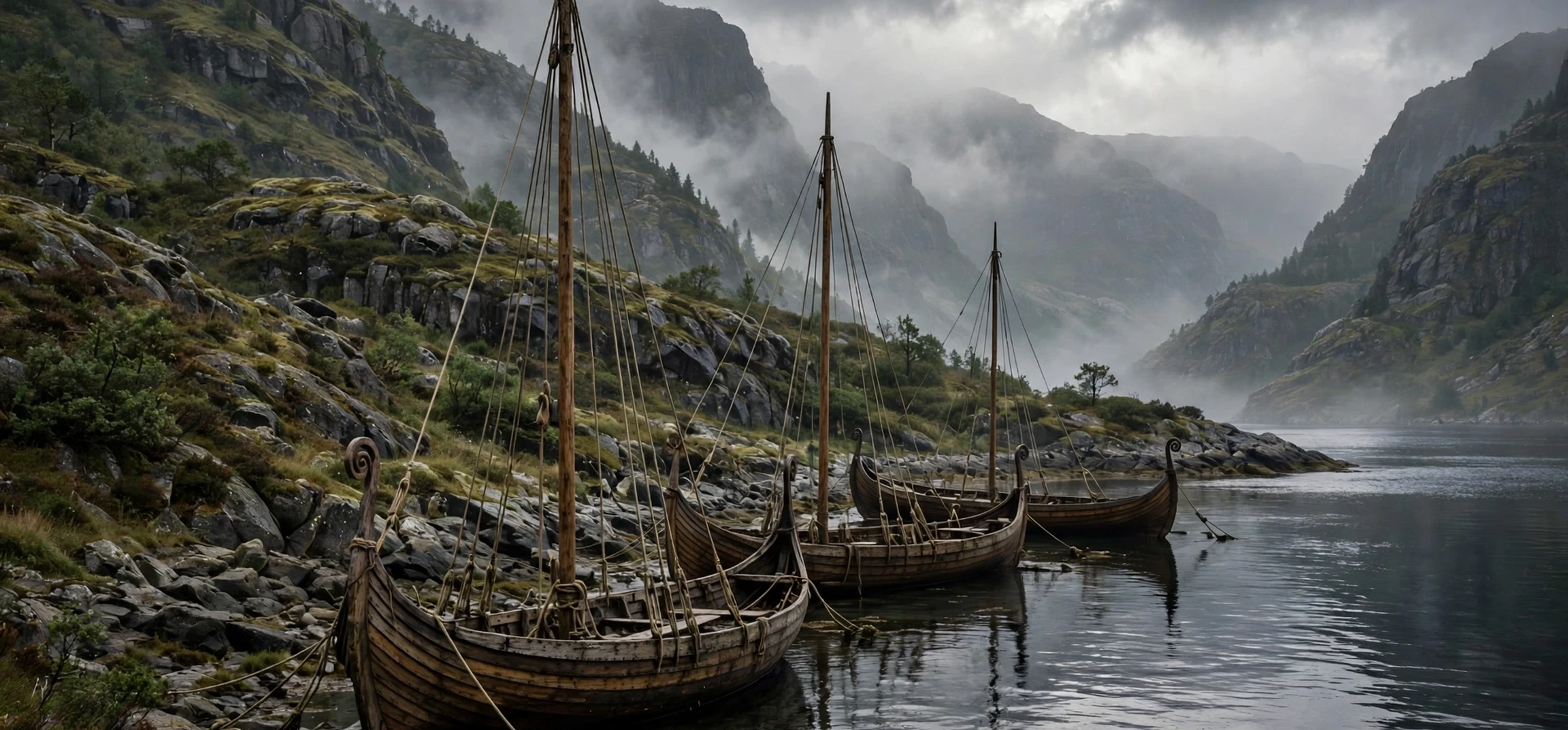
Visually, Norsemen looks like a serious historical drama. The costumes, sets, and landscapes are detailed and convincing, with fjords, wooden halls, and period clothing that ground the story in its Viking Age setting. That visual seriousness strengthens the comedy, because the world looks real even when the dialogue is modern. The show was filmed in Norway, and its natural scenery adds atmosphere without distracting from the characters. The result is a series that respects its setting while playfully questioning the myths around it.
It is worth noting that Norsemen includes violence and adult humour, as befits a comedy about Vikings, but its tone is comic rather than grim. Battles are often played for laughs, and the show’s focus remains on character and dialogue. Viewers who enjoy historical comedies, satire, and ensemble sitcoms are most likely to enjoy its style. Viewers looking for a serious, historically accurate drama may find its modern dialogue surprising, but that surprise is the point.
Norsemen TV Series Seasons and Story
The norsemen tv series ran for three seasons, with each season expanding the world of Norheim while keeping its core characters at the centre. The first season introduces the village, its leaders, and its daily routines, establishing the show’s tone and its central conflicts. Viewers meet Olav and Orm, learn how Norheim functions, and see how outside influences, including Rufus and other newcomers, challenge village traditions.
The second season broadens the story, bringing new characters and larger ambitions to Norheim. Orm’s pursuit of fame grows more elaborate, Olav faces new leadership challenges, and village politics become more complex. The show also explores more of the world beyond Norheim, including rival villages and trading partners, which adds variety without losing its focus on character comedy.
The third season brings many storylines toward a conclusion, while still finding fresh comic situations. Characters face consequences for earlier choices, relationships shift, and the village must adapt to changing circumstances. Because the show was planned as a complete series, its final season offers a satisfying sense of closure for viewers who have followed the characters from the beginning. Watching in order is recommended, since character arcs and running jokes build across episodes, even though individual episodes often work on their own.
Episode lengths are typical for a comedy-drama series, making Norsemen easy to watch in short sittings or longer sessions. The show’s balance of standalone jokes and longer arcs means new viewers can enjoy a single episode, while regular viewers are rewarded for following the village’s story over time. If you enjoy discovering other ensemble series, you may also like reading about other television series reviewed for their characters and tone.
Norsemen TV Series Language and Versions
One distinctive feature of the norsemen tv series is that it was produced in two language versions. The original Norwegian version, Vikingane, features the cast performing in Norwegian. An English-language version was also produced, with the same cast performing the same scenes in English. This dual production is unusual and gives viewers a choice. Some viewers prefer the Norwegian version with subtitles, feeling it captures the original performances most directly. Others prefer the English version, which makes the modern dialogue and wordplay immediately accessible.
Both versions feature the same actors, sets, and stories, so the choice is mainly about viewing preference. The English version is notable because the actors perform in English themselves, rather than being dubbed by different voices. That preserves the cast’s timing and delivery, which are central to the show’s deadpan humour. Whichever version you choose, the premise, characters, and jokes remain the same, and the show’s appeal does not depend on one language alone.
This bilingual approach also helped Norsemen reach international audiences. Viewers who might not normally watch a Norwegian-language series could discover it in English, while viewers who enjoy subtitled drama could watch the original. The show’s success abroad shows how comedy can travel when its core ideas, about leadership, ambition, and community, are universal, even when its setting is specific to Viking Age Norway.
Why Norsemen Found an International Audience
Several factors explain why the norsemen tv series found viewers beyond Norway. First, its premise is instantly understandable. Everyone knows the popular image of Vikings as fierce warriors, and Norsemen plays with that image in an accessible way. You do not need detailed knowledge of Norse history to enjoy the jokes, because the comedy comes from character and modern dialogue, not from obscure references.
Second, its humour travels well. Deadpan comedy, workplace satire, and family arguments are familiar across cultures. A viewer in any country can recognise a boss struggling with change, a sibling chasing fame, or a community divided over a new idea. Norsemen uses the Viking setting as a fresh frame for those familiar stories, which makes it feel both new and relatable.
Third, the show benefits from the wider popularity of Viking stories in film and television. Audiences who enjoyed serious Viking dramas were curious to see a comedy version, and Norsemen offered a clever alternative. It affectionately parodies the genre, borrowing its look and some of its tropes, while replacing epic seriousness with everyday humour. That parody works best for viewers who know the genre, but it remains funny even for newcomers.
Finally, Norsemen is simply well made. Its writing is sharp, its cast is strong, and its production values are high. The show respects its audience, trusting viewers to follow ensemble storylines and to enjoy jokes that are sometimes subtle. That combination of quality and originality helps explain why it is often recommended in lists of hidden gems and underrated comedies, and why it continues to be discovered by new viewers years after its original run.
| Aspect | Details |
|---|---|
| Original title | Vikingane |
| English title | Norsemen |
| Creators | Jon Iver Helgaker and Jonas Torgersen |
| Country of origin | Norway |
| Original broadcaster | NRK |
| Setting | Viking Age village of Norheim, year 790 |
| Genre | Historical comedy, ensemble sitcom |
| Seasons | Three |
| Language versions | Norwegian original and English-language version with the same cast |
Who Should Watch Norsemen?
Norsemen is a good fit for viewers who enjoy dry humour, historical settings, and character-driven comedy. If you like shows that mix satire with strong ensemble casts, or if you enjoy comedies that play with genre expectations, Norsemen is likely to appeal to you. It is also a good choice for viewers who want a comedy that is clever without being obscure, and that rewards attention to character detail.
It may be less suited to viewers who prefer fast-paced, joke-heavy sitcoms with a laugh track, since Norsemen’s humour is often deadpan and situational. It may also surprise viewers who expect a serious Viking drama, since its modern dialogue is a deliberate comic choice. Going in with the right expectation, as a comedy that happens to be set among Vikings, helps you enjoy it on its own terms.
For viewers exploring television more broadly, comparing Norsemen with other series can be rewarding. Its ensemble structure resembles many classic sitcoms, while its historical setting links it to period dramas. Guides to other series, such as overviews of television series and their casts and cast guides for period series, can help you find your next watch after Norheim.
Frequently Asked Questions
What is Norsemen about? Norsemen is a Norwegian comedy set in a Viking village in the year 790, following chieftain Olav, his family, and the villagers of Norheim as they deal with leadership, ambition, and everyday life in modern-sounding dialogue.
What is the original title of Norsemen? The original Norwegian title is Vikingane. Norsemen is the English-language title used for international audiences.
Who created Norsemen? Norsemen was created by Jon Iver Helgaker and Jonas Torgersen.
How many seasons of Norsemen are there? There are three seasons, telling a complete story across the village of Norheim.
Is Norsemen in English or Norwegian? Both. The cast performed the series in Norwegian and in English, so viewers can choose the version they prefer.
Is Norsemen a serious historical drama? No. Norsemen is a comedy that uses a detailed Viking Age setting for satire and character humour, rather than aiming for strict historical realism.
Norsemen TV Series: Quick Guide
When viewers ask what the norsemen tv series is, the short answer is a Norwegian historical comedy about a Viking village. The norsemen tv series follows the village of Norheim in the year 790, with characters who speak in modern dialogue despite their ancient setting. That contrast is the heart of the norsemen tv series, and it is what makes the show funny even for viewers who know little about Viking history. The norsemen tv series is a comedy first, a history lesson second, and an ensemble sitcom at its core.
New viewers often ask how to start the norsemen tv series. The best approach is to begin with the first season and watch in order, so that the characters of Norheim grow familiar and the running jokes build naturally. The norsemen tv series rewards that patience, because Olav, Orm, Hildur, and their neighbours develop across three seasons. At the same time, the norsemen tv series is accessible episode by episode, so a single episode can still be enjoyed on its own. Whether you choose the Norwegian version or the English-language version, the norsemen tv series offers the same story, cast, and humour.
Finally, the norsemen tv series is worth recommending to friends who enjoy dry comedy and clever genre parody. The norsemen tv series takes the familiar image of fierce Vikings and fills it with workplace arguments, artistic ambition, and village politics, all played with serious faces. That blend is why the norsemen tv series continues to find new fans, and why it earns its place on lists of underrated comedies worth discovering.
Conclusion
The norsemen tv series stands out as a smart, funny, and well-crafted comedy that uses the Viking Age to tell timeless stories about leadership, ambition, family, and community. With its strong ensemble cast, its deadpan modern dialogue, and its detailed historical setting, Norsemen turns familiar Viking imagery into something fresh and unexpectedly relatable. Whether you watch it in Norwegian or English, from the first episode or as a complete three-season story, the norsemen tv series offers a rewarding watch for anyone who enjoys historical comedy done with wit, care, and a keen eye for human nature. Norheim may be set in the year 790, but its jokes, rivalries, and hopes feel entirely familiar today.