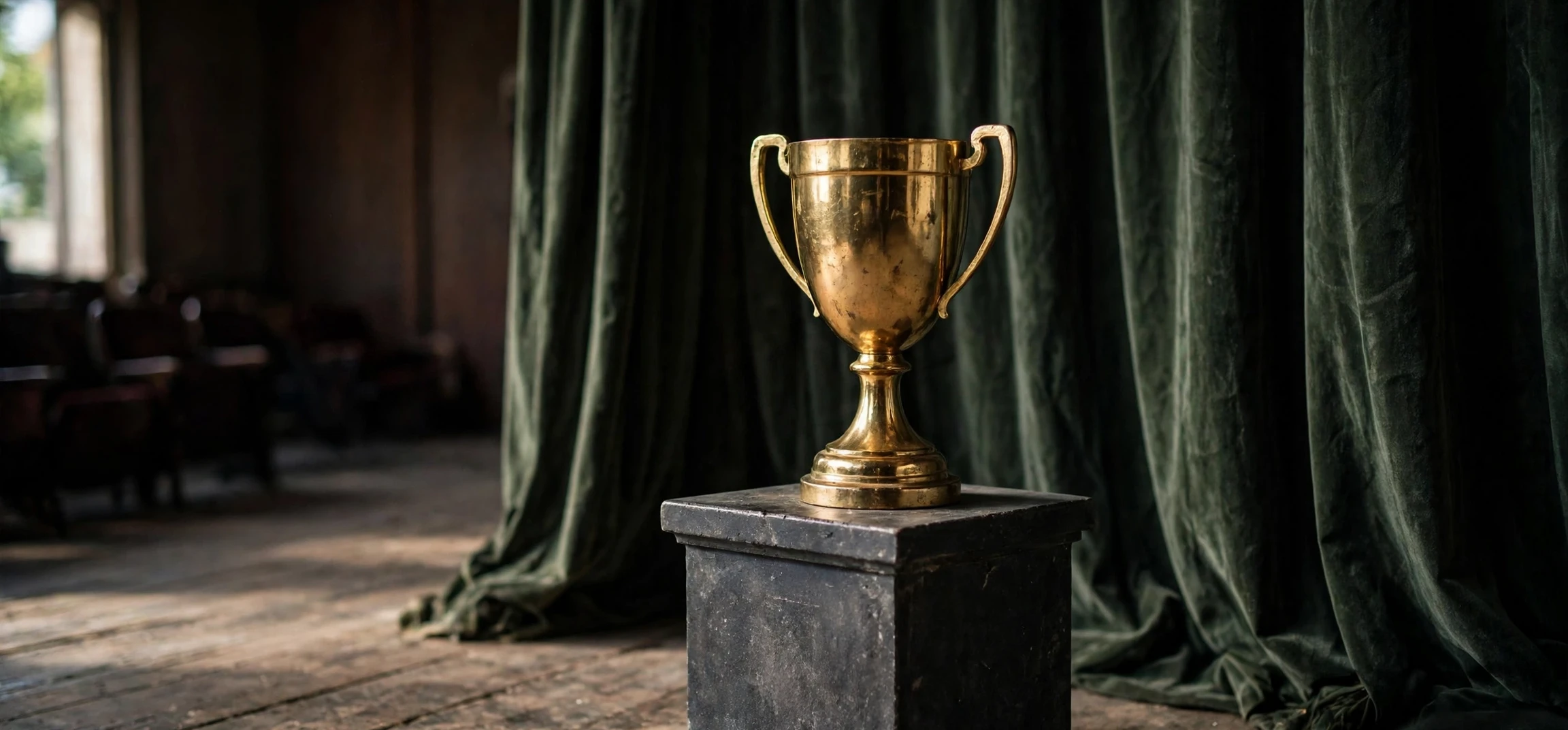
The 2015 Academy Award Best Picture nominees represent one of the most talked-about line-ups in recent Oscar history. Strictly speaking, these were the films honoured at the 87th Academy Awards, held on 22 February 2015, recognising the best films released during 2014. Eight films were nominated for Best Picture that year, ranging from a dazzling backstage drama shot to look like a single continuous take, to a twelve-year coming-of-age project, a meticulous Second World War code-breaking drama and a jazz drumming thriller. This guide lists every one of the 2015 Academy Award Best Picture nominees, explains what made each film stand out, and confirms which film took home the top prize.
Understanding the year label helps avoid a common point of confusion when researching the 2015 Academy Award Best Picture nominees. People often search for the “2015 nominees” meaning the ceremony held in 2015, while others mean the films of 2015 honoured at the 2016 ceremony. This article follows the ceremony-year convention: the nominees announced in January 2015 and awarded in February 2015. That field of eight remains a useful snapshot of what the Academy valued at that moment — bold formal experiments, historical stories, intimate character studies and films with strong ensemble performances — and several of the nominated films are still widely discussed, taught and rewatched today.
2015 Academy Award Best Picture Nominees: The Full List
The eight 2015 Academy Award Best Picture nominees were American Sniper, Birdman or (The Unexpected Virtue of Ignorance), Boyhood, The Grand Budapest Hotel, The Imitation Game, Selma, The Theory of Everything and Whiplash. That is the complete field of 2015 Academy Award Best Picture nominees: no other film was nominated in the category that year. The eventual winner was Birdman or (The Unexpected Virtue of Ignorance), directed by Alejandro G. Iñárritu, which also won Best Director, Best Original Screenplay and Best Cinematography on the night.
Before looking at each film in turn, it is worth noting how varied the 2015 Academy Award Best Picture nominees were as a group. Two nominees were based on real people and real events — American Sniper, Selma, The Imitation Game and The Theory of Everything all drew on true stories, though in very different ways. Two were striking formal achievements: Birdman with its apparent single-take style, and Boyhood with its twelve-year shoot using the same cast. The Grand Budapest Hotel offered stylised comedy and visual invention, while Whiplash delivered an intense, claustrophobic drama about ambition and teaching. Together, they made for a competitive race with no obvious runaway favourite until the final weeks of awards season.
| Film | Director | What it is known for |
|---|---|---|
| Birdman or (The Unexpected Virtue of Ignorance) — winner | Alejandro G. Iñárritu | Apparent single-take backstage drama |
| American Sniper | Clint Eastwood | War drama based on a memoir |
| Boyhood | Richard Linklater | Filmed over twelve years with the same cast |
| The Grand Budapest Hotel | Wes Anderson | Stylised comedy and intricate design |
| The Imitation Game | Morten Tyldum | Code-breaking drama of the Second World War |
| Selma | Ava DuVernay | Civil rights march drama |
| The Theory of Everything | James Marsh | Biographical drama about Stephen Hawking |
| Whiplash | Damien Chazelle | Jazz drumming drama about ambition |
2015 Academy Award Best Picture Nominees: Birdman, the Winner
Birdman or (The Unexpected Virtue of Ignorance) follows Riggan Thomson, an actor once famous for playing a superhero, as he tries to stage a serious Broadway play and reclaim his credibility. The film is famous for its cinematography, which stitches scenes together to create the impression of one long, unbroken shot as the camera follows characters through theatre corridors, dressing rooms and city streets. That technique is not just a showpiece: it mirrors Riggan’s restless state of mind, his inability to escape his past, and the blurring line between performance and reality.
Michael Keaton’s central performance drew particular attention, partly because of the playful parallel with his own earlier superhero fame, and the supporting cast — including Emma Stone, Edward Norton and Naomi Watts — gave the film its sharp, funny and often uncomfortable energy. Its Best Picture win was widely read as the Academy rewarding formal daring and a story about acting itself. For viewers coming to it now, the film rewards a second viewing, when the camera movement, the drumming score and the stage-versus-screen themes become easier to appreciate once the plot surprises are known.
2015 Academy Award Best Picture Nominees: Boyhood and Whiplash
Boyhood remains the most unusual production story among the 2015 Academy Award Best Picture nominees. Director Richard Linklater filmed the same young actor, Ellar Coltrane, and the same supporting cast over twelve years, returning for short shoots as the central character, Mason, grew from a small child into a young adult. The result is a film in which ageing is real rather than achieved with make-up, and in which everyday moments — moving house, starting school, a first relationship — carry the emotional weight that plot twists carry in other films. Patricia Arquette won the Best Supporting Actress award for her role as Mason’s mother.
Whiplash, by contrast, is tight, intense and almost entirely driven by two performances. Miles Teller plays Andrew Neiman, a young jazz drummer determined to become one of the greats, while J. K. Simmons plays Terence Fletcher, his ruthless instructor, in a performance that won Best Supporting Actor. The film asks uncomfortable questions about teaching, talent and the price of greatness, and its final drum sequence is one of the most discussed endings of any film of that awards year. For a look at Simmons’s wider screen career, see our guide to J. K. Simmons movies and TV shows.
2015 Academy Award Best Picture Nominees: The Historical Dramas
Four nominees told stories rooted in real history, and each took a different approach. American Sniper, directed by Clint Eastwood and starring Bradley Cooper, adapted the memoir of Navy SEAL Chris Kyle and became a major box-office success, while also prompting extensive public debate about war films and their portrayal of conflict. The Imitation Game told the story of mathematician Alan Turing and the code-breakers at Bletchley Park, with Benedict Cumberbatch in the central role and Keira Knightley as Joan Clarke; it won Best Adapted Screenplay.
Selma, directed by Ava DuVernay, focused on the 1965 Selma to Montgomery marches and Martin Luther King Jr.’s campaign for voting rights, with David Oyelowo as King. Although it received only two nominations — Best Picture and Best Original Song, winning the latter for “Glory” by John Legend and Common — it has since become one of the most widely referenced films of the group, particularly in educational and historical discussions. The Theory of Everything, directed by James Marsh, charted the life of physicist Stephen Hawking and his relationship with Jane Wilde, with Eddie Redmayne winning Best Actor for his portrayal of Hawking.
2015 Academy Award Best Picture Nominees: The Grand Budapest Hotel
The Grand Budapest Hotel, directed by Wes Anderson, was the lightest film in the field in tone, but one of the most meticulously crafted. Set largely in a fictional grand hotel in a fictional European country between the wars, it follows a concierge, Gustave H., played by Ralph Fiennes, and his protégé lobby boy, Zero, played by Tony Revolori, as they become entangled in a battle over an inheritance and a murder mystery. The film’s symmetrical compositions, pastel palette, miniature models and chapter structure made it instantly recognisable, and it won four Academy Awards: Best Original Score, Best Production Design, Best Costume Design and Best Makeup and Hairstyling.
Its presence among the 2015 Academy Award Best Picture nominees showed the Academy’s willingness to honour comedy and visual stylisation alongside heavier dramas. It also demonstrated how a film with an ensemble cast — including Saoirse Ronan, Adrien Brody, Willem Dafoe, Tilda Swinton and Bill Murray — could balance farce, melancholy and nostalgia without losing its comic timing. For viewers who enjoy design-led film-making, it remains the most rewatchable nominee of the year, with details in the sets, costumes and framing that reward close attention.
Why the 2015 Academy Award Best Picture Nominees Still Matter
Looking back, the 2015 field is interesting not only for its winner but for what it reveals about film culture in the mid-2010s. The success of Birdman and Boyhood showed that formally adventurous, director-led projects could still reach the top of the Academy’s list. The strong showing of historical dramas reflected a continuing appetite for true stories told on a large scale. And the later reputation of Selma — a film whose awards-season treatment was widely debated at the time — is a reminder that an Oscar race is only one measure of a film’s lasting value.
For new viewers, the 2015 Academy Award Best Picture nominees also make an excellent watchlist because they are so different from one another. A weekend spent moving from the visual comedy of The Grand Budapest Hotel to the tension of Whiplash, the sweep of Boyhood and the historical weight of Selma gives a broad sense of what mainstream and independent film-making could achieve in a single year. Our broader guide to Academy Award nominations for Best Picture places this year in the longer history of the category, showing how the field has expanded and changed over time.
Frequently Asked Questions About the 2015 Academy Award Best Picture Nominees
Which film won Best Picture at the 2015 Academy Awards?
Birdman or (The Unexpected Virtue of Ignorance) won Best Picture at the 87th Academy Awards, held on 22 February 2015.
How many films were nominated for Best Picture in 2015?
Eight films were nominated: American Sniper, Birdman, Boyhood, The Grand Budapest Hotel, The Imitation Game, Selma, The Theory of Everything and Whiplash.
Are these the films of 2014 or 2015?
They are the films of 2014, honoured at the ceremony held in 2015. Awards ceremonies are usually described by the year they take place, which is why this group is commonly called the 2015 nominees.
Which nominee won the most acting awards?
Acting wins went to Eddie Redmayne for The Theory of Everything (Best Actor), Patricia Arquette for Boyhood (Best Supporting Actress) and J. K. Simmons for Whiplash (Best Supporting Actor). Julianne Moore won Best Actress for Still Alice, which was not a Best Picture nominee.
Conclusion
The 2015 Academy Award Best Picture nominees offer a remarkably varied portrait of a single year in film: a single-take illusion, a twelve-year experiment, a stylised comedy, an intense music drama and four very different historical stories. Birdman took the prize, but each of the eight nominees has found its own audience and its own afterlife, whether in classrooms, on streaming watchlists or in ongoing critical debate. If you have not yet seen the full field, working through all eight is one of the most rewarding ways to understand what the Academy — and audiences — valued in 2015.



