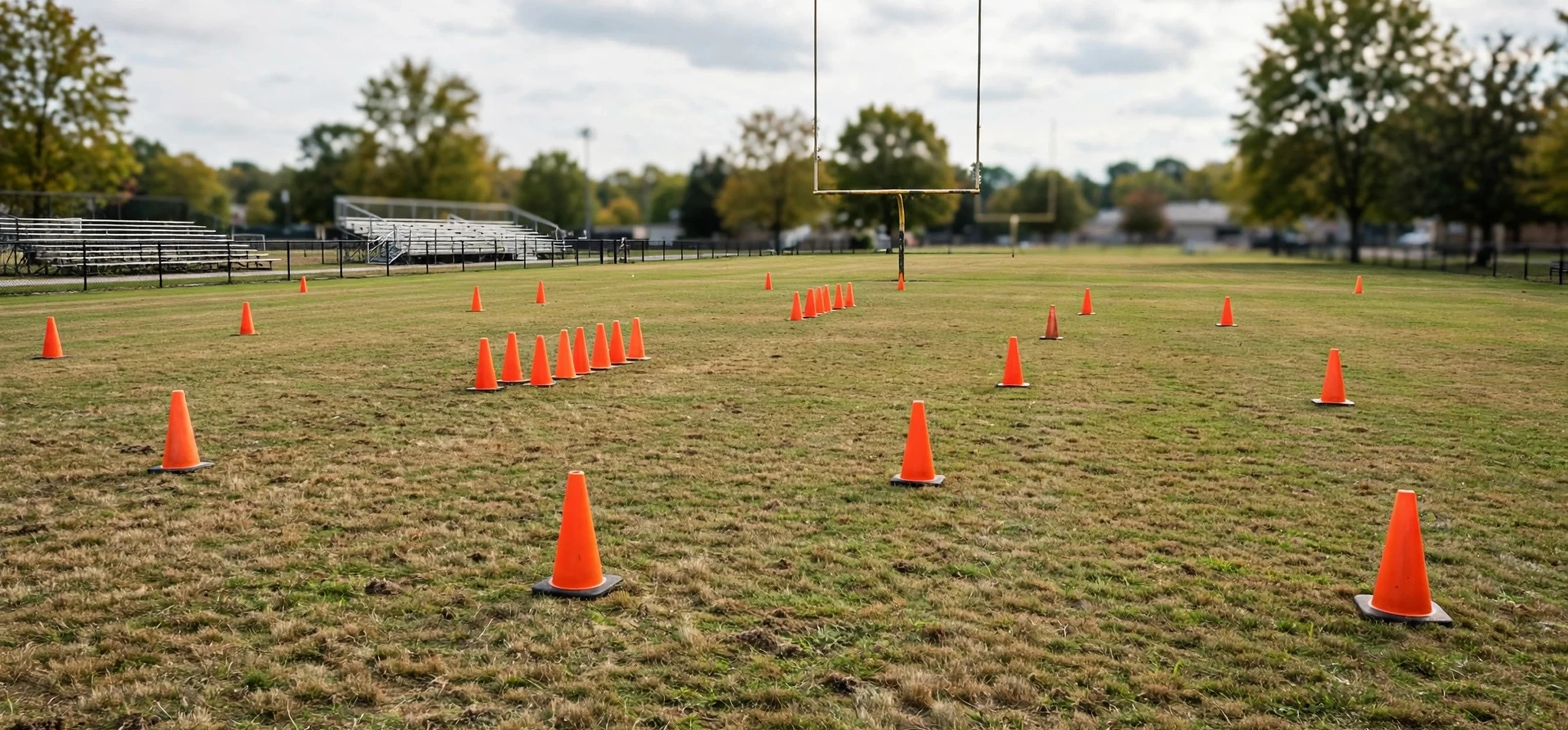
If you follow American football news in spring, you will soon meet the question: what is NFL OTA meaning? OTA stands for Organised Team Activities, a phase of the National Football League off-season in which teams may hold structured practices, meetings, and workouts under strict league rules. OTAs are not training camp, and they are not full-contact football. They are a bridge between the quiet months after the season and the intensity of summer camp: a chance for players to learn playbooks, build fitness, and develop chemistry, without the collisions that define the regular season. In this guide, we explain what is NFL OTA meaning in full, including the rules, schedule, phases, who must attend, what players actually do, and why fans and fantasy players should pay attention.
OTAs matter because the modern NFL calendar is tightly regulated. The league and the players’ union agreed, through collective bargaining, to limit off-season work in order to protect player health. That means teams cannot simply practise whenever they like. OTAs are one of the few windows when organised, coach-led team activity is permitted in spring, and every detail — how many days, what drills are allowed, whether contact is permitted — is spelled out in advance.
What Is NFL OTA Meaning? The Full Definition
OTA is short for Organised Team Activities. In NFL usage, the term refers specifically to the voluntary off-season practice sessions that form Phase Three of the league’s off-season programme. During OTAs, the whole team may practise together on the field, with coaches present, running drills and team periods. The key limits are that practices are voluntary for veteran players, that no live contact is allowed, and that the pace is controlled. Players wear helmets, but not full pads in the usual sense, and drills are designed to teach rather than to test physical dominance.
It helps to place OTAs in the wider off-season structure. Phase One, lasting about two weeks, is limited to strength and conditioning work and injury rehabilitation, with no on-field football drills except for individual work with a coach. Phase Two, lasting about three weeks, adds on-field individual and group drills, but still no team offence-versus-defence work. Phase Three, lasting about four weeks, is where OTAs sit: teams may hold up to ten days of organised team practice, plus a mandatory minicamp. That progression — fitness, then individual skills, then team work — is deliberate. It rebuilds players gradually after months away from football.
Fans sometimes confuse OTAs with minicamp. The difference is attendance. OTAs are voluntary, meaning a veteran player may choose not to attend without being fined, although absence is often noted and discussed in the media. Minicamp, by contrast, is mandatory, and unexcused absence can lead to fines. Both take place in the same spring window, but minicamp is shorter, usually three days, and carries a stronger expectation of full attendance.
When Do NFL OTAs Take Place?
OTAs normally take place in May and June, after the NFL Draft and before summer training camp in late July. Exact dates vary by team and by year, because each club chooses its ten OTA days within the league’s permitted window, subject to rules about spacing and rest days. Teams typically spread OTAs across three or four weeks, with practices on selected weekdays and rest days in between. Some teams cluster them; others space them out to allow recovery and classroom work.
New head coaches receive an extra benefit: a team with a new head coach may begin its off-season programme earlier and may hold an additional voluntary minicamp for veterans before the draft. That recognises the extra teaching load when a new system is being installed. Rookie players have their own calendar too, including a rookie minicamp shortly after the draft, where first-year players learn basics before joining veterans in OTAs.
For supporters, the OTA window is the first real football news after the draft. Beat reporters attend open practices, share observations about depth charts, and note which players are present or absent. That coverage should be read with care. Early OTA depth charts are provisional, rookies are still learning, and coaches deliberately experiment with line-ups. OTAs are a teaching phase, not a final judgement.
NFL OTA Rules: What Is Allowed and What Is Not
The rules for OTAs are designed to balance preparation with safety. Live contact is prohibited. That means no tackling to the ground, no full-speed blocking battles in pads, and no drills that simulate game collisions. Instead, teams run walk-throughs, individual technique drills, seven-on-seven passing sessions, and controlled team periods at reduced intensity. Coaches may teach assignments, timing, and communication, which are the foundations of good team play.
Practice length and intensity are also regulated. Teams may hold only one practice per day during OTAs, and classroom, film, and weight-room work are part of the overall programme. Players must receive rest days, and the league monitors compliance. Violations can lead to fines, loss of practice days, or other penalties, so teams take the rules seriously. The system is enforced partly through reporting by players and staff, and partly through league oversight.
Helmets are worn, but full pads are not used in the way they are in camp. That visual cue is helpful for fans watching clips: if players are in helmets and shorts or shells, moving at teaching tempo, you are almost certainly watching OTAs or a similar off-season session, not a padded camp practice. The absence of contact does not mean the work is easy. Players still run, cut, and learn at high speed, and conditioning demands are real, but the collision risk is deliberately kept low.
What Players Actually Do During OTAs
A typical OTA day blends classroom and field work. Mornings may begin with meetings, where coaches install new plays, review film from the previous season, and set expectations. Strength and conditioning sessions follow, tailored to each position group. On-field work then puts the classroom teaching into practice: quarterbacks and receivers work on timing routes, linemen work on footwork and hand placement without contact, defensive backs work on coverage technique, and the whole team runs controlled team periods.
For rookies, OTAs are an immersion course. They must learn a professional playbook, adapt to the speed of the NFL, and prove they can handle the mental load. Veterans use OTAs differently: they refine technique, build rapport with new teammates, and, for players changing teams, learn a new system. For coaches, OTAs are a diagnostic tool. They reveal who has studied, who is fit, who communicates well, and where the roster still has gaps before camp begins.
Are NFL OTAs Mandatory? Attendance Explained
OTAs are voluntary for most veteran players under the collective bargaining agreement. A veteran who skips OTAs cannot be fined for that absence alone, and teams cannot punish the player formally for choosing not to attend. In practice, however, attendance is closely watched. Coaches value players who attend, teammates notice who is present, and media coverage often frames absence as a story, especially if the player is seeking a new contract or recovering from injury.
There are legitimate reasons for absence. Some players train privately with personal coaches. Others are managing injuries and following medical advice. Some are dealing with family matters or contract discussions. Teams generally handle these cases privately, even when public speculation runs ahead of the facts. Fans should therefore avoid reading too much into a single missed OTA session. A pattern of absence across the whole spring is more meaningful than one day away.
Rookies and younger players face a different expectation. Although the same voluntary rule technically applies, first-year players are strongly expected to attend, because they need the teaching time and because their roster spots are not yet secure. Missing OTAs as a rookie is rare and usually explained by injury, a personal matter, or a late arrival after the draft.
| Off-season stage | When | What happens | Attendance |
|---|---|---|---|
| Phase One | Early spring, about 2 weeks | Strength, conditioning, rehabilitation | Voluntary |
| Phase Two | Spring, about 3 weeks | Individual and group drills, no team work | Voluntary |
| Phase Three: OTAs | May to June, up to 10 days | Team practices, no live contact | Voluntary |
| Mandatory minicamp | June, usually 3 days | Team practices, full team present | Mandatory |
| Training camp | Late July onwards | Padded practices, pre-season preparation | Mandatory |
Why NFL OTAs Matter for Teams and Fans
OTAs matter first for learning. Modern NFL playbooks are complex, with hundreds of plays, adjustments, and checks at the line of scrimmage. Players cannot master that volume in training camp alone. OTAs give them a head start, so camp can focus on competition and refinement rather than basic installation. Teams with new quarterbacks, new coordinators, or many new starters benefit most, because OTAs are where a new system stops being theory and starts becoming habit.
OTAs also matter for health. The phased approach reduces the risk of soft-tissue injuries that occur when athletes jump straight into high-intensity work after a break. By rebuilding fitness, technique, and timing gradually, teams aim to arrive at camp healthier. That is a shared interest for players and clubs: a player injured in May may miss the season, while a player who progresses steadily through OTAs has a better chance of staying available.
For fans and fantasy players, OTAs offer early clues, not conclusions. Reports about a rookie receiver’s route running, a veteran’s recovery, or a position battle’s early shape are useful context, but they should not be over-weighted. Coaches use OTAs to experiment, and depth charts in May rarely match depth charts in September. Treat OTA news as a progress report: interesting, informative, and provisional.
Readers who enjoy clear explanations of sporting and general terms may also like our word guides. For example, the meaning of cajole explains a persuasive verb often heard in commentary, the meaning of inhabiting covers a word with both physical and figurative uses, and a writing guide for published authors offers practical advice on explaining complex topics clearly.
Frequently Asked Questions About What Is NFL OTA Meaning
What does OTA stand for in the NFL?
OTA stands for Organised Team Activities, the voluntary team practice sessions held in Phase Three of the NFL off-season programme.
Are OTAs the same as training camp?
No. OTAs are voluntary spring practices with no live contact. Training camp, in late July, is mandatory, padded, and far more intense.
Can players be fined for missing OTAs?
No, veterans cannot be fined for missing voluntary OTAs. Fines apply to unexcused absence from mandatory minicamp and training camp.
How many OTA days can a team hold?
Teams may hold up to ten days of OTAs, plus a separate mandatory minicamp, within the league’s spring window.
Conclusion
So, what is NFL OTA meaning? It is Organised Team Activities: the voluntary, non-contact team practices that form the final phase of the NFL spring programme. OTAs bridge the gap between off-season conditioning and training camp, giving players time to learn playbooks, build fitness, and develop teamwork under controlled, safety-first rules. They are not mandatory, they are not full-contact football, and they are not a final verdict on the season ahead. They are, however, an essential part of how modern NFL teams prepare — and the first real sign, each spring, that football is coming back.



