If you have ever seen a mailing address that starts with a box number instead of a street address, you have probably wondered what is a p.o. box and how it actually works. A P.O. box, short for post office box, is a lockable mailbox located inside or near a post office that a person or business rents to receive mail. Instead of mail being delivered to a home or office door, it is held securely in that box until the renter collects it. This guide explains what is a p.o. box in plain language, how mail reaches it, who uses one, and what its limits are.
The idea is older than it might sound. Postal services have offered rented boxes for well over a century as a practical answer to a simple problem: not everyone can receive mail reliably at a home address. People move, work irregular hours, live in areas without door delivery, or run a business from home and prefer not to share that address. A rented box gives them a stable mailing address that stays the same even when their living or working situation changes.
What Is a P.O. Box in Simple Terms?
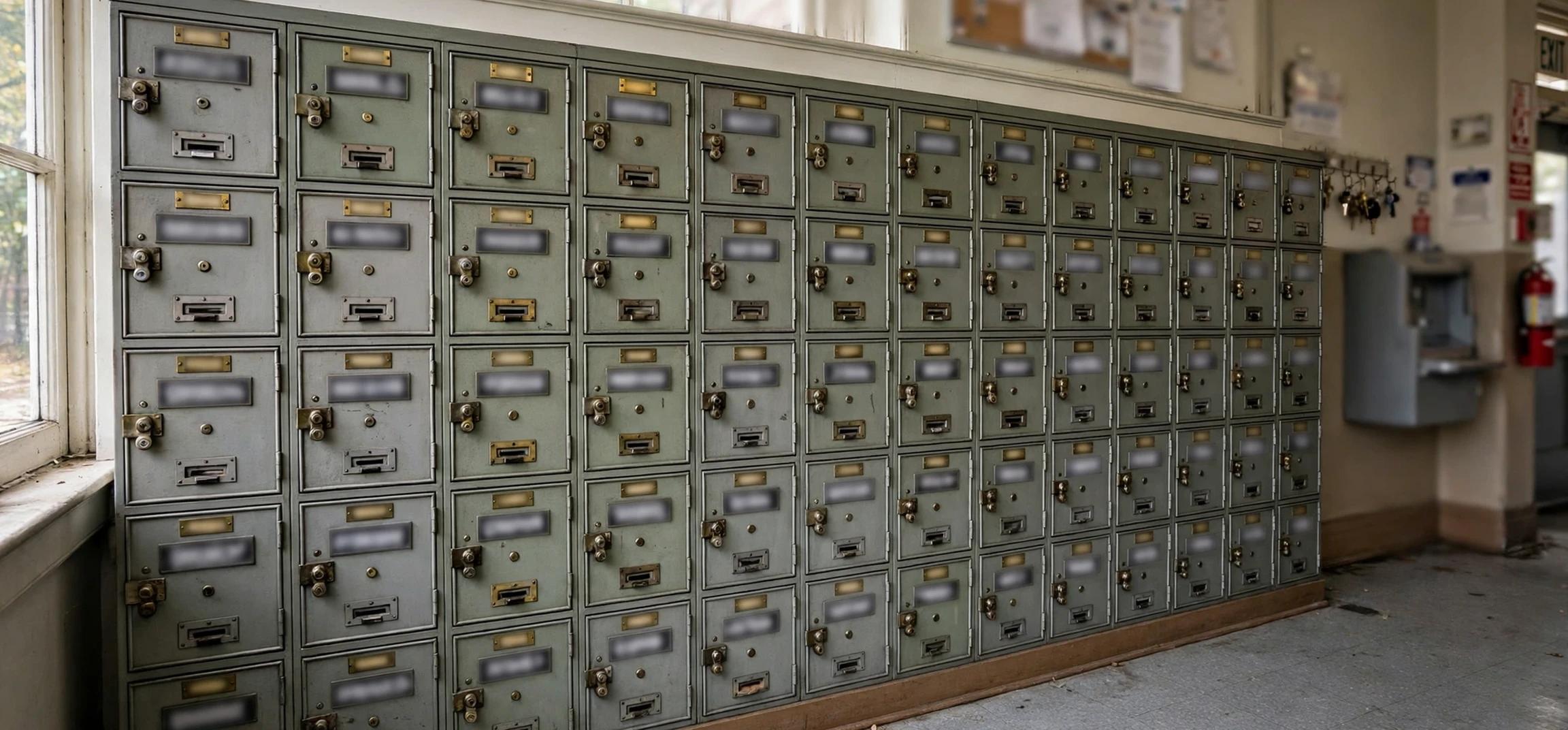
At its core, a P.O. box is a numbered compartment in a postal facility. When someone sends you a letter or parcel addressed to your box number, postal staff sort it into your compartment rather than sending a carrier out to a street address. You then open the box with a key or combination and collect the contents at a time that suits you. The box itself is the property of the postal service, and renting it gives you the right to use that numbered address for receiving mail during the rental period.
It helps to think of a P.O. box as a mailing address, not a place where you live or work. You cannot sleep in it, register it as a residence, or use it to prove where you physically live in situations that require a street address. What it does give you is a consistent, private point of contact for mail. Many small businesses, freelancers, clubs, and private individuals use one for exactly that reason: correspondence arrives at a professional-looking address, and their home address stays out of circulation.
What Is a P.O. Box and How Does Mail Reach It?
The journey of a letter to a P.O. box is straightforward. The sender writes the recipient’s name, the words P.O. Box followed by the box number, and the town or city and postal code of the post office that holds the box. Postal sorting systems route the item to that facility, where staff place it in the matching compartment. Small items fit directly inside the box, while larger parcels are usually held at the counter or in a parcel locker, with a notice or key left in the box telling the renter where to collect them.
Collection is flexible, which is part of the appeal. Many postal lobbies are accessible outside counter hours, so renters can pick up mail early in the morning, late in the evening, or on days when they cannot be home for a delivery. If a box fills up, the post office may hold overflow mail for a period and notify the renter, but a consistently overflowing box can lead to reminders or, eventually, closure of the rental. Regular collection keeps the service running smoothly and avoids missed or returned mail.
Who Uses a P.O. Box and Why?
Privacy is one of the most common reasons. Someone who sells products online, writes under a pen name, runs a small charity, or simply values discretion may prefer that customers and correspondents use a box address rather than a home address. A box address looks tidy on a website, business card, or publication, and it separates personal life from public correspondence in a clear way.
Practical reasons matter just as much. People who travel frequently, split their time between locations, live in shared housing, or work on the road often find a stable box more reliable than a changing home address. Rural residents in areas where home delivery is limited may also rely on a box as their main mailing address. For businesses, a box can provide a single mailing point even if staff work from different places, and it keeps mail secure when no one is at an office to receive it.
P.O. Box Versus a Street Address: Key Differences
The most important difference is delivery. A street address tells a courier or postal carrier where to bring an item, while a P.O. box tells the postal service to hold it for collection. That distinction affects what can be sent. Most standard letters and parcels sent through the postal service can go to a P.O. box, but some private couriers do not deliver to boxes at all, because their systems are built around street addresses and signed doorstep delivery. If you expect deliveries from a courier, check its rules before relying on a box alone.
Another difference is what the address proves. A street address is tied to a physical location, so it is often accepted as proof of residence or business premises. A P.O. box is not, and many official forms, banks, and registration processes ask for a physical address in addition to, or instead of, a mailing address. A box is best understood as a complement to a street address, not a replacement for it. Knowing that limit in advance prevents frustration when a form asks for both.
| Feature | P.O. box | Street address |
|---|---|---|
| How mail arrives | Held for collection at the post office | Delivered to the door or mailbox |
| Privacy | Keeps a home address out of circulation | Reveals the physical location |
| Courier delivery | Often not accepted by private couriers | Generally accepted |
| Proof of residence | Usually not accepted on its own | Commonly accepted |
| Stability when you move | Stays the same if you keep renting | Changes with every move |
Sizes, Security, and Everyday Features
P.O. boxes come in different sizes, from small compartments suited to letters and magazines to larger boxes that can hold thicker envelopes and small parcels. Choosing a size is a balance between cost and convenience: a larger box costs more, but it reduces trips to the counter for oversized items. Some facilities also offer parcel lockers, mail forwarding when you are away, and notifications that tell you when a parcel has arrived. Availability varies by location, so it is worth asking what a particular facility offers before renting.
Security is another advantage. Mail in a locked box is less exposed than mail left in an open roadside mailbox or on a doorstep, and it cannot be taken by someone passing by. Access is limited to the renter and anyone the renter authorises, and keys or combinations should be kept secure like any other key. If a key is lost, the post office can usually replace the lock, though a fee may apply. Good habits, such as collecting mail regularly and updating the address with senders promptly, keep the service useful over time.
Limits and Common Misunderstandings
A frequent misunderstanding is that a P.O. box can receive absolutely everything. In practice, very large parcels, items that need a signature at a door, and deliveries from couriers that refuse box addresses may not be deliverable. Perishable goods are another poor fit, since mail may sit in a box until collection. Some senders also refuse to ship to a box for fraud-prevention reasons, particularly for high-value goods. If you order online often, keep a street address available for those cases.
Another limit concerns official and legal mail. Some government agencies, courts, and financial institutions require a physical address for identity checks, even if they are happy to send routine correspondence to a box. A box also does not create a business presence in a town in the legal sense, and it does not change tax or licensing obligations. Used within its limits, though, a P.O. box is a simple, reliable tool, and understanding those limits is what makes it work well.
Frequently Asked Questions
Can I receive parcels at a P.O. box?
Yes, parcels sent through the postal service can usually be held for collection, often in a parcel locker or at the counter, with a notice placed in your box. Private couriers may not deliver to a box, so check before ordering.
Is a P.O. box the same as a home address?
No. It is a mailing address for receiving post, not a residential address. Most forms that ask where you live will still require a street address.
Does a P.O. box keep my home address private?
It helps a great deal for public correspondence, because customers and readers see the box address instead of your home address. It does not hide your address from organisations that require a physical address for verification.
What happens if I do not collect my mail?
Mail accumulates in the box, and overflow may be held at the counter. If a box is left uncollected for a long period, the post office may contact the renter and eventually close the rental, so regular collection matters.
Conclusion
So, what is a p.o. box? It is a rented, lockable mailbox at a postal facility that gives you a stable, private mailing address and lets you collect mail on your own schedule. It suits people who move often, work from home, run a small business, or simply want to keep their home address out of public view. Its limits are equally clear: it is not a residence, it cannot replace a street address for official verification, and some couriers will not deliver to it. Used with those facts in mind, a P.O. box is a practical and long-established part of the postal system. For related reading, see our guide to changing your address with the postal service and our explainer on the post office change of address form.