Types of plaids can be confusing at first, because the word plaid is used in different ways in different countries, and many patterns look similar until you learn what to look for. In everyday American speech, plaid usually means any pattern of crossed horizontal and vertical stripes. In Scotland, the word plaid can also refer to a traditional garment, while the pattern itself is often called tartan. This guide explains the main types of plaids by their structure, colour, and history, so you can recognise tartan, gingham, madras, windowpane, and several other patterns with confidence, whether you are shopping, sewing, decorating, or simply trying to describe a favourite shirt.
The key to telling plaids apart is to look at three things: the size of the repeat, the number of colours, and the way the stripes cross. Some plaids use only two colours and a simple, even repeat. Others use many colours, uneven stripe widths, and a more complex rhythm. Some patterns are woven with yarns dyed before weaving, which gives them a rich, textured look. Others are printed on fabric, which can produce sharper edges but a flatter feel. Once you know which features matter, the differences become much easier to spot.
Types of Plaids: Tartan Explained
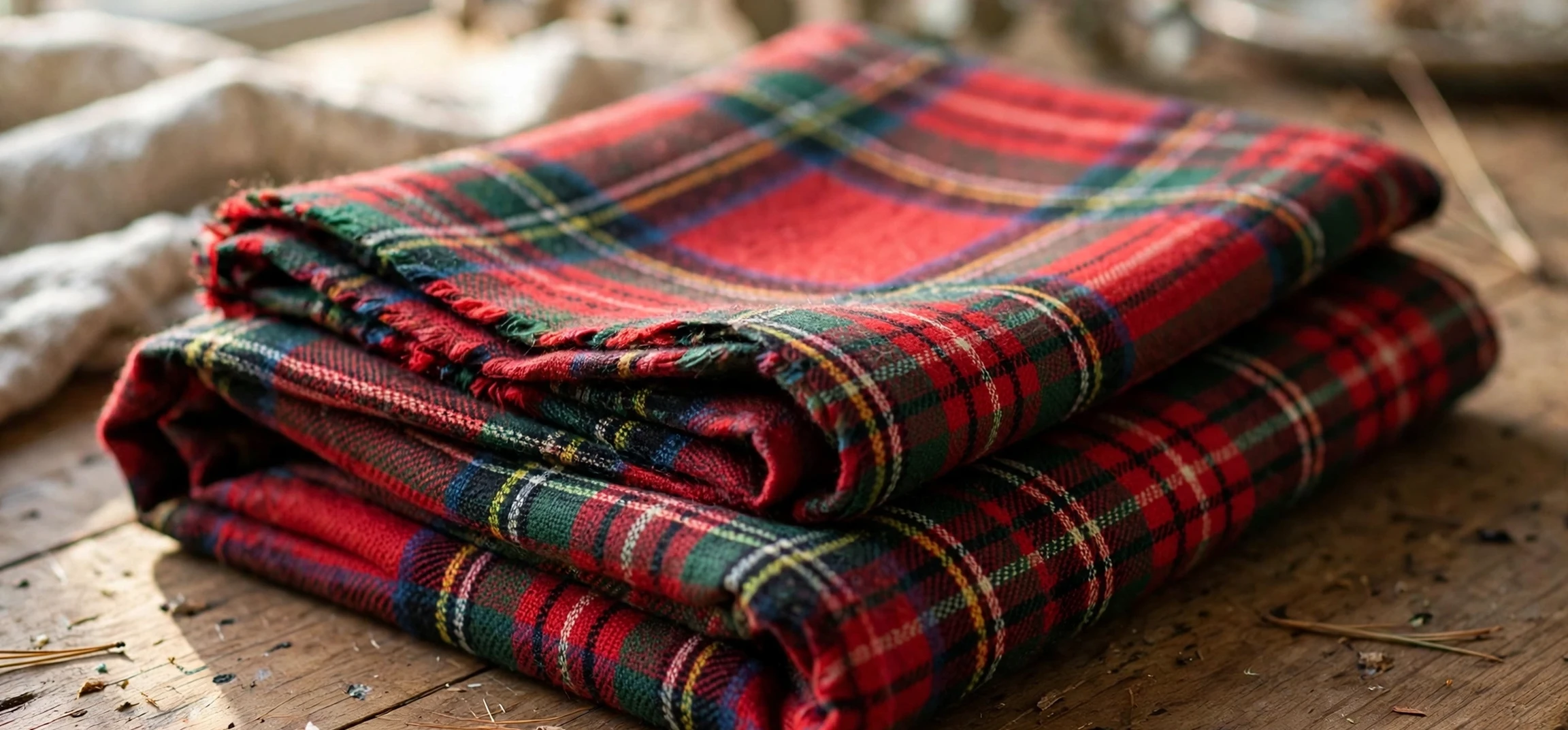
Tartan is the most famous of the types of plaids, and it is closely associated with Scotland. A traditional tartan is a woven pattern of coloured stripes crossing at right angles, usually in a symmetrical arrangement. The sequence of colours and stripe widths is called the sett, and different setts are associated with different clans, districts, organisations, and occasions. That association is part of tartan’s cultural importance: a pattern can carry identity, history, and pride, not just decoration.
Classic tartans often use deep, rich colours such as dark green, navy, red, and black, with thinner accent stripes in white, yellow, or light blue. The famous Royal Stewart tartan, for example, is dominated by red with green, blue, white, and yellow accents. Black Watch tartan, by contrast, is darker and more subdued, using dark green and navy with black. Those two examples show how tartan can range from bold and festive to quiet and formal, even though both use the same basic crossed-stripe structure.
Tartan appears in kilts, scarves, skirts, jackets, blankets, and home furnishings. Modern designers also use tartan-inspired patterns in fashion collections that have no clan connection, which can blur the line between a traditional tartan and a general plaid. If you want to know whether a pattern is a specific registered tartan or simply tartan-style, check the colour sequence and the name given by the maker. A true clan tartan will usually be named, while a fashion plaid may use a descriptive name instead.
Types of Plaids: Gingham Explained
Gingham is one of the simplest and most recognisable types of plaids. It is made from a single colour crossed with white, usually in an even, checked arrangement. Where the coloured stripes overlap, they create a darker square, and where a coloured stripe crosses white, the result is a lighter shade. That three-tone effect, created by only one colour plus white, is the signature of gingham.
Gingham is common in shirts, dresses, tablecloths, picnic blankets, and kitchen curtains. It feels fresh, casual, and cheerful, especially in red, blue, or green on white. Small gingham checks look neat and delicate, while large gingham checks look bold and playful. Because gingham uses so few colours, it pairs easily with solid colours and simple stripes, which makes it a practical choice for everyday clothing and home textiles.
It is easy to confuse gingham with a simple check, but the overlapping-colour effect is the clue. A plain check made from printed squares will not show the same gradual shading where stripes cross. True woven gingham shows that interaction clearly, especially when you look closely at the fabric.
Gingham Versus Windowpane
Windowpane is another pattern that is sometimes grouped with plaids, although it is simpler. A windowpane pattern uses thin lines, often in a single contrasting colour, spaced widely apart on a solid background, creating large squares that resemble window panes. Unlike gingham, windowpane does not usually create a third tone from overlapping colours. Unlike tartan, it does not use a complex sequence of wide and narrow stripes. Windowpane is common in suits, blazers, and trousers, where its clean, open grid looks smart without being loud.
Types of Plaids: Madras and Other Lightweight Patterns
Madras is a lightweight, colourful plaid that originated in the Madras region of India, now Chennai. Traditional madras fabric is made from cotton, often with bright, uneven stripes in colours such as orange, pink, green, and blue. The pattern feels lively and informal, and it is closely associated with warm-weather clothing, especially shirts, shorts, and summer dresses.
One distinctive feature of madras is that its colours can bleed slightly during washing, which historically gave the fabric a soft, slightly faded look. Modern madras may be more colourfast, but the bright, patchwork-like arrangement of stripes remains. Madras patterns often look less symmetrical than tartan, with stripe widths and colour order varying in a way that feels spontaneous rather than formal.
Other lightweight plaids include seersucker checks and brushed cotton plaids for cooler weather. Seersucker has a puckered texture that helps air circulate, and it is often used for summer suits and shirts. Brushed cotton, sometimes called flannel plaid, has a soft, fuzzy surface that makes it popular for winter shirts, pyjamas, and blankets. The pattern may be similar to tartan or gingham, but the feel of the fabric changes the season and the mood completely.
Types of Plaids: Buffalo Check and Shepherds Check
Buffalo check is a bold, two-colour plaid made from large squares, most famously in red and black. It is associated with outdoor clothing, lumberjack-style shirts, and rustic home decor. The large scale makes buffalo check easy to spot from a distance, and its simple two-colour structure keeps it from looking busy despite the size of the squares.
Shepherds check is a smaller, subtler pattern, traditionally in black and white or brown and white. It uses a twill weave that creates a slightly diagonal texture within the squares, giving it a refined look that works well for coats, trousers, and scarves. While buffalo check shouts, shepherds check speaks more quietly. That difference in scale and tone is a useful lesson in plaid design: the same crossed-stripe idea can feel rugged or elegant depending on size and colour.
Gun club check, also called gun check, is a related pattern that combines small checks in muted colours such as brown, green, and cream. It is named for its association with shooting clubs and country clothing, and it is often used for jackets and tweed-style garments. Like shepherds check, it rewards close looking: from a distance it may look like a solid colour, but up close the small pattern reveals itself.
| Pattern | Colours | Typical feel | Common uses |
|---|---|---|---|
| Tartan | Several, often deep and rich | Traditional, bold, or formal | Kilts, scarves, jackets, blankets |
| Gingham | One colour plus white | Fresh and casual | Shirts, dresses, tablecloths |
| Madras | Many bright colours | Lively and summery | Summer shirts, shorts, dresses |
| Buffalo check | Two colours, large squares | Bold and rustic | Outdoor shirts, home decor |
| Windowpane | Thin lines on a solid colour | Clean and smart | Suits, blazers, trousers |
| Shepherds check | Two muted colours, small scale | Quiet and refined | Coats, trousers, scarves |
How to Identify Types of Plaids
To identify a plaid, start by counting colours. If you see only one colour plus white with a clear three-tone overlap, you are probably looking at gingham. If you see two colours in large, bold squares, think buffalo check. If you see many colours in a symmetrical, repeating sequence, think tartan. If you see bright, uneven stripes on lightweight cotton, think madras. If you see thin lines forming large, open squares, think windowpane.
Next, check the scale. Small patterns feel delicate and formal, while large patterns feel bold and casual. Then check the fabric. A soft, brushed surface suggests a winter plaid. A crisp, lightweight cotton suggests a summer plaid. A wool or tweed texture suggests a pattern meant for coats and jackets. Those clues together will usually point you to the right name, even when a pattern borrows elements from more than one tradition.
Colour also matters for styling. Dark tartans and shepherds checks pair well with solid dark colours and simple accessories. Bright madras and large gingham pair well with white, cream, and other light neutrals that let the pattern breathe. Buffalo check pairs well with denim, leather, and plain knitwear. Learning those pairings is not about following strict rules, but about understanding how scale and colour affect the overall look.
For related colour and design reading, see how neighbouring colours work together, a guide to naming shades of blue, and how patterns and uniforms are used for a smart, consistent look.
Frequently Asked Questions About Types of Plaids
Is plaid the same as tartan?
Not exactly. In American usage, plaid often means any crossed-stripe pattern. Tartan is a specific kind of plaid, traditionally woven in Scotland with a named colour sequence. All tartans are plaids in the broad sense, but not all plaids are tartans.
What is the difference between gingham and check?
Gingham is a woven pattern using one colour plus white, where overlapping stripes create a darker tone. A general check can be any square pattern, including printed squares that do not show that woven overlap effect.
Is madras only for summer?
Madras is most associated with summer because it is lightweight cotton with bright colours. It can be worn in other seasons as an accent, but its fabric and colour palette feel most natural in warm weather.
Can different plaids be mixed?
Mixing plaids is possible but challenging. It usually works best when one pattern is large and bold and the other is small and quiet, and when they share at least one colour. Beginners often find it easier to pair one plaid with solid colours.
Conclusion
Types of plaids become much easier to recognise once you look beyond the general idea of crossed stripes and focus on colour count, stripe sequence, scale, and fabric. Tartan brings tradition and complex colour sequences. Gingham brings simplicity and freshness. Madras brings bright, summery energy. Buffalo check brings bold rusticity, windowpane brings clean tailoring, and shepherds check brings quiet refinement. Together, they show how a single weaving idea can produce a whole family of patterns, each with its own history, mood, and best use. Next time you see a checked shirt, scarf, or blanket, try naming the pattern using the clues in this guide, and you may find that plaid is far more varied than it first appears.