If you searched for ‘what is pliancy‘, you are asking about a less common English noun, and the short answer is that pliancy means the quality of being pliant: flexible, easily bent, yielding, or adaptable. A pliant material bends without breaking. A pliant person, in a figurative sense, adapts readily or yields to influence. This guide explains the meaning of pliancy in plain terms, where the word comes from, how it is used in different contexts, and how it differs from similar words such as flexibility, compliance, and suppleness. That bending idea is the heart of what is pliancy in every context.
Pliancy is not a word most people use every day, which is why it often appears in a search, a crossword, a piece of formal writing, or a vocabulary list. It belongs to a family of words built around bending: pliant, pliable, pliancy, and the older verb ply. Once you see that family connection, the meaning becomes much easier to remember. If something can be bent, folded, shaped, or influenced without snapping, it has pliancy.
As with many abstract nouns, the exact shade of meaning depends on context. In a discussion of materials, pliancy is a physical property. In a discussion of character or negotiation, it is a social or psychological quality, and it can be positive, neutral, or slightly critical, depending on whether yielding is seen as wisdom or weakness. Learning to spot that shift is the key to using the word well, rather than simply memorising a dictionary definition. A dictionary answer to what is pliancy will usually start with flexible, yielding, or easily bent.
What Is Pliancy: A Clear Definition
What is pliancy in its simplest form? It is the noun form of pliant, and it means the state or quality of being pliant. Dictionaries typically define pliant as easily bent, flexible, or readily yielding to influence. Pliancy therefore covers both a physical sense, the ability of a material to bend, and a figurative sense, the willingness or tendency of a person, a group, or an institution to adapt, comply, or change direction.
Consider a few examples. A young branch has pliancy: it bends in the wind and springs back, rather than snapping. A soft leather has pliancy: it can be shaped and worked without cracking. A negotiating team shows pliancy when it adjusts its position in response to new information, rather than holding a rigid line. In each case, the core idea is the same: bending, shaping, or yielding without breaking. The difference is only in what is bending, a material, a body, or a mind. The Latin root behind what is pliancy, folding, explains why the word covers materials and minds alike.
It is worth noting that pliancy is a noun, not an adjective. You would say “the pliancy of the material impressed the craftsman”, not “the material was pliancy”. The adjective is pliant, and the closely related adjective pliable means much the same thing, although pliable is more common in everyday use for materials. Pliancy itself tends to appear in more formal or literary writing, which is one reason it can feel unfamiliar even to fluent English speakers.
What Is Pliancy: Origin and Word Family
The word family behind what is pliancy comes from Latin. The Latin verb plicare meant to fold, and it gives English a whole set of folding and bending words: ply, apply, imply, complicate, and explicit all share that root, in different ways. Pliant entered English through French, carrying the sense of something that can be folded or bent. Pliancy was formed from pliant by adding the noun ending, in the same way that brilliancy comes from brilliant, although brilliancy is now less common than brilliance. When writers ask what is pliancy in a literary sense, they often mean graceful yielding rather than mere softness.
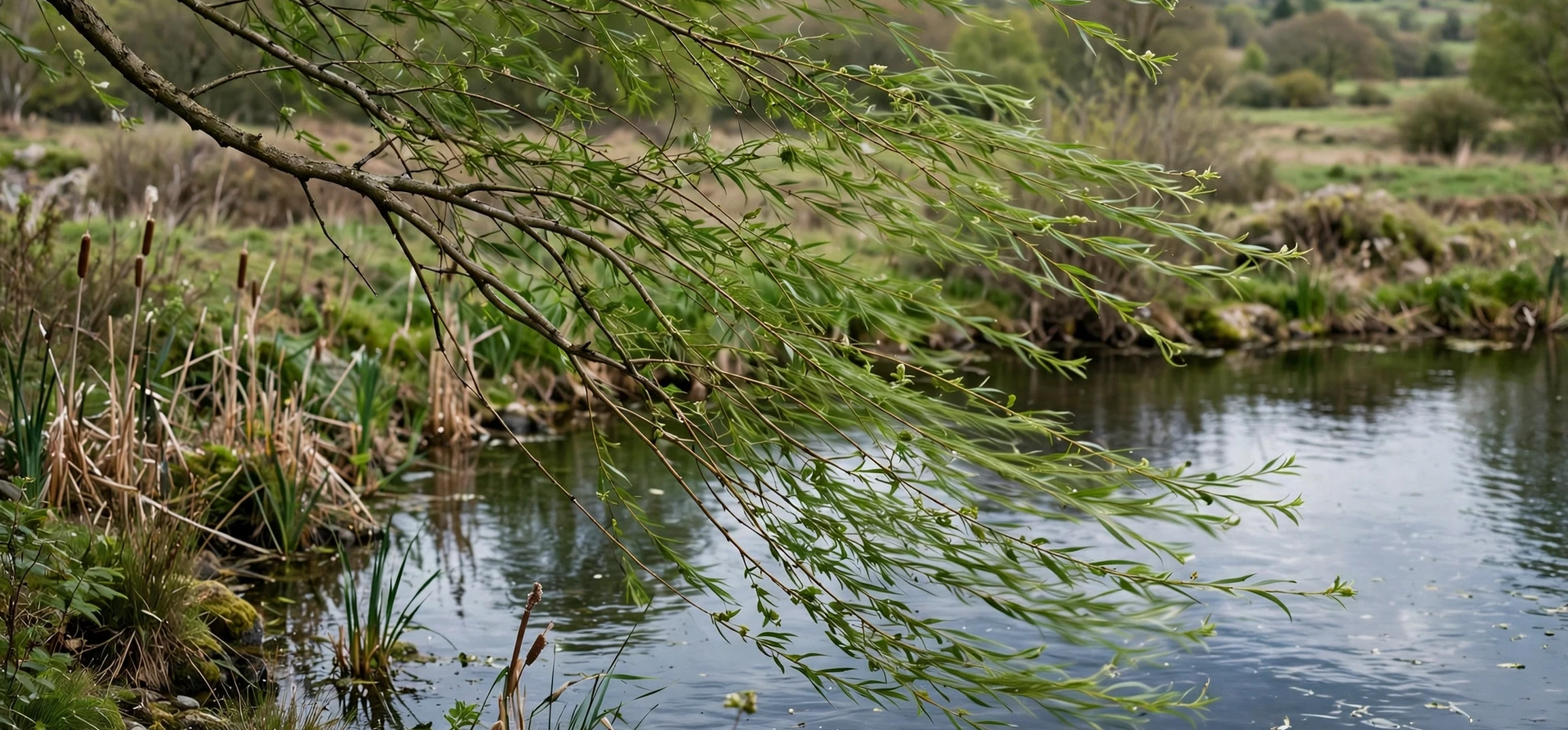
That history helps explain why pliancy feels both familiar and formal. The root is ancient and widespread, but the noun itself was never as popular as flexible or adaptable. Writers who choose pliancy are often reaching for a slightly elevated, literary tone, or for a word that suggests graceful bending rather than mere softness. A willow branch is pliant in a way that a rubber band, although flexible, is not quite: the willow suggests natural grace, while the rubber band suggests stretch and snap.
Related words are worth learning alongside pliancy, because they appear in similar contexts. Supple means flexible and graceful, often used for bodies, leather, and voices. Flexible is the general, neutral word for something that bends or adapts. Adaptable stresses the ability to change to suit new conditions. Compliant stresses willingness to obey or agree, and can sound more passive than pliant. Malleable, borrowed from metalworking, stresses being shaped by pressure. Each word overlaps with pliancy, but none is an exact synonym in every sentence. A young branch is a simple way to picture what is pliancy in the physical sense.
Pliancy in Materials and the Body
In materials, pliancy is a practical quality. A craftsman working with wood, leather, clay, or metal needs to know how much a material will bend before it breaks, how it responds to heat or moisture, and whether it will hold a new shape or spring back. Young, green wood is more pliant than dry, seasoned wood. Soft leather is more pliant than stiff, new leather. Those differences affect what can be made, how it can be joined, and how long it will last.
In the body, pliancy is often described through flexibility, suppleness, and range of movement. A dancer, a gymnast, or a yoga practitioner may be described as pliant, meaning their body moves and bends with ease. Here the word carries a positive, admiring tone: pliancy suggests control as well as softness, not floppiness. A pliant body is not weak; it is responsive, coordinated, and able to move through a full range without strain. In negotiation, what is pliancy becomes a question of judgement: wise adjustment, or yielding too easily.
Engineers and designers also think in terms of pliancy, even when they use different technical terms such as elasticity, ductility, or bend radius. A cable that must bend around corners needs pliancy. A bridge that must sway slightly in wind needs a controlled kind of flexibility, so that it does not crack under stress. In all these cases, pliancy is not about being soft for its own sake; it is about surviving stress by yielding a little, rather than resisting until something breaks.
Pliancy in Character, Negotiation, and Organisations
In human behaviour, pliancy is more complicated, because yielding can be wise or unwise depending on the situation. A pliant negotiator listens, adjusts, and finds a workable compromise. That kind of pliancy is often praised as diplomacy, pragmatism, or emotional intelligence. It allows agreements to be reached, relationships to be preserved, and plans to survive contact with reality. Students meeting what is pliancy for the first time should learn pliant and pliable alongside it.
The same word can, however, carry a warning. A person described as too pliant may be seen as easily influenced, lacking firm principles, or unable to hold a boundary. A leader who is pliant in every direction may be praised for listening, or criticised for having no clear direction. Context, and the writer’s judgement, decide which reading is intended. Adverbs and surrounding words often give the clue: “wisely pliant” sounds positive, while “excessively pliant” or “merely pliant” sounds critical.
Organisations show pliancy too. A pliant organisation adapts its rules, products, or working methods when conditions change. During a crisis, pliancy can be a survival skill: a business that adjusts quickly may outlast a rigid competitor. Over a longer period, however, an organisation that changes direction with every fashion risks losing its identity. The healthiest form of pliancy, in people and in organisations, is therefore flexible strength: a clear core, with the ability to bend at the edges. The difference between pliancy and flexibility is subtle, and that subtlety is part of what is pliancy as a word choice.
Pliancy Compared With Similar Words
| Word | Closest sense | When pliancy fits better |
|---|---|---|
| Flexibility | General ability to bend or adapt | When you want a literary or graceful tone |
| Suppleness | Graceful, smooth bending | For bodies, leather, voices, and movement |
| Compliance | Willingness to obey or agree | When yielding is about agreement, not bending |
| Adaptability | Ability to change for new conditions | When change over time is the main point |
| Malleability | Being shaped by pressure | For metals and for character shaped by others |
Choosing between these words is a matter of emphasis. If you want to stress graceful bending, choose pliancy or suppleness. If you want a neutral, everyday word, choose flexibility. If you want to stress obedience, choose compliance. If you want to stress long-term change, choose adaptability. Good writing often depends on that small choice, because readers feel the difference even when they cannot name it.
For other word meanings explained in the same plain style, see our guides to acceded meaning, all-encompassing meaning, and chaos meaning. Each one follows the same pattern: a clear definition first, then origin, examples, and the distinctions that help you use the word correctly. A supple body shows what is pliancy in movement, with control as well as softness.
Using Pliancy in Sentences
Examples make an abstract noun concrete. “The pliancy of the young willow allowed it to bend in the storm without breaking” uses the physical sense. “Her pliancy in negotiation helped both sides reach an agreement” uses the social sense, positively. “Critics accused the committee of pliancy, saying it yielded to every lobby group” uses the same social sense, critically. The word itself does not change; the judgement around it does.
When you write with pliancy, keep the sentence simple and let the context do the work. Avoid stacking abstract nouns, as in “the pliancy, flexibility, and adaptability of the organisation”, because the three words blur together and the sentence loses force. Choose one, and give it a concrete example. A single clear sentence about a bending branch, a soft leather, or a negotiator who adjusted a position will teach the reader more than a paragraph of synonyms. Organisations, like materials, reveal what is pliancy when conditions change and they must bend or break.
Pronunciation is straightforward for most English speakers: pliancy is usually spoken with three syllables, with the stress on the first syllable, similar to pliant with an added ending. You do not need to master a technical pronunciation to use the word in writing, and in speech, saying it slowly and clearly, as pli-ant-see, will be understood. If you are unsure in a formal talk, flexible or adaptable are safe substitutes, and no listener will think less of you for choosing the clearer word.
Frequently Asked Questions About Pliancy
What is pliancy in one sentence?
Pliancy is the quality of being pliant: flexible, easily bent, yielding, or adaptable, whether you are talking about a material, a body, or a person’s approach. For everyday writing, what is pliancy matters less than knowing when flexible is the clearer word.
Is pliancy the same as flexibility?
They overlap, but pliancy is more specific and more literary. Flexibility is the general word, while pliancy suggests graceful bending or yielding without breaking, and it can carry a judgement about character.
What is the adjective form of pliancy?
The adjective is pliant, and pliable is a closely related adjective, more common for materials. You would say a pliant branch, or the pliancy of a pliant branch. In short, what is pliancy is the quality of bending, yielding, or adapting without breaking.
Is pliancy a positive or negative word?
It can be either. In materials and in wise negotiation, it is usually positive. When it means yielding too easily or having no firm position, it can be critical. Context decides.
Conclusion
So, what is pliancy? It is the noun for being pliant: the ability to bend, yield, or adapt without breaking. In materials, it describes a branch that bends in wind, a leather that shapes without cracking, or a design that survives stress by giving a little. In people and organisations, it describes the ability to listen, adjust, and compromise, a strength when it is guided by clear principles, and a weakness when it becomes directionless yielding. Remember the folding root, plicare, and the word becomes easy to keep: pliancy is what allows something to be folded, shaped, or influenced, rather than snapped. Use it when you want that graceful, bending sense, and choose flexibility, suppleness, compliance, or adaptability when a different shade fits better. That small, careful choice is what turns a vocabulary word into good writing.



