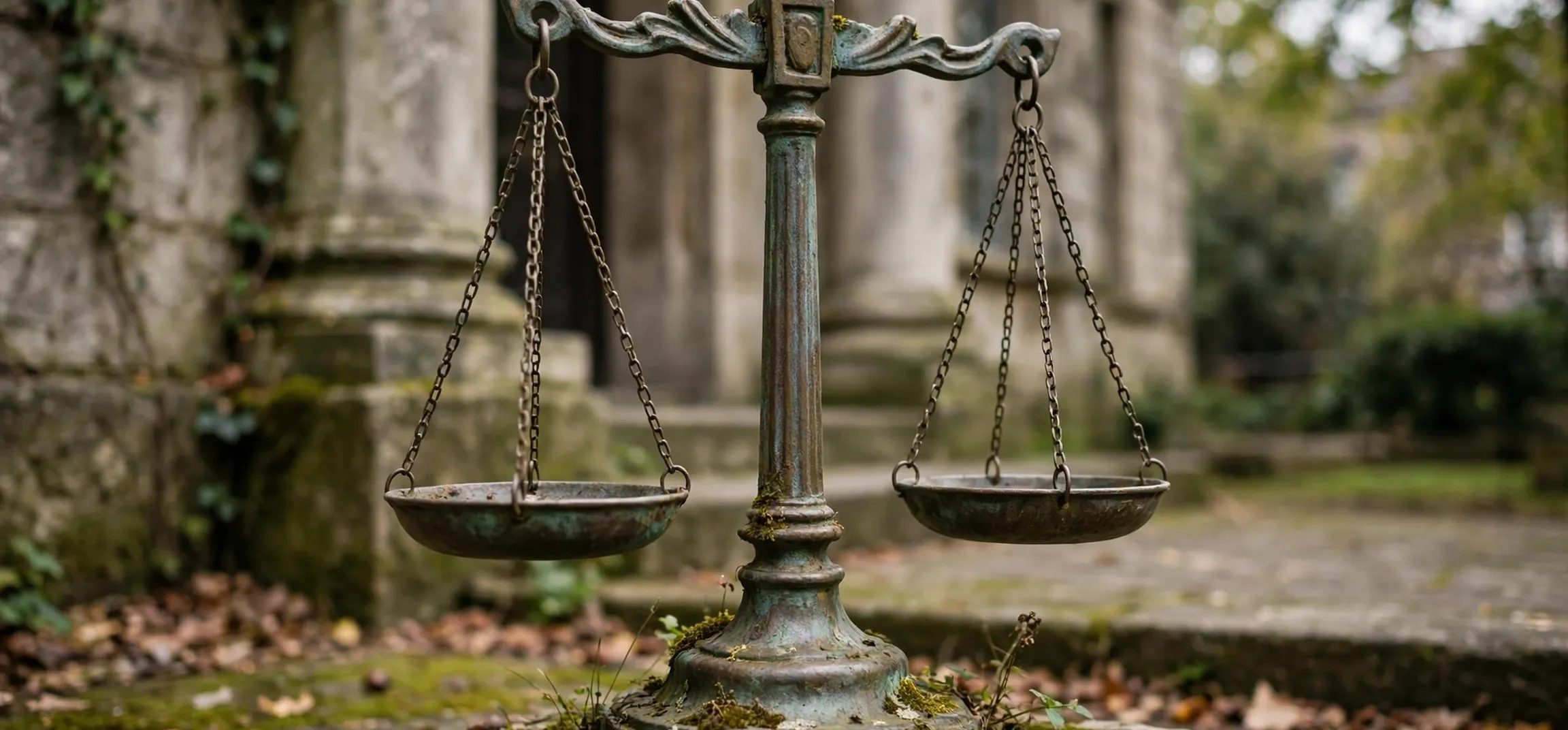
When readers talk about the meaning poetic justice, they usually mean a satisfying twist in a story in which a character gets exactly what they deserve: the villain is undone by their own scheme, the cheat is cheated, or the kind character is rewarded after long hardship. Poetic justice is not a legal term and it is not a courtroom verdict. It is a literary and everyday idea about fairness in narrative, where the outcome feels morally fitting even if it would be unlikely in real life. This guide explains the meaning poetic justice in full, from its origins in literary criticism to its use in films, novels, television and everyday conversation, and shows how writers create it without making a story feel forced or preachy.
The phrase itself points to its meaning. Justice is the fair treatment of people according to what they have done, and poetic describes the artistic, shaped quality of that fairness: it happens in a poem, play, novel or film, arranged by the author so that the audience can feel the rightness of it. A villain who traps others may fall into their own trap. A greedy character may lose everything by grasping for more. A humble character who helps strangers may discover that one of those strangers can help them in return. In each case, the punishment or reward fits the character’s behaviour so neatly that it feels like a kind of moral rhyme, which is why the word poetic suits it so well. That moral rhyme is central to the meaning poetic justice in criticism and in casual conversation alike.
It is important to distinguish poetic justice from revenge. Revenge is a character deliberately paying someone back, often in anger and often going too far. Poetic justice is broader and usually less personal: it is the shape of the story itself delivering a fitting outcome, whether or not any character planned it. A character may be ruined by their own arrogance, exposed by a lie they told, or saved by a kindness they showed earlier, without any avenger stepping forward. The satisfaction comes from the sense that the world of the story has a moral order, even when the real world often does not. That is part of its comfort and part of its power as a storytelling tool. Audiences return to stories partly because the meaning poetic justice promises order that life does not always supply.
Meaning poetic justice in literary history
The meaning poetic justice has a long history in English literary criticism. The idea was discussed by critics in the seventeenth and eighteenth centuries, who argued that plays and poems should show virtue rewarded and vice punished, so that audiences would learn moral lessons from what they watched. The critic Thomas Rymer is often associated with popularising the term, arguing that a well-ordered drama should distribute rewards and punishments according to merit. Later writers and critics debated that rule fiercely: some thought it made drama moral and satisfying, while others thought it made drama unrealistic, because in real life good people suffer and bad people often prosper.
That debate never really ended, and it is still useful today. Supporters of poetic justice argue that stories are not documentaries: they are shaped experiences, and a fitting ending gives audiences a sense of closure and moral clarity. Critics argue that forcing every story to end fairly can make it predictable and sentimental, and can imply that suffering is always deserved, which is a dangerous idea when applied to real people. Good writers navigate between those poles. They may give a story a poetically just ending while leaving some loose ends, or they may deny poetic justice deliberately to make a point about an unfair world. Understanding the meaning poetic justice therefore means understanding both its appeal and its limits. That warning shapes how the meaning poetic justice is taught in classrooms today.
Over time, the phrase moved from critical essays into everyday speech. People now use it for real-life coincidences that feel morally fitting, such as a person who mocks punctuality missing an important appointment, or a company that cuts corners facing a costly failure caused by those same corners. Strictly speaking, those are coincidences rather than authored justice, because no author arranged them, but the phrase survives because it captures a recognisable human pleasure: seeing a pattern in which behaviour and consequence match. When someone says that an outcome was poetic justice, they usually mean that it felt deserved, ironic and strangely appropriate all at once. Teachers often introduce the meaning poetic justice through fairy tales, where cause and effect are easy to follow.
Meaning poetic justice in stories today
In modern stories, the meaning poetic justice is most visible in crime drama, comedy, fairy tales and revenge thrillers, although it appears in almost every genre. In a heist film, the thief who betrays the gang may be betrayed in turn. In a comedy, the snob who sneers at ordinary people may be forced to live as one of them. In a fairy tale, the cruel stepsisters may be humbled while the kind heroine is recognised. The mechanism is the same in each case: the character’s defining flaw or virtue becomes the instrument of their fate. Audiences enjoy spotting that mechanism, and writers enjoy hiding it until the final act, when the pattern clicks into place.
Television has made poetic justice a familiar weekly pleasure. In legal and medical dramas, a dishonest witness may be undone by their own testimony, while a compassionate professional is vindicated by a patient they treated kindly. In soap operas and long-running series, poetic justice often arrives slowly, across months of episodes, as a scheming character’s lies accumulate until they collapse under their own weight. The delay matters: if justice arrives too quickly, it feels trivial, but if it arrives after the audience has watched the character’s behaviour carefully, it feels earned. That sense of earning is the difference between a satisfying twist and a cheap coincidence. Long-running series test the meaning poetic justice over time, because audiences must remember behaviour across many episodes.
Children’s stories use poetic justice in a simpler, more direct form. A bully learns kindness by experiencing exclusion, a lazy character discovers that shortcuts create more work, and a generous character is rewarded by the very people they helped. These endings are didactic, meaning they are designed to teach, and they work because young readers can follow the cause and effect clearly. Adult stories often complicate the pattern: the villain may receive poetic justice but an innocent character may still suffer, or the hero may achieve justice only at great personal cost. That complication keeps the device fresh, because it acknowledges that fairness in stories, like fairness in life, is rarely clean or complete. Children’s tales show the meaning poetic justice in its simplest form, where kindness is rewarded and cruelty is humbled.
How writers create poetic justice
Writers create poetic justice by planting a character’s flaw or virtue early and then letting it drive the ending. The classic technique is the trap of the character’s own making: a liar must remember too many lies, a thief must guard stolen goods that betray them, a proud ruler must defend a boast that cannot be defended. Because the downfall grows from the character’s own choices, the audience accepts it as fair rather than as authorial cruelty. The writer’s job is to make the chain of cause and effect visible in hindsight without making it obvious in advance, so that the ending feels both surprising and inevitable. When the downfall grows from choice, the meaning poetic justice feels earned rather than imposed.
Irony is the second ingredient. Poetic justice is at its strongest when the punishment mirrors the crime in a specific, memorable way. A character who silences others may lose their own voice in the story’s climax, metaphorically or literally. A character who hoards wealth may lose it through the very safe they built to protect it. A character who judges others harshly may face the same judgement from people they once dismissed. That mirroring is what makes audiences call an ending poetic rather than merely just: the form of the outcome rhymes with the form of the wrongdoing, and the rhyme is what stays in the memory. That mirroring explains why the meaning poetic justice is remembered long after plot details fade.
Timing and proportion are the third ingredient, and they are where many stories fail. If the punishment is wildly out of proportion to the offence, the audience feels discomfort rather than satisfaction. If the reward is unearned, it feels like sentimentality rather than justice. Skilled writers calibrate both: the villain’s fall should match the harm they caused, and the hero’s reward should follow from choices the audience actually saw them make. When that calibration is right, poetic justice feels like the story keeping a promise it made in its opening chapters, and the audience leaves with a sense of order restored. Calibration is what keeps the meaning poetic justice satisfying instead of sentimental or cruel.
Poetic justice, irony and karma
Poetic justice is often confused with irony and with karma, and the differences are worth clarifying. Irony is a contrast between expectation and reality: a fire station burning down is ironic, but it is not poetic justice unless someone’s behaviour caused it in a fitting way. Karma, in its original religious and philosophical senses, is a broader doctrine about actions shaping future lives and circumstances, and in casual Western use it has become a shorthand for what goes around comes around. Poetic justice is narrower and more literary: it is a crafted outcome inside a story, designed to feel morally fitting, and it does not require any belief about the universe or about rebirth. Reviewers who use the term precisely keep the meaning poetic justice tied to fitting method, not merely to a pleasant ending.
That distinction matters for criticism. A story can be ironic without being just, and it can be just without being poetic. A villain arrested by chance after a long career of crime is justice of a sort, but if the arrest has no connection with their particular crimes, it may not feel poetic. Conversely, a villain undone by their own signature method feels poetic even if no police officer ever arrives. Writers and reviewers use the term most precisely when they reserve it for outcomes where the method of downfall or reward echoes the character’s own behaviour, rather than for any happy or unhappy ending.
| Device | What it means | Example pattern |
|---|---|---|
| Poetic justice | A fitting outcome crafted by the story | A cheat is cheated by their own trick |
| Irony | Outcome opposite to expectation | A lifeguard needs rescuing |
| Karma | Actions shaping future circumstances | Kindness returns as kindness later |
| Revenge | Deliberate payback by a character | A victim hunts down the wrongdoer |
| Comeuppance | Informal deserved punishment | A braggart is publicly humbled |
Readers who enjoy tracing these devices in stories may also enjoy our guides to neighbouring literary ideas. Our explanation of foreshadowing in literature shows how writers plant clues that make a fitting ending feel earned, while our guide to line meaning in poetry explores how small units of language carry larger effects. Together, those guides help explain why some endings feel satisfying and others feel arbitrary, even when both end with the villain defeated.
Frequently asked questions about poetic justice
What is the meaning poetic justice in simple words?
In simple words, the meaning poetic justice is that a character in a story gets what they deserve in a fitting, ironic way: good behaviour is rewarded and bad behaviour is punished by the logic of the story itself, often through the character’s own actions.
Is poetic justice the same as karma?
Not exactly. Karma is a broader belief about actions shaping future outcomes across life, while poetic justice is a literary device inside a single story. The two overlap in everyday speech, but critics use poetic justice for crafted narrative endings and karma for a wider moral worldview.
Can poetic justice happen in real life?
People use the phrase for real-life coincidences that feel morally fitting, such as a dishonest seller being caught by their own false claim. Strictly, that is a coincidence rather than authored justice, because no writer arranged it, but the phrase captures why the outcome felt satisfying.
Why do some critics dislike poetic justice?
Some critics argue that always rewarding virtue and punishing vice makes stories predictable and unrealistic, and can imply that real suffering is deserved. Many modern writers therefore use poetic justice selectively, or mix it with unfair outcomes, to reflect a more complicated world.
Conclusion
Ultimately, the meaning poetic justice is about the pleasure of a fitting ending: a story that keeps faith with its own moral logic and lets behaviour shape fate in a memorable, ironic way. From seventeenth-century criticism to modern film and television, the device has survived because audiences recognise the pattern and enjoy seeing it completed. It works best when the outcome grows from the character’s own choices, mirrors their behaviour, and arrives in proportion to what they did. Used sparingly and crafted carefully, poetic justice gives a story closure, clarity and a quiet moral resonance. Used mechanically, it feels like a lecture. The best writers know the difference, and the best readers can feel it, which is why this old phrase remains a living part of how we talk about stories today.



