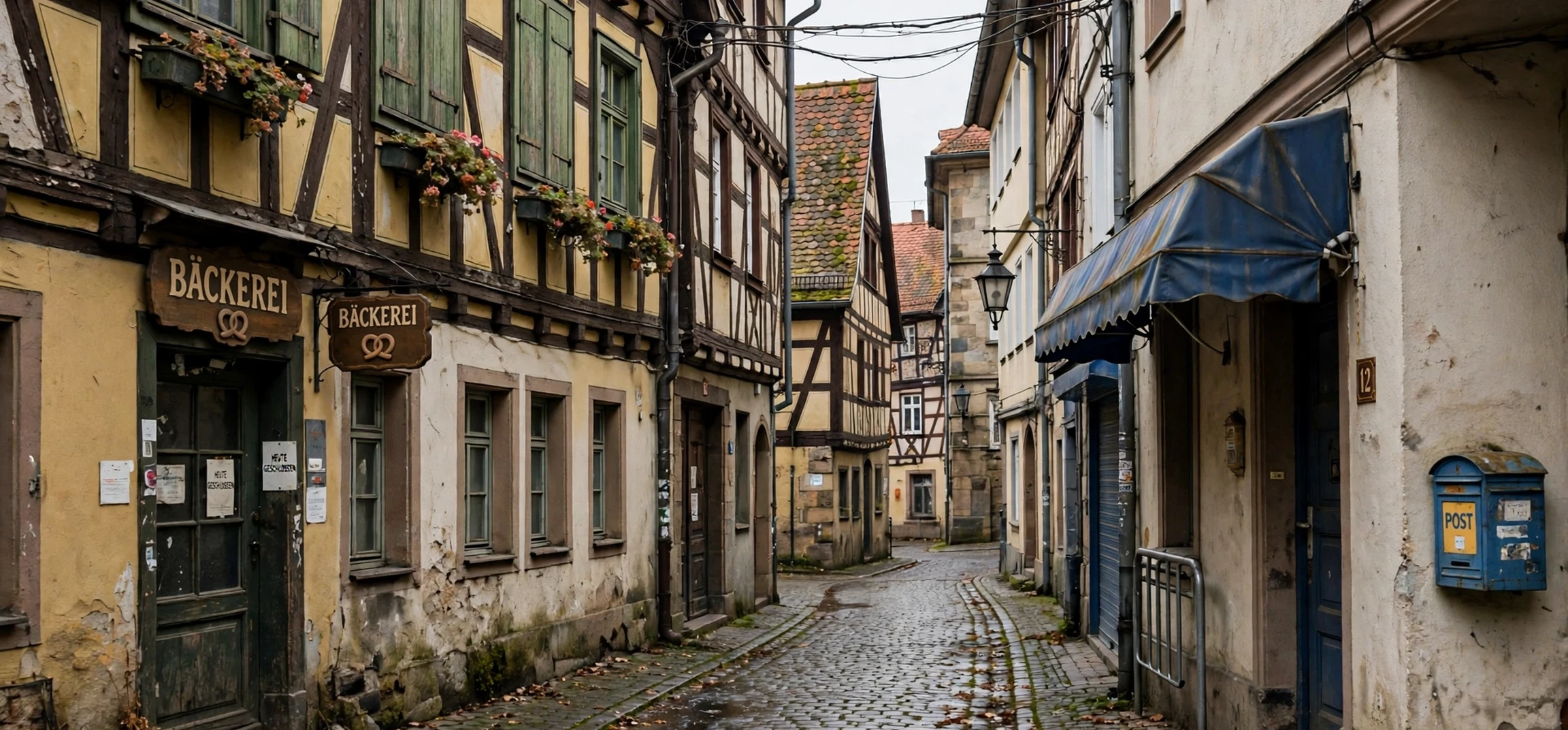
The most popular German last names tell a story about work, place, family, and history, all packed into a single word. If you have ever wondered why so many German surnames sound familiar even outside Germany, the answer is that centuries of migration carried them around the world, and the most popular German last names are now found in the Americas, Australia, and across Europe. This guide explains which surnames top the lists, This guide to the most popular German last names explains which surnames top the lists, what they originally meant, where they come from, and how to research your own German family name.
German surnames became fixed relatively late by European standards. For much of the Middle Ages, most people were known by a first name plus a description, such as their trade, their father’s name, or the village they came from. As populations grew and records became more formal, these descriptions hardened into hereditary surnames, passed from parent to child. That is why the most popular German last names still read like a snapshot of medieval life: millers, smiths, bakers, and farmers, alongside names drawn from landscape features and personal characteristics.
Most Popular German Last Names: The Top 20
Across modern Germany, lists of the most popular German last names agree closely, with only small differences in order depending on the data source. with only small differences in order depending on the data source. Muller, usually written with an umlaut as Müller, is generally the most common surname in Germany, followed closely by Schmidt, Schneider, Fischer, and Weber. These five names alone account for millions of people, and they all describe trades: a miller, a smith, a tailor, a fisherman, and a weaver. The dominance of occupational names is the single clearest pattern in German surname history, and no other pattern comes close among the most popular German last names.
Just below the top five sit Meyer, Wagner, Becker, Schulz, and Hoffmann. Meyer originally described a manager or steward of an estate, Wagner a wagon maker, Becker a baker, Schulz a village headman or constable, and Hoffmann a farm manager or courtier. The next tier includes Koch, meaning cook, Bauer, meaning farmer, Richter, meaning judge, and Klein, meaning small, which likely described a person’s stature or a younger son. Together, these twenty names cover a remarkable share of the German population, which is why any list of the most popular German last names starts with them, which is why genealogists often warn that a common surname alone proves very little about family connections.
Spelling variations matter enormously. Müller may appear as Muller, Mueller, or Miller in records outside Germany, because clerks in English-speaking countries often dropped the umlaut or translated the name outright. Schmidt becomes Smith, Schneider becomes Snyder or Taylor, and Fischer becomes Fisher. If you are tracing a family that emigrated, always search every spelling variant, since a single family can appear under three different forms across a few generations of documents. Our guide to Anton name origin shows how one name can shift form across languages in a similar way.
Why Most Popular German Last Names Endure
The most popular German last names endure because they were useful, widespread, and tied to everyday life. They endure because they were useful, widespread, and tied to everyday life, and that combination is hard for any newer name to match. Every village needed a miller and a smith, so those names arose independently in hundreds of places at once. Unlike rare names that trace to one family in one town, occupational names were coined again and again, which is why millions of unrelated Mullers and Schmidts exist today. The same logic applies to names drawn from common landscape features, such as Berg, meaning mountain, and Stein, meaning stone.
Migration then spread these names far beyond Germany. In the nineteenth century, millions of German speakers emigrated to the United States, Brazil, Argentina, and elsewhere, carrying their surnames with them. In America, German surnames are now among the most common of all, and many families have kept them unchanged for six or seven generations. Wars, border changes, and the division and reunification of Germany also scattered name bearers, so a surname that looks German today may have roots in regions that are now part of Poland, the Czech Republic, or France.
Another reason for their staying power is simple inertia. Another reason the most popular German last names stay on top is simple inertia: surnames are inherited and rarely changed. Surnames are inherited, rarely changed, and legally protected in most countries, so a name that became common in 1500 tends to stay common. Even as trades like milling and weaving faded, the names survived as family labels. Today, a Weber is no more likely to weave than a Fischer is to fish, but the names still carry a quiet echo of the work their first bearers did.
The Four Families of German Surnames
German surnames fall into four broad groups, The most popular German last names fall into four broad groups, and recognising which group your name belongs to is the first step in researching it. Occupational names, the largest group, describe a trade: Müller, Schmidt, Schneider, Fischer, Weber, Becker, and Koch all belong here. Patronymic names derive from a father’s first name, often with a suffix, such as Peters, meaning son of Peter, or Jakobs. Geographical names describe where someone lived or came from, such as Berger, meaning someone from a mountain area, or Frank, which could indicate a Frankish origin.
The fourth group is descriptive or nickname names, drawn from appearance, character, or habit. Klein, meaning small, Gross, meaning large, and Weiss, meaning white or fair, are classic examples. Some nickname names are less flattering, and a few began as jokes that stuck. A smaller fifth category covers names taken from houses, signs, or estates, such as names beginning with “Zum” or referring to a distinctive building, though these are rarer among the most common surnames.
Regional patterns add another layer. Northern Germany favours names ending in “sen”, borrowed from Danish and Low German practice, while southern Germany and Austria show more names ending in “er” attached to place names, such as Gruber or Huber. Bavarian names often reference farms and alpine features, while Rhineland names show French influence from centuries of border movement. If your surname has a strong regional flavour, that flavour is a clue worth following in the records.
Meanings Behind the Most Famous Names
| Surname | Usual meaning | Type |
|---|---|---|
| Müller | Miller | Occupational |
| Schmidt | Smith | Occupational |
| Schneider | Tailor | Occupational |
| Fischer | Fisherman | Occupational |
| Weber | Weaver | Occupational |
| Meyer | Estate manager | Occupational |
| Wagner | Wagon maker | Occupational |
| Becker | Baker | Occupational |
| Schulz | Village headman | Occupational |
| Hoffmann | Farm manager | Occupational |
| Koch | Cook | Occupational |
| Bauer | Farmer | Occupational |
| Richter | Judge | Occupational |
| Klein | Small | Descriptive |
| Wolf | Wolf | Descriptive or nickname |
Notice how heavily occupational names dominate the list. That pattern holds across every ranking of the most popular German last names. That is no accident: in a society where most people worked the land or a craft, a trade was the most practical way to tell two men called Hans apart. A name like Klein worked differently, distinguishing a shorter man or a younger son from an older namesake. Over time, both kinds of label became permanent, and the original reason for the name was often forgotten within a generation or two.
Some famous German surnames carry meanings that surprise modern readers. Zimmermann means carpenter, not room man, despite the modern sense of “Zimmer” as room. Zimmermann built with timber, and the older sense of the word explains the name. Similarly, Lehmann describes a feudal tenant or vassal, not a man on a loan. These older meanings are a good reason to check a specialist surname dictionary rather than translating a name word by word with a modern dictionary, which can mislead.
Researching Your Own German Surname
If you carry a German surname or suspect one in your family tree, start with what you know and work backwards. Gather birth, marriage, and death records, and note every spelling variant you find, since clerks recorded names as they heard them. Passenger lists and naturalisation papers are especially valuable for emigrant families, because they often give a place of origin and an original spelling before anglicisation. Church registers in Germany are the next step, and many have been digitised by archives and genealogical societies.
Be cautious with the most common names. If your surname is Müller or Schmidt, a shared surname alone tells you almost nothing about kinship, If your surname is Müller or Schmidt, two of the most popular German last names, a shared surname alone tells you almost nothing about kinship, and you will need locations, dates, and first names to separate one family from another. Regional clues help: a Schmidt family from a named village in Bavaria is a far stronger lead than a Schmidt family “from Germany” in general. Online surname distribution maps, which show where a name is most frequent today, can point you towards the region where your family most likely originated.
Also remember that German naming customs varied. In some regions, farm names passed with the farm rather than the family, so a family could change surnames when it moved to a new holding. Women historically took their husband’s surname on marriage, and children took their father’s, though modern German law now allows more choice. Understanding these customs prevents dead ends and false matches, and it explains why a family line sometimes seems to change names without explanation. For a comparable naming study, see our article on Amish names for males, which traces another tradition shaped by community custom.
German Last Names Around the World
Outside Germany, German surnames adapted to local languages in fascinating ways. In the United States, the most popular German last names were often respelled, as umlauts were dropped or expanded, so Müller became Muller or Mueller, and Schröder became Schroeder. Some families translated their names outright: Schneider became Taylor, Zimmermann became Carpenter, and Kaufmann became Merchant. Others kept the original spelling proudly, especially in communities with strong German heritage such as parts of Pennsylvania, Texas, and the Midwest.
In Brazil and Argentina, German surnames survive in large immigrant communities, sometimes with Portuguese or Spanish spelling adjustments. In Australia, German settlers of the nineteenth century left surnames that are still common in South Australia and Queensland. In each case, the name is a small piece of migration history, and the most popular German last names travelled furthest of all, marking a journey that may have begun in a single village and ended on another continent. If your family name sounds German but your family has lived elsewhere for generations, that journey is very likely part of your story.
Pronunciation also shifted. An American Schmidt is usually pronounced differently from a German Schmidt, and a Brazilian Müller sounds different again. These shifts are normal and do not make a name less German; they simply show how a name lives in a new language. When researching, search by spelling rather than by sound, since written records preserve the spelling even when pronunciation has drifted far from the original.
Frequently Asked Questions
What is the most common German last name?
Müller, often written as Muller or Mueller outside Germany, is generally ranked as the most common surname in Germany, followed by Schmidt, Schneider, Fischer, and Weber.
Why are so many German last names job titles?
Because surnames formed when people needed a practical way to distinguish neighbours with the same first name, and a trade was the most obvious label. Every village had a miller, a smith, and a tailor, so those names arose independently in many places.
Does sharing a common German surname mean we are related?
Not necessarily. The most popular German last names arose in hundreds of places at once, so millions of unrelated people share them. Location, dates, and first names are needed to prove a family connection.
How do I find the original spelling of an anglicised German name?
Check passenger lists, naturalisation records, and church registers, which often preserve the original form. Also search umlaut variants, since Müller, Muller, and Mueller may all refer to the same family.
Conclusion
The most popular German last names are far more than labels: they are compact histories of medieval trades, villages, families, and migrations. From Müller the miller to Schmidt the smith, each common surname began as a practical description and grew into a family identity carried across centuries and continents. Whether you are researching your own ancestry, comparing the most popular German last names out of curiosity, or choosing a character name for a story, understanding their meanings and patterns adds real depth. Start with the meaning, follow the spelling variants, and keep the most popular German last names in perspective. Let the records, not guesswork, lead you to the region and the family behind the name.



