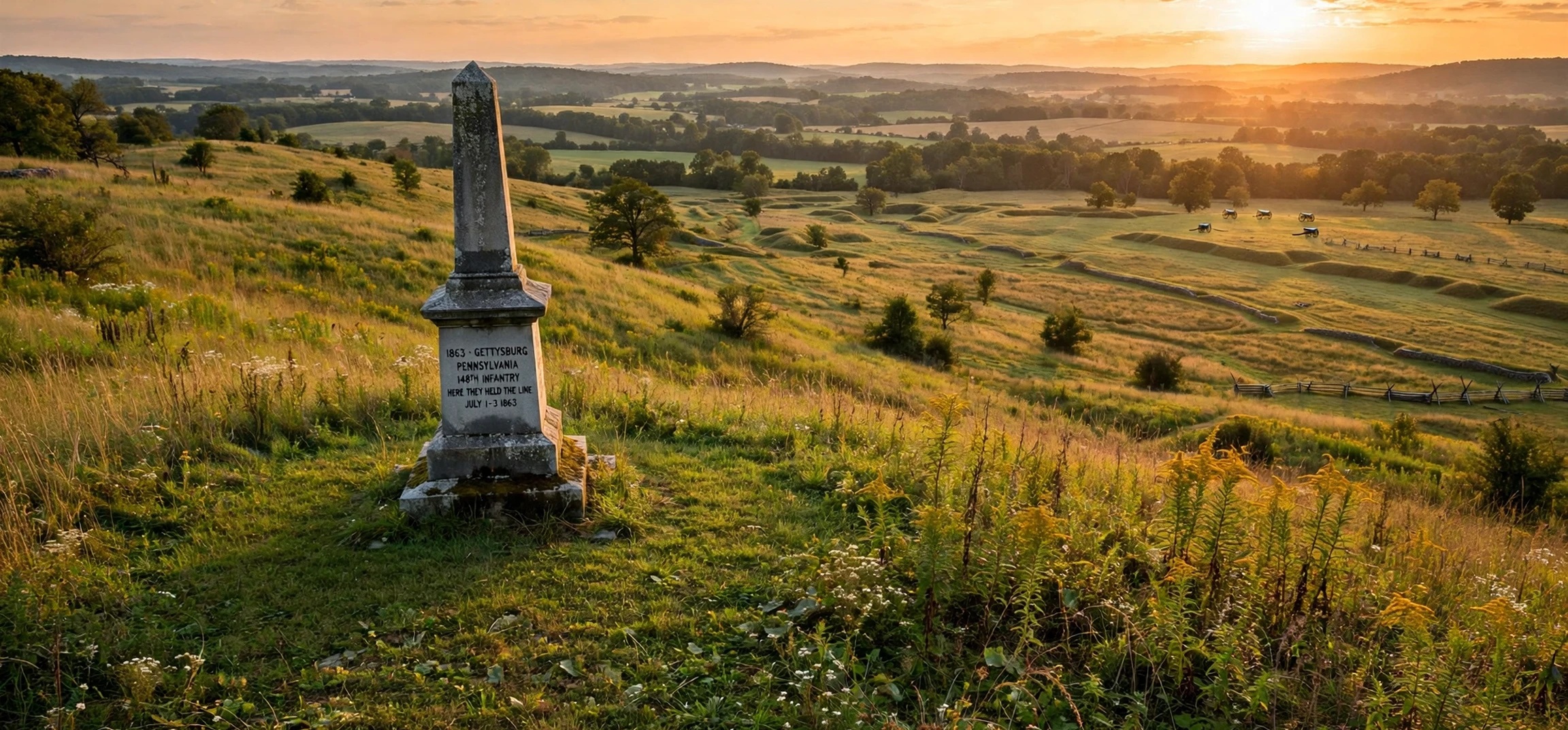
The abraham lincoln speech gettysburg address is one of the shortest and most quoted speeches in American history, yet it continues to reward close reading more than 160 years after it was delivered. In just over two minutes, President Abraham Lincoln reframed a battlefield dedication as a statement about equality, democracy, and the purpose of the Civil War itself. This guide gives the full context of the speech: what Lincoln was invited to do, what happened at Gettysburg, what he actually said, why his words were structured the way they were, and why the address still matters today.
Whether you are a student preparing an essay, a teacher planning a lesson, or a reader who has heard the famous opening line but never studied the whole text, this article walks through the Gettysburg Address in full — its background, its language, and its legacy — in clear, accessible terms.
Abraham Lincoln Speech Gettysburg: The Occasion
The abraham lincoln speech gettysburg address was delivered on 19 November 1863, at the dedication of the Soldiers’ National Cemetery at Gettysburg, Pennsylvania. Four months earlier, from 1 to 3 July 1863, Union and Confederate armies had fought one of the bloodiest battles of the American Civil War on and around the fields of Gettysburg. More than 50,000 soldiers were killed, wounded, or reported missing. The scale of loss overwhelmed local resources, and the dead had initially been buried in shallow, hastily dug graves across the battlefield.
In the months that followed, Pennsylvania officials organised a proper national cemetery for the Union dead. The dedication ceremony was a major public event, and the principal speaker was Edward Everett, a celebrated orator and former senator, who spoke for about two hours. Lincoln, as President, was invited to offer a few appropriate remarks after Everett. His address lasted roughly two minutes and ran to about 270 words in its most commonly quoted version. That brevity was deliberate in its effect, if not in its planning: Lincoln had prepared carefully, and he understood that a short, disciplined statement could carry more weight than a long oration on such a solemn occasion.
Contemporary reports suggest the audience response was muted at first — some listeners were unsure the speech had ended, so brief was it — but its reputation grew rapidly as the text was printed and circulated. Within years, it was being memorised in schools and quoted in political debate. The contrast with Everett’s long speech became part of the story: length, the Address seemed to prove, is not the same as lasting power.
The Battle Behind the Dedication
To understand the abraham lincoln speech gettysburg address, it helps to know why Gettysburg mattered. By the summer of 1863, the Civil War had been raging for more than two years. Confederate General Robert E. Lee had taken his Army of Northern Virginia into Pennsylvania, hoping a victory on Northern soil would weaken support for the war, encourage foreign recognition, and shift the strategic balance. Union forces under General George G. Meade met him at Gettysburg, a small market town where several roads converged.
The battle unfolded over three days of intense fighting, including the defence of Little Round Top, the struggle for Cemetery Ridge, and the famous Pickett’s Charge on the final day, when Confederate infantry advanced across open ground against entrenched Union positions and were repelled with heavy losses. Lee retreated to Virginia, and the battle became widely regarded as a turning point of the war, alongside the Union capture of Vicksburg on the Mississippi on 4 July 1863. Neither victory ended the war — nearly two more years of fighting followed — but together they shifted momentum and morale.
When Lincoln stood at Gettysburg in November to deliver the abraham lincoln speech gettysburg address, the ground itself was part of the message. The cemetery was being consecrated on a battlefield still marked by the recent fighting. He was not speaking in an abstract setting; he was speaking where men had died, before families and soldiers who knew the cost personally. That immediacy shaped every line of the speech.
Abraham Lincoln Speech Gettysburg: The Full Text
Several versions of the Address survive in Lincoln’s handwriting, with small wording differences between them. The version most often quoted, known as the Bliss copy, reads as follows. It is in the public domain, and it is worth reading slowly, sentence by sentence, because its structure is part of its meaning.
“Four score and seven years ago our fathers brought forth on this continent, a new nation, conceived in Liberty, and dedicated to the proposition that all men are created equal. Now we are engaged in a great civil war, testing whether that nation, or any nation so conceived and so dedicated, can long endure. We are met on a great battle-field of that war. We have come to dedicate a portion of that field, as a final resting place for those who here gave their lives that that nation might live. It is altogether fitting and proper that we should do this. But, in a larger sense, we can not dedicate — we can not consecrate — we can not hallow — this ground. The brave men, living and dead, who struggled here, have consecrated it, far above our poor power to add or detract. The world will little note, nor long remember what we say here, but it can never forget what they did here. It is for us the living, rather, to be dedicated here to the unfinished work which they who fought here have thus far so nobly advanced. It is rather for us to be here dedicated to the great task remaining before us — that from these honored dead we take increased devotion to that cause for which they gave the last full measure of devotion — that we here highly resolve that these dead shall not have died in vain — that this nation, under God, shall have a new birth of freedom — and that government of the people, by the people, for the people, shall not perish from the earth.”
Note the famous opening: “Four score and seven years ago” counts back 87 years from 1863 to 1776, the year of the Declaration of Independence. Lincoln thus anchors the nation not in the Constitution of 1787, but in the Declaration’s proposition that all men are created equal. That choice is the interpretive heart of the speech, as the next section explains.
Structure and Language: Why the Speech Works
The abraham lincoln speech gettysburg address is built in three movements, and recognising them helps explain its power. The first movement looks to the past: a nation conceived in liberty and dedicated to equality. The second movement describes the present: a civil war testing whether such a nation can endure, and a battlefield dedication that is fitting yet, in a larger sense, beyond the power of words to achieve. The third movement turns to the future: the living must dedicate themselves to the unfinished work, resolve that the dead shall not have died in vain, and ensure a new birth of freedom and a government of the people, by the people, for the people.
That past–present–future shape gives the speech its momentum. It does not linger on blame, strategy, or the details of the battle. It lifts a local ceremony into a national argument: the war is not only about preserving a political union, but about proving that a nation founded on equality can survive its own divisions. Lincoln makes that argument without naming the Confederacy, without triumphalism, and without partisan attack — a restraint that helped the speech endure across later generations who disagreed about much else.
The language is also carefully balanced. Lincoln uses repetition and parallel structure — “we can not dedicate — we can not consecrate — we can not hallow” — to build rhythm and emphasis. He uses short, plain words alongside formal ones, so the speech feels both elevated and accessible. And he places the most memorable phrase, “government of the people, by the people, for the people,” at the very end, where it can resonate as a closing definition of democracy itself.
The Equality Argument at the Centre
Lincoln’s decision to centre equality in the abraham lincoln speech gettysburg address was politically significant in 1863. The Emancipation Proclamation, issued in January of that year, had already reframed the war as a fight against slavery as well as for union, but that reframing remained contested. By tying the nation’s founding purpose to the Declaration’s equality proposition, Lincoln argued that ending slavery and preserving the Union were part of the same task, not competing aims. Later readers, including civil rights leaders, would return to exactly this passage to argue that the promise of equality remained unfinished and demanded action.
Which Version Is the “Full Version”?
Readers searching for the abraham lincoln speech gettysburg full version sometimes wonder why different sources show slightly different wording. Lincoln wrote out the Address several times for presentation and publication, and the copies differ in small details — punctuation, the phrase “under God,” and minor word choices. The Bliss copy, written later for a charity publication, is the version most textbooks and memorials use, and it is the version quoted above. Other copies, including the Nicolay and Hay drafts, are also authentic Lincoln texts, and scholars study the differences to understand how he refined his wording.
For most readers, the differences do not change the meaning, but they are a useful reminder that famous texts have histories. When quoting the Address for an essay or speech, it is good practice to name the version you are using — for example, “the Bliss copy” — and to quote it consistently. The Gettysburg National Military Park and the Library of Congress both display and explain these versions for visitors who want to compare them.
| Version | When written | Notable feature |
|---|---|---|
| Nicolay copy | Before the delivery | Thought to be an early draft carried to Gettysburg |
| Hay copy | Around the delivery | Another early draft with small wording differences |
| Everett copy | After the delivery | Written at Edward Everett’s request for publication |
| Bliss copy | Later, for charity | The most widely quoted standard text |
Abraham Lincoln Speech Gettysburg Legacy
The abraham lincoln speech gettysburg address’s afterlife is as remarkable as its delivery. It became a staple of American school memorisation, was carved into the Lincoln Memorial in Washington, D.C., and has been quoted by presidents, activists, and writers around the world. Its phrases have travelled far beyond their original context: “a new birth of freedom” has been invoked in debates about civil rights, voting, and national renewal, while “government of the people, by the people, for the people” has become a shorthand definition of democracy in many languages.
That universality also invites critical reading of the abraham lincoln speech gettysburg address. Scholars note that Lincoln’s vision of equality in 1863 did not yet extend, in law or practice, to all Americans — women could not vote, and full civil rights for Black Americans remained decades away. The speech’s power lies partly in the gap it names between a founding proposition and a lived reality, a gap later generations have sought to close. Reading the Address critically, rather than as a finished achievement, is truer to Lincoln’s own framing of “unfinished work.”
For readers interested in Lincoln himself, our guide to Abraham Lincoln’s background and names offers further biographical context, and our explainer on leadership and operations roles looks at how leaders communicate under pressure — a theme Lincoln embodied at Gettysburg. Both complement the story of a short speech that carried an enormous argument.
Frequently Asked Questions
How long is the Gettysburg Address?
About 270 words in the Bliss copy, taking roughly two minutes to deliver. Its brevity is part of why it is so often memorised and quoted.
When and where was the abraham lincoln speech gettysburg address given?
On 19 November 1863, at the dedication of the Soldiers’ National Cemetery at Gettysburg, Pennsylvania, four months after the battle fought there in July 1863.
Who was the main speaker that day?
Edward Everett, a renowned orator, gave the main address, speaking for about two hours. Lincoln followed with his brief remarks.
Why do versions of the text differ slightly?
Lincoln wrote the Address out several times, refining punctuation and a few words. The Bliss copy is the standard quoted version; other authentic drafts show minor differences.
Conclusion
The abraham lincoln speech gettysburg address endures because it does so much in so little space: it honours the dead without glorifying war, it reframes a civil war as a test of equality and democracy, and it hands the living a task rather than a conclusion. Its past–present–future structure, its plain yet elevated language, and its closing definition of government still give readers a way to think about what a nation founded on equality owes to those who defend it — and what unfinished work remains. Read in full, slowly, and in its historical context, the abraham lincoln speech gettysburg address is not just a famous opening line. It is a complete argument, delivered in two minutes, that has shaped democratic language ever since.



