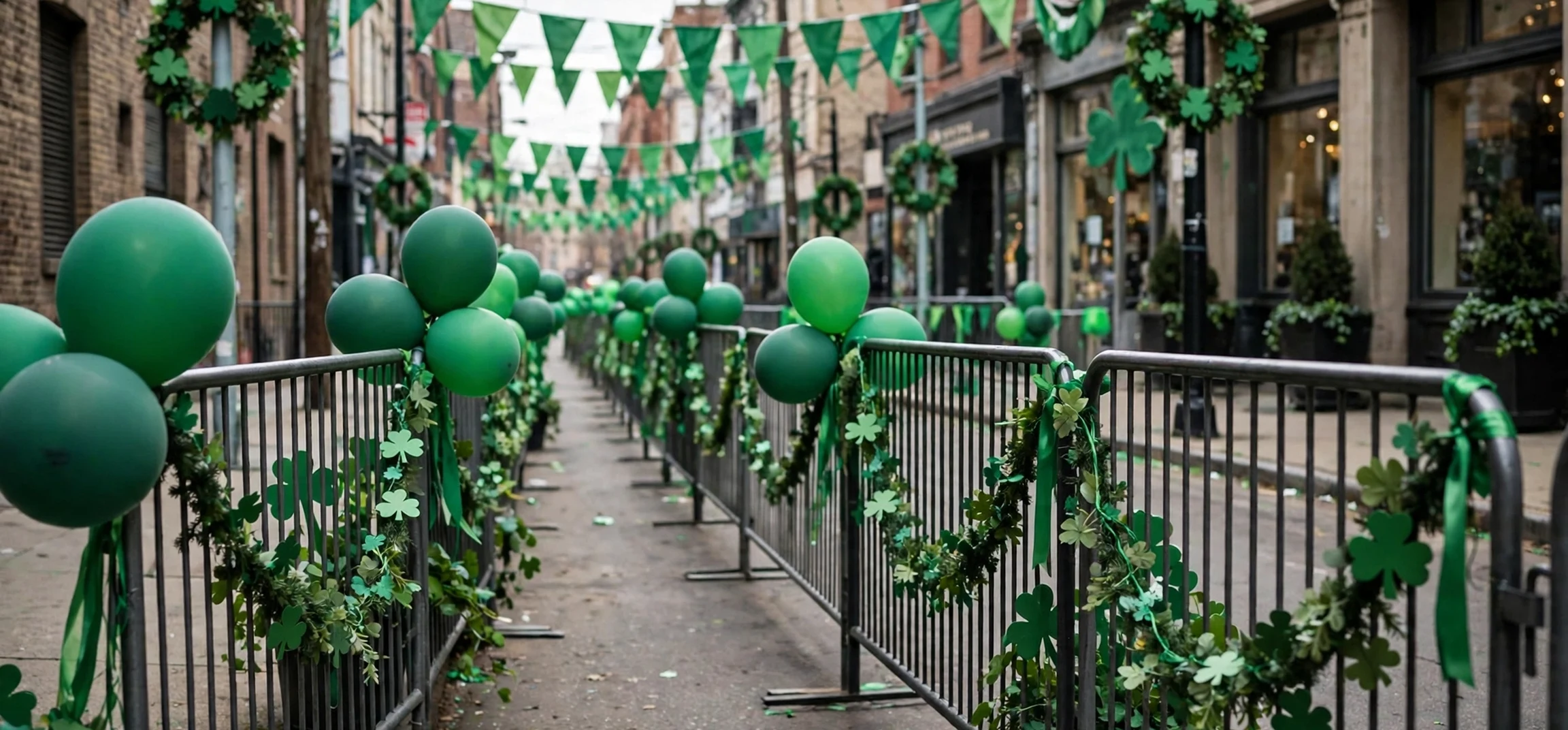
Saint Patrick’s Day is celebrated every year on March 17, and most people recognise it by its green clothes, parades, shamrocks, and cheerful music. But behind the modern celebrations lies a much older and more meaningful story about a man, a country, and a cultural identity that travelled around the world. Understanding the meaning of Saint Patrick’s Day helps explain why it is observed far beyond Ireland, why it feels both religious and cultural, and why its symbols have lasted for centuries.
At its heart, Saint Patrick’s Day began as a feast day honouring Saint Patrick, the patron saint of Ireland. Over time, it grew into a celebration of Irish heritage, community, and belonging. Today, people with Irish roots and people with no Irish ancestry at all take part, often in very different ways: some attend church services or cultural events, others join parades, cook traditional food, or simply wear green and enjoy the festive mood. All of these are part of the modern meaning of the day.
Who Was Saint Patrick?
Saint Patrick lived in the fifth century, a time when Ireland was made up of many small kingdoms rather than one united country. According to the most widely accepted historical accounts, Patrick was born in Britain, then part of the Roman world, and was taken to Ireland as a young captive. After several years, he escaped and returned home, but later chose to return to Ireland as a missionary. His own writings, especially his Confession, describe his faith, his struggles, and his sense of calling to serve the Irish people.
Patrick is traditionally credited with spreading Christianity in Ireland, although historians note that Christian communities already existed there before him and that his work built on the efforts of others. What made Patrick stand out was his approach: he travelled widely, worked with local leaders, and used familiar Irish language and imagery to explain new ideas. The famous story that he used the shamrock to explain a complex religious idea is a later legend rather than a documented fact, but it shows how his story became woven into Irish culture.
March 17 is traditionally regarded as the date of Patrick’s death, which is why it became his feast day. In the early centuries, the day was mainly a religious observance in Ireland, marked by church services and a break from the fasting and restraint of Lent. It was a solemn occasion first, and a public celebration second. That balance between faith and festivity still shapes the day today, even though the festive side is far more visible in many countries.
From Religious Feast to Global Celebration
The transformation of Saint Patrick’s Day into a global festival is closely linked to Irish emigration. From the seventeenth century onward, and especially during the nineteenth century, large numbers of Irish people moved to Britain, the United States, Canada, Australia, and other countries. Far from home, they used March 17 as a way to stay connected to their identity, support one another, and show pride in their heritage. Parades became a powerful expression of that identity.
Interestingly, some of the earliest large Saint Patrick’s Day parades did not take place in Ireland at all, but in cities with large Irish immigrant communities, such as New York and Boston. These parades gave Irish immigrants visibility and community strength at a time when they often faced prejudice and hardship. Over time, as Irish communities became established and celebrated, the parades became city-wide festivals open to everyone, regardless of background.
In Ireland itself, public parades on a large modern scale developed later, particularly in the twentieth century. Dublin’s festival is now one of the best-known celebrations in the world, drawing visitors from many countries and showcasing Irish music, dance, theatre, and art. The day has therefore come full circle: a feast that began in Ireland, spread through emigration, and returned as a major international cultural event.
Symbols and Their Meaning
Saint Patrick’s Day is rich in symbols, and each one carries its own layer of meaning. Green is the most obvious. It is linked to Ireland’s green landscape, earning the country the nickname the Emerald Isle, and it is also linked to Irish national identity. Wearing green on March 17 is a simple, joyful way of joining in, and in some traditions, it is said to make the wearer invisible to mischievous leprechauns.
The shamrock, a small three-leafed plant, is another central symbol. Legend connects it to Patrick’s teaching, and it has become a national emblem of Ireland. It is important not to confuse the shamrock with the four-leaf clover, which is a separate symbol of good luck. The shamrock’s meaning is tied to Ireland itself, while the four-leaf clover belongs to a broader folk tradition about luck.
Leprechauns, pots of gold, and rainbows belong to Irish folklore and add a playful, storytelling side to the day. Leprechauns are small, clever figures from folk tales, often shown as shoemakers who hide their gold at the end of a rainbow. These stories are not historical accounts of Patrick, but they reflect Ireland’s rich tradition of myth, humour, and imagination, and they help make the festival fun for children and families.
Music, dance, and food are equally important symbols. Traditional Irish music, with fiddles, flutes, and drums, creates the sound of the celebration. Irish dancing, with its fast footwork and upright posture, showcases a distinctive art form. Foods often associated with the day include soda bread, colcannon, stew, and other hearty dishes that reflect Ireland’s farming history. Together, these cultural expressions turn a date on the calendar into a living experience.
How Saint Patrick’s Day Is Celebrated Today
Modern celebrations vary widely by place and by person. In many cities, the day includes a parade with marching bands, floats, dancers, and community groups. Streets may be decorated in green, landmarks may be lit green at night, and public events may include concerts, food markets, and family activities. In smaller towns, celebrations may be simpler: a local gathering, a school event, a church service, or a meal with friends and family.
For many Irish people, the day is also a moment of reflection about identity and home. It can be a time to remember family members who emigrated, to celebrate the Irish language, or to think about Ireland’s history, including both its achievements and its hardships. For people of Irish descent living abroad, it can strengthen a sense of connection to ancestors and to a culture they may know mainly through family stories, music, and food.
For people without Irish roots, the day is often simply a chance to enjoy a festive atmosphere and learn something new. Many join in by wearing green, trying Irish food, listening to Irish music, or attending a parade. This open, welcoming spirit is part of why the festival has grown so large: it invites participation without requiring a test of ancestry, and it celebrates community as much as nationality.
Common Misconceptions
Several popular ideas about Saint Patrick are legends rather than proven history. The story that Patrick drove all the snakes out of Ireland is one example. Ireland has no native snakes today, but scientists explain this by its climate and geography after the last Ice Age, not by a single historical event. The story is best understood as a symbolic tale, possibly representing the spread of a new faith or the triumph of good over evil in folk storytelling.
Another misconception is that Saint Patrick was Irish by birth. As noted above, he was most likely born in Britain and came to Ireland first as a captive, then later by choice. This detail actually deepens the meaning of the day: Patrick’s story is not only about being born Irish, but about choosing Ireland, serving its people, and becoming part of its identity through commitment and care.
It is also a mistake to see Saint Patrick’s Day as only a drinking festival. While social gatherings and pubs are part of modern celebrations in many places, the day has religious, cultural, family, and community dimensions that are just as important. Many celebrations are family-friendly, and many people mark the day without alcohol at all, focusing instead on music, history, language, and togetherness.
| Symbol | Common Meaning | What to Remember |
|---|---|---|
| Green clothing | Irish identity and landscape | A joyful, inclusive way to join in |
| Shamrock | Ireland and Patrick’s teaching legend | Three leaves, not four; distinct from a lucky clover |
| Parades | Community pride and heritage | Early large parades grew in immigrant cities |
| Music and dance | Irish culture and artistry | A living tradition, not just background entertainment |
| Leprechauns | Irish folklore and humour | Folk-tale figures, not historical facts |
Why the Day Still Matters
Saint Patrick’s Day still matters because it tells a story about migration, identity, and belonging that remains relevant today. Millions of people around the world have ancestors who left home seeking work, safety, or opportunity, and festivals like this one help keep those connections alive. They remind communities that identity can travel, adapt, and grow without disappearing, and that newcomers can enrich the places they move to while honouring where they came from.
The day also matters as a celebration of culture in its broadest sense. Language, music, storytelling, food, and dance are not museum pieces; they are practices that people learn, share, and remake in each generation. When a child learns an Irish song, a visitor tries soda bread for the first time, or a city lights its landmarks green, culture is being passed on in a living, accessible way. That is a powerful reason to keep the festival meaningful, not merely commercial.
For readers who enjoy clear, plain-language guides to online topics and everyday questions, Ploomes Org and Technewstop Org provide similar helpful explainers on this site.
Frequently Asked Questions
When is Saint Patrick’s Day?
Saint Patrick’s Day is celebrated on March 17 each year, traditionally regarded as the anniversary of Saint Patrick’s death in the fifth century.
Is Saint Patrick’s Day a public holiday?
It is a public holiday in Ireland and Northern Ireland, and a celebrated cultural day in many other countries, though holiday status varies by country and region.
Why do people wear green on Saint Patrick’s Day?
Green is linked to Ireland’s landscape and national identity, and wearing it has become the simplest and most visible way to join the celebration.
What is the difference between a shamrock and a four-leaf clover?
A shamrock has three leaves and is a symbol of Ireland, while a four-leaf clover is a rarer variation associated more generally with good luck.
Conclusion
The meaning of Saint Patrick’s Day goes far beyond green clothes and parades, though those joyful elements are part of its charm. At its core, the day honours Saint Patrick, celebrates Irish heritage, and marks the journey of Irish people and culture around the world. It blends faith, history, folklore, music, and community into a festival that is both deeply Irish and warmly open to everyone. Whether you mark it with a parade, a family meal, a quiet moment of reflection, or simply a touch of green, you are taking part in a tradition that has connected people across centuries and continents, and that continues to grow with each new generation.



