If you are looking for a secrets we keep synopsis, you probably want to know what the show is about before you start watching, without having the biggest twists ruined. Secrets We Keep is a Danish crime drama that arrived on Netflix in 2025 and quickly found an international audience. Set in an affluent suburb of Copenhagen, it begins with the disappearance of a young au pair and follows the investigation that slowly exposes the secrets hidden behind the perfect facades of the neighbourhood’s wealthy families. Across six episodes, the series blends a missing-person mystery with a sharp social drama about privilege, power, and the people who are paid to keep other people’s lives running smoothly. This guide gives you a clear, spoiler-light synopsis: the premise, the main characters, the themes, and what to expect from the story’s structure, without giving away how it ends.
Secrets We Keep Synopsis: The Premise
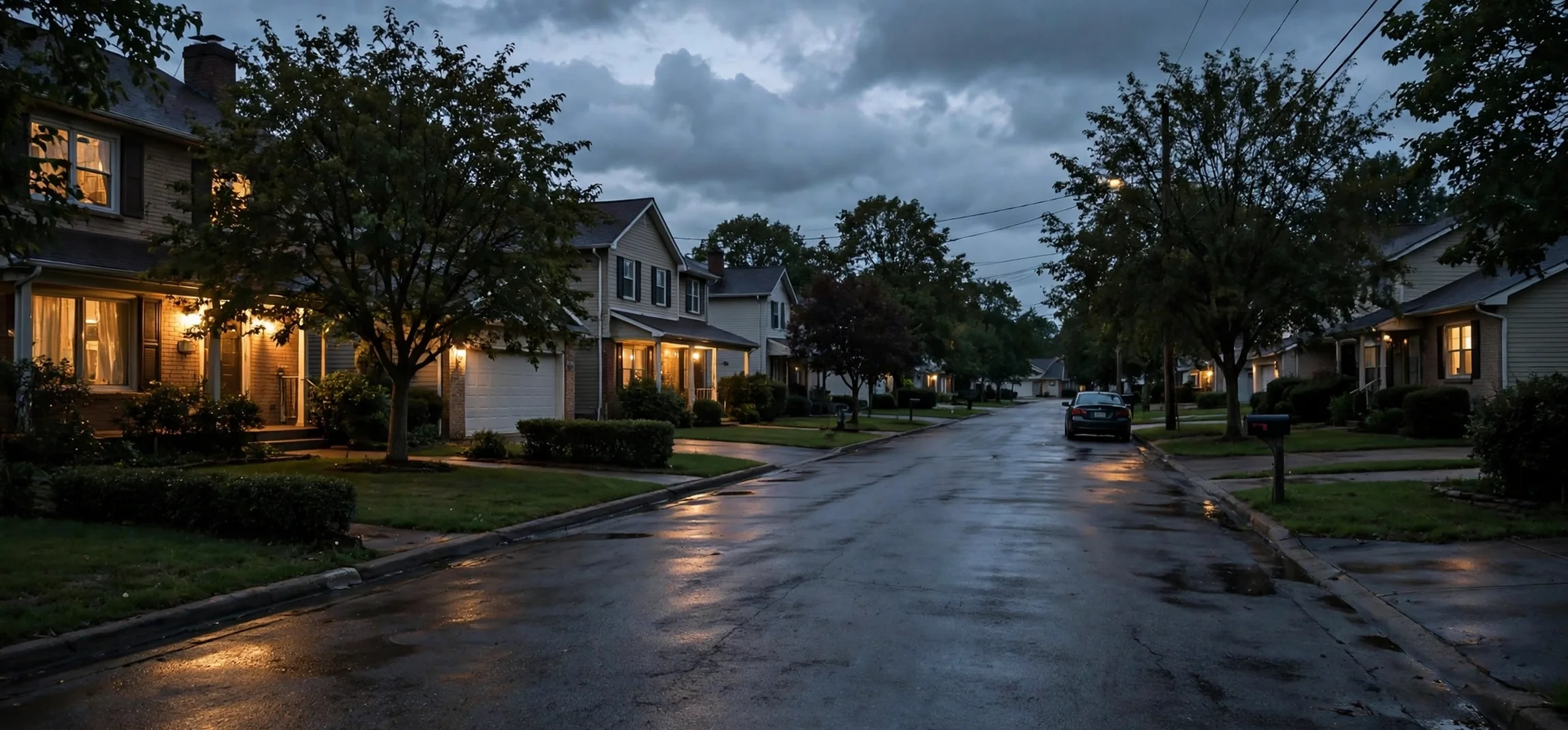
The story is set in a wealthy residential area north of Copenhagen, a world of large houses, manicured gardens, private schools, and dinner parties where everyone knows everyone else, or thinks they do. Many of the families employ au pairs, young women from abroad who live with the family, look after the children, and help run the household. The series opens with the disappearance of Ruby, an au pair working for one of the neighbourhood’s families. When Ruby vanishes, the police begin an investigation, but the official inquiry quickly runs into a wall of silence, evasiveness, and carefully managed appearances.
At the centre of the story is Cecilie, a mother in the neighbourhood whose own family employs an au pair and who becomes convinced that something is wrong. While the authorities treat the case as a matter to be processed, Cecilie begins asking questions of her own, talking to neighbours, comparing stories, and noticing the small inconsistencies that suggest the neighbourhood knows more than it is saying. Her investigation puts her at odds with her husband, her friends, and the social codes of a community built on discretion. The central tension of the series is therefore not only “what happened to Ruby” but “what is this community willing to hide in order to protect itself.”
The show’s Danish title, Reservatet, translates roughly as “the reservation” or “the reserve,” a reference to the enclosed, privileged world in which the story takes place. That title captures the series’ central idea: the suburb functions like a closed reserve, a place with its own rules, its own hierarchies, and its own ways of dealing with problems quietly. The au pairs, who live inside these houses but are not truly part of these families, occupy a fragile position in that world, and the series uses Ruby’s disappearance to examine what that position really means.
Secrets We Keep Synopsis: The Main Characters
Cecilie is the audience’s way into the story. She is a mother of two who appears, at first, to be a typical member of the neighbourhood: comfortable, well-connected, and invested in keeping up appearances. What sets her apart is her refusal to look away once she senses that something is wrong. Her determination to find out what happened to Ruby drives the plot forward, but it also costs her: her marriage comes under strain, her friendships are tested, and she is forced to confront uncomfortable truths about her own life and the compromises she has made. Her arc is the emotional spine of the series.
Ruby, the missing au pair, is present throughout the series even in her absence, through flashbacks, through other characters’ memories of her, and through the slowly emerging picture of her life in the neighbourhood. The series is careful to treat Ruby as a person with her own hopes, relationships, and frustrations, rather than as a mere plot device. As the episodes progress, viewers learn more about her friendships with other au pairs, her relationship with her employers, and the pressures she faced, and each revelation reframes what seemed certain in earlier episodes.
The supporting cast fills out the neighbourhood’s social world. There are the other wealthy families, each with their own secrets and their own reasons to want the investigation to go away. There are the other au pairs, whose shared experiences and mutual support provide a counterpoint to the employers’ world. And there are the police investigators, who must work within a community that is skilled at presenting a polished surface to outsiders. The series is an ensemble piece, and its strength lies in how these perspectives overlap and contradict one another, so that the truth emerges gradually rather than arriving in a single revelation.
Episodes and Structure
Secrets We Keep runs for six episodes, a compact length that suits its tightly plotted mystery. The first episode establishes the neighbourhood, introduces Cecilie and her family, and ends with Ruby’s disappearance, setting the investigation in motion. The middle episodes deepen the mystery: each one shifts the focus to a different household or character, reveals a new piece of Ruby’s story, and adds a complication to Cecilie’s investigation. Suspicions move from one character to another as new information comes to light, and viewers who think they have worked out the answer in episode two will usually find themselves reconsidering by episode four.
The series is structured as a slow-burn mystery rather than a fast-paced thriller. There are tense scenes and moments of confrontation, but much of the drama comes from conversations, glances, and the gap between what characters say and what they mean. The affluent setting is used deliberately: beautiful houses and calm streets make the darker undercurrents more unsettling, because the contrast between appearance and reality is the show’s central theme. Viewers who enjoy character-driven crime dramas, in the tradition of Scandinavian noir, will recognise the style, though the series is more focused on social observation than on police procedure.
Without spoiling the ending, it is fair to say that the final episodes bring Cecilie’s investigation to a head and force the neighbourhood’s secrets into the open. The resolution addresses both the mystery of Ruby’s disappearance and the wider questions the series has been asking about privilege, responsibility, and who gets believed when something goes wrong. The ending has divided some viewers, as endings of mystery series often do, but it follows logically from the themes established in the early episodes, and it rewards viewers who have been paying attention to the small details along the way.
Themes and Why the Show Struck a Chord
Several themes run through the series. The first is privilege and its blind spots. The wealthy families of the suburb are not portrayed as villains in a simple sense; many of them are sympathetic, loving parents who genuinely believe they treat their employees well. The series shows how privilege can nevertheless create a world in which some people’s problems are taken seriously and others’ are not, and in which the comfort of the powerful depends on the invisibility of the people who serve them. That observation, rather than any single twist, is what gives the show its bite.
The second theme is the au pair system itself. Au pairs live in their employers’ homes, care for their children, and occupy a position that is neither quite employee nor quite family member. The series explores how that ambiguity can leave young women vulnerable, especially when they are far from home, dependent on their employers for housing and income, and reluctant to complain for fear of losing their position. By telling the story partly from the au pairs’ perspective, the show gives weight to experiences that are often overlooked in stories about wealthy families.
The third theme is female solidarity and its limits. Cecilie’s investigation depends on alliances with other women, both employers and au pairs, and the series is interested in when those alliances hold and when they break under social pressure. Friendships in the neighbourhood are real, but they are also entangled with status, reputation, and mutual self-protection, and the show is honest about how difficult it can be to stand up for someone when doing so threatens your own standing. These themes, combined with the mystery plot, explain why the series travelled well beyond Denmark: its setting is specific, but its questions about wealth, work, and who gets heard are widely recognisable.
| Detail | Secrets We Keep |
|---|---|
| Original title | Reservatet |
| Country of origin | Denmark |
| Genre | Crime drama, mystery, social drama |
| Episodes | 6 |
| Setting | An affluent suburb of Copenhagen |
| Central mystery | The disappearance of an au pair, Ruby |
| Main perspective | Cecilie, a neighbour who investigates |
| Key themes | Privilege, the au pair system, secrets, solidarity |
Who Should Watch It
Secrets We Keep will appeal to viewers who enjoy slow-burn mysteries with strong characters and social depth. If you liked Scandinavian crime dramas that prioritise atmosphere and moral complexity over action, or domestic thrillers that explore what happens behind closed doors in seemingly perfect communities, this series fits that taste. It is less suited to viewers who want a fast, action-driven procedural, since its pleasures are in gradual revelation and character work rather than chases and cliffhangers every ten minutes.
Parents may want to note that the series deals with adult themes, including exploitation, deception, and the darker side of domestic employment, and it contains scenes of tension and distress that suit a mature audience. The show is in Danish with subtitles available, and the subtitled version preserves the performances and the specific social texture of the Copenhagen setting, which is part of its appeal. Watching with subtitles also helps viewers catch the small verbal distinctions, between what characters say politely and what they actually mean, that carry much of the drama.
Frequently Asked Questions
What is Secrets We Keep about?
It is a Danish crime drama about the disappearance of Ruby, an au pair in a wealthy Copenhagen suburb, and about Cecilie, a neighbour who investigates when the official inquiry stalls. The series combines a missing-person mystery with a social drama about privilege and secrets.
How many episodes does Secrets We Keep have?
The series has six episodes, telling a single complete story. The compact length makes it well suited to watching over a few evenings or a weekend.
Is Secrets We Keep based on a true story?
No. It is a fictional drama, although its portrayal of the au pair system and of life in affluent suburbs draws on real social conditions that viewers in many countries will recognise.
Do I need to know Danish to watch it?
No. The series is available with subtitles, and the subtitled version is the recommended way to watch, since it preserves the original performances and the social nuances of the dialogue.
Conclusion
This secrets we keep synopsis can be summed up in a single sentence: a young au pair disappears from a wealthy Copenhagen suburb, and one neighbour’s refusal to accept easy answers slowly exposes the secrets that the whole community has been keeping. Across six episodes, the series uses that mystery to ask searching questions about privilege, about the people who work inside other people’s homes, and about what it costs to tell the truth in a world built on appearances. It is a slow-burn, character-driven drama rather than a conventional thriller, and its strength lies in its characters, its setting, and its willingness to let moral complexity sit unresolved. If that sounds like your kind of show, it is well worth adding to your watchlist. For more viewing guides, see our piece on A Good Girl’s Guide to Murder series and our Black Doves parents guide.



