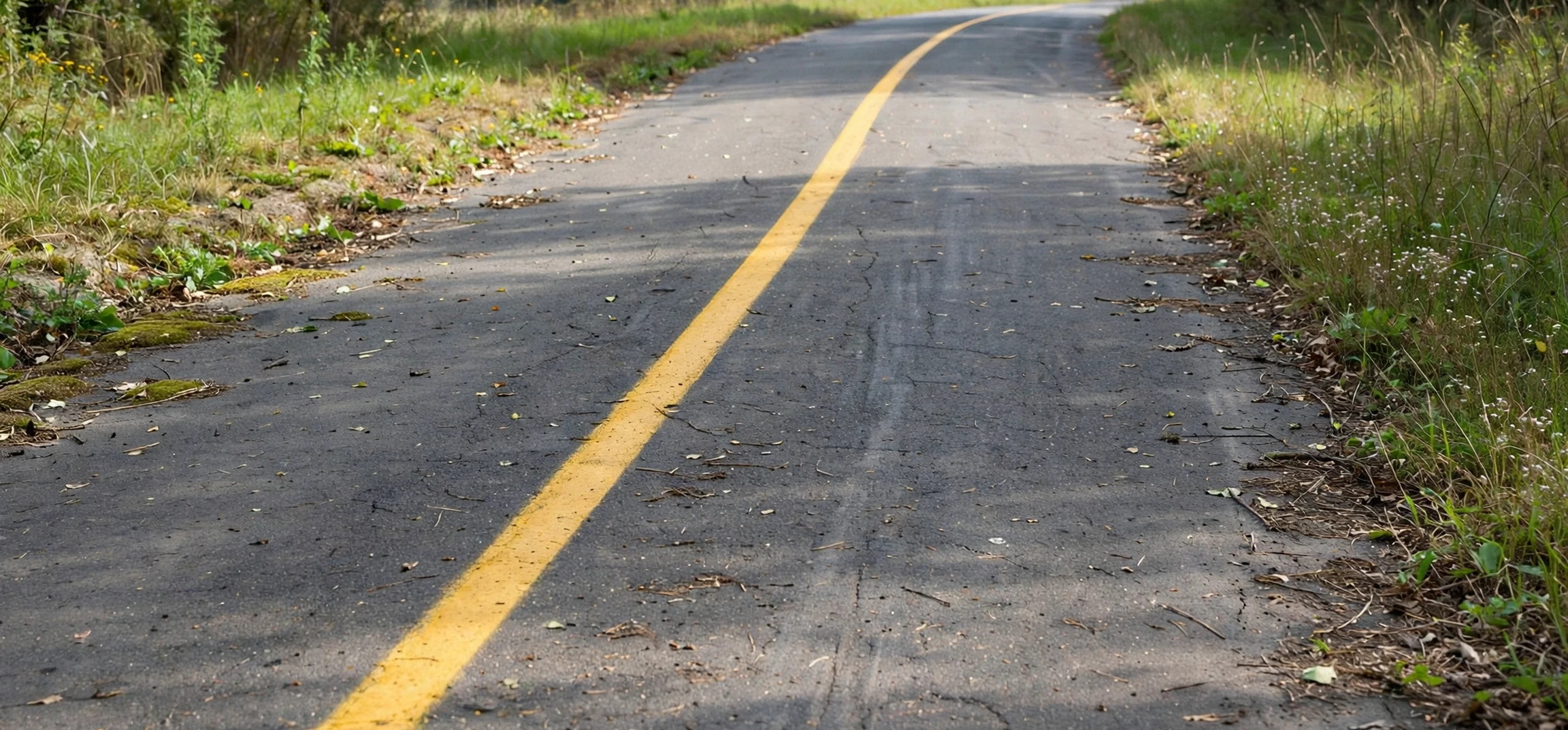
If you searched for what a yellow solid line meaning is on the road, the short answer is that it is a warning: do not cross it to pass. The yellow solid line meaning is tied to safety, because yellow lines separate traffic moving in opposite directions, and a solid line tells drivers that crossing into the opposing lane is not safe or not allowed at that point. Learning to read this marking is one of the most useful skills for a new driver, and it also helps experienced drivers stay calm on winding, hilly, or busy roads where overtaking looks tempting but the view ahead is limited. This guide explains the marking in plain language, shows how it differs from broken and double lines, and answers the questions drivers ask most often.
Road markings are a silent language. Signs can be missed, especially at night or in rain, but painted lines are always under the wheels, guiding every driver in the same way. A solid yellow line is one of the clearest messages in that language. It does not mean “slow down a little” or “pass only if you are careful.” It means that the road ahead has a hazard, a restriction, or a layout that makes passing unsafe, and the correct response is to stay in your lane until the marking changes. Understanding that message protects you, your passengers, and the drivers coming the other way.
Yellow Solid Line Meaning Explained in Plain Language
The yellow solid line meaning is simple: yellow marks the centre of a road carrying traffic in opposite directions, and solid means do not cross. When you see a single solid yellow line in the middle of the road, you should treat the other side as out of bounds for overtaking. You may still need to cross it in a few narrow, legally permitted situations, such as turning into a driveway where local rules allow it, but you must never use it as a passing lane. The line is there because engineers judged that the stretch ahead does not give enough clear sight distance for a safe overtake.
Sight distance is the key idea. To pass safely, a driver needs to see far enough ahead to complete the manoeuvre and return to the correct lane before meeting oncoming traffic. On a hill crest, a sharp bend, a narrow bridge, or a stretch with side roads and pedestrian crossings, that distance is not available. Instead of expecting every driver to judge the risk from scratch, the road authority paints a solid line that makes the decision for everyone. The marking removes guesswork, and that consistency is what keeps two-way roads predictable.
What the colour yellow tells you
Colour is not decoration. In many road systems, yellow lines separate opposing traffic, while white lines separate traffic moving in the same direction or mark the edge of the road. That colour code helps a driver understand the road at a glance, even before reading a sign. A yellow line warns that vehicles will be approaching from the opposite direction, so any move across it carries a head-on risk. A white broken line, by contrast, usually means that traffic beside you is travelling the same way, so a lane change is a different kind of decision. Remembering “yellow means opposite” is a helpful shortcut for learners.
Yellow Solid Line Meaning: Single Line Versus Double Lines
A single solid yellow line and a double solid yellow line carry a similar core message, but they are not identical. A single solid yellow line often appears on narrower two-way roads, where one continuous line marks the centre. A double solid yellow line, two solid yellow lines side by side, is a stronger and more common centre marking on wider or busier roads. In both cases, drivers on either side must not cross to pass. The double line simply makes the restriction clearer and harder to miss, especially at speed or in poor light.
The most important variation is a combination: one solid yellow line beside one broken yellow line. In that layout, the rule depends on which line is closest to you. If the broken line is on your side, you may pass when it is safe. If the solid line is on your side, you must not pass, even though drivers coming the other way may be allowed to. This is a frequent test question for learners, and it is also a frequent source of confusion in real driving. Always check the line nearest your vehicle, not the pair as a whole, before deciding.
| Marking | What it means for you | Passing allowed? |
|---|---|---|
| Single solid yellow line | Centre line for opposing traffic; do not cross to pass | No |
| Double solid yellow lines | Strong centre restriction on both sides | No, either side |
| Solid plus broken yellow lines | Rule follows the line nearest you | Only if the broken line is on your side and it is safe |
| Single broken yellow line | Centre line where passing may be allowed | Yes, only when safe and legal |
| Solid yellow edge line | Marks the left edge or a no-crossing boundary in some systems | Do not cross except as local rules allow |
Where You Will See a Yellow Solid Line Meaning in Action
You will see a solid yellow centre line in places where passing would be risky. Hill crests are a classic example, because a driver cannot see oncoming traffic until the last moment. Sharp bends are another, because the curve hides the road ahead. Narrow bridges, tunnels, and stretches with frequent driveways or junctions also use solid lines, since a passing driver might meet a turning vehicle or a pedestrian without warning. In towns, a solid yellow line may appear near schools, crossings, and bus stops, where the focus must stay on people rather than speed.
Weather and light make the marking even more important. In rain, fog, or darkness, a driver already has less time to react. A solid line is a fixed reminder that the road authority has already assessed the stretch and decided that passing is unsafe. It is not a suggestion to use your own judgement to override the marking. Even if the road looks empty for a moment, a vehicle can appear quickly from a hidden dip or side road, and a head-on collision leaves almost no margin for error. Patience for a few hundred metres is a small price for that safety.
Why the line sometimes changes to broken
Drivers often notice that a solid yellow line becomes broken after a bend or a hill, and then becomes solid again. That change reflects the changing sight distance along the road. Where the view opens up and a safe overtake becomes possible, the marking relaxes. Where the view closes again, it tightens. The lesson is to read the line continuously, not to assume that one stretch sets the rule for the whole road. A safe driver adjusts to each section as it comes, rather than treating the road as uniformly open or closed.
Yellow Solid Line Meaning and the Few Legal Exceptions
The yellow solid line meaning is a prohibition on passing, but road rules in many places allow a limited number of other crossings. A common example is turning left or right into a driveway, a side road, or a business entrance where the turn is permitted and can be made safely. Another example is moving around an obstruction, such as a broken-down vehicle or roadworks, when directed or when it is safe and lawful to do so. Emergency vehicles, road workers, and specific local rules can also create exceptions. These cases are about access and safety, not about overtaking, and they still require care, signals, and a check for oncoming traffic.
Because exact rules vary by country and by state or region, this guide does not replace your local road code. The safest habit is to learn the rule as it applies where you drive, and to check the official driver handbook for your area before a test or a long trip. If you are driving abroad, take a few minutes to learn the local marking system, because colours and combinations can differ. A marking that looks familiar may carry a different rule in another system, and assuming otherwise is a common mistake for visiting drivers.
Road language and everyday language often overlap in surprising ways. If you enjoy decoding everyday expressions, you may like our plain-English guide to what all-encompassing means, which explains a long word with short examples. For another everyday phrase explained step by step, see the meaning of aloft in plain English. Both guides follow the same approach as this one: a clear definition first, then examples that show how the meaning works in real life.
Common Mistakes Drivers Make With a Solid Yellow Line
The most dangerous mistake is treating a solid yellow line as a challenge. A driver stuck behind a slow vehicle may feel frustrated, especially on a long rural road, and may be tempted to pass “just this once” because the road looks clear. That temptation is exactly what the marking is designed to resist. A clear view for a few seconds is not the same as a safe passing distance, and oncoming vehicles travel fast. The time saved by one risky overtake is tiny compared with the risk it creates, and the penalty for crossing a solid line can include fines, points, and liability after a crash.
Another mistake is following the vehicle ahead across the line. If the driver in front crosses illegally, it does not make the move legal for you, and it does not make it safe. Each driver must judge the marking for themselves. A third mistake is drifting across a solid yellow line while distracted, tired, or using a phone. Lane discipline matters even when you are not trying to pass, because a drift into opposing traffic can be just as dangerous as a deliberate overtake. Keeping a steady position, checking mirrors, and staying alert are part of respecting the line, not extras.
What learners should practise
Learners should practise reading markings early, before they need to make a passing decision under pressure. On a quiet road, name each marking aloud: solid yellow, broken yellow, double solid, or combination. Say what it allows and what it forbids. That habit builds automatic recognition, so that on a busy road the decision feels routine rather than rushed. Instructors often test this skill because it reveals whether a learner understands the road system or is merely memorising answers for a written test. Real driving rewards the first kind of knowledge.
Yellow Solid Line Meaning: A Quick Checklist for Drivers
Use this short checklist whenever you meet a centre line and you are unsure what it allows. First, ask what the yellow solid line meaning is for your side of the road: if the line nearest you is solid, do not pass, even if the road ahead looks empty. Second, check whether the marking is a single solid line, a double solid line, or a solid line paired with a broken line, because the yellow solid line meaning changes only in that last combination, and only when the broken line is on your side. Third, look beyond the line itself and read the road: a bend, a crest, a junction, or a crossing can explain why the yellow solid line meaning applies on that stretch, and it can also warn you that the restriction may continue around the next corner.
Fourth, remember that the yellow solid line meaning is about passing, not about every possible crossing, so a permitted turn into a driveway is a different decision from an overtake, and it still needs a signal, a mirror check, and a check for oncoming traffic. Fifth, do not copy the driver ahead: if they cross, the yellow solid line meaning still applies to you, and their decision does not make yours safe or legal. Sixth, if you feel impatient behind a slow vehicle, remind yourself that the yellow solid line meaning protects the very gap you would need for a safe pass, and that waiting for a broken line and a clear view is almost always a matter of minutes, not hours. Keep this checklist in mind, and the yellow solid line meaning will become a habit rather than a rule you have to recall under pressure.
Frequently Asked Questions About Yellow Solid Line Meaning
Can I ever cross a solid yellow line?
You must not cross it to pass or overtake. Limited crossings for turns, access, or obstructions may be allowed under local rules, but those are exceptions for access and safety, not permission to pass. Always check your local road code for the exact rule.
What does a double solid yellow line mean?
It means neither side may cross to pass. It is a stronger, clearer version of the single solid line, used where the restriction needs to be unmistakable, such as on wider or faster roads.
What if one side is solid and the other is broken?
Follow the line nearest you. A broken line on your side means passing may be allowed when safe. A solid line on your side means you must not pass, even if drivers on the other side may pass.
Does a solid yellow line mean no stopping?
Not by itself. Stopping and parking rules usually come from kerb markings, signs, and local regulations, not from the centre line. A solid yellow centre line is primarily a passing restriction, so check nearby signs for stopping rules.
Is the yellow solid line meaning the same everywhere?
The core idea is widely shared, but details vary by country and region. Some systems use yellow differently at the road edge, and some use white for the centre line. Learn the system for the place where you are driving, and never assume a familiar colour means the same rule abroad.
Conclusion
The yellow solid line meaning is a safety message in paint: yellow separates opposing traffic, and solid means do not cross to pass. A single solid line, a double solid line, and a solid line paired with a broken line all follow the same logic, with the line nearest you deciding what you may do. By reading the marking, respecting the sight distance it protects, and waiting for a broken line and a genuinely safe gap before overtaking, you keep yourself and oncoming drivers safe. That patience is the heart of good driving, and it is a habit that serves you on every road, in every kind of weather, for every journey.