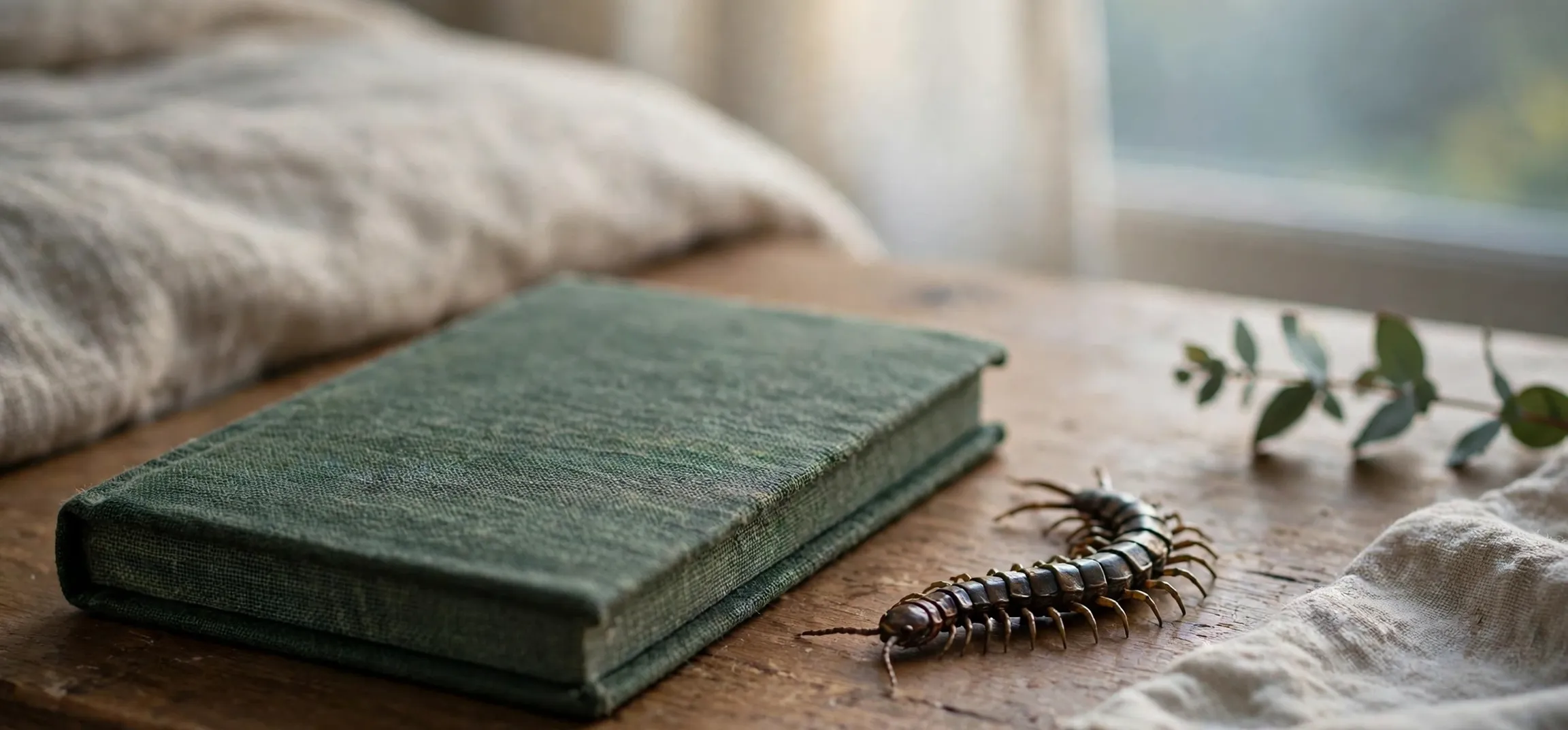
Seeing a centipede, whether in waking life or in a dream, can be startling enough that people immediately look for a story to explain it, and one of the most common related searches is spiritual meaning of a centipede in a dream. This guide focuses on the broader spiritual meaning of a centipede, drawing on popular belief, folklore, and animal symbolism, and it treats every interpretation here as a cultural story rather than a proven fact. Centipedes are small, many-legged creatures that move quickly, hide in dark and damp places, and appear unexpectedly, and those very traits shape the symbolism people attach to them. In some traditions they are read as signs of resilience and adaptability, in others as warnings to slow down and pay attention, and in still others as reminders of protection, patience, or a need for change. None of these readings can be proved or disproved in the way a scientific claim can, so the most useful way to read them is as a prompt for reflection, not as a prediction about what will happen next.
It helps to separate three layers that are often mixed together in online symbolism guides. The first layer is biology: what a centipede actually is and how it behaves. The second layer is folklore: what different cultures have said about centipedes over time. The third layer is personal meaning: what a particular sighting or dream means to the person who experienced it, given what is happening in their life at the time. When those layers are kept apart, symbolism becomes much clearer. A centipede in a garden, for example, is first and foremost a living animal doing what centipedes do, seeking shelter, moisture, and food. A centipede in a dream is first and foremost a product of sleep, memory, and imagination. The symbolic layer only enters when a person chooses to ask what the image might represent for them, and different people will quite reasonably give different answers to that question.
What spiritual meaning of a centipede in a dream Means in Popular Belief
In popular belief, dream symbolism works by association. A dream image is linked to a feeling, a situation, or a quality, and the dreamer is invited to consider whether that association fits their waking life. Centipedes are often associated with movement, because they have many legs and move in a rippling, coordinated way. They are also associated with hidden things, because they prefer dark corners, leaf litter, and undisturbed spaces. From those two associations, popular guides commonly derive several overlapping readings. One reading is progress through small steps: many legs working together can suggest that steady, repeated effort matters more than one dramatic leap. Another reading is awareness of what has been overlooked: something small and easily missed may deserve attention before it becomes a larger problem. A third reading is adaptability: a creature that can navigate tight spaces and varied ground can suggest flexibility in a changing situation.
Popular guides also link centipedes to protection and boundaries. A centipede defends itself, moves away quickly when disturbed, and is not an animal most people seek out casually. In symbolic language, that behaviour is sometimes read as a reminder to protect personal space, to set clearer limits, or to notice where a boundary has become too loose. Other guides emphasise patience and persistence, because a centipede advances steadily rather than rushing in a straight line. Still others emphasise discomfort: a centipede can provoke a strong reaction, and that reaction itself is sometimes treated as the point of the dream, a sign that something in waking life feels unsettling, crowded, or out of control. None of these readings is universal, and the same dream image can support several of them at once, which is why dream dictionaries often list multiple meanings side by side.
Context matters more than any single dictionary entry. In popular dream interpretation, the setting, the size of the centipede, the dreamer’s reaction, and what happens next are all treated as important details. A large centipede that blocks a path may be read differently from a small one that simply crosses a floor and disappears. A dream in which the dreamer feels calm may be read differently from one in which the dreamer feels fear or disgust. A dream that repeats may be read as a sign that an unresolved worry keeps returning, while a single vivid dream may be read as a passing reflection of a stressful day. These distinctions are not rules, they are habits of interpretation that people use to make a dream feel personally relevant. If a particular reading does not fit your life, it is reasonable to set it aside and consider another, or to conclude that the dream was simply a dream.
Centipede Symbolism in Waking Life and Folklore
Outside dreams, centipede symbolism varies a great deal by culture and region, and much of it grows out of practical experience. In places where centipedes are common household visitors, folklore tends to be practical first and symbolic second: people learn where centipedes hide, how to keep them out of living spaces, and when to leave them alone. In places where centipedes are rare, they may carry more mystery, simply because an unfamiliar animal invites storytelling. Some traditions treat centipedes as protective creatures, because they eat other small insects and therefore help keep a home or garden in balance. Other traditions treat them as unwelcome guests, and the symbolism follows that feeling, with the centipede standing for intrusion, disorder, or something that has been allowed to grow unnoticed.
Centipedes also appear in broader animal symbolism as creatures of the ground and the hidden world. Animals that live close to the earth are often linked in folklore to groundedness, persistence, and connection to the physical world. Animals that emerge at night or from dark places are often linked to the unconscious, to secrets, or to things that are not yet fully understood. A centipede combines both ideas: it is a ground-dwelling animal that is often seen only briefly, in a flash of movement. That combination makes it a flexible symbol. It can represent steady, grounded effort, and it can also represent a hidden worry or an unexamined feeling. The same animal can therefore appear in one guide as a positive sign of resilience and in another as a cautionary sign, and both guides may be drawing on the same basic observations.
It is worth noting that folklore about centipedes is not the same as medical or ecological advice. A centipede sighting in a home is best handled practically: check for damp areas, seal gaps where small animals enter, and avoid handling the animal with bare hands. Some centipede species can deliver a painful bite if handled, so the sensible response is distance and prevention rather than symbolic interpretation alone. If a centipede appears frequently, the practical question is usually about moisture, shelter, and food sources in the building, not about a spiritual message. Symbolism can sit alongside that practical response, but it should not replace it, especially where safety or health is involved.
Resilience, adaptability, and steady movement
One of the most common positive readings of centipede symbolism is resilience. A centipede has many legs, and if one part of its movement is blocked, the rest of the body can often adjust and continue. In symbolic language, that becomes a picture of coping with setbacks: progress does not require perfection, and a journey can continue even when one step goes wrong. Adaptability follows naturally from the same image. Centipedes live in gardens, forests, basements, and other varied environments, and they adjust to the ground beneath them. For a person facing a change at work, a move, or a shift in family life, that image can feel encouraging, not because the animal causes anything, but because it offers a useful metaphor for flexible thinking.
Steady movement is a quieter version of the same idea. A centipede does not leap or sprint in the way a larger animal might. It advances through coordination, with many small movements adding up to real progress. People who are working toward a long goal, such as studying, saving, recovering from a setback, or building a skill, sometimes find that image helpful. It reframes progress as something that happens in small, repeatable steps rather than in a single breakthrough. That reframing can reduce pressure, because it suggests that a slow day is still part of moving forward, provided the direction remains clear.
Protection, boundaries, and paying attention
A second cluster of readings centres on protection and attention. Because centipedes are often noticed suddenly, they can serve as a reminder to notice what has been overlooked in daily life. That might be a practical matter, such as a repair that has been postponed, a message that has gone unanswered, or a health check that has been delayed. It might also be a relational matter, such as a boundary that needs restating or a conversation that needs to happen. In this reading, the centipede is not a warning of danger in any literal sense. It is a prompt to pause, look around, and ask what small thing deserves care before it grows larger.
Protection readings also touch on personal space. A centipede keeps its distance and reacts quickly when disturbed, and some symbolism guides translate that into advice about guarding time and energy. If life feels crowded, overcommitted, or constantly interrupted, the image of a creature that retreats to a quiet, dark place can suggest the value of rest and privacy. Again, this is a metaphor, not a diagnosis. It can be a helpful way to name a feeling, but it does not replace practical steps such as adjusting a schedule, asking for help, or speaking directly with the people involved.
Centipede Encounters: Protection, Patience, and Change
When people describe a real centipede encounter, they often remember the surprise more than the animal itself. The centipede appears suddenly, moves fast, and disappears just as quickly. That experience of surprise is part of why encounters feel meaningful. The human mind is good at noticing sudden movement, and it is also good at searching for patterns after a surprising event. If a centipede appears on a day when a person is already thinking about change, the encounter can feel connected to that change, even though the two events are independent. Recognising that pattern-seeking tendency does not make the experience less interesting. It simply keeps symbolism in its proper place, as a way of reflecting on life, rather than as evidence about the future.
Change is a frequent theme in centipede symbolism because centipedes shed their outer layers as they grow, as many arthropods do, and because they move through different environments during their lives. In symbolic language, shedding can represent letting go of an old habit, role, or expectation. Moving through varied ground can represent a transition, such as starting a new job, ending a relationship, or adjusting to a new stage of life. These readings are most useful when they are treated as questions rather than answers. Instead of asking whether a centipede means change is coming, it can be more helpful to ask whether change is already underway, and whether the centipede image helps clarify how you feel about it.
Patience is another theme that appears often, and it pairs naturally with change. Real change usually takes time, and the centipede image of steady, coordinated movement offers a counterweight to the desire for instant results. If a goal feels slow, the symbolism can serve as a reminder that slow progress is still progress. If a situation feels stuck, the same image can prompt a different question: is the blockage a matter of direction, of resources, or of timing? Framing the question that way turns a symbolic image into a practical planning tool, which is often more useful than a fixed interpretation.
For readers who enjoy dream journals, recording the details of a centipede dream or encounter can be a helpful practice in itself, regardless of what the symbolism is taken to mean. Note the setting, the size and behaviour of the animal, your emotional reaction, and what was happening in your life at the time. Over weeks or months, patterns may emerge, not because dreams predict events, but because journaling makes your own concerns and reactions more visible. If a dream is distressing or recurring, and especially if it is accompanied by poor sleep, anxiety, or low mood, speaking with a clinician or a qualified sleep professional is a sensible step. Dream symbolism is not a substitute for health advice, and persistent sleep problems deserve proper attention.
How to Reflect on spiritual meaning of a centipede in a dream Without Treating It as Fact
Reflecting on dream symbolism without treating it as fact starts with a simple distinction: a belief can be meaningful without being literally true. Many people find comfort, insight, or motivation in folklore, and that value does not depend on the folklore being scientifically proven. The difficulty arises only when a symbolic reading is used to make a high-stakes decision, such as a financial choice, a medical choice, or a decision about another person, without any other evidence. A balanced approach keeps symbolism as one input among many, and gives practical evidence, expert advice, and personal values the larger share of the decision.
A practical reflection routine can help. First, describe the dream or encounter in plain language, without interpretation. Second, note your immediate feeling: curiosity, fear, disgust, calm, or something else. Third, list two or three possible symbolic readings, and ask which one, if any, connects to something already present in your life. Fourth, ask what practical step, if any, that reading suggests, and whether that step makes sense on its own merits. If the step makes sense anyway, such as resting more, tidying a neglected space, or having a needed conversation, then the symbolism has served a useful purpose. If the step only makes sense if the symbolism is literally true, then it is worth pausing and seeking additional information before acting.
It is also helpful to compare sources rather than relying on a single dream dictionary. Different guides disagree, and that disagreement is informative in itself. If one guide says a centipede dream is a positive sign and another says it is a warning, the contradiction shows that the meaning is not fixed. You are free to choose the reading that feels most honest to your situation, or to reject both. Cultural background matters here too. A reading that comes from one tradition may not resonate in another, and there is no single global authority on centipede symbolism. Respect for different traditions means recognising that variety, rather than treating one guide as the correct version.
For readers interested in related dream topics, the same reflective approach applies across the board. Animal dreams in general invite the same questions about setting, reaction, and waking-life context, and folklore guides for other animals often use similar themes of protection, change, and awareness. You can explore a related guide to tiger dream meanings or a guide to zombie dream meanings to see how those themes are handled for very different animals, and to notice how much of dream interpretation depends on the dreamer’s own context rather than on the animal alone.
Common Questions About Centipede Symbolism
Readers often ask whether a centipede dream is good or bad, and the honest answer from folklore is that it depends on the source and on the dreamer. Some guides emphasise resilience and protection, which readers experience as positive. Others emphasise intrusion or hidden problems, which readers experience as cautionary. Neither label is a property of the dream itself. A more useful question is whether the dream draws attention to something you already value or worry about, and whether that attention leads to a helpful action.
Another common question is whether seeing a centipede repeatedly means something stronger than seeing one once. In folklore, repetition is often treated as emphasis, as if the message is being repeated because it has not yet been noticed. In psychological terms, repetition may simply reflect a recurring worry, a recurring environment, or a memory that keeps resurfacing during sleep. Both explanations can be considered without choosing between them in a rigid way. If repetition is accompanied by distress or by poor sleep, the practical response is to address sleep and wellbeing directly, rather than to search for an ever more specific symbolic meaning.
| Theme in popular guides | How it is usually described | A grounded way to use it |
|---|---|---|
| Resilience | Many legs working together through difficulty | Notice small, steady steps toward a goal |
| Adaptability | Moving across varied ground and spaces | Ask what flexibility a current change requires |
| Protection | Defending space and retreating when disturbed | Review boundaries around time and energy |
| Attention | A small, easily missed creature appearing suddenly | Check for overlooked practical tasks |
| Change | Growth through shedding and transition | Reflect on changes already underway |
Frequently asked questions
Is a centipede dream a prediction? In folklore, dreams are sometimes treated as messages, but there is no reliable evidence that a centipede dream predicts a specific future event. Treat it as a reflection prompt, not as a forecast.
Does the colour or size of the centipede change the meaning? Popular guides sometimes assign extra meanings to size or colour, but those assignments vary widely between guides. Size and colour are best treated as details that affect how vivid or unsettling the dream felt, rather than as fixed codes.
Should I be worried if I dream about centipedes often? Occasional vivid dreams are common. If dreams are frequent, distressing, or disrupt sleep, consider general sleep hygiene steps and, if needed, advice from a clinician. Symbolism alone is not a treatment for sleep problems.
What should I do if I find a centipede in my home? Avoid handling it with bare hands, reduce damp and clutter where possible, seal entry gaps, and, if sightings are frequent or you are unsure about the species, seek local pest or wildlife advice. Practical steps come first.
Conclusion: Reading Centipede Symbolism With Care
Centipede symbolism offers a rich set of images: resilience through many coordinated steps, adaptability across varied ground, protection of personal space, attention to overlooked details, and patience through change. Those images can be genuinely helpful as metaphors, because they give a vivid language for feelings and situations that are otherwise hard to describe. The care lies in remembering what the images are. They are cultural stories and personal reflections, not measurements, diagnoses, or predictions. Used that way, they can prompt useful questions about goals, boundaries, and wellbeing, without claiming authority they do not have.
Whether you arrived here through an interest in centipedes in general or through the specific phrase spiritual meaning of a centipede in a dream, the same balanced approach applies. If you take one practice from this guide, let it be the habit of pairing symbolism with practical reflection. Describe what you saw, notice how you felt, consider a few possible readings, and then ask what practical step, if any, makes sense on its own merits. That habit keeps folklore enjoyable and honest at the same time. It respects the traditions that created these meanings, it respects your own judgment, and it leaves room for the simplest explanation of all: sometimes a centipede is just a centipede, briefly crossing your path, and the meaning you take from it is the meaning you choose to carry forward.