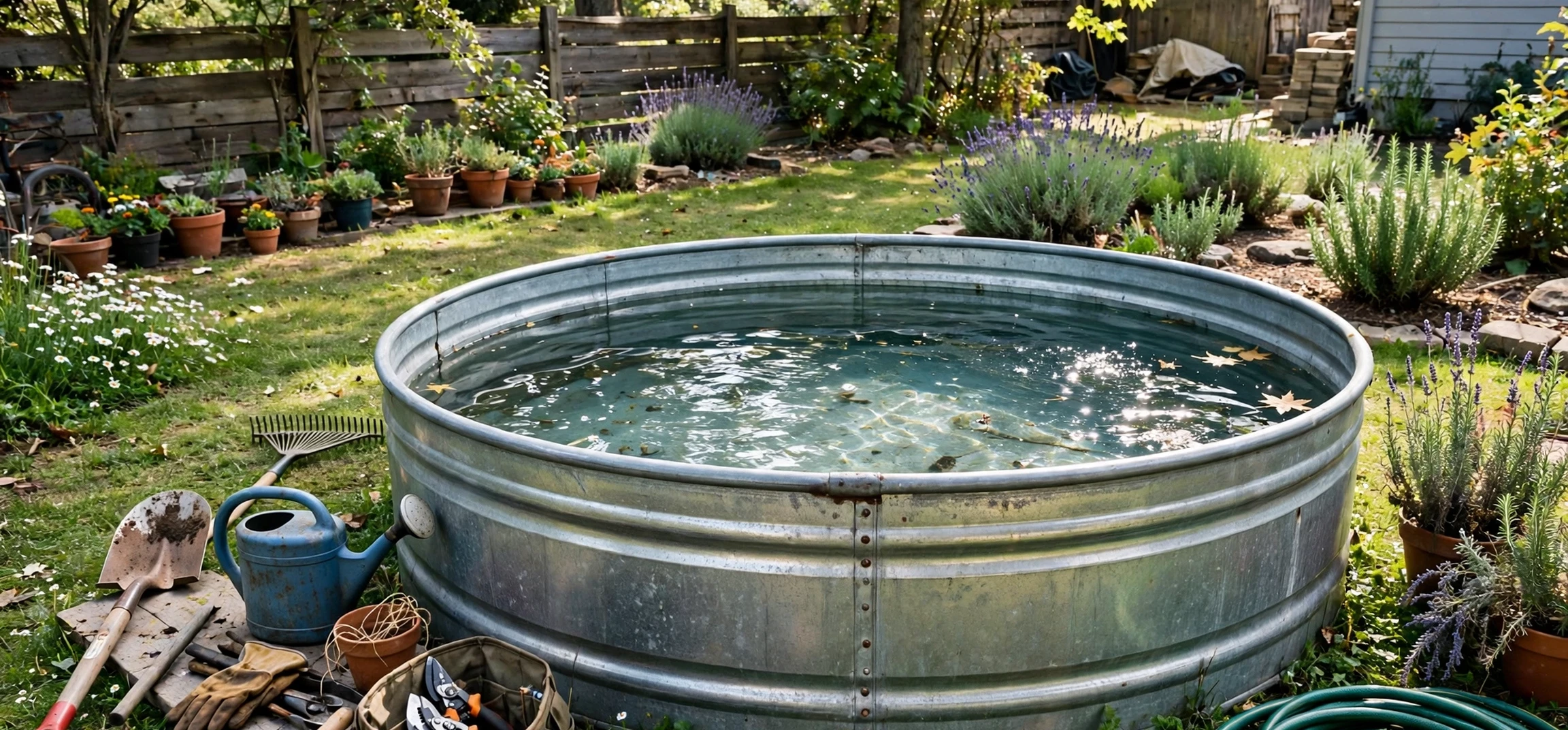
A stock tank pool looks like a simple idea, and that simplicity is exactly why so many people love it. A round metal tank, originally made for farm animals to drink from, becomes a small backyard pool for cooling off on a hot day. When that idea is sold as a ready-made package, it is usually called stock tank pool kits, and the kit is meant to take the guesswork out of the project. This guide explains what stock tank pool kits include, how they work, what to check before you buy, how to set one up safely, and how to look after it through the season, so you can decide whether this low-cost, rustic pool is right for your home, your garden, and your family.
It helps to start with the tank itself. Stock tanks are traditionally made from galvanised steel, which is steel coated to resist rust, and they come in round and oval shapes in a range of sizes. A small tank may suit one or two adults sitting and cooling off, while a larger tank can fit a small family. The depth is usually modest, often around knee to waist height for an adult, which makes a stock tank pool feel more like a plunge pool or a soaking tub than a swimming pool for laps. That shallow depth is part of the appeal: it is easier to fill, easier to step in and out of, and less intimidating for people who simply want to cool down, relax, and enjoy a summer afternoon.
What Are stock tank pool kits?
In plain terms, stock tank pool kits are bundles that include the tank plus the parts needed to turn it into a usable pool. A basic kit may include the tank, a pump and filter system, inlet and outlet fittings, hoses, and a drain plug. A more complete kit may also include a ladder or step, a cover, a thermometer, a skimmer, and a starter set of water-care supplies. The exact contents vary by seller, so reading the contents list carefully is essential. Two kits with similar prices may differ greatly: one may include a proper filter, while the other may include only a small pump with no filtration at all. Filtration matters, because without it, water can quickly become cloudy and unpleasant, especially in warm weather.
The word kit is doing important work here. Buying a tank alone leaves you to source compatible fittings, drill holes in the right places, seal them correctly, and choose a pump that matches the tank size. A kit aims to solve those problems in advance, with fittings designed for the tank, instructions for installation, and parts that fit together. That convenience is valuable, especially for first-time buyers. It does not remove all work: you still need a level site, a suitable base, a power supply for the pump, and a routine for water care. But a good kit reduces the research, the shopping trips, and the risk of buying incompatible parts. When comparing stock tank pool kits, always compare the full contents, not just the headline price.
Tank sizes and shapes explained
Round tanks are the classic choice and the most widely available. They suit corners, patios, and small gardens, and they give a sociable, circular seating arrangement. Oval tanks offer more length for stretching out, and they suit longer, narrower spaces. Larger tanks hold more water, which takes longer to fill and to warm up, and needs a stronger pump and more water-care attention. Smaller tanks are quicker to set up and cheaper to run, but they fill up fast with people. Measure your space before you buy, allowing room around the tank for a step, for the pump, and for safe access. Also check gate and path widths: a large tank must actually fit through to your garden, or delivery and placement become a problem.
How to Choose Among stock tank pool kits
Choosing among stock tank pool kits starts with honest questions about how you will use the pool. Will it be used daily by adults, occasionally by children, or mainly as a decorative soaking tub? Will it sit in full sun or partial shade? Is your ground level, or will it need preparation? Do you have an outdoor power outlet nearby, and is it protected for outdoor use? Answers to these questions determine the tank size, the filter type, and the accessories you need. A family with young children, for example, should prioritise safe access, a stable step, a cover for when the pool is not in use, and clear supervision rules. Adults who want a plunge pool for exercise recovery may prioritise water temperature control and a strong, quiet pump.
Material and build quality deserve close attention. Galvanised steel is the traditional material, valued for its strength and rustic look, but it can become hot in direct sun and may need a liner or careful water chemistry to protect the coating. Polyethylene tanks, made from strong plastic, are lighter, do not rust, and stay cooler to the touch, but they have a different look and may flex under load. Some kits include a liner to protect a steel tank and to make cleaning easier. Check what the seller says about the tank’s suitability for pool use, about any warranty, and about whether the fittings are sealed and tested. Reviews from other buyers can help, but look for reviews that mention long-term use, not just delivery and first impressions.
Filtration, pumps, and water care basics
Filtration is the heart of a healthy stock tank pool. A pump circulates water through a filter, which traps debris and helps keep water clear. Cartridge filters are common in smaller kits and are simple to clean or replace. Sand filters are used in larger setups and can handle more debris, but they are bulkier. Some kits use a saltwater system, which converts salt into a sanitiser, while others rely on chlorine or other sanitisers added by hand. Whichever system you choose, follow the manufacturer’s instructions for your tank size, test the water regularly with test strips or a test kit, and keep a simple log of readings and treatments. Good water care is not complicated, but it does need consistency, especially in hot weather when bacteria and algae grow fastest.
Setting Up stock tank pool kits Safely
Setting up stock tank pool kits begins with the site. Choose a flat, stable area that can support the weight of a full tank, which is surprisingly heavy: water weighs about one kilogram per litre, so even a modest tank can weigh several hundred kilograms when full. A concrete patio, compacted gravel pad, or purpose-built base is usually better than soft lawn, which can sink unevenly. Check that the area drains well, so splashed water does not pool against a house wall or fence. Keep the tank away from overhead power lines, and make sure the pump’s power supply is protected by a suitable outdoor safety device and kept away from standing water. If you are unsure about electrical safety, ask a qualified electrician for advice before you fill the tank.
Installation steps vary by kit, but a typical sequence is to position the empty tank, check that it is level, install inlet and outlet fittings according to the instructions, connect the pump and filter, check all seals for leaks with a small amount of water, and only then fill the tank fully. Do not rush the leak check: a slow leak discovered after filling is much harder to fix. Once filled, run the pump, check water flow, and test the water before anyone gets in. Add a stable step or ladder, making sure it cannot slip or tip, and place a non-slip mat beside the tank if the surrounding surface becomes wet. A cover, used when the pool is not in use, helps keep out leaves, insects, and debris, and it also improves safety by discouraging unsupervised access.
| Step | What to do | Why it matters |
|---|---|---|
| Choose a site | Flat, stable, well-drained, with safe power access | Prevents sinking, flooding, and electrical risk |
| Prepare a base | Concrete, pavers, or compacted gravel | Supports the full weight evenly |
| Fit pump and filter | Follow kit instructions, check seals | Keeps water clear and prevents leaks |
| Fill and test | Fill slowly, check leaks, test water | Confirms safety before first use |
| Add access and cover | Stable step, non-slip surface, cover | Safe entry and cleaner water |
Safety, Children, and Seasonal Maintenance
Safety deserves emphasis, because a stock tank pool, though shallow, is still a body of water. Never leave children unsupervised near any pool, including a small tank, and never rely on a cover alone as a safety barrier. Teach everyone who uses the pool to enter and exit slowly, using the step, and to avoid jumping or diving into shallow water, which can cause serious injury. Keep the area around the tank clear of tripping hazards, store chemicals safely out of children’s reach, and follow local rules or guidance about pool fencing, covers, and drainage where they apply. If your household includes toddlers or pets, consider additional barriers and a strict rule that the pool is covered and gated when not in use.
Maintenance through the season is straightforward if it becomes a habit. Skim leaves daily in summer, clean or replace the filter as instructed, test water two or three times a week in hot weather, and top up water lost to splashing and evaporation. At the end of the season, drain the tank following local guidance, clean it thoroughly, dry it before storage if you plan to store it, and protect fittings and the pump from frost. Steel tanks left full over winter can be damaged by freezing water, so winter care matters in cold climates. A little attention at the start and end of the season will extend the life of your kit and keep the water inviting. For general home and garden planning ideas, see our guide to planning a project step by step and our overview of outdoor living supplies.
Costs, running expenses, and realistic expectations
Buyers often ask about cost, and the honest answer is that it varies widely by tank size, kit contents, and region, so no single price should be treated as current or universal. Check current prices from reputable sellers for the exact kit you want, and budget beyond the kit itself: water, electricity for the pump, filter replacements, water-care supplies, a step, and a cover all add to the total. Running costs are usually modest compared with a full swimming pool, because the water volume is smaller, but they are not zero. Set realistic expectations too: a stock tank pool is wonderful for cooling off, soaking, and relaxing, but it is not a lap pool, and it will not suit everyone who wants to swim lengths. If your main goal is exercise swimming, a larger pool or a local facility may be a better fit.
Frequently Asked Questions About stock tank pool kits
Do stock tank pool kits include everything I need?
It depends on the kit. Basic kits include the tank, pump, filter, and fittings, while fuller kits add a step, cover, and water-care supplies. Always read the full contents list and check what you still need to buy separately, such as a base, a power supply, or chemicals.
How long does setup take?
For a prepared, level site, many owners complete setup in a day, including leak checks and filling. Preparing a new base, arranging power, or fixing leaks can extend that time, so allow a weekend for a first installation rather than rushing it.
Can a stock tank pool be left up all year?
In mild climates, some owners keep tanks up year-round with a cover and regular care. In cold climates, draining and winter protection are usually needed to avoid freeze damage. Follow the kit instructions and local climate guidance for your area.
Is a stock tank pool safe for children?
It can be enjoyed safely with constant adult supervision, safe access, a cover when not in use, and clear rules against jumping or diving into shallow water. Shallow water still requires the same supervision as any pool, and barriers should be considered for households with toddlers.
Conclusion
stock tank pool kits offer a charming, practical way to enjoy a backyard pool without the cost and complexity of a full swimming pool. The key to success is choosing the right size and kit contents, preparing a level and stable site, installing filtration correctly, and keeping up a simple water-care and safety routine. Check current prices and contents from reputable sellers, never treat an old price or an old list as a current fact, and prioritise safety, especially around children. Done well, a stock tank pool becomes a favourite summer spot: a place to cool off, relax, and enjoy long, warm afternoons close to home.