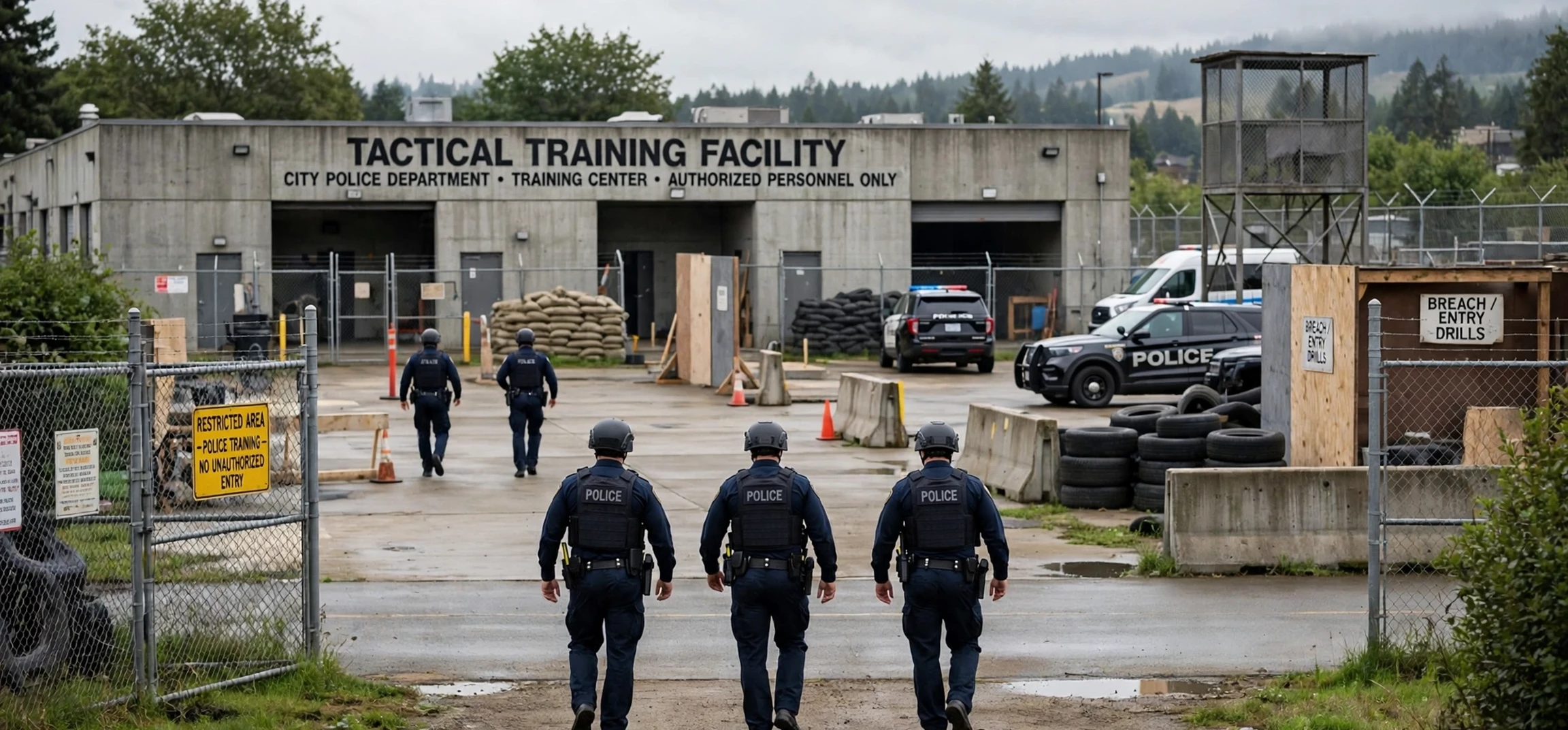
When people search for the S.W.A.T meaning, they usually want a simple answer first and the fuller story second. In its original and most common sense, S.W.A.T. stands for Special Weapons and Tactics, the name given to specially trained police units that handle high-risk situations. But the letters have also become widely known through television, film, and everyday language, where S.W.A.T. is used more loosely to suggest a highly trained team sent in for a difficult job. This guide explains the S.W.A.T. meaning in each of those senses, how the term developed, what such teams actually do, and how to tell which sense is meant when you see the letters.
It is helpful to start with the distinction between the abbreviation and the idea behind it. As an abbreviation, S.W.A.T. is a compact way of writing Special Weapons and Tactics. As an idea, it describes a specialist approach to policing: a small, well-trained, well-equipped team that is called when an ordinary patrol response would not be safe or sufficient. That idea, rather than the exact equipment, is what most people picture when they hear the term, and it is why the letters have spread beyond policing into entertainment and metaphor.
S.W.A.T meaning: Special Weapons and Tactics
The S.W.A.T meaning in full is Special Weapons and Tactics. The word special here does not mean impressive in a general sense; it means specialised, set apart for particular kinds of work. Weapons refers to the specialised equipment such teams may use, which differs from standard patrol equipment. Tactics refers to the planned methods, coordination, and training used to resolve a situation with as much control and as little harm as possible. Together, the three words describe a unit defined by its training and its methods, not simply by its gear.
The concept developed in American policing in the latter part of the twentieth century, at a time when police departments were facing situations that ordinary patrol officers were not trained or equipped to handle safely. These included armed standoffs, hostage situations, and incidents involving barricaded individuals. Rather than asking general patrol officers to improvise in dangerous circumstances, departments began to form dedicated teams that trained together, planned together, and could be called as a single unit. The name Special Weapons and Tactics captured that specialist purpose in a short, memorable form.
Why the full stops matter
You will see the term written in several ways: S.W.A.T., SWAT, and Swat. The version with full stops, S.W.A.T., makes the abbreviation explicit, showing that each letter stands for a word. The version without full stops, SWAT, is now extremely common, especially in headlines and television titles, and it is generally understood to mean the same thing. The capitalised word Swat, without stops, is also used as a name for such teams and for the television series. None of these spellings changes the meaning, but when you are writing formally, S.W.A.T. is the clearest way to show that you are using an abbreviation.
S.W.A.T meaning in Practice: What Such Teams Do
Understanding the S.W.A.T meaning also means understanding the kinds of situations specialist teams are called to handle. The most commonly described roles include responding to hostage situations, dealing with armed and barricaded individuals, serving high-risk warrants where resistance is expected, and providing protection or support during major public-safety incidents. In each case, the emphasis in modern training is on planning, communication, negotiation, and controlled action, with force used only as part of a broader plan to resolve the situation safely.
Specialist teams also train extensively in skills that go beyond ordinary patrol work. These include close teamwork and communication under stress, careful movement through buildings, the use of specialised protective equipment, and coordination with negotiators, medical responders, and other emergency services. The point of this training is not to make every incident dramatic, but to make a rare and dangerous incident more manageable. A well-trained team aims to slow a situation down, gather information, talk where talking can help, and act decisively only when a plan is ready.
How S.W.A.T. teams differ from ordinary patrol
Ordinary patrol officers are generalists: they respond to a wide range of calls, from traffic incidents to neighbourhood disputes, and they are the first presence in most emergencies. Specialist teams are different in purpose and in pattern of work. They are called less often, they train together as a unit, and they arrive with a specific role for a specific kind of incident. That difference matters for public understanding, because it explains why a specialist team may be present at one incident and not at another, even when both look serious on the news. Presence of a specialist team signals the type of risk involved, not necessarily the scale of public attention.
S.W.A.T. in Television, Film, and Everyday Language
For many people, the first encounter with the letters S.W.A.T. comes not from a news report but from entertainment. A long-running television series and related films have used S.W.A.T. as a title, following a fictional specialist police team through dramatic missions. These stories are popular because they combine teamwork, tension, and clear problem-solving, but they are dramatised versions of reality. Real specialist work involves far more waiting, planning, negotiation, and paperwork than screen stories suggest, and far fewer rapid resolutions.
That screen familiarity has also pushed S.W.A.T. into everyday metaphor. People may describe any highly organised group sent to fix a difficult problem as a swat team, even when no police are involved. A company might joke about sending in a swat team to fix a technical failure, or a school might describe a group tackling an urgent project in the same way. In these metaphorical uses, the S.W.A.T. meaning has shifted from a literal police unit to a general image of expertise, speed, and teamwork under pressure. Context usually makes the intended sense clear: a news report is likely literal, while a casual office joke is likely metaphorical.
Other Uses of the Letters S.W.A.T.
Like many abbreviations, S.W.A.T. can stand for different phrases in different fields, which is another reason people search for its meaning. Outside policing, the same letters may appear as initials for organisations, projects, or technical terms, and only the surrounding context can tell you which one is meant. If you see S.W.A.T. in a business document, a scientific paper, or a hobby forum, do not assume it refers to police. Read the sentence around it, look for a definition nearby, and check whether the topic is law enforcement at all. That habit will save you from many misunderstandings with abbreviations in general.
There is also a useful contrast with a similar-sounding word. Swat as an ordinary verb means to hit something, especially an insect, with a quick blow. That verb has no connection to Special Weapons and Tactics beyond the shared letters and sound, and it is a coincidence of language rather than a hidden clue to the abbreviation. When S.W.A.T. appears in capitals, with or without full stops, and in a policing or team context, the abbreviation sense is almost always the intended one.
Quick Reference Table for S.W.A.T.
The table below summarises the main senses of S.W.A.T., so you can check at a glance which meaning fits the context you have seen.
| Context | What S.W.A.T. usually means | How to recognise it |
|---|---|---|
| Policing and news | Special Weapons and Tactics: a specialist police unit | Reports of hostage, barricade, or high-risk incidents |
| Television and film | The title of a drama about a fictional specialist team | Programme listings, cast, and episode guides |
| Everyday metaphor | A highly trained team sent to solve a hard problem | Casual speech, jokes, or business language |
| Other fields | Various organisation or technical names using the same initials | Defined by the document or field itself |
| Ordinary verb | To hit quickly, as in swatting an insect | Lowercase use in a non-police sentence |
Common Questions About the S.W.A.T. Meaning
One question people often ask is whether every police department has a S.W.A.T. team. The answer varies: larger departments may have a dedicated full-time team, while smaller departments may have a part-time team whose members also do other police work, or may call on a regional team shared between departments. The name and structure can therefore differ from place to place, even though the core idea of a specialist team remains the same. Another common question is whether S.W.A.T. is a rank or a job title. It is neither; it is the name of a unit and a role within policing, and officers assigned to it hold ordinary police ranks alongside that specialist role.
People also ask whether the television version is realistic. Screen stories compress time, heighten danger, and focus on action, because that is what drama does. Real specialist operations involve long periods of assessment and negotiation, strict rules about the use of force, and close work with other emergency services. Watching a drama can be a good introduction to the vocabulary, but it should not be treated as a training manual or as a reliable picture of how every incident unfolds. For other abbreviation explainers, see what auth means, what CTE means, and what LMS means.
When people look up the S.W.A.T meaning, they are often trying to settle a simple question: is this a real police term, a television title, or a metaphor? The S.W.A.T meaning can be all three, depending on context, but the original sense is the police one, Special Weapons and Tactics. Keeping that original S.W.A.T meaning in mind helps you judge the other uses: a television title borrows the police sense for drama, and a metaphor borrows it for the image of an expert team. Neither borrowing changes the original, but both depend on it being recognised.
A final point about the S.W.A.T meaning is worth remembering for everyday reading. Abbreviations are only as clear as their context, and the S.W.A.T meaning is a good example: in a news report about a standoff, it is literal; in a drama listing, it is a title; in a casual joke about fixing a problem, it is a metaphor. If you ever feel unsure, read the sentence around the letters and ask what kind of text you are in. That one habit will resolve the S.W.A.T meaning correctly far more reliably than memorising every possible expansion of the letters.
Frequently Asked Questions About S.W.A.T.
What is the S.W.A.T meaning?
S.W.A.T. stands for Special Weapons and Tactics, the name for specially trained police units that handle high-risk situations. That expansion is the literal S.W.A.T meaning.
Is SWAT the same as S.W.A.T.?
Yes. SWAT without full stops is the same abbreviation, used especially in headlines and titles, while S.W.A.T. with full stops makes the abbreviation explicit, and both spellings share the same S.W.A.T meaning.
What kinds of incidents do S.W.A.T. teams handle?
They are typically called for hostage situations, armed and barricaded individuals, high-risk warrants, and other incidents where specialist training and coordination are needed for safety, which is the practical side of the S.W.A.T meaning.
Is the television series S.W.A.T. realistic?
It is dramatised entertainment. It uses the name and the general idea of a specialist team, but it compresses time and emphasises action far more than real operations do.
Can S.W.A.T. mean something else?
Yes, in other fields the same letters can stand for different names, and swat as a lowercase verb means to hit quickly. Context is the best guide to which sense is intended, and to whether the police S.W.A.T meaning applies.
Conclusion
The S.W.A.T meaning is clearest when you keep its layers apart. Literally, S.W.A.T. stands for Special Weapons and Tactics, a specialist police unit trained for high-risk situations where ordinary patrol methods would not be safe or sufficient. In entertainment, it is the title of popular dramas that dramatise that world. In everyday speech, it has become a metaphor for any expert team tackling a tough problem. Knowing which layer you are dealing with, and remembering that the real work is defined by training, planning, and communication rather than by drama alone, will help you read news reports, watch shows, and use the term itself with confidence.



