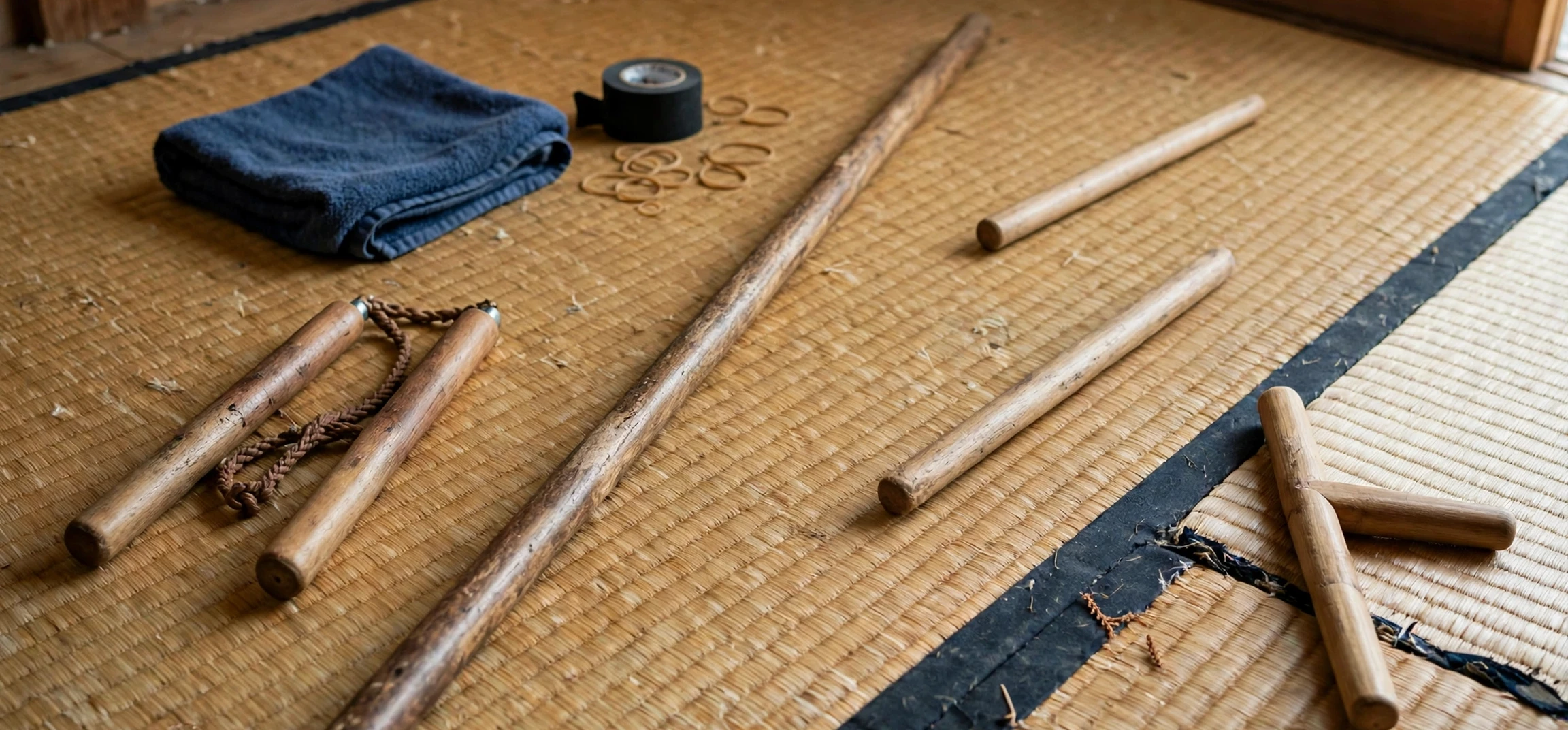
The ninja turtles weapons are instantly recognisable to fans of all ages, because each of the four heroes carries a signature weapon that reflects his personality, fighting style and role within the team. Leonardo’s swords, Raphael’s sais, Donatello’s staff and Michelangelo’s nunchucks are more than props: they are part of each character’s identity, repeated across comics, cartoons, films and toys for decades. This guide explains the ninja turtles weapons in detail, where they come from, how each one is used in the stories, and why they have endured as symbols of the team.
Understanding the ninja turtles weapons also helps you understand the team itself. The four brothers are trained in ninjutsu by their master, Splinter, and each weapon suits a different temperament. The disciplined leader favours twin swords, the hot-headed brother favours close-range daggers, the thoughtful inventor favours a versatile staff, and the playful brother favours fast, showy nunchucks. That careful matching of weapon to character is one reason the team feels balanced and memorable.
Ninja Turtles Weapons Overview
At the heart of the ninja turtles weapons is a simple idea: four brothers, four weapons, four personalities. Leonardo, identifiable by his blue mask, wields two katana swords. Raphael, in red, uses a pair of sai, short pointed daggers with prongs. Donatello, in purple, carries a bo staff, a long wooden pole used for striking, blocking and vaulting. Michelangelo, in orange, spins a pair of nunchucks, two short sticks joined by a chain or cord. Together, these weapons cover long range, close range, speed and power, giving the team flexibility in any confrontation.
The weapons are also colour-coded in most versions of the franchise, matching each turtle’s mask and accessories. That visual clarity helps younger viewers tell the brothers apart and makes the team easy to recognise in merchandise, posters and games. For older fans, the weapons carry deeper meaning: they connect the turtles to real martial-arts traditions, particularly Japanese and Okinawan weapon arts, and they show how the creators blended authentic influences with comic-book imagination.
It is important to remember that these are fictional weapons in stories about fictional characters. The turtles are animated heroes whose battles are choreographed for entertainment, and their weapons are part of that fantasy world. This guide treats them as storytelling and cultural symbols, not as instructions for real-world use, and readers should enjoy them in that spirit, through comics, shows, films and games.
Ninja Turtles Weapons: Leonardo’s Katana Swords
Leonardo’s katana swords are perhaps the most iconic of the ninja turtles weapons. A katana is a curved, single-edged Japanese sword traditionally associated with samurai, and Leonardo wields two of them, one in each hand. That dual-wielding style suits his role as leader: it is disciplined, precise and balanced, requiring training, focus and control. In the stories, Leonardo is the most dedicated student of his master, and his swords reflect that commitment.
In action scenes, the katanas are used for controlled strikes, blocks and defensive movements rather than wild swinging. Leonardo often fights with patience, waiting for an opening and protecting his brothers. That style contrasts with Raphael’s aggression and Michelangelo’s improvisation, and it reinforces Leonardo’s personality as the steady centre of the team. When Leonardo doubts himself, his swordsmanship often suffers too, which shows how closely weapon and character are linked in the writing.
Across different versions of the franchise, Leonardo’s swords have varied slightly in design, from traditional steel-coloured blades to more stylised versions for animation and toys. Some stories give the swords special origins or names, while others treat them simply as well-made tools of his training. Whatever the version, the twin katanas remain his defining image, and they are usually the first weapon fans picture when they think of the team.
Ninja Turtles Weapons: Raphael’s Sai
Raphael’s sai are the most distinctive close-range weapons among the ninja turtles weapons. A sai is a short, pointed metal weapon with a central prong and two side guards, originating in Okinawan martial arts. It is traditionally used for blocking, trapping an opponent’s weapon, and striking at close quarters. Raphael uses a pair of sai, which suits his aggressive, direct fighting style and his preference for getting close to the action.
Raphael’s personality is famously hot-headed, independent and fiercely loyal. His sai reflect that mix: they are practical, tough and unshowy, designed for a fighter who would rather confront a problem head-on than wait for a perfect plan. In team battles, Raphael often charges forward, using his sai to block attacks and create openings for his brothers. That boldness makes him exciting to watch, but it also creates tension, because his impulsiveness sometimes clashes with Leonardo’s careful leadership.
The sai also give Raphael a unique visual silhouette. Unlike swords or a long staff, they are compact and easy to carry, which fits a character who values speed and readiness. In toys and games, Raphael’s sai are instantly recognisable, and they have become a shorthand for his rebellious spirit. For fans, they are a reminder that strength in the team comes in different forms, not only through leadership but through courage and determination.
Donatello’s Bo Staff
Donatello’s bo staff is the longest weapon in the team’s arsenal and one of the most versatile ninja turtles weapons. A bo is a long wooden staff, typically around six feet in length, used in Japanese and Okinawan martial arts for striking, sweeping, blocking and leverage. Donatello’s skill with the staff reflects his intelligence and creativity: he uses reach, timing and technique rather than brute force, often outthinking opponents and controlling distance in a fight.
Donatello is the team’s inventor and problem-solver, the brother who builds gadgets, hacks systems and figures out how things work. His staff suits that role because it is both a weapon and a tool. In stories, he uses it to vault over obstacles, trip opponents, block doorways and reach objects that others cannot. That adaptability mirrors his mind: practical, inventive and always looking for a clever solution rather than a straightforward clash.
The bo staff also gives Donatello a defensive strength that balances the team. While his brothers engage at close range, Donatello can hold opponents at a distance, protect the group, and create space for others to act. That supportive role fits his personality as the thoughtful, sometimes quieter brother whose contributions are essential even when they are less flashy. For viewers, Donatello shows that intelligence and patience are heroic qualities in their own right.
Michelangelo’s Nunchucks
Michelangelo’s nunchucks are the most playful and visually spectacular of the ninja turtles weapons. Nunchucks consist of two short sticks joined by a short chain or cord, and they are traditionally used in Okinawan martial arts for fast strikes, blocks and spins. Michelangelo’s skill with them is presented as natural and joyful: he twirls, flips and improvises, turning combat into something that looks almost like performance.
Michelangelo is the youngest in spirit, known for humour, enthusiasm and a love of fun. His nunchucks match that energy perfectly. They are fast, unpredictable and require rhythm and coordination, qualities that suit a character who thinks on his feet and lightens the mood for the team. In many scenes, Michelangelo’s humour provides relief from tension, and his weapon work reflects that same lightness, even in serious moments.
Behind the fun, however, the nunchucks also require real discipline in the fiction. Spinning them without losing control takes practice, and Michelangelo’s mastery shows that his carefree attitude hides genuine training and talent. That combination of humour and skill makes him a fan favourite, especially among younger viewers who are drawn to his energy and optimism. His orange mask and nunchucks are among the most recognisable images in the entire franchise.
| Turtle | Mask colour | Weapon | Fighting style |
|---|---|---|---|
| Leonardo | Blue | Twin katana swords | Disciplined and precise |
| Raphael | Red | Pair of sai | Aggressive and close-range |
| Donatello | Purple | Bo staff | Versatile and tactical |
| Michelangelo | Orange | Nunchucks | Fast and improvisational |
Origins and Martial-Arts Traditions
The ninja turtles weapons draw on real martial-arts traditions, which gives the fantasy a grounding in history. Katanas come from Japanese swordsmanship, sai and nunchucks from Okinawan kobudo, the study of traditional weapons, and the bo staff from staff arts practised across East Asia. The creators borrowed these weapons because they looked distinctive, suited different fighting styles, and connected the turtles to the ninja legends that inspired the franchise.
That borrowing also explains why the weapons feel so well chosen. Each one has a real history, a real technique and a real reason for existing, even though the turtles themselves are fictional. Fans who become curious about martial arts through the show often discover those histories, learning about discipline, respect and training rather than mere spectacle. That educational side effect is one of the franchise’s quiet strengths, and it has helped it endure across generations.
Over the years, different versions of the turtles have adapted the weapons in creative ways. Some animated series give the weapons technological upgrades, some comics explore their origins, and some games let players switch or customise them. These variations keep the franchise fresh, but the core set remains unchanged, because it works so well as a team design. Changing one weapon would change the character attached to it, and fans would notice immediately.
Why the Weapons Endure in Popular Culture
The ninja turtles weapons endure because they are simple, visual and meaningful. A child can draw them, a toy maker can reproduce them, and a game designer can build mechanics around them. At the same time, older fans can appreciate the martial-arts heritage and the character writing behind each choice. That combination of simplicity and depth is rare, and it explains why the weapons have survived reboots, redesigns and changing fashions.
The weapons also support the team’s theme of family and teamwork. No single weapon is presented as the best; each has strengths and weaknesses, and the turtles succeed by combining them. Leonardo’s precision, Raphael’s power, Donatello’s reach and Michelangelo’s speed complement each other, just as the brothers’ personalities do. That message, that different strengths work best together, resonates with audiences of all ages and is central to the franchise’s appeal.
If you enjoy animated heroes and cartoon history, you may also like our guides to Cartoon Network games and Ben 10, Clarence from Cartoon Network, and the Curious George TV show cast, which explore other beloved animated worlds and their characters.
Frequently Asked Questions
What weapon does each Ninja Turtle use?
Leonardo uses twin katana swords, Raphael uses a pair of sai, Donatello uses a bo staff, and Michelangelo uses nunchucks. Each weapon matches the turtle’s personality and fighting style.
Are the Ninja Turtles weapons based on real weapons?
Yes, they are inspired by real Japanese and Okinawan martial-arts weapons, including the katana, sai, bo staff and nunchucks. In the stories, however, they are fictional props wielded by fictional characters for entertainment.
Why do the turtles have four different weapons?
Different weapons give each brother a distinct identity and fighting role, and they make the team more versatile. The variety also helps viewers tell the characters apart and reflects the idea that different strengths complement each other.
Conclusion
The ninja turtles weapons are far more than accessories: they are expressions of character, links to martial-arts tradition, and symbols of teamwork that have lasted for decades. Leonardo’s katanas, Raphael’s sai, Donatello’s staff and Michelangelo’s nunchucks each tell a story about the brother who carries them, and together they create a team that is balanced, recognisable and endlessly entertaining. Whether you discovered the turtles through comics, cartoons, films or games, their weapons are a lasting part of why the heroes in a half shell continue to capture imaginations around the world.



