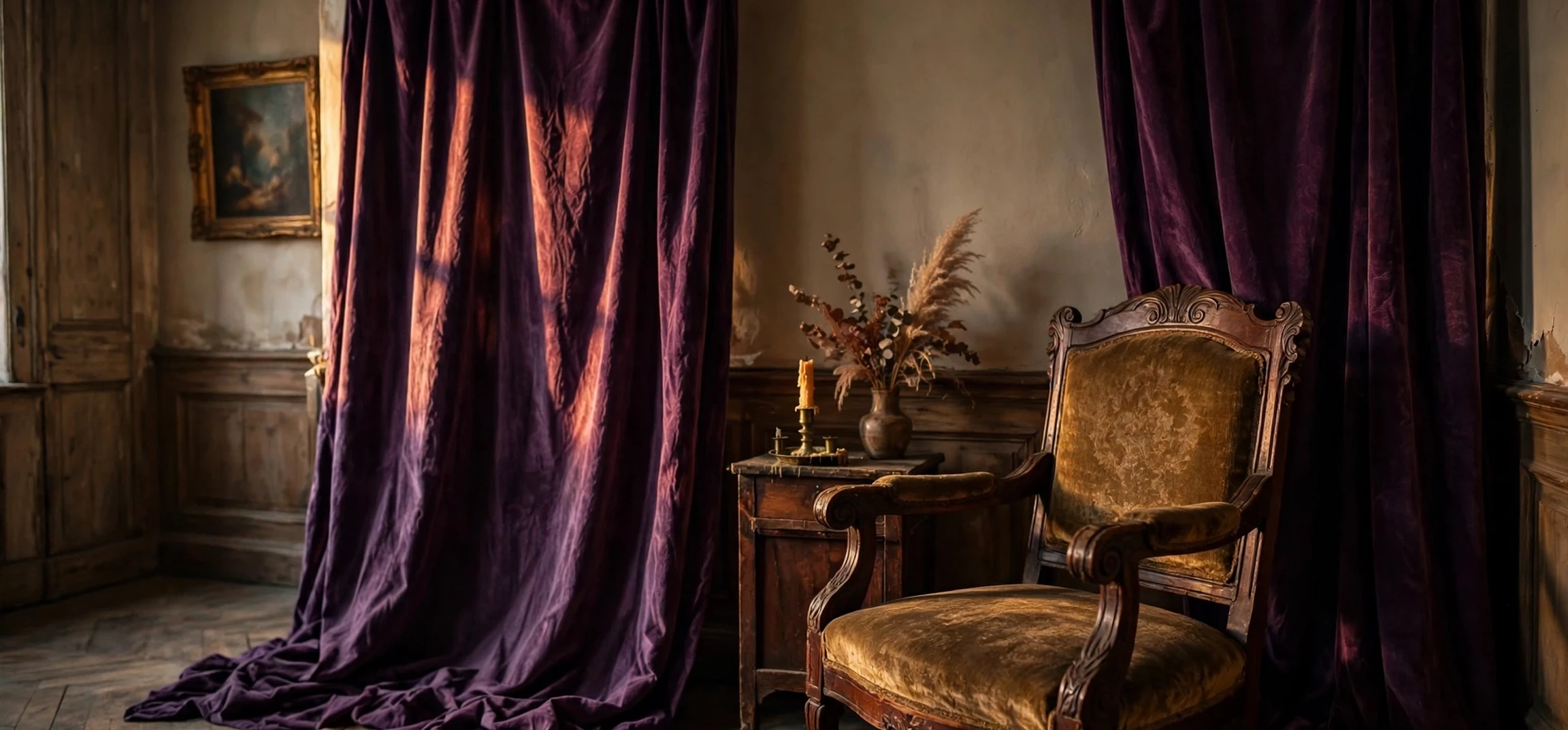
If you searched for “the meaning of the colour purple”, you may already know that purple is linked with royalty and creativity. This article takes a different path through the same colour, tracing how the meaning of the colour purple was shaped by history, trade, religion, art, and design, and how it is used in culture around the world today. Where a symbolism guide asks what purple feels like, this guide asks how purple got its meanings in the first place, and how those meanings are carried, challenged, and reinvented in flags, fashion, festivals, and everyday objects.
Purple’s story is unusual among colours, because for most of history it was not a colour that ordinary people could easily wear or use. Its meaning was therefore bound up with who could afford it, who was allowed it, and who controlled its production. That history of scarcity explains a great deal about why purple still feels special, even now that synthetic dyes have made it cheap and widely available. When a colour stops being rare, its old meanings do not vanish overnight. They linger, adapt, and find new homes in ceremony, art, and popular culture.
The Meaning of the Colour Purple in the Ancient World
The meaning of the colour purple in the ancient world begins on the shores of the eastern Mediterranean, in the cities of Phoenicia, in what is now Lebanon. There, dyers produced Tyrian purple from the glands of certain sea snails, in a process that was slow, smelly, and labour-intensive, requiring very large numbers of snails for a small quantity of dye. The resulting colour was rich, fast, and resistant to fading, which made it prized, and its cost put it beyond the reach of most people. Purple cloth became a luxury good traded across the Mediterranean, and a visible sign of wealth and status.
In Rome, purple became closely tied to imperial authority. Emperors and senior officials wore purple-trimmed or fully purple garments, and the phrase “born in the purple” came to describe a person born to reigning royalty, referring to the purple-draped chamber in which Byzantine emperors’ children were said to be born. Sumptuary customs, rules about who could wear what, reinforced the link: purple was not simply expensive, it was restricted. That combination of cost and regulation gave purple a political meaning that few other colours possessed, and it is the foundation of the royal association that survives today.
Purple also had a religious dimension in the ancient world. It appears in descriptions of temple hangings, priestly garments, and sacred objects in Hebrew scripture, where its richness suited worship and ceremony. In the ancient Near East, purple, blue, and scarlet were often grouped as precious colours for sacred textiles, and their use marked a space or a person as set apart. That sacred association travelled with the colour into later Christian and other religious traditions, where purple continued to mark seasons, offices, and rites that called for solemnity or preparation.
The Meaning of the Colour Purple Through History
As empires changed and trade routes shifted, the production of purple changed too, but its elite associations proved durable. In Byzantium, purple remained an imperial colour, and in medieval Europe it remained associated with kings, bishops, and high nobility, even as cheaper purple dyes made from plants and lichens became available. Those cheaper dyes were often less vivid or less durable than Tyrian purple, which helped preserve a hierarchy within purple itself: the richest, deepest purples still signalled the highest status, while duller purples were available more widely.
The invention of synthetic dyes in the nineteenth century transformed purple’s history. In 1856, the young English chemist William Henry Perkin, while attempting to synthesise quinine, accidentally produced a purple dye that became known as mauveine, or mauve. It was the first synthetic aniline dye, and it made a fashionable purple available at a price ordinary consumers could afford. Mauve became a sensation in Victorian fashion, worn by royalty and by the middle classes alike, and it launched the modern synthetic dye industry. That moment is a turning point in purple’s story: the colour of emperors became, within a generation, a colour of high-street fashion, and its meaning shifted from exclusivity towards style and modernity.
That democratisation did not erase purple’s older meanings, but it complicated them. Purple could now signal fashion-forward taste, artistic daring, or countercultural identity, as well as tradition and authority. In the twentieth century, purple was taken up by various movements and subcultures, each giving it a new layer of meaning. The women’s suffrage movement in Britain, for example, used purple, white, and green as its colours, with purple commonly explained as standing for dignity, a meaning that drew on its royal heritage while putting it to a democratic cause. Later, purple was adopted in various contexts as a symbol of pride, remembrance, and solidarity, showing how a colour’s history can be reworked for new purposes.
Purple Around the World: Culture and Custom
Purple’s meanings vary around the world, and a traveller or designer who assumes a single global meaning will be caught out. In Thailand, purple is associated with mourning for widows in some customs, while in Brazil and parts of Italy it is associated with mourning and funerals more broadly, and wearing purple to certain occasions can be considered inappropriate. In Japan, purple has historically been associated with aristocracy and high status, reflecting a similar pattern to Europe, where the cost of purple dye restricted its use. In China, purple has been associated with spirituality and, in some periods, with the emperor’s palace, through the name of the Forbidden City’s inner court, the Purple Forbidden Enclosure in older astronomical usage.
In parts of Africa, purple is worn at celebrations and ceremonies as a colour of richness and prestige, often in vivid, joyful combinations rather than the sombre shades associated with mourning elsewhere. In the United States, purple is familiar in sport, in military honours through the Purple Heart medal awarded to service members wounded or killed in action, and in popular culture through music, notably the song and film associations that made purple a byword for a certain kind of expressive, boundary-pushing artistry. The point is not that any one of these meanings is the “true” meaning of purple, but that purple, like any colour, is read through local history and custom.
Religious uses of purple also differ. In Western Christianity, purple vestments are worn during Advent and Lent, seasons of preparation and penitence, and purple is used in some funeral liturgies. In other faiths and spiritual traditions, purple is linked with meditation, wisdom, or the higher aspects of spiritual life, often through the imagery of the crown chakra in some modern spiritual systems. Those associations are modern and syncretic rather than ancient and universal, but they are genuinely part of how many people encounter purple today, especially in wellness, yoga, and artistic contexts.
| Context | Purple association | Root of the meaning |
|---|---|---|
| Ancient Rome and Byzantium | Imperial authority | Cost and restriction of Tyrian purple dye |
| Medieval Europe | Kingship and high clergy | Continued elite use and ceremonial dress |
| Victorian fashion | Modern style, mauve mania | Perkin’s synthetic mauveine dye, 1856 |
| British suffrage movement | Dignity | Royal heritage reworked for a democratic cause |
| United States military honour | Sacrifice and service | The Purple Heart medal |
| Some mourning customs | Grief and solemnity | Local funeral and widowhood traditions |
Purple in Art, Fashion and Design
Artists have long used purple to do work that other colours cannot do as easily. In painting, purple shadows, twilight skies, and distant hills create depth and atmosphere, because purple sits between warm and cool and can suggest both light and shadow. The Impressionists and Post-Impressionists used violet and purple shadows to break with the convention of painting shadows in black or brown, and that choice changed how light was represented in Western art. In literature, purple prose is a term, usually critical, for writing that is overly ornate, a reminder that purple’s richness can tip into excess when overused.
In fashion, purple moves in cycles, like every colour, but it always returns. Victorian mauve gave way to Edwardian lilac, to the bold purples of 1960s psychedelic fashion, to the deep plums of 1980s power dressing, and to the soft lavenders and vivid violets of recent seasons. Each return carries a different mood: lilac for romance and spring, violet for drama and evening wear, plum for autumn richness. Designers use purple to signal that a collection is not playing it safe, because purple is less of a default than black, navy, or grey, and choosing it is a visible decision.
In graphic and interior design, purple’s history gives it a double character that designers exploit. A deep purple can lend a product a sense of heritage and quality, drawing on centuries of royal association, while a bright purple can lend the same product a sense of innovation and youth, drawing on its countercultural and creative associations. The difference lies in shade, in pairing, and in context, as a companion guide on symbolism explains. Used with gold, purple leans towards opulence and ceremony. Used with white or silver, it leans towards calm and modernity. Used with lime or turquoise, it leans towards playfulness and pop energy. Those pairings are tools, not rules, and good designers test them with real audiences.
Purple in Popular Culture and Everyday Life
Popular culture has given purple some of its most durable modern associations. Music is the clearest example, where purple titles, album art, and stage costumes have made the colour a shorthand for expressive, genre-crossing artistry. Film and television use purple lighting and costume to signal mystery, magic, royalty, or otherworldliness, often in fantasy and science fiction, where a purple sky or a purple robe instantly tells the audience that the world on screen is not quite ordinary. Children’s media, too, uses purple for friendly monsters, magical characters, and imaginative worlds, giving young audiences an early, positive association with the colour.
In everyday life, purple appears in food, flowers, and nature, and those encounters shape its meaning as much as history does. Lavender fields, lilac blossom, violets, aubergines, plums, and grapes all give purple a natural, seasonal presence, and the scent of lavender in particular links purple with calm and cleanliness for many people. That natural presence is a useful counterweight to the idea that purple is purely artificial or ceremonial. It is a colour of gardens and kitchens as well as of thrones and cathedrals, and that breadth is part of why it remains so widely loved.
Finally, purple’s modern civic uses deserve mention. Purple is used in awareness campaigns for a range of causes, where its visibility helps a ribbon, a light display, or a social media theme stand out. It is used in sports branding, where a distinctive purple helps a team be recognised instantly. It is used in children’s hospitals, schools, and community spaces, where a warm purple can feel welcoming without being as stimulating as red or as cool as blue. Each use adds a small, local layer to purple’s meaning, and together they show a colour that is still evolving, centuries after its dye was first traded across the Mediterranean. For related reading, see our guide on a colour guide in a different field and our explainer on the names of different blue shades.
Frequently Asked Questions (FAQ)
Why was purple once so expensive?
Because the most prized ancient purple, Tyrian purple, was made from sea snails in a laborious process requiring very large numbers of snails for a small amount of dye. Its cost and durability made it a luxury good and a marker of status.
When did purple become affordable?
In the nineteenth century, after William Henry Perkin accidentally produced the synthetic dye mauveine in 1856. That discovery launched the synthetic dye industry and made fashionable purple available to ordinary consumers.
Does purple mean the same thing everywhere?
No. Purple is linked with royalty in many traditions, but it is also linked with mourning in some cultures, with dignity in the suffrage movement, and with sacrifice through the Purple Heart. Local history and custom shape its meaning.
How is purple used in design today?
Designers use deep purples for heritage and luxury, bright purples for creativity and youth, and pale purples for calm and softness. Pairings matter: gold leans towards opulence, white towards modernity, and bright accents towards playfulness.
Conclusion
The meaning of the colour purple is not a single fact but a history. It began as a costly dye that marked emperors and priests, survived as a sign of dignity and ceremony, became a fashionable colour for ordinary people through synthetic chemistry, and was then reworked by movements, artists, and popular culture into a symbol of creativity, pride, remembrance, and imagination. That layered history is why purple still feels special today, even though it is now cheap and common. To understand purple is to understand how a colour can carry centuries of human choices, from a Phoenician dye workshop to a modern design studio, and still keep finding new meanings.