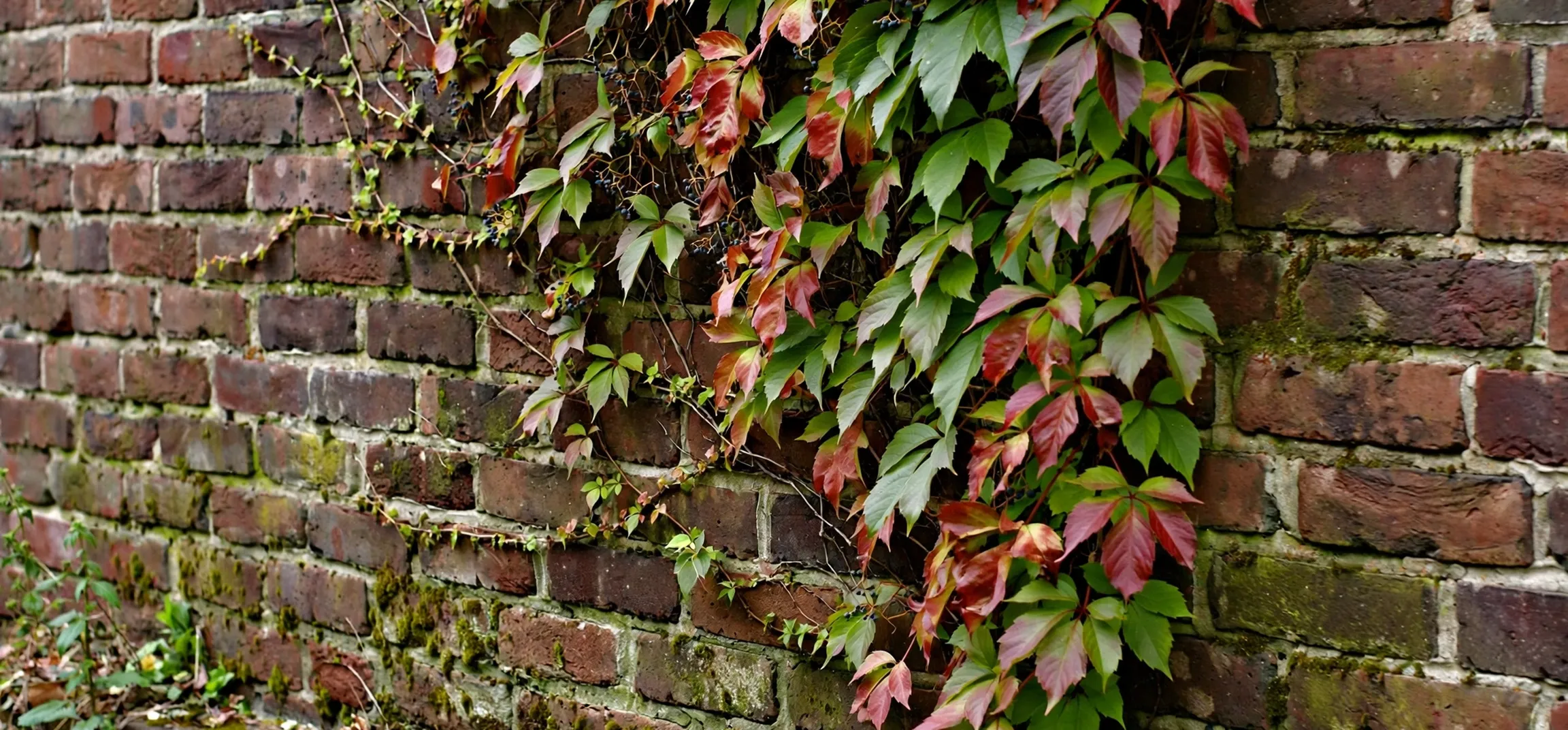
The Virginia creeper scientific name is Parthenocissus quinquefolia, and it belongs to one of the most recognisable climbing plants in North America. Virginia creeper is a vigorous deciduous vine famous for its five-leaflet leaves, which turn brilliant shades of red, orange and purple in autumn. It climbs walls, trees and fences with adhesive tendrils, and it is widely planted as an ornamental ground cover and wall vine, as well as growing wild across much of eastern North America.
Understanding the Virginia creeper scientific name opens up the plant’s story. Parthenocissus comes from Greek words meaning “virgin ivy”, referring to the plant’s ivy-like habit and to the fact that it can set fruit without fertilisation. Quinquefolia means “five leaves”, describing the five leaflets that fan out from each leaf stalk. Together, the name is a compact botanical description: a virgin ivy with five leaves.
Virginia Creeper Scientific Name and Classification
Virginia creeper sits in the grape family, Vitaceae, which also includes true grapes and Boston ivy. Its full classification runs from kingdom Plantae, through order Vitales and family Vitaceae, to genus Parthenocissus and species quinquefolia. The genus also includes Boston ivy, Parthenocissus tricuspidata, which has three-lobed leaves rather than five leaflets — the key difference between the two popular wall vines.
Botanists have debated Virginia creeper’s classification over the years, and older books may list it under the genus Ampelopsis or as Parthenocissus quinquefolia with different varieties. Modern taxonomy generally accepts Parthenocissus quinquefolia as the standard name, with several recognised varieties that differ in leaf size, hairiness and growth habit. When buying a plant, the cultivar name on the label matters as much as the species: some cultivars are more compact, more colourful, or better behaved than the wild species.
How to Identify Virginia Creeper
Identification starts with the leaves. Virginia creeper leaves are palmately compound, meaning five leaflets radiate from a central point like fingers from a palm. Each leaflet is toothed along the edges and pointed at the tip. In summer the leaves are green, sometimes glossy, and in autumn they turn vivid red and purple — one of the most spectacular autumn displays of any vine.
The stems provide the next clue. Virginia creeper climbs using tendrils that end in adhesive discs, which grip bark, brick and stone without damaging the surface as aggressively as some ivies. In summer, small greenish flowers appear in clusters, followed by dark blue-black berries in autumn. The berries are an important food source for birds, which spread the seeds widely — one reason Virginia creeper naturalises so readily.
Virginia creeper is sometimes confused with poison ivy, and the distinction matters. Poison ivy has three leaflets, not five, and its famous warning — “leaves of three, let it be” — is a useful reminder. Virginia creeper’s five leaflets make it easy to tell apart once you know what to look for, though young plants and unusual growth can occasionally confuse beginners. When in doubt, count the leaflets and check for the adhesive tendrils.
| Feature | Virginia creeper | Poison ivy | Boston ivy |
|---|---|---|---|
| Leaflets or lobes | Five leaflets | Three leaflets | Three lobes, one leaf |
| Scientific name | Parthenocissus quinquefolia | Toxicodendron radicans | Parthenocissus tricuspidata |
| Autumn colour | Brilliant red and purple | Red and orange | Red and crimson |
| Berries | Dark blue-black | White or cream | Dark blue-black |
Growing Virginia Creeper
Virginia creeper is one of the easiest vines to grow. It tolerates sun and shade, most soils, drought once established, and urban pollution, and it needs little care beyond occasional pruning to keep it within bounds. It is hardy across a wide range of climates and will quickly cover a wall, fence or pergola, providing summer shade and autumn colour. For wildlife gardens, it is particularly valuable: its flowers attract insects, its berries feed birds, and its dense foliage shelters nesting birds.
The plant’s vigour is also its main drawback. Virginia creeper grows fast and can overwhelm small gardens, smother shrubs, and creep into gutters and roof spaces if left unchecked. Prune it at least once a year, in late winter or after leaf fall, and keep it away from painted woodwork and delicate surfaces, where its adhesive discs can leave marks. With regular pruning, it is a superb garden plant; without it, it can become a nuisance.
Virginia Creeper Safety Notes
Virginia creeper berries are not for eating. They contain oxalic acid and are considered toxic to humans if eaten in quantity, though birds eat them safely. The sap can irritate sensitive skin in some people, so gloves are advisable when pruning. These cautions are general information: if a child or pet eats berries or shows a reaction, contact a medical professional or poison advice service promptly rather than relying on internet guidance.
Virginia creeper is native to eastern North America, where it is an important part of woodland ecology. In other regions, it can naturalise and spread beyond gardens, so gardeners outside its native range should check local guidance before planting. Choosing a named cultivar, rather than the wild species, can reduce unwanted spread, since some cultivars fruit less freely.
Virginia Creeper in History and Culture
Virginia creeper has been planted in gardens since colonial times in America, where its autumn colour made it a favourite for covering houses and barns. It appears in landscape paintings and garden writing as a symbol of autumn abundance, and its brilliant foliage has inspired poets and photographers. In its native woodlands, it climbs trees without strangling them — unlike some vines, it does not constrict its host — and it provides a seasonal food source that supports migrating birds.
The plant’s common name reflects its origins: “Virginia” for the colony where early botanists encountered it, and “creeper” for its climbing habit. Its scientific name, Parthenocissus quinquefolia, tells the same story in botanical Latin. Together, the two names capture a plant that is both a familiar garden friend and a serious subject of botanical study.
Virginia Creeper Scientific Name: Pronunciation Guide
The Virginia creeper scientific name is pronounced par-then-oh-SIS-us kwin-kweh-FOH-lee-uh, with the stress on the third syllable of the genus and the third syllable of the species. Botanical Latin pronunciation varies by country and tradition, and no single version is universally enforced, so gardeners should not worry about getting it exactly “right”. What matters is that the name is recognisable: say it confidently, and nursery staff and fellow gardeners will know precisely which plant you mean.
Breaking the name into parts helps memory. Parthenocissus combines parthenos (virgin) and cissus (ivy), while quinquefolia combines quinque (five) and folia (leaves). Once you know the parts, the whole name becomes a description rather than a tongue-twister, and it is much easier to remember the next time you need it — whether in a garden centre, an exam, or a conversation about autumn colour.
Virginia Creeper Scientific Name in Garden Centres
In garden centres, the Virginia creeper scientific name appears on plant labels alongside the common name and the cultivar, and it is the most reliable way to ensure you buy the right plant. Common names vary by region and can be shared between different species, but the scientific name is unique. If a label says Parthenocissus quinquefolia, you are buying Virginia creeper; if it says Parthenocissus tricuspidata, you are buying Boston ivy, a related but different plant with three-lobed leaves.
Cultivar names add a further layer. Cultivars such as ‘Engelmannii’ are selected forms of Virginia creeper with smaller leaves and especially vivid autumn colour, while others are chosen for compact growth or denser coverage. When choosing, read the full label — species plus cultivar — and check the plant’s expected size and vigour against the space you have. A correctly identified plant, planted in the right place, is the foundation of a successful garden.
Virginia Creeper Scientific Name and Wildlife
The Virginia creeper scientific name is worth knowing for wildlife gardeners, because this vine supports more wildlife than almost any other climber. Its summer flowers provide nectar for bees and other pollinators, its autumn berries feed thrushes, waxwings and other birds, and its dense foliage offers nesting sites and shelter through the year. Planting Virginia creeper is therefore one of the simplest ways to make a garden more wildlife-friendly, provided it is pruned to keep it in bounds.
Wildlife value also explains why Virginia creeper is recommended in native planting schemes across its home range. Unlike some exotic climbers that offer little to local wildlife, Virginia creeper co-evolved with North American birds and insects, and its berries ripen at a time when migrating birds need them most. A garden plant that feeds wildlife, colours autumn, and shades a wall in summer is doing several jobs at once — which is why this vine has remained popular for centuries.
Frequently Asked Questions
What is the Virginia creeper scientific name?
The Virginia creeper scientific name is Parthenocissus quinquefolia, meaning “virgin ivy with five leaves”.
How do I tell Virginia creeper from poison ivy?
Virginia creeper has five leaflets per leaf, while poison ivy has three. Remember “leaves of three, let it be”.
Are Virginia creeper berries edible?
No. The berries are toxic to humans and should not be eaten, though birds eat them safely.
Is Virginia creeper easy to grow?
Yes. It tolerates sun, shade, most soils and drought once established, but it needs annual pruning to keep it within bounds.
Conclusion
The Virginia creeper scientific name, Parthenocissus quinquefolia, describes a vine of remarkable beauty and vigour: five leaflets, brilliant autumn colour, and a climbing habit that has made it a garden favourite for centuries. Easy to grow, valuable to wildlife, and simple to identify once you count the leaflets, Virginia creeper earns its place in gardens — provided you prune it, respect its berries, and give it the space its energy deserves.
For more plant and science guides, see what simultaneously means, the meaning of Bildungsroman, and the meaning of Angelica.



