When people search for succulents meaning, they are usually asking what these thick-leaved, water-storing plants are thought to stand for in symbolism, folklore, and everyday gift-giving. The association that appears most often in cultural writing is resilience: a plant that can survive dry soil, strong sun, and long gaps between watering is an easy symbol for endurance, patience, and quiet strength. This guide explains this symbolism as a set of cultural beliefs and associations, not as a proven fact about the plants themselves. Succulents do not carry a universal, scientifically established message; the meanings below come from traditions, popular symbolism books, garden writing, and modern gift culture, and different sources emphasise different ideas.
That distinction matters because this symbolism changes with context. A jade plant on a desk may be given as a wish for good fortune, while a cactus in a window may be chosen for protection or simply because it is hard to kill. An echeveria in a wedding bouquet may be chosen for its neat rosette shape and lasting quality rather than for any deep symbolism at all. Understanding this symbolism therefore means looking at several layers at once: the biology of the plant, the cultural stories attached to it, and the personal reason someone chose it. This article walks through each layer so you can decide which interpretation, if any, fits your own situation.
Succulents Meaning at a Glance
In short, succulents meaning is most commonly linked with endurance, adaptability, and lasting affection. Because succulents store water in their leaves or stems, they can keep going when conditions are difficult, and that visible toughness is the root of most symbolic readings. Writers on plant symbolism often connect it with the idea of thriving with little, staying steady through change, and recovering after a hard period. That is why succulents are popular gifts for new homes, new jobs, graduations, and recoveries: the plant itself seems to say that good things can grow slowly and steadily.
Other common associations include protection, prosperity, and calm. Spiky types such as cacti are sometimes linked with protection, because their spines suggest a boundary. Jade plants, with their round, coin-shaped leaves, are linked in some traditions with wealth and good fortune. Soft, rosette-shaped succulents are often linked with gentleness, beauty, and enduring love, because they hold their shape for a long time. None of these links is a botanical fact; they are cultural readings that have grown up around the plants over time, and the symbolism in any one gift depends on what the giver intended.
Why Succulents Suit Symbolism So Well
Succulents suit symbolism because their appearance tells a story at a glance. Thick leaves suggest stored resources. Compact growth suggests discipline and care. Slow, steady growth suggests patience. When a plant looks as though it is managing on very little, people naturally project qualities such as independence and self-reliance onto it. That is how this symbolism became so rich: the plant gives the imagination plenty to work with, while remaining easy to keep alive in a home or office.
Succulents Meaning in Different Cultures
Cultural writing about this symbolism draws on several traditions, and the same plant can mean different things in different places. In feng shui-inspired home writing, jade plants and other rounded succulents are often placed near entrances or workspaces as symbols of prosperity and positive energy, although feng shui itself is a traditional practice rather than a proven science. In some Latin American and desert-region traditions, cacti and agave are associated with endurance in harsh landscapes and with protection of the home. In modern Western gift culture, this symbolism is often simpler: a low-maintenance plant that signals thoughtfulness without demanding much care from the recipient.
It is worth noting that this symbolism is not fixed in any single culture. Aloe vera, for example, is valued in many places first as a useful household plant, and only secondarily as a symbol of healing or protection. Agave has a long practical history in food, fibre, and drink production, so its symbolism is tied to usefulness and sustenance as much as to endurance. When you read a claim about this symbolism, it helps to ask where the claim comes from: a centuries-old tradition, a modern symbolism guide, or a marketing description for a gift shop. Each source has a different level of authority, and none of them turns a belief into a botanical fact.
Succulents Meaning by Plant Type
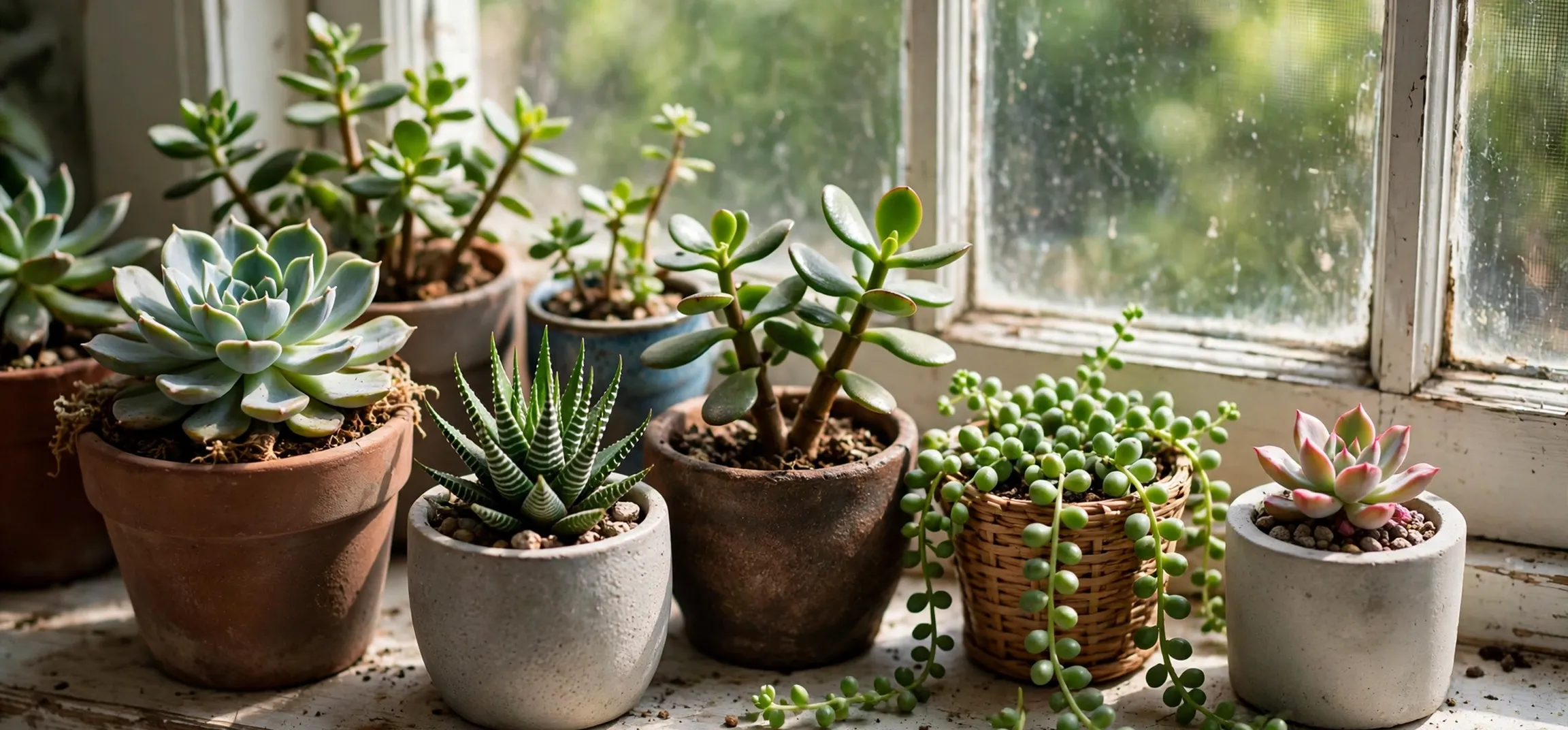
Different succulents carry different associations, and a table of the most common ones makes this symbolism easier to grasp. Jade plants are the classic prosperity symbol. Echeveria, with its flower-like rosette, is linked with beauty and enduring affection. Aloe vera is linked with healing, protection, and care. Cacti are linked with endurance and boundaries. Snake plants, which are sometimes grouped with succulents in popular writing even though botanists classify them separately, are linked with resilience and clean, calm spaces. Haworthia, with its patterned leaves, is linked with quiet strength and modesty.
These associations should be read as cultural shorthand, not as rules. A person who loves cacti may simply enjoy desert plants, and a person who keeps aloe on a windowsill may value it for practical reasons. The table below summarises the most repeated associations in symbolism writing, so you can see the patterns without treating any single entry as definitive. If you are choosing a plant as a gift, the recipient’s taste and living conditions matter far more than any symbolic entry, and this symbolism works best when it supports a choice you already like.
| Plant | Common symbolic association | Why people make the link |
|---|---|---|
| Jade plant | Prosperity and good fortune | Round, coin-like leaves and long life |
| Echeveria | Enduring love and beauty | Neat rosette that holds its shape |
| Aloe vera | Healing, protection, and care | Long household use and soothing gel |
| Cactus | Endurance and boundaries | Survival in dry places and protective spines |
| Agave | Strength and sustenance | Large, tough leaves and practical uses |
| Haworthia | Quiet strength and modesty | Compact growth and patterned leaves |
Succulents Meaning as Gifts
As gifts, succulents meaning is often about the message the giver wants to send without saying it directly. A succulent for a new home can suggest that the household will grow and settle in well. A succulent for someone starting a new job can suggest confidence that they will adapt and thrive. A succulent for someone going through a difficult time can suggest steady support: something that does not need constant attention, but is still there. In each case, the plant works as a gift because it is attractive, long-lasting, and forgiving of imperfect care, and succulents meaning adds a thoughtful layer on top of those practical qualities.
If you are giving a succulent, a short note makes the intended succulents meaning clear. Without a note, the recipient may simply enjoy the plant and never think about symbolism at all, which is perfectly fine. With a note such as wishing them steady growth in a new chapter, you turn a general cultural association into a personal message. That personal message is more meaningful than any generic symbolism list, because it connects the plant to a real person and a real moment. Gift guides often stress this point: symbolism should support a personal gesture, not replace it.
Choosing a Succulent Gift Thoughtfully
When choosing a succulent gift, match the plant to the recipient’s light, space, and experience. A sunny windowsill suits echeveria and cacti, while lower light suits snake plants and haworthia. Check whether the recipient has pets or small children, since some plants are safer than others in a shared home, and choose a pot with drainage so the plant is not sitting in water. A healthy plant in the right conditions will live up to its reputation for endurance far better than a struggling plant in the wrong spot, and that practical care is the best way to honour any succulents meaning you have in mind.
Succulents Meaning in Home and Workspaces
In homes and workspaces, succulents meaning is often tied to calm and focus. A small plant on a desk can make a workspace feel less stark, and its slow growth can be a gentle reminder to take a steady approach to a busy day. Writers on interior styling often describe succulents as grounding objects: they bring a natural element indoors without the demands of a large houseplant. That sense of calm is a personal response to greenery, not a proven effect of any particular species, but many people report that having plants nearby makes a room feel more pleasant and lived in.
Placement traditions add another layer to succulents meaning in the home. Some guides suggest placing jade plants near a front door or in a living area as a prosperity symbol, while others suggest placing cacti away from seating areas because of their spines. These placement ideas come from cultural and styling traditions, not from plant science, so they are best treated as optional inspiration. The most important placement rule is practical: give the plant the light it needs, avoid overwatering, and put it where it will be enjoyed rather than knocked over. A plant that thrives in its spot will look better and last longer than one placed purely for symbolism.
Succulents Meaning and Personal Growth
Many modern writers connect succulents meaning with personal growth, self-reliance, and patience. The logic is simple: a succulent grows slowly, stores what it needs, and does not demand constant attention, so it becomes a metaphor for building a life steadily rather than rushing. People going through a transition sometimes keep a succulent as a small daily reminder to be patient with themselves. That use of symbolism is personal and reflective, and it does not require believing that the plant has any power of its own. The value lies in the reminder, not in the plant’s supposed energy.
This reflective use of succulents meaning is also why succulents appear so often in journals, social media posts, and wellness writing. A photograph of a thriving succulent can stand for a period of recovery or a fresh start, and the plant’s visible progress over months gives a sense of continuity. If that framing helps someone stay patient or hopeful, it has served a useful purpose, provided it is not treated as a substitute for real support, medical care, or practical help when those are needed. Symbolism works best as encouragement alongside action, not instead of it. For readers interested in other symbolic topics, our guide to number and tattoo symbolism and our planting guide for warm climates offer related background on how meanings and growing conditions are discussed.
Common Questions About Succulents Meaning
Readers often ask whether succulents meaning is the same everywhere, whether a particular species has a single correct meaning, and whether giving a cactus is rude. The answers are reassuringly flexible. Meanings vary by culture and by source, no species has one official meaning, and a cactus is only rude if the giver intends it that way; most recipients take it as a hardy, attractive plant. The frequently asked questions below summarise the points that come up most often.
Frequently Asked Questions
Do succulents bring good luck? In some traditions, particularly those that link jade plants with prosperity, succulents are given as good-luck gifts. That is a cultural belief, not a proven effect, so it is best understood as a wish rather than a guarantee.
What does a cactus symbolise? In symbolism writing, cacti are most often linked with endurance, protection, and strength in difficult conditions. Many people simply enjoy their sculptural shapes and low care needs, without attaching any symbolism at all.
Is there a succulent for love? Echeveria and other rosette succulents are often linked with enduring affection because they hold their shape for a long time. A personal note explaining your wish matters more than the species you choose.
Does succulents meaning differ by colour? Some guides link green with growth and calm, purple or red-tinged leaves with passion or energy, and variegated leaves with uniqueness. These colour associations are modern styling ideas rather than ancient traditions, so treat them as creative inspiration.
Conclusion: Succulents Meaning
In the end, succulents meaning is a blend of biology, culture, and personal intention. The plants themselves are remarkable for their ability to store water and survive dry conditions, and that toughness has inspired associations with resilience, patience, prosperity, protection, and enduring affection. Those associations are beliefs and cultural readings, not facts about the plants, and they vary from one tradition and one writer to another. Knowing that variety helps you use symbolism wisely: enjoy it as a thoughtful layer when you give or keep a succulent, but let the plant’s real qualities, its beauty, its hardiness, and the care you give it, carry the main message. Whether you choose a jade plant for a new home, an echeveria for a loved one, or a cactus for your own desk, the most lasting succulents meaning is the one you attach to it yourself, through steady care and the occasion it marks.