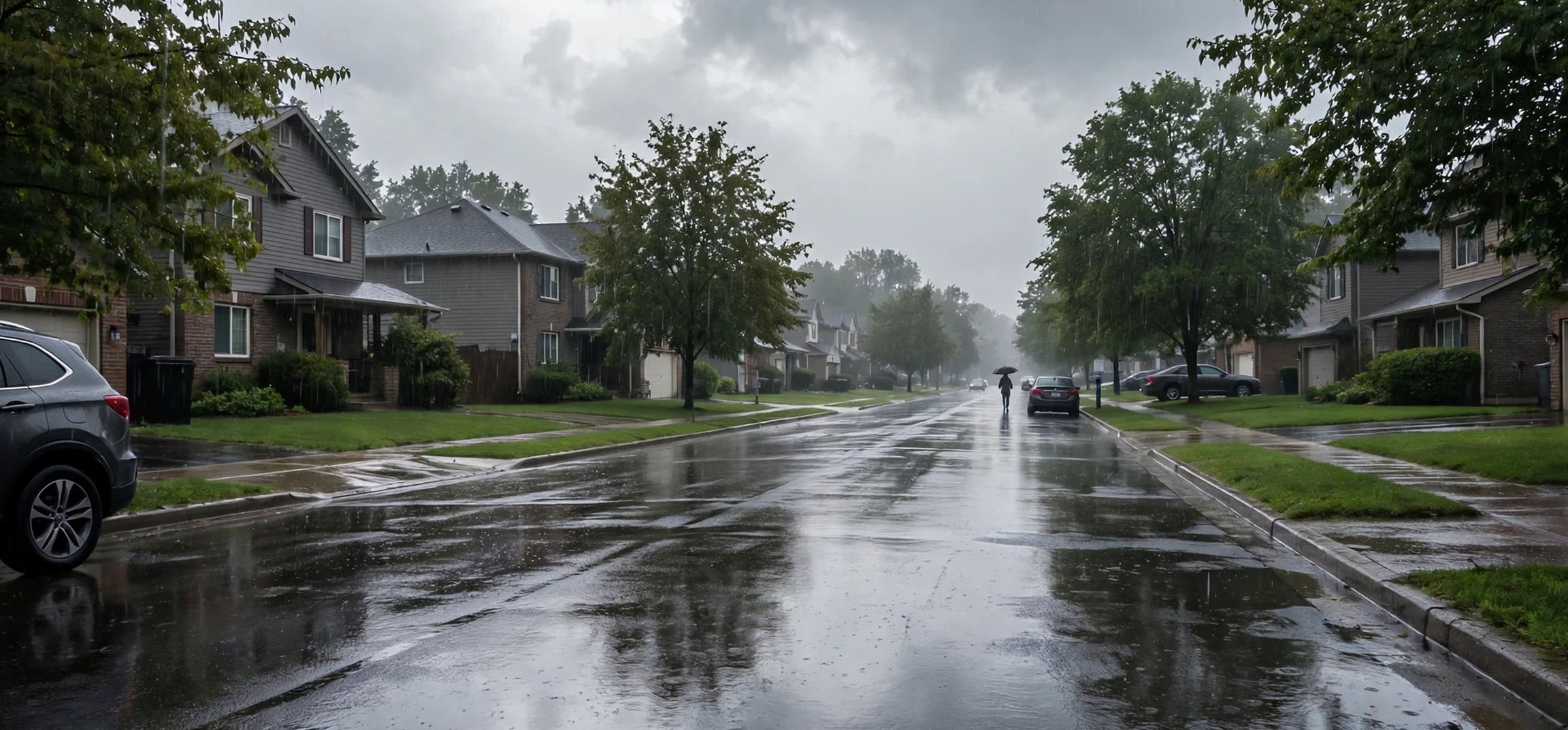
If you have ever checked a forecast, seen a figure such as 40 percent, and wondered whether you should carry an umbrella, you are asking exactly the question behind the search phrase what does rain percentages mean. In everyday language, a rain percentage is a forecaster’s way of expressing how likely rain is for a stated place and time period, but the number is easy to misread, because it does not simply mean that it will rain for 40 percent of the day, or that 40 percent of your town will get wet. This guide explains the idea in plain language, shows how forecasters arrive at the number, and helps you use it to make sensible plans without treating any single percentage as a promise. It is an educational explanation only, and it does not state a forecast for any place or day, so for decisions that matter, always check an official weather service for your exact location and time.
What Does Rain Percentages Mean in Plain Language
At its simplest, when a forecast says there is a 40 percent chance of rain, it means that, under conditions like the ones expected, rain would occur about four times out of ten. Forecasters usually define rain as a measurable amount, often at least a small threshold such as one hundredth of an inch, falling at a given point during the forecast period. That definition matters, because a brief shower that leaves only a trace of water may not count in the same way as steady rain. The percentage is therefore a probability, not a measurement of how heavy the rain will be, how long it will last, or how much of an area will be covered, although those details are often shown separately as rainfall amounts, timing, and coverage descriptions. This is the practical answer to what does rain percentages mean for anyone planning a day outdoors.
People often ask what does rain percentages mean because the number feels precise while the weather itself feels uncertain. A probability is honest about that uncertainty. If ten days had exactly the same atmospheric setup, and rain fell on four of them, a 40 percent forecast would be well calibrated, even though no single day in the set could be predicted with certainty. That is why two forecasts can both be reasonable even when one says 30 percent and another says 50 percent: they may cover different areas, different hours, or different definitions of measurable rain. Reading the time window and the location beside the number is just as important as reading the number itself.
A Probability, Not a Promise
A 20 percent chance does not mean rain is impossible, and an 80 percent chance does not mean rain is guaranteed. Low chances still happen, and high chances sometimes fail, because small changes in wind, temperature, or moisture can shift a shower by a few miles or a few hours. Treat the percentage as a guide to risk: the higher the number, the more sensible it is to have a wet-weather plan, while a lower number means the risk is smaller but not zero. For an outdoor wedding, a long hike, or a day of travel, that distinction is more useful than treating any threshold as a simple yes or no answer. Asking what does rain percentages mean is really asking how much trust to place in a single number.
How Forecasters Calculate the Percentage
Modern forecasts combine observations, computer models, and human judgement. Weather stations, satellites, radar, and balloons feed current conditions into models that simulate how the atmosphere may evolve. Forecasters run these models many times with slightly different starting conditions, creating an ensemble of possible outcomes. If rain appears in 40 out of 100 of those runs for a particular place and period, the chance of rain is reported as around 40 percent. Human forecasters then adjust that raw output using local knowledge, recent model performance, and the behaviour of similar weather patterns in the past. In short, what does rain percentages mean is a question about likelihood, not about certainty.
Another common method looks at historical analogues. When forecasters see a pattern that has occurred many times before, they can check how often rain followed in the past. If a similar setup produced rain on six out of ten occasions, a forecast near 60 percent may be appropriate. In practice, most published percentages blend both approaches: model ensembles provide the starting point, and forecaster experience refines it. That blend is one reason forecasts from different providers can differ slightly, even when they use similar data, because each provider weights the models and the human adjustment differently. That distinction sits at the centre of what does rain percentages mean in a published forecast.
Point Forecasts and Area Forecasts
One of the most common sources of confusion is the difference between a point forecast and an area forecast. A point forecast answers the question for one specific spot, such as your home address, while an area forecast covers a wider region, such as a county or a city district. Some services describe their percentage as the chance that any point in the area will receive rain, while others describe it as the chance at a single point. A 50 percent area forecast can therefore feel different from a 50 percent point forecast, and this is why checking how your chosen service defines its number is worth a minute of your time. The help pages of official weather services usually explain the definition they use, and that definition is the one you should apply when reading their numbers. Anyone learning what does rain percentages mean should start with that probability idea before worrying about details.
What Does Rain Percentages Mean for Your Day
For daily planning, the most useful approach is to combine the percentage with the other details in the forecast. A 60 percent chance of light rain in the morning, followed by a dry afternoon, calls for a different plan than a 60 percent chance of heavy showers all day. Look at the expected timing, the likely rainfall amount, the wind, and any warnings or advisories. A low percentage with a severe weather warning deserves more attention than a high percentage of light drizzle, because the impact of the weather matters as much as its likelihood. In short, use the percentage to judge likelihood, and use the rest of the forecast to judge impact. This is why what does rain percentages mean cannot be answered with a single rule that fits every place and every day.
Common Misunderstandings About Rain Percentages
One widespread myth is that a 50 percent chance means it will rain for half the day. It does not. A shower lasting twenty minutes can still count as a rainy day for probability purposes, just as a dry morning followed by an evening downpour can. Another myth is that a 100 percent chance means it will rain all day without a break. In practice, a very high percentage usually means rain is expected at some point during the period, not continuously throughout it. A third myth is that percentages from different apps can be averaged to get a better answer. Averaging can smooth out extremes, but it can also hide important differences in timing and location, so it is usually better to pick one trusted source and follow its updates consistently. Put simply, what does rain percentages mean is best read as a risk guide for the stated period.
People also sometimes assume that a percentage applies equally to every hour in the forecast period. Most detailed forecasts break the day into hourly or three-hourly chances, and those hourly figures can vary a great deal. A day with a 70 percent chance of rain overall might show only 10 percent in the morning and 80 percent in the evening, which changes what you should wear and when you should travel. Whenever you can, look at the hourly breakdown rather than relying on a single daily figure, especially if your plans are time-sensitive. A clear grasp of what does rain percentages mean helps readers avoid both false confidence and needless worry.
| Rain chance | Plain-language meaning | Sensible planning response |
|---|---|---|
| 0 to 20 percent | Rain is unlikely, but not impossible | Proceed as normal, with a light backup plan for important outdoor events |
| 30 to 50 percent | Rain is possible and worth preparing for | Carry rain gear and know your indoor alternative |
| 60 to 80 percent | Rain is likely at some point in the period | Plan around rain, and move vulnerable activities indoors if you can |
| 90 to 100 percent | Rain is expected, though timing may still vary | Assume wet conditions and check for warnings or heavy rainfall advice |
Reading the Rest of the Forecast Beside the Percentage
A good forecast gives you far more than a single number. Rainfall amounts tell you whether to expect a light sprinkle or a soaking downpour. Timing tells you whether the rain will arrive before your commute or after it. Temperature and wind tell you whether rain will feel cold and driving or warm and brief. Warnings and advisories tell you whether the rain is linked to flooding, thunderstorms, or strong winds that need a safety response rather than just an umbrella. Reading these details together turns a bare percentage into a usable plan, and it reduces the surprise when a forecast that looked mild turns out to be disruptive, or vice versa. That is another way of explaining what does rain percentages mean without overstating what a forecast can promise.
Radar and Short-Term Updates
For the next few hours, radar and short-term updates, often called nowcasts, are usually more useful than a daily percentage. Radar shows where rain is falling right now and which direction it is moving, so you can judge whether a shower is heading toward you or away from you. Many official weather services provide radar alongside their forecasts, and combining the two gives you both the longer view and the immediate picture. If you are already outdoors, a quick radar check is often the fastest way to decide whether to shelter, wait, or carry on. For everyday use, what does rain percentages mean comes down to likelihood, timing, and impact taken together.
Frequently Asked Questions
Does a 30 percent chance of rain mean it will rain 30 percent of the time?
No. It means there is roughly a three-in-ten likelihood of measurable rain at the stated place during the stated period. The rain itself could be brief or prolonged, and the figure says nothing on its own about duration. For duration and timing, check the hourly forecast and the expected rainfall amount. Readers who keep asking what does rain percentages mean are usually trying to turn a number into a decision, and that is the right instinct.
Does 100 percent mean it will rain all day?
No. It means rain is expected during the forecast period, but there may still be dry breaks, and the rain may arrive later or finish earlier than expected. A very high percentage is a strong signal to prepare for wet weather, not a promise of continuous rain. So what does rain percentages mean in practice? It means weighing a stated chance against what is at stake if rain arrives.
Why do different apps show different percentages?
Different providers use different models, different definitions of point and area, and different time windows. They may also update at different times. The differences are usually small, but they can look large when a shower is scattered or borderline. Pick one trusted official source for important decisions and follow it consistently. Keeping what does rain percentages mean in mind helps you read updates calmly instead of reacting to every small change.
Do percentages work the same way for snow?
The same probability idea applies: a percentage expresses the likelihood of measurable precipitation, but snow forecasts also depend on temperature, ground conditions, and snowfall amounts. A low chance of heavy snow can still matter a great deal, so always read snowfall amounts and warnings alongside the percentage. That habit is exactly what understanding what does rain percentages mean is meant to encourage.
Planning With Percentages: A Simple Approach
Start by noting the percentage, the place, and the time window, then read the hourly details and any warnings. Next, decide what outcome would actually disrupt your plans: a brief shower, steady rain, or heavy rain with wind. Then set your threshold in advance and prepare the matching backup, whether that is an umbrella, a change of clothes, an indoor venue, or a different travel time. Finally, recheck the forecast closer to the event, because short-term updates are usually more accurate than forecasts made several days ahead. This simple routine works for commutes, walks, sports, gardening, and outdoor events alike, and it keeps a single number in its proper place as one part of a fuller picture. Once you see what does rain percentages mean in these terms, the rest of the forecast becomes easier to use.
Conclusion
Understanding what does rain percentages mean comes down to one clear idea: the number is a probability of measurable rain for a stated place and period, calculated from models, ensembles, and forecaster experience, and it should be read together with timing, amounts, and warnings. A low percentage is not a guarantee of dry weather, and a high percentage is not a guarantee of all-day rain, but both give you a sensible basis for planning. Use the hourly breakdown, check radar for short-term decisions, and turn to official weather services for the forecast that applies to your exact location. For more on how weather names and seasonal patterns are described, see our guide to hurricane names, and for travel planning that depends on the forecast, see our guide on domestic travel. With that approach, a rain percentage becomes a practical tool rather than a puzzle.