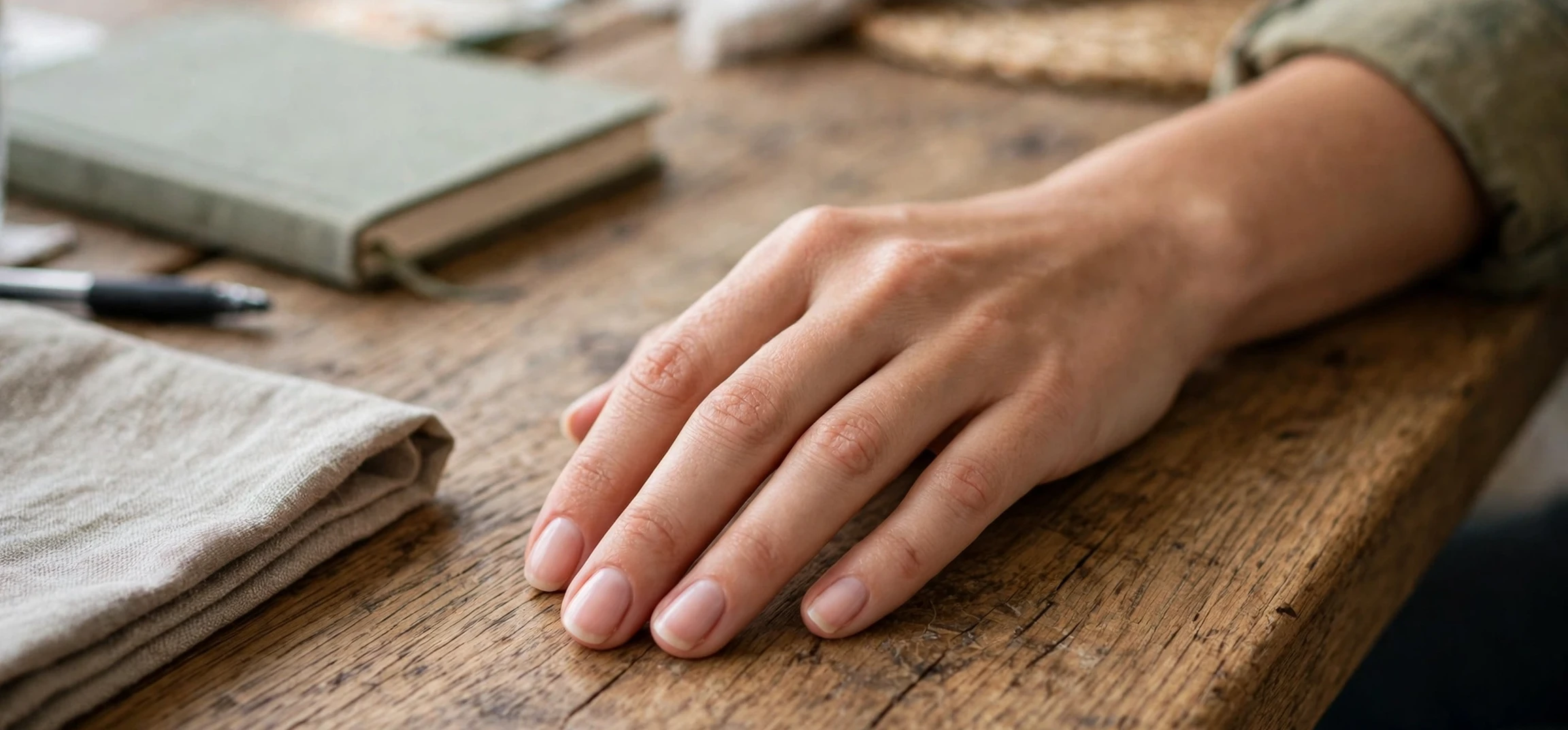
Many people notice white marks under fingernails and wonder what they mean. The short answer is that, in most cases, small white marks on the nails are common and harmless, and they are usually linked to minor knocks to the nail rather than to a serious health problem. This article offers general health education only. It is not medical advice, it does not diagnose any condition, and it does not replace a conversation with a clinician. This article shows no pictures: it describes the marks in words only, so readers can compare the description with what they see without relying on photographs. If you are worried about changes to your nails, or if marks appear with other symptoms, speak to a clinician promptly.
White marks under fingernails are often called leukonychia, a term that simply describes white discoloration of the nail. The marks can appear as small dots, short lines, or larger white patches. They can affect one nail or several nails, and they can appear, grow out with the nail, and then disappear. Because nails grow slowly, a mark caused by a minor injury at the base of the nail may only become visible weeks later, which is why people often cannot remember bumping the nail. That delay is one reason white marks can seem mysterious, even when the cause is ordinary. People who notice white marks under fingernails often worry first and ask questions later, which is understandable.
White Marks Under Fingernails Explained
To understand white marks under fingernails, it helps to know a little about how nails grow. A nail is made of keratin, a tough protein also found in hair. New nail cells are produced at the base of the nail, under the skin at the cuticle, in an area called the matrix. As new cells form, older cells are pushed forward and harden into the visible nail plate. If the matrix is briefly disturbed, for example by a knock, pressure, or vigorous manicure work, the nail that grows from that spot may contain a small white area. As the nail grows, the mark moves toward the tip and is eventually trimmed away.
That simple mechanism explains the most common pattern: a single small white spot on one nail that slowly moves outward and then vanishes. It also explains why children and adults who use their hands a lot, play sport, or work with tools may notice these marks more often. The nail is exposed to everyday knocks, and even a minor bump that is not painful at the time can leave a trace in the growing nail. In general educational terms, this is the explanation clinicians most often give for isolated white spots. In general, white marks under fingernails that appear as a single spot are the least worrying pattern described here.
Other patterns are less common but worth knowing about in general terms. White lines that run across several nails, white areas that cover most of the nail, or nails that change colour, shape, or thickness along with other symptoms are different from a single spot. General health information sources note that widespread nail changes can sometimes be associated with broader health conditions, nutritional issues, or medication effects, but those associations are not diagnoses. Only a clinician who can examine the nails, take a history, and, if needed, arrange tests can assess an individual case. This article deliberately avoids listing specific conditions as explanations for any reader’s marks, because that kind of matching can cause unnecessary worry or false reassurance. Parents who see white marks under fingernails on a child can use the pattern guidance above before deciding to seek advice.
Common Causes of White Marks Under Fingernails
The most common cause of white marks under fingernails in everyday life is minor trauma. This includes catching a finger in a door, tapping nails against a hard surface, biting or picking at nails and cuticles, and pressure from tight gloves or tools. Manicures, artificial nails, and aggressive cuticle pushing can also disturb the matrix. None of these causes usually requires treatment: the mark grows out on its own as the nail lengthens, typically over several months for a fingernail.
Another everyday factor is simply the way nails are used. Typing, gardening, cooking, cleaning, and DIY work all expose nails to small impacts. People sometimes notice marks after a holiday or a period of manual work, even if they cannot recall a specific incident. That is normal, because the mark may not become visible until the affected part of the nail has grown beyond the cuticle. Keeping nails trimmed and avoiding biting or picking can reduce the chance of new marks, but it cannot prevent every minor knock. Because nails grow slowly, white marks under fingernails may only become visible weeks after a minor knock.
Less commonly, general health information mentions that certain illnesses, nutritional deficiencies, or medicines can affect nail appearance. These are broad categories, not a checklist for self-diagnosis. For example, severe illness or major stress can sometimes interrupt nail growth and leave a line across the nail, but many other factors can do the same. The key educational point is pattern: a single spot on one nail points in a different direction from changes affecting all nails at once, and a clinician is the right person to interpret that pattern in context. Anyone tracking white marks under fingernails should note which nails are affected and whether the marks move outward.
What the Marks Can Look Like
White marks vary in appearance. Small round dots are the most familiar form. Short white streaks or lines are also common. Sometimes a larger white patch covers part of the nail, and sometimes the whole nail looks paler than usual. The texture of the nail usually stays smooth in the case of a simple spot. If the nail becomes rough, ridged, brittle, split, or painful, or if the skin around the nail becomes red, swollen, or sore, that is a different situation and deserves clinical attention rather than simple observation. White marks under fingernails are not, on their own, a reason to change diet or start a supplement.
Colour also matters in general terms. A white mark is different from yellowing, darkening, or a dark streak under the nail. Dark streaks, in particular, should always be checked promptly by a clinician, because they require proper assessment even though most causes are benign. This article focuses on white marks only, and readers who notice other colours or changes should seek advice rather than assuming the same explanation applies. If white marks under fingernails appear on many nails at once, that pattern deserves a clinical conversation.
When to See a Clinician About Nail Marks
Most isolated white spots need no medical attention and simply grow out. However, it is sensible to speak to a clinician if white marks appear on most or all nails at the same time, if they do not grow out after several months, if nails also become thick, brittle, ridged, or misshapen, or if marks appear alongside other symptoms such as fatigue, weight change, skin changes, or pain. A clinician can examine the nails, ask about recent illness, medicines, diet, and nail care habits, and decide whether any further assessment is needed.
Parents and carers often ask about white marks on children’s nails. The same general principles apply: a single spot after play or a minor knock is common, while widespread or persistent changes deserve a clinical check. Children should not be given supplements or treatments for nail marks without clinical advice. A balanced diet, gentle nail care, and protection during sport and play are sensible general measures, but they are not treatments for an underlying condition. Gentle care can reduce new white marks under fingernails, but it cannot remove a mark already in the nail plate.
It is also worth seeking advice promptly, rather than waiting, if a nail becomes painful, infected, or detached, or if a mark is accompanied by swelling or discharge. Those signs suggest a problem that needs clinical assessment, not home observation. If you are unsure whether your situation needs attention, contacting a clinician or a pharmacist for guidance is a reasonable first step. This article cannot make that decision for you, and it is better to ask than to worry in silence. Most questions about white marks under fingernails are answered by the simple growth explanation in this guide.
Everyday Nail Care and Prevention
Gentle nail care can reduce minor trauma and keep nails healthy in general terms. Keep nails clean and trimmed, file in one direction rather than sawing back and forth, and avoid biting nails or picking at cuticles. Wear gloves for gardening, cleaning with harsh products, and manual work. If you have manicures, choose a practitioner who works gently around the cuticle and avoids aggressive pushing or cutting. Let nails rest between artificial nail applications, and remove artificial nails carefully rather than peeling them off.
Diet is often raised in discussions of nail health. In general educational terms, a varied diet that includes protein, vitamins, and minerals supports normal nail growth, just as it supports general health. However, there is no evidence that taking a particular supplement will remove an existing white spot, and supplements should not be taken for nail marks without clinical advice. A spot caused by a past knock will grow out regardless of diet, and a persistent change affecting many nails needs assessment, not a supplement. Remember that white marks under fingernails differ from dark streaks, yellowing, or painful swelling, which need prompt advice.
Moisturising hands and nails can help prevent brittleness, especially in cold or dry conditions. Use a plain hand cream or nail oil if you find it helpful, and avoid harsh nail products that dry the nail. These measures are about general care, not treatment, and they will not change a mark that is already in the nail plate. Patience is part of nail care: fingernails grow only a few millimetres per month, so a mark near the base may take months to reach the tip. This guide on white marks under fingernails is for general education and does not replace personal clinical advice.
| Pattern | Common general explanation | What to do |
|---|---|---|
| Single small dot on one nail | Minor knock to the nail matrix | Observe; it should grow out |
| Short white streak on one nail | Minor pressure or manicure trauma | Gentle care; trim as it grows out |
| Marks on most or all nails | Needs clinical assessment | Speak to a clinician |
| Nail pain, swelling, or infection signs | Needs prompt clinical assessment | Seek care promptly |
Frequently Asked Questions
Do white marks mean a vitamin deficiency?
Popular belief links white marks to zinc deficiency, but general health information notes that isolated spots are far more often caused by minor trauma. Do not start supplements for nail marks without clinical advice.
How long do white marks take to disappear?
Fingernails grow slowly, so a mark may take several months to grow from the base to the tip, where it can be trimmed away. Marks that do not move or grow out deserve a clinical check.
Are white marks on children’s nails a worry?
A single spot after play is common. Widespread, persistent, or painful changes should be checked by a clinician, as with adults.
To summarise the pattern point once more: white marks under fingernails on a single nail usually grow out, while white marks under fingernails on many nails deserve a clinical check.
Conclusion
White marks under fingernails are, in most cases, a common and harmless sign of a minor knock to the growing nail, and they usually grow out on their own over several months. This article has described the general patterns, the everyday causes, and the situations where clinical advice is sensible, without diagnosing any individual reader. Remember that this article shows no pictures, by design, so that the description stands on its own in words. If your marks affect many nails, persist, change the nail’s shape or texture, or appear with other symptoms, speak to a clinician for personal assessment. Gentle nail care, protection during manual work, and patience while the nail grows are the sensible everyday steps. For broader health reading, see our explainers on medical terms in plain language, common test terms, and medical abbreviations explained.