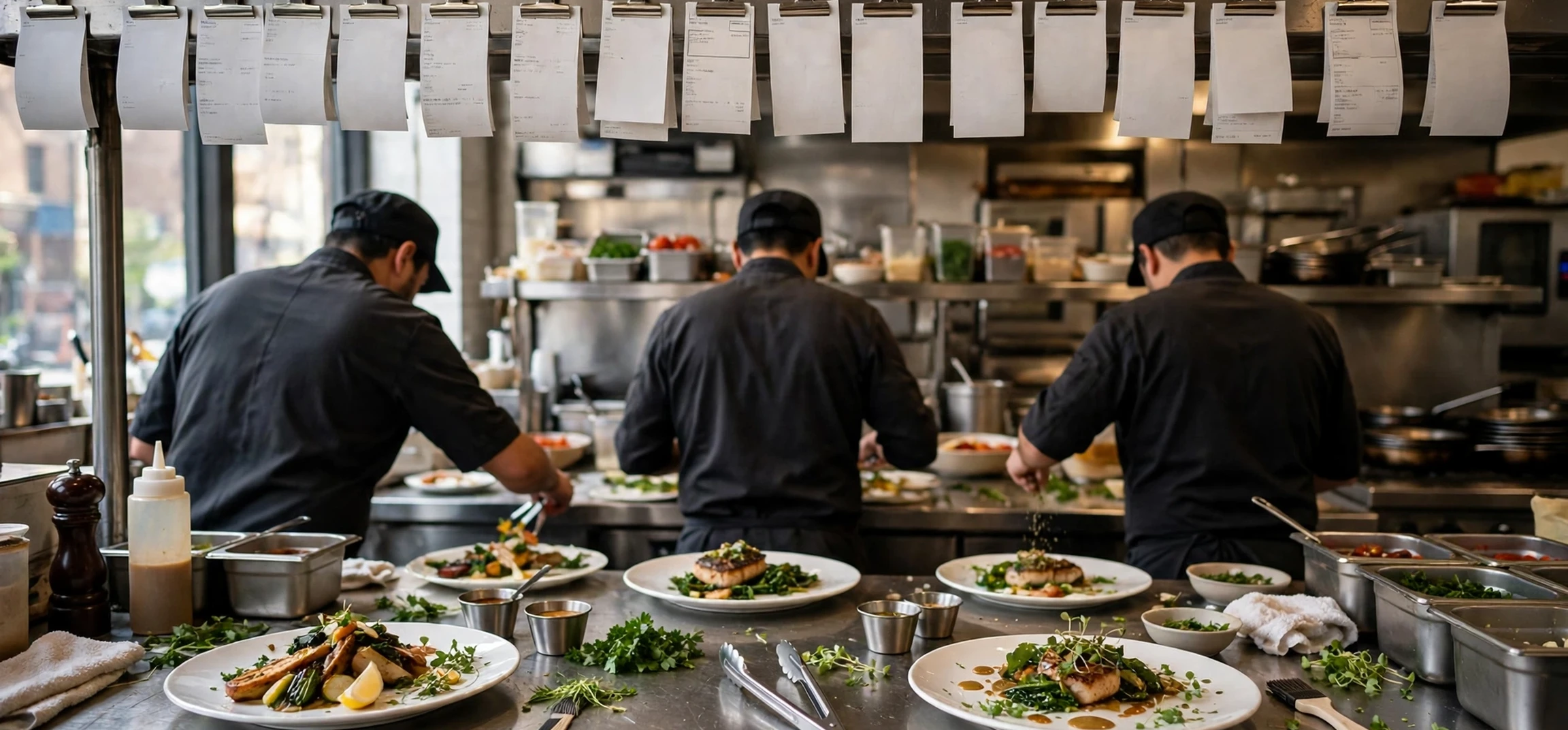
If you have ever watched a busy restaurant kitchen at work, you may have heard a chef call out a phrase like “two salmon, all day!” and wondered what it meant. The all day meaning restaurant kitchens use is a practical piece of kitchen slang: “all day” means the total number of a particular dish that the kitchen still needs to prepare across all outstanding orders, not just the latest ticket. In other words, it is a running count. When a new order arrives, the kitchen adds it to the orders already waiting, and the “all day” figure tells the cooks exactly how many of that item are still owed in total.
This guide explains the all day meaning restaurant teams rely on, where the phrase comes from, how it is called on the pass, and why it matters for speed, accuracy, and calm service. Whether you are a new cook, a front-of-house team member, a culinary student, or simply a curious diner, understanding “all day” will change how you hear kitchen chatter — and help you appreciate the quiet system behind a smooth service.
All Day Meaning Restaurant Kitchens Use Every Service
The all day meaning restaurant kitchens use is easiest to grasp with a simple example. Imagine three tables have each ordered one grilled chicken dish, and none has been cooked yet. The kitchen owes three grilled chicken dishes in total. If a fourth table then orders another grilled chicken, the chef might call “one grilled chicken, four all day.” The “one” is the new order; the “four all day” is the total still to be made, including the three already waiting. Cooks use that total to plan their grill space, their timing, and their preparation, rather than cooking one dish at a time in isolation.
That running total is the whole point. A kitchen is not a series of separate, unrelated orders; it is a queue. Dishes for different tables often need to be ready at the same time, and some items take longer than others. By calling the all-day count, the person leading the pass gives every cook a shared picture of the workload. A grill cook who knows there are eight steaks all day will manage the grill differently from one who thinks there are only two. A fry cook who hears “six chips, all day” knows to keep enough portions ready without overproducing and wasting food.
In the all day meaning restaurant system, the phrase is usually attached to a specific dish, not to the whole order. A ticket might contain a starter, two mains, and a side, but “all day” is counted dish by dish. So a kitchen might have “three soups all day, five salmon all day, and two chocolate desserts all day” at the same moment. Each count is separate, and each station only worries about its own items. That separation keeps communication short and precise in a noisy, fast-moving room.
All Day Meaning Restaurant: How It Is Called on the Pass
“All day” is normally called when a new order is read out, or when a cook or chef wants to confirm the remaining workload. The person calling — often the head chef, sous chef, or expeditor on the pass — reads the ticket, names the dish, and adds the all-day total. The cooks on the relevant station repeat it back, a practice known as calling back or echoing. That repetition matters: it confirms everyone heard the same number and prevents a miscount from turning into a missing dish or a duplicate.
As dishes are cooked and sent out, the all-day count falls. If four salmon were owed and one is plated, three remain all day. Some kitchens update the count aloud after each course is sent; others update it only when a new ticket arrives. Either way, the count is a living number that rises with new orders and falls as food leaves the kitchen. When the count reaches zero for a dish, that item is clear — at least until the next order arrives.
Modern kitchens may also see the same idea behind the all day meaning restaurant system on a kitchen display screen, where outstanding items are grouped and counted automatically. Even then, cooks often still call “all day” aloud, because voice carries across a kitchen faster than a glance at a screen, and because hearing the number helps the whole team stay synchronised. The technology changes the display; the language stays the same.
A Worked Example Across One Service
Consider a small bistro at 7 p.m. Table 4 orders two mushroom risottos. The pass calls “two risotto, two all day.” Table 7 then orders one risotto, so the call becomes “one risotto, three all day.” The risotto cook now knows three portions are owed in total and can start them in a sensible sequence. When one risotto is plated and sent, two remain all day. If Table 9 orders another risotto, the count rises again to three all day. At no point does “all day” mean “for the whole day” in the calendar sense; it means “for the whole of the orders currently outstanding.” That distinction trips up newcomers, but once it clicks, the system feels obvious.
Where the Phrase Comes From
The all day meaning restaurant workers use has roots in old-fashioned diner and short-order cooking, where a cook might work a long counter and need to keep track of many similar orders at once. “All day” in that setting meant the total for the day so far, or the total still owed, depending on the house. Over time, professional kitchens standardised the meaning to the outstanding total, because that is the number a cook actually needs during service. Knowing how many burgers have been sold since lunchtime is interesting; knowing how many are still owed right now is essential.
Some kitchen historians link the phrase to the ticket rail, where paper orders were hung in sequence. A cook scanning the rail could count how many of each dish were still clipped up — literally, the “all day” pile. Whether or not that is the exact origin, the image captures the idea well: the count is the sum of everything still hanging on the rail, not just the ticket in hand. Today’s kitchen display screens are the digital version of that rail, grouping identical items so the total is visible at a glance.
The all day meaning restaurant phrase has also travelled into popular culture through chef memoirs, cooking shows, and restaurant documentaries, which is why many diners recognise it even if they have never worked in a kitchen. Hearing it on television is one thing; hearing it live during a busy service, with pans clattering and timers sounding, shows why brevity matters. Two words — “all day” — replace a whole sentence about outstanding orders.
Why “All Day” Matters for Speed and Accuracy
First, the all day meaning restaurant count prevents undercooking and overcooking. Without a running total, a cook might prepare only the latest ticket and then discover three more of the same dish waiting, causing delays while extra portions are started late. With the total, the cook can batch sensibly: start all the portions that share a cooking time, stagger those that need different timings, and keep the pass flowing. That is especially important for dishes with long cooking times, such as slow-braised meats or risottos, where starting late cannot be fixed by turning up the heat.
Second, the all day meaning restaurant count helps with preparation and stock. If the all-day count for a dish climbs quickly, the kitchen can check whether enough prepared ingredients remain, or whether a cook needs to prep more mid-service. If the count is low, the team avoids preparing far more than needed and wasting food. In a well-run kitchen, the all-day figure is an early warning system for both shortages and waste.
Third, the all day meaning restaurant system supports timing across stations. A main course is rarely cooked by one person alone: the grill, the sauce, and the vegetables may come from different stations, and they must meet on the plate at the same moment. When every station hears the same all-day counts, each cook can judge how many portions of their component are needed and when to fire them. The expeditor, who coordinates the pass, uses those counts to decide when to call “fire” for the next course.
Common Mistakes Newcomers Make
The most common mistake when learning the all day meaning restaurant term is hearing “all day” as “all day long” — as if the kitchen were being asked to cook something for the entire day. In service, it means the opposite in spirit: it is about right now, about the orders currently owed. A second mistake is confusing the new order with the total. If the call is “two salmon, six all day,” the kitchen does not need eight salmon; it needs six in total, two of which are new. Cooking eight would waste food and confuse the pass.
A third mistake is failing to call back. In a loud kitchen, a number misheard by one can mean a table waits or receives the wrong dish. Repeating the dish and the all-day count confirms the message and gives the caller a chance to correct it. New cooks are often shy about shouting in a busy kitchen, but calling back is not showing off; it is part of the job, and experienced chefs expect it.
Finally, newcomers sometimes forget that “all day” counts only outstanding orders, not orders already sent. Once a dish has left the kitchen, it leaves the count. Keeping a mental tally that includes sent dishes will inflate the number and lead to overproduction. The discipline is simple: count what is still owed, nothing more.
| Call heard | New order | Total still owed (all day) |
|---|---|---|
| “One salmon, one all day” | 1 salmon | 1 salmon |
| “Two salmon, three all day” | 2 salmon | 3 salmon (1 old + 2 new) |
| “One salmon, four all day” | 1 salmon | 4 salmon (3 old + 1 new) |
| After one salmon is sent | — | 3 salmon remain all day |
Related Kitchen Language Worth Knowing
“All day” sits alongside a family of short kitchen terms. “Fire” means start cooking a course now, usually called by the expeditor when the previous course is nearly finished. “On the fly” means a dish is needed urgently, often because of a mistake or a special request. “86” means an item has run out and should no longer be sold. “In the weeds” means a cook or station is overwhelmed by orders. Each term compresses a longer message into a word or two, because during service there is no time for full sentences.
Understanding the all day meaning restaurant term also helps front-of-house staff. A waiter who knows the all day meaning restaurant count for a popular dish can warn a table honestly if a dish will take longer, or suggest an alternative if an item is close to running out. That honesty, delivered early, prevents disappointment later. It also helps managers judge when to stop selling a dish — when the all-day count approaches the remaining stock, it may be time to 86 it gracefully rather than promise what the kitchen cannot deliver.
For readers interested in how kitchens organise work more broadly, our guide to slow-cooked dishes and their preparation explains why some items need longer lead times, and our piece on operations roles in a business shows how coordination roles work beyond the kitchen. Both illustrate the same principle: clear counts and clear roles keep a busy operation calm.
Frequently Asked Questions
What is the all day meaning restaurant staff use?
It is the total number of a particular dish still owed across all outstanding orders. If three salmon are already waiting and one more is ordered, the call is “one salmon, four all day.”
Does “all day” mean for the entire day?
No. During service it means the current outstanding total, not the calendar day. Once dishes are sent, they leave the count.
Who calls “all day”?
Usually the chef, sous chef, or expeditor on the pass, and the relevant station cooks call it back to confirm they heard the number correctly.
Do modern kitchens still use the phrase with display screens?
Yes. Screens group outstanding items and show totals, but cooks still call “all day” aloud because voice keeps the whole team synchronised faster than a screen glance alone.
Conclusion
The all day meaning restaurant kitchens rely on is beautifully simple once it is explained: it is the running total of a dish still to be cooked, across every order currently waiting. It helps cooks plan grill space and timing, helps the pass coordinate courses, helps the kitchen manage stock, and helps front-of-house staff set honest expectations. It is not about the whole calendar day, and it is not the new order alone — it is the total owed right now. Next time you hear a chef call “three risotto, all day,” you will know exactly what is happening: a team counting together, so that every table gets the right dish at the right moment. That shared count, repeated service after service, is one small piece of language that keeps a busy kitchen running smoothly.



