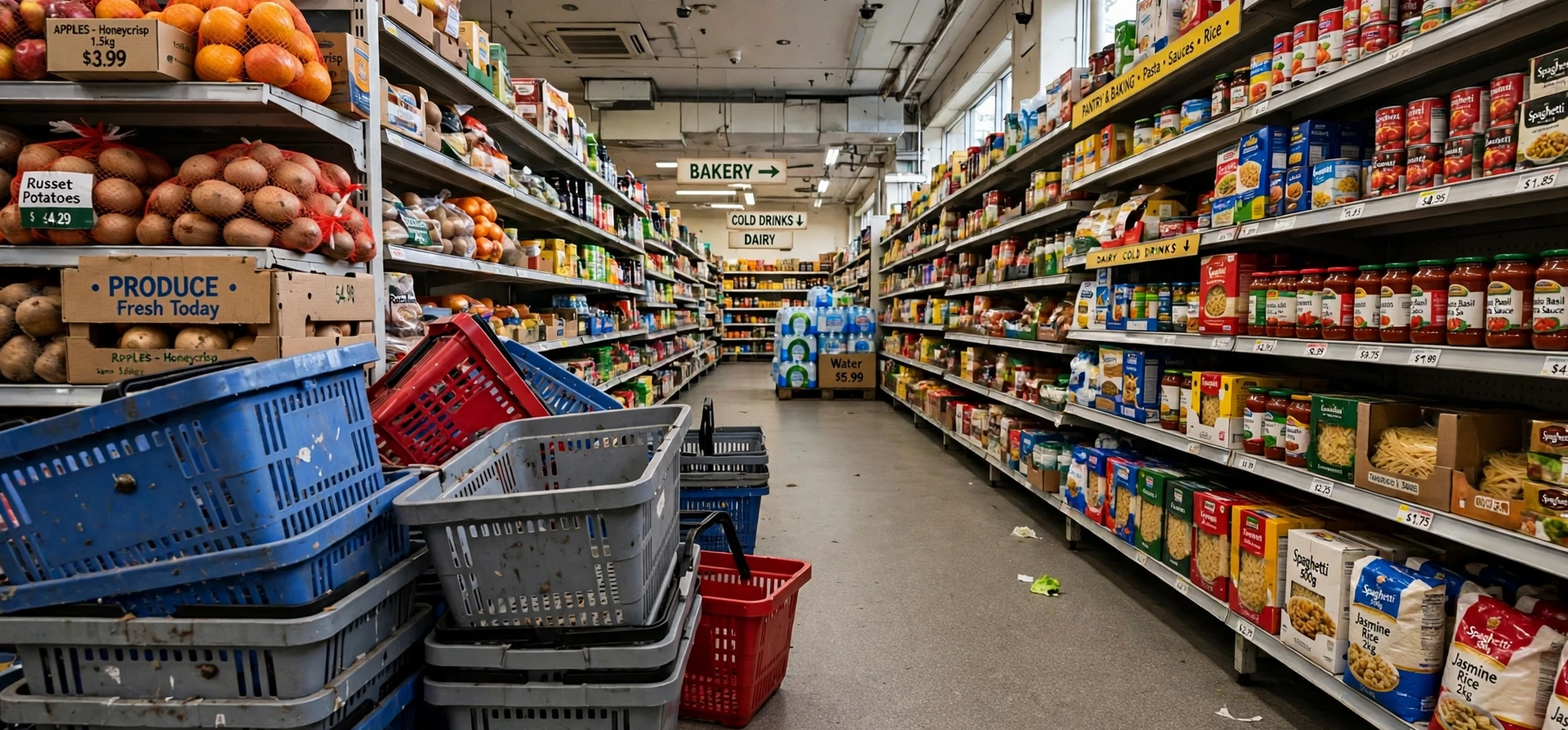
If you have ever asked what is consumer definition in plain English, you are asking one of the most useful questions in everyday economics. In short, what is consumer definition about is simple: a consumer is a person, household, or group that buys or uses goods and services to satisfy a need or want, rather than to resell them or use them as an input for making something else to sell. When people ask what is consumer definition in a classroom, a business meeting, or a general knowledge search, they usually want that clear line between using something and selling something. This guide explains what is consumer definition in full, how consumers differ from customers, how consumer behaviour works in basic terms, and why the idea matters for households, businesses, and public policy.
Understanding what is consumer definition helps you read news about spending, prices, and the economy with more confidence. Consumer spending is often described as a large driver of economic activity, because households buy food, housing services, transport, clothing, health care, entertainment, and countless smaller items every day. Businesses watch those choices closely, and governments track them through surveys and statistics. Yet behind every chart is a simple human story: someone deciding what to buy, what to wait for, and what to skip. That decision maker is the consumer.
What Is Consumer Definition in Economics?
The question what is consumer definition points to a standard economics idea. A consumer is the final user of a good or service. A good is something tangible, such as bread, a bicycle, or a phone. A service is something done for you, such as a haircut, a bus ride, or a streaming subscription. The consumer is the person who ultimately uses the good or enjoys the service. This is different from a producer, who makes the good, and from a seller, who offers it for sale. When what is consumer definition is explained in textbooks, the key test is final use: if the item is bought for personal or household use, the buyer is acting as a consumer.
Consider a loaf of bread. A bakery buys flour to bake bread for sale, so the bakery is not the final consumer of that flour. The household that buys the finished loaf and eats it is the consumer. Now consider a laptop. A student who buys a laptop for study is a consumer. A company that buys the same laptop for an employee to use at work is also using it as a final user in a broad sense, although business buying is often studied separately. The distinction matters because consumer choices, business purchases, and government purchases are tracked in different ways.
Another helpful point when answering what is consumer definition is that consumers are not always the people who pay. A parent may pay for a child’s school shoes, but the child wears them. A friend may pay for a shared meal, while everyone at the table consumes it. Economists still call the end users consumers, even when the payer is someone else. This matters for marketing, product design, and public services, because the person who chooses, uses, and judges a product is not always the person who hands over the money.
What Is Consumer Definition Explained With Everyday Examples
Everyday examples make what is consumer definition easy to remember. When you drink a cup of coffee at home, you are a consumer of coffee. When you ride a train to work, you are a consumer of transport services. When you watch a film, read a book, or use a fitness app, you are consuming entertainment, knowledge, or a digital service. None of these actions involves reselling the item. You are using it for its intended purpose, and that is the heart of the idea.
Households are the most common consumers, but the term can also cover groups. A family that buys groceries is a consuming household. A school that buys textbooks for its pupils is consuming educational materials, even though the pupils are the ultimate readers. A charity that buys blankets for people in need is also acting as a consumer of those blankets. In each case, the goods are not bought for resale. They are bought to meet a need, solve a problem, or provide comfort.
It is also useful to separate consumption from ownership. You can consume a service without owning anything. Renting a home, borrowing a library book, or using a car-sharing service all involve consumption. You enjoy the benefit for a period, even though you do not own the asset. Modern digital life has made this even clearer: many people subscribe to music, video, software, and storage services rather than buying physical copies. The consumer relationship is about access and use, not only about ownership.
Consumer Versus Customer: What Is the Difference?
People often use the words consumer and customer as if they mean the same thing, but they describe different roles. A customer is the person who buys something. A consumer is the person who uses it. Often the same person does both, which is why the words overlap. But they can split apart. A customer may buy a gift for someone else. The gift buyer is the customer, while the gift receiver is the consumer. A company may buy office snacks for staff. The company is the customer, while the staff members are the consumers.
This difference matters for businesses. A shop may need to please the customer who pays, because that person decides whether to return. It may also need to please the consumer who uses the product, because that person decides whether the product feels good, works well, and deserves a recommendation. A toy company, for example, sells to parents but designs for children. A food brand may sell to a supermarket buyer but must satisfy the household that eats the product. Good businesses think about both roles, not just the person at the checkout.
There is a related word worth knowing: client. A client usually buys a professional service, such as legal advice, accounting help, or consulting. A consumer is a broader term that covers everyday goods and services as well. In ordinary conversation, the distinction is not strict, but in economics and business studies, keeping customer and consumer apart helps you analyse who pays, who uses, and who influences the next purchase.
Students often return to the same basic question because what is consumer definition touches daily life so directly. When a textbook asks what is consumer definition, it is not asking for a slogan; it is asking who the final user is. And when a shopper asks what is consumer definition in practical terms, the answer is the same: the person who uses the product, not the person who resells it.
Types of Consumers You Will Meet in Economics
Economics textbooks often sort consumers into helpful groups. Personal consumers buy for themselves and their households. Organisational consumers include schools, hospitals, charities, and government bodies that buy goods and services for their work, without reselling them. Impulse consumers buy on the spot, often because something catches their eye. Planned consumers compare options, check prices, and wait for the right moment. Loyal consumers return to the same brand again and again, while variety-seeking consumers enjoy trying something new.
Another useful split is between consumers of necessities and consumers of luxuries. Necessities include food, basic clothing, housing, and essential health care. Demand for these tends to stay steadier even when incomes change, because people still need them. Luxuries and discretionary items include holidays, premium gadgets, and fine dining. Demand for these tends to rise faster when incomes rise and fall faster when money is tight. This is a general pattern, not a rule for every person, because what counts as necessary varies by household, culture, and circumstance.
Digital consumers form a growing category. They buy apps, subscriptions, online courses, and digital media. They also consume free services supported by advertising, which raises interesting questions about what is being exchanged. Even when no money changes hands, attention and time are being spent. Understanding this helps explain why companies offer free versions of products and why privacy, ease of use, and trust matter so much in digital markets.
Consumer Behaviour Basics: How People Decide
Consumer behaviour is the study of how people choose, buy, use, and dispose of goods and services. At its simplest, a consumer faces a problem or a want, searches for information, compares options, makes a choice, and then judges the result. A hungry shopper may compare prices and ingredients. A student choosing a laptop may compare battery life, weight, and warranty. A family planning a holiday may compare destinations, travel time, and total cost. The steps are similar, even when the purchase is small.
Several factors shape those decisions. Income sets the budget. Prices set the trade-offs. Personal taste, habits, culture, and values shape preferences. Friends, family, and advertising shape awareness. Past experience shapes trust: a product that worked well before is more likely to be bought again. Time pressure also matters. A rushed shopper may grab a familiar brand, while a relaxed shopper may read reviews and compare features. None of this means consumers are perfectly rational calculators. People use shortcuts, follow habits, and sometimes regret a choice.
Businesses study consumer behaviour to design better products, set fair prices, and communicate clearly. Policymakers study it to understand how taxes, prices, and information affect households. For example, clear labelling can help consumers compare food products. Simple explanations of energy use can help households choose efficient appliances. Consumer education, in this sense, is not only about avoiding bad deals. It is about helping people make choices that fit their goals, budgets, and values.
It helps to repeat the core test whenever a new example appears. Ask what is consumer definition pointing to in this case, and check whether the buyer is the final user. If the answer to what is consumer definition leads you to the final user, you have found the consumer, even when the payer is someone else entirely.
Consumer Rights and Protection in Plain Terms
Alongside the economic definition sits an important legal and social idea: consumer protection. In many countries, consumers have basic rights, such as the right to safety, the right to clear information, the right to choose among competing products, and the right to seek a remedy when a product is faulty or misleadingly described. The exact rules differ by country and by product, so this guide does not replace local law. The general principle, however, is widely shared: sellers should describe products honestly, and buyers should be able to complain and seek a fix when something goes wrong.
Consumer protection also covers advertising standards, product safety testing, fair contract terms, and rules about refunds and repairs. These rules exist because buyers cannot always inspect everything before purchase, especially online. A shopper cannot test every ingredient, check every safety feature, or read every clause in a long contract. Protection rules try to balance that gap by requiring honest descriptions, safe design, and reasonable remedies. Consumers, in turn, can protect themselves by keeping receipts, reading key terms, and checking return policies before buying.
For readers who want to explore related business ideas, our guide on how firms organise their work offers useful background, and our look at long-run market returns shows how household saving connects to wider economic trends. You can read the business functions guide at business function taxonomy guide and the market returns overview at average stock market return overview.
Why Consumers Matter to the Whole Economy
Consumers matter because their spending signals what society values and what producers should make more of. When many households buy electric bicycles, producers notice and invest in that area. When interest in a product fades, production shifts elsewhere. This feedback loop is one reason market economies adapt over time. Consumer choices are not the only force at work, since technology, regulation, and business strategy also matter, but household demand is a powerful signal.
Consumer confidence is another widely reported idea. It describes how optimistic households feel about their finances and the economy. When confidence is high, people may be more willing to make larger purchases. When confidence is low, they may save more and delay spending. Surveys try to capture this mood, but they are only a snapshot. Individual households still make choices based on their own jobs, debts, savings, and plans, not only on headlines.
Finally, consumers influence sustainability and ethics through their choices. Buying durable goods, repairing items, choosing energy-efficient products, and reducing waste are all consumer decisions with wider effects. Businesses respond when enough consumers ask for clearer sourcing, longer-lasting design, or recyclable packaging. This does not place the whole burden on shoppers, since producers and regulators also shape what is available, but it shows why the consumer role carries real influence beyond the checkout.
Consumer Concepts at a Glance
| Term | Simple meaning | Example |
|---|---|---|
| Consumer | Final user of a good or service | A person eating a meal at home |
| Customer | Person who buys the good or service | A parent buying shoes for a child |
| Producer | Person or firm that makes the good | A bakery making bread for sale |
| Consumption | Using up goods or enjoying services | Watching a film or riding a bus |
| Consumer behaviour | How people choose and judge purchases | Comparing laptops before buying |
A final classroom tip: if an exam asks what is consumer definition, start with final use, then give an example, then note the customer distinction. That three-step answer to what is consumer definition covers the definition, the example, and the common confusion in one short paragraph, which is why teachers return to what is consumer definition so often.
Frequently Asked Questions
Is every buyer a consumer?
Not always. A buyer who purchases goods to resell them is acting as a trader or retailer, not as a final consumer. The consumer is the person at the end of the chain who uses the good or service for its intended purpose.
Can a business be a consumer?
Yes, in a broad sense. A business that buys office supplies, software, or catering for its own use is consuming those items, even though business purchasing is often studied as a separate topic from household consumption.
What is the simplest answer to what is consumer definition?
The simplest answer to what is consumer definition is this: a consumer is the final user of a good or service, buying or using it to satisfy a need or want rather than to sell it onward.
Before finishing, it is worth restating the idea once more in full. The question what is consumer definition is answered by final use, and what is consumer definition means in practice is that households and other final users drive demand, judge quality, and shape what producers offer next.
Conclusion
To sum up, what is consumer definition comes down to final use. A consumer buys or uses goods and services to meet a need or want, while a customer is the person who pays, a producer is the person or firm that makes the item, and a seller is the person or firm that offers it. Consumer behaviour explains how choices are made, shaped by income, price, taste, habit, information, and trust. Consumer protection exists to keep those choices fair and safe. Whether you are a student, a shopper, a business owner, or simply a curious reader, keeping this definition in mind will help you understand everyday spending and the wider economy more clearly. The next time you buy, use, or recommend something, you will know exactly which role you are playing: you are the consumer, and your choice is part of a much larger economic story.