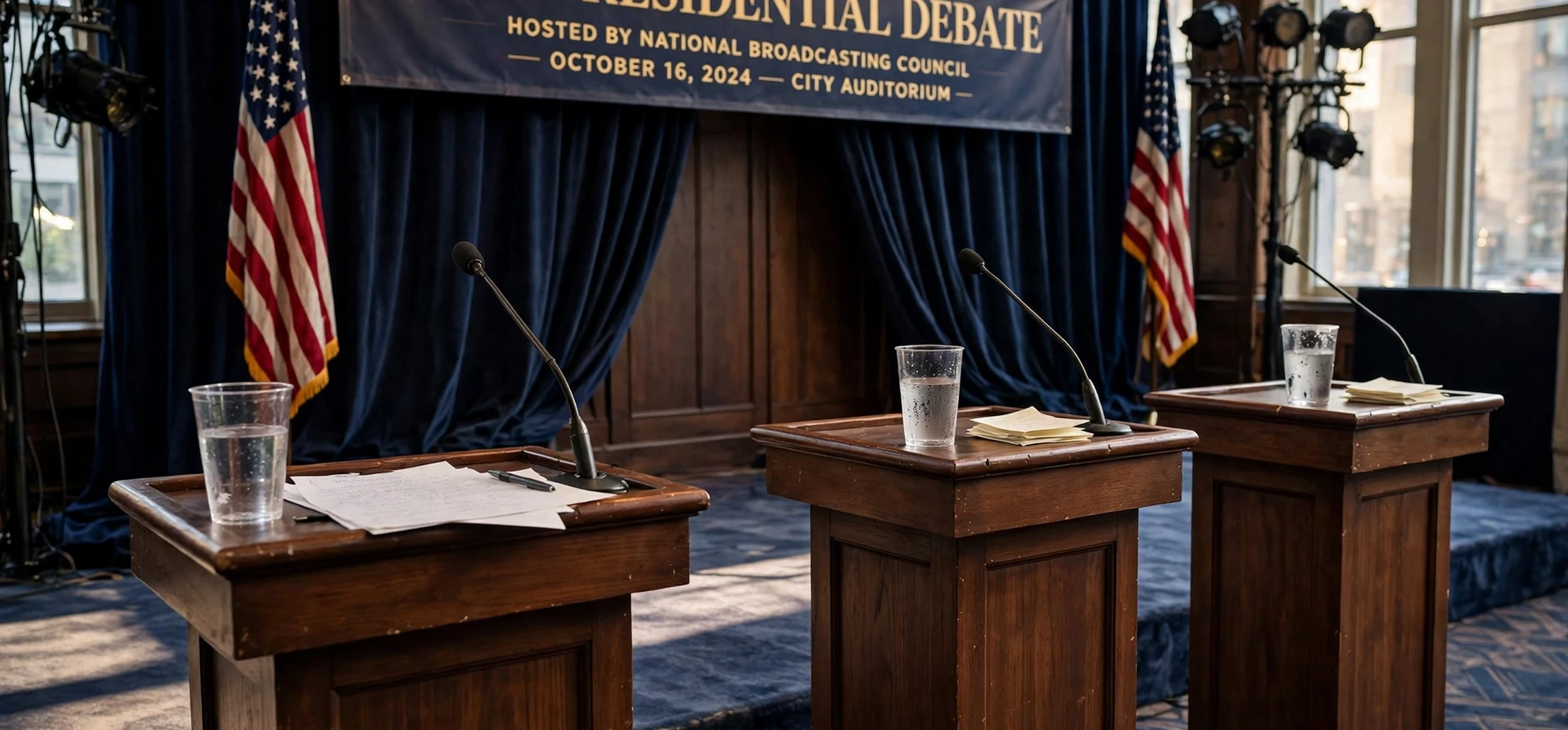
If you are learning English, the phrase debate meaning in English is a good place to start with one of the language’s most useful words. The debate meaning in English is, at its core, a formal discussion in which people present opposing arguments about a topic, question, or proposal. Unlike a casual argument, a debate follows rules, gives each side a chance to speak, and usually ends with a decision, a vote, or a judgment about which side argued more persuasively.
This guide explains the debate meaning in English in full: its meanings as a noun and a verb, its pronunciation and grammar, common phrases, the difference between a debate and an argument, the main types of debate, and how the word is used in school, politics, and everyday conversation. By the end, you should be able to use “debate” confidently and to understand it whenever you meet it in reading, news, or exams.
Debate Meaning in English: The Basic Definition
As a noun, the debate meaning in English is a structured discussion of a subject in which opposing viewpoints are presented. For example, a class might hold a debate on whether school uniforms should be required. One team argues in favor, the other argues against, and the audience or a judge decides the winner. As a verb, “to debate” means to take part in such a discussion, or, more generally, to think carefully about a decision. A person might say, “I am debating whether to accept the job,” meaning they are weighing the pros and cons before deciding.
The history behind the debate meaning in English starts with the word coming from Old French “debatre,” meaning to fight or contend, which itself comes from Latin roots meaning “to beat down.” That history explains why debate carries a sense of contest. Yet modern debate is not a fight. It is a contest of ideas conducted with rules, evidence, and respect for the other side. Good debaters listen carefully, answer the strongest version of the opponent’s case, and avoid personal attacks.
Debate as a noun and a verb
Grammar learners should note both uses. Noun examples include “a lively debate,” “the debate continues,” and “a topic for debate.” Verb examples include “they debated the proposal,” “she is debating her options,” and “we debated for an hour.” The verb can take a direct object, as in “debate the issue,” or appear without one, as in “they debated long into the evening.” The noun is countable, so you can speak of “several debates” on different topics.
Debate Meaning in English Versus Argument and Discussion
Many learners confuse debate with argument and discussion, but the debate meaning in English becomes clearer once the three words are separated, since they describe different things. A discussion is a general conversation in which people share ideas without fixed sides. An argument, in everyday speech, often means a heated disagreement, although in academic writing it can mean a reasoned case for a conclusion. A debate sits between and beyond both: it has fixed sides, a set topic, a structure, and a way of judging the result.
Consider a group deciding where to hold a school trip. In a discussion, everyone suggests places and talks freely. In an argument, two students might raise their voices because they disagree strongly. In a debate, one side presents a prepared case for the museum, the other presents a prepared case for the park, each side answers the other, and the class votes. The debate is the most formal of the three, and it is designed to test ideas rather than to settle a personal conflict.
This distinction matters in exams and in professional life, and examiners often test the debate meaning in English precisely through this contrast. If a question asks you to “debate an issue,” it expects structured arguments for and against, not a personal opinion alone. If it asks you to “discuss,” it expects a broader exploration of ideas. Learning the difference will improve both your writing and your speaking in English.
Main Types of Debate
School and university debates often use team formats, and learning the debate meaning in English helps students follow each format’s rules. In a common format, two teams of three speakers each present arguments, rebut the other side, and summarize. Points are awarded for content, strategy, and speaking style. Parliamentary debate, used in many student competitions, gives speakers short preparation time and follows the conventions of a legislature. Policy debate focuses on a proposed plan and tests whether it is workable and desirable.
Public and political debates follow different rules, and news coverage assumes readers already know the debate meaning in English. In an election debate, candidates answer questions from moderators and from each other, while voters judge their ideas and character. In a legislative debate, elected members discuss a bill before voting on it. These debates can be long and technical, and they are recorded in official transcripts. News reports often summarize them with phrases such as “a heated debate” or “a debate over funding,” which signal strong disagreement within a formal setting.
Informal debates happen everywhere, from workplaces to family dinners, which is why the debate meaning in English matters outside the classroom too. A team might debate whether to launch a product in spring or autumn. Friends might debate which film deserves an award. These debates lack judges and strict timing, but they still benefit from debate skills: stating a clear position, giving reasons, listening, and responding to counterarguments rather than repeating the same point.
Common Phrases and Collocations With Debate
| Phrase | Meaning | Example |
|---|---|---|
| Open to debate | Not settled; still arguable | Whether the plan will work is still open to debate. |
| Up for debate | Available to be discussed or questioned | The date of the event is still up for debate. |
| Under debate | Currently being discussed | The new rules are still under debate. |
| Debate the merits | Discuss the advantages and disadvantages | The committee debated the merits of each proposal. |
| Settle a debate | End a disagreement with evidence or a decision | The experiment finally settled the debate. |
| A heated debate | A debate with strong feelings | The budget provoked a heated debate. |
Learners studying the debate meaning in English should also watch for related words. A “debater” is a person who debates, especially in competitions. “Debatable” means open to question, as in “a debatable decision.” “Debating society” is a club where students practice debate. Each of these words grows naturally from the same root, and recognizing the family of words makes reading easier.
For vocabulary building, related meaning guides such as the explanation of deliberative language, the guide to contestation and disagreement, and the overview of all-encompassing expressions show how English words for discussion and disagreement fit together. Reading several meaning guides side by side is an efficient way to grow academic vocabulary.
How to Debate Well: Skills That Transfer
Good debate begins with a clear motion, and that structure is part of the debate meaning in English in school competitions, which is the statement being debated. A motion should be specific and debatable, such as “This house believes that homework should be abolished” rather than a vague topic like “education.” Each side then defines key terms, presents two or three strong arguments, supports them with evidence or examples, and answers the other side’s points. A summary at the end reminds listeners of the strongest arguments and explains why they matter most.
Evidence separates strong debates from weak ones, a point every guide to the debate meaning in English should stress. A debater who cites statistics, expert views, or real examples is more persuasive than one who repeats opinions. Equally important is rebuttal: the skill of answering an opponent’s argument directly rather than ignoring it. Judges reward debaters who engage with the strongest opposing points, because that shows genuine understanding of the issue.
Speaking style matters too. Clear pronunciation, steady pace, eye contact, and signposting phrases such as “my first point is” or “in response to the opposition” help listeners follow the argument. Notes should guide a speaker, not become a script read aloud. Pauses are powerful: a short pause before a key point gives the audience time to absorb it. These skills transfer directly to presentations, interviews, and meetings, which is why debate is taught in schools around the world.
Debate in Exams, Essays, and Everyday English
In English exams, students often meet debate in reading passages about politics, education, or science, where the debate meaning in English is tested in context. Questions may ask for the meaning of “debate” in context, or ask students to summarize both sides of a debate. The safest approach is to identify the motion, list each side’s main arguments, and note the conclusion, if any. That structure works for almost any debate passage, from a short paragraph to a long article.
In essay writing, a “for and against” essay borrows the shape of a debate. The writer presents arguments on both sides, evaluates them, and reaches a balanced conclusion. Phrases such as “on the one hand,” “on the other hand,” “supporters argue that,” and “critics point out that” signal this structure to readers. Students who practice debate often write better essays, because they are used to seeing an issue from more than one side.
In everyday conversation, “debate” appears in news headlines, podcasts, and social media. Headlines such as “Debate grows over new transport plan” mean that public disagreement is increasing. A podcast described as a “debate” promises opposing guests rather than a single interview. Recognizing these uses helps learners follow current affairs in English without needing a dictionary for every headline.
Frequently Asked Questions
What is the simplest meaning of debate?
A debate is a formal discussion in which people present opposing arguments about a topic, following rules and usually ending with a decision or judgment.
Is debate the same as an argument?
No. An argument in everyday speech often means a heated disagreement, while a debate is structured, with fixed sides, rules, and a way of judging the result. In academic writing, “argument” can also mean a reasoned case, which is closer to debate.
Can debate be used as a verb?
Yes. As a verb, “debate” means to take part in a debate or to think carefully about a decision, as in “She is debating whether to move abroad.”
How do you pronounce debate?
It is pronounced dih-BAYT, with the stress on the second syllable. The first syllable is short and unstressed, and the second rhymes with “late.”
Conclusion
Debate is one of the most practical words in English, and the debate meaning in English describes a skill used in classrooms, workplaces, politics, and daily decisions. It means a structured discussion of opposing views, conducted with rules, evidence, and respect. Whether you are preparing for an exam, joining a debating club, or simply trying to understand a news headline, knowing the noun and verb forms, the common phrases, and the difference between debate, discussion, and argument will serve you well. The best way to master the word is to use it: pick a topic, argue both sides, and notice how much clearer your thinking becomes.



