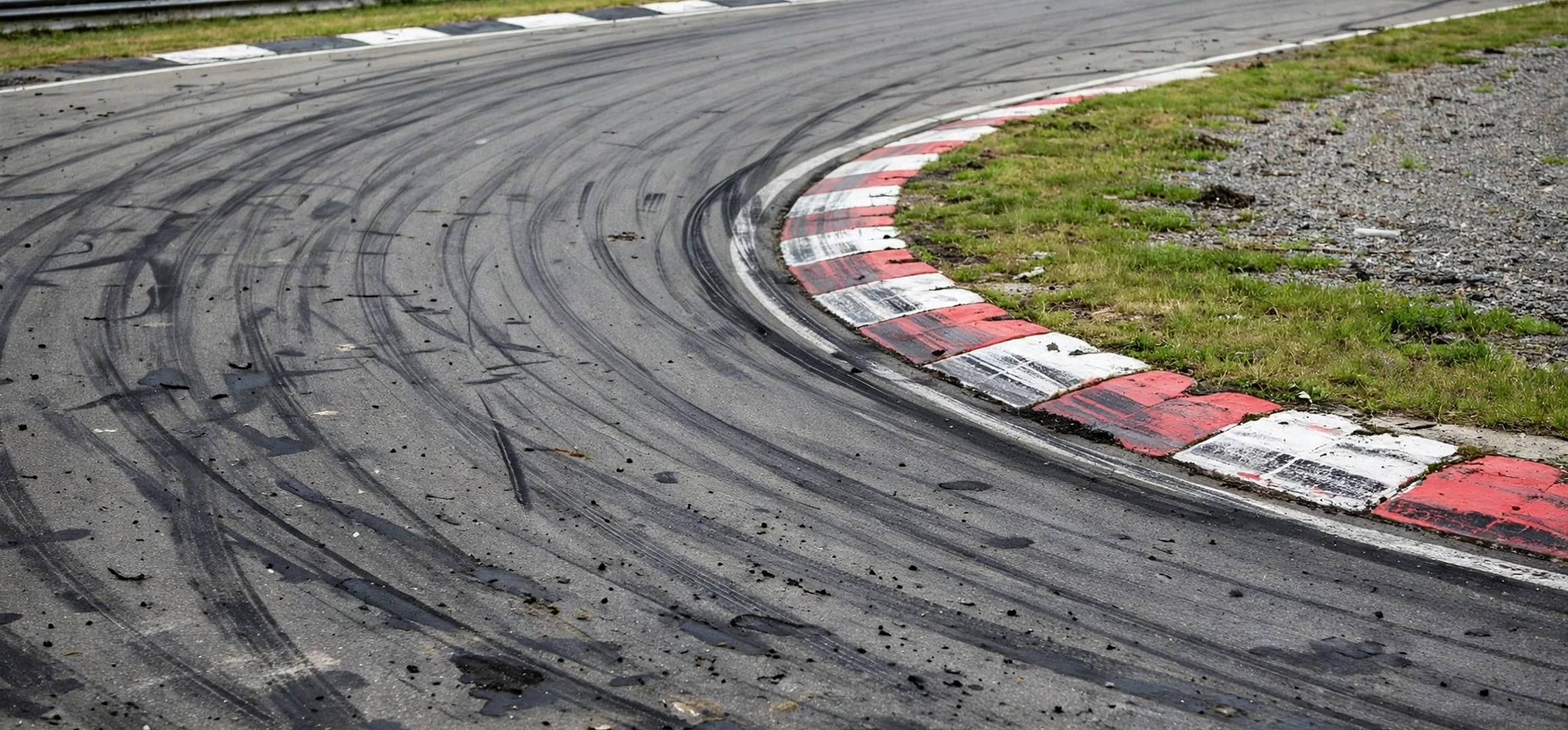
A clear drifting car definition is the best place to start: drifting is a driving technique, and a motorsport discipline, in which a driver deliberately makes a car slide sideways through a corner while keeping control of its direction and speed. Unlike an accidental skid, a drift is intentional, and that intention is central to any drifting car definition. The rear wheels lose grip in a controlled way, the car points at an angle to where it is travelling, and the driver uses steering, throttle, and braking together to hold that slide and then recover smoothly. This guide gives a full drifting car definition, explains how the technique works, describes how it became a sport, and makes the safety and legal boundary unmistakable: drifting belongs only on closed courses and licensed venues, never on public roads.
That boundary is not a footnote in a drifting car definition. It is part of the definition of responsible drifting. A slide that looks exciting on a track can be dangerous and unlawful on a street, where other drivers, pedestrians, parked cars, and road surfaces are unpredictable. Every legitimate drifting event therefore takes place in a controlled environment, with barriers, marshals, safety checks, and rules about speed, spacing, and vehicle condition. If you remember one sentence from this guide, make it this one: admire drifting at an event, learn it only through proper instruction at a proper venue, and never practise it on a public road.
Drifting is also a good example, in a full drifting car definition, of how a driving skill can become a judged sport. In racing, the fastest car usually wins. In drifting competitions, judges reward angle, line, speed, and style, as well as how closely a chasing driver follows a leading driver without contact. That makes drifting part driving skill, part car control art, and part performance. It also explains why drifting videos are so popular: the smoke, the sound, and the sideways angle are visually dramatic, even for viewers who have never driven a car sideways themselves.
Drifting Car Definition in Simple Terms
Put most simply, a drifting car definition describes controlled oversteer. Oversteer means the rear of the car slides out more than the front, so the car rotates. In normal driving, oversteer is something drivers are taught to correct quickly. In drifting, the driver creates oversteer on purpose, holds it for a chosen distance, and then brings the car back into line. The key word is control. A car that simply spins is not drifting well. A car that slides at a steady angle, on a chosen line, at a chosen speed, and then straightens cleanly, is drifting.
Three controls work together during a drift, and a complete drifting car definition must mention all three. Steering sets the angle and helps the driver catch the slide before it becomes a spin. Throttle controls wheelspin and keeps the rear tyres sliding rather than gripping suddenly, which could snap the car back violently. Braking, including the handbrake in some techniques, can start a slide or adjust speed and balance. No single control does the job alone. Drifting is a balance of all three, adjusted many times per second as the car moves, which is why it takes extensive practice in a safe setting to learn.
Tyres are central to the technique in any drifting car definition, and they are also the most visible sign of it. Drifting wears rear tyres quickly, produces smoke when the tyres slide and heat up, and leaves distinctive marks on a track surface. That is another reason drifting belongs on a track: a venue expects tyre wear, provides a suitable surface, and manages smoke and debris. A public road is not designed for that, and tyre failure or sudden grip changes on a public surface can turn a slide into a crash very quickly.
Drifting Car Definition and How a Drift Works
To expand the drifting car definition into a sequence, imagine a driver approaching a corner on a closed course. First, the driver sets speed and position, choosing a line that leaves room for the slide. Next, the driver initiates the drift, using a technique such as a weight shift, a brief handbrake pull, or a power-induced slide, depending on the car and the corner. Then the driver holds the drift, steering into the slide, which is often called counter-steering, while adjusting the throttle to keep the angle steady. Finally, the driver exits the drift, easing off the throttle and straightening the steering so the tyres regain grip smoothly.
Each stage has a common error, which is why a drifting car definition should stress learning in stages. Entering too fast can push the car wide or cause a spin. Initiating too sharply can snap the car around. Holding with too much throttle can over-rotate the car, while too little throttle can end the slide early and send the car off line. Exiting too abruptly can cause a sudden grip return, sometimes called snap oversteer, which can throw the car in the opposite direction. Good drifters learn to feel these limits gradually, through instruction and repetition on a course, not by guessing at speed in an uncontrolled place.
Initiation Techniques Explained
Different cars and corners call for different initiation methods, and a drifting car definition should note that no single method suits every corner, but all of them share the same goal: break rear grip in a predictable way. A handbrake initiation locks the rear wheels briefly to start a slide. A power initiation uses engine power to overcome rear grip. A weight-transfer initiation, sometimes called a feint, shifts the car weight quickly to unsettle the rear. Beginners should learn these only under instruction, in a suitable car, on a suitable surface, because the same technique that works smoothly on a track can behave very differently on a wet, uneven, or crowded road.
Rear-Wheel Drive and Drift Cars
Most dedicated drift cars are rear-wheel drive, a point that belongs in a practical drifting car definition, because the driven rear wheels can be made to slide while the front wheels steer. That does not mean every rear-wheel-drive car is a drift car. A proper drift car for events usually has safety equipment, suspension and steering changes, a suitable differential, and tyres chosen for the event. It also passes technical inspection at the venue. A standard road car, even a powerful one, is not automatically safe or suitable for drifting, and modifying a car without knowledge can make it less predictable, not more.
Drifting as a Motorsport
As a motorsport, drifting is usually run as a judged competition, which extends a basic drifting car definition into sport rather than a timed race. Drivers first run solo qualifying laps, where judges score angle, line, speed, and overall style. The best drivers then move into tandem battles, where two cars run together: a lead car sets a line and a chase car follows as closely as possible while also drifting. Judges compare the two runs and decide who advances. Contact, straightening, spinning, or going off course can cost points or end a run, so precision matters as much as drama.
Tandem drifting is especially demanding, and a drifting car definition for competitors must include tandem work, because the chase driver must read the lead car, match its speed and angle, and stay close without hitting it. That requires trust, practice, and strict event rules. Drivers agree on lines, judges watch for unfair blocking or dangerous driving, and marshals can stop a run if safety is at risk. Spectators enjoy the closeness, but the closeness is only possible because the environment is controlled. On a public road, following another car sideways at close distance would be reckless and unlawful, which is why the sport and street behaviour must never be confused.
Drifting also has a strong culture around car building, practice days, and grassroots events. Many drivers start at organised practice sessions, where they can learn at low speed, receive coaching, and build experience before entering competitions. That pathway, from spectator to student to practice driver to competitor, is the responsible route into the sport. It also builds community: drivers share setup advice, help each other repair cars, and learn the unwritten rules of track etiquette alongside the written rules of the event.
Drifting in Popular Culture
Popular culture made drifting famous, and a modern drifting car definition often starts from what viewers saw on screen far beyond motorsport audiences. Films, games, and videos showed sideways driving as stylish and thrilling, and many viewers first learned the word drifting from a screen rather than from a track. That exposure has a benefit and a risk. The benefit is that more people discover a legitimate motorsport and attend events. The risk is that screen drifting looks easy, safe, and repeatable anywhere, when real drifting is none of those things without training, a proper car, and a closed course.
Video games add another layer to how people learn a drifting car definition. In a game, a crash costs nothing, a car can be reset instantly, and a slide can be attempted hundreds of times without consequence. Real life has none of those resets. A responsible guide must therefore separate game skill from real skill. Enjoying a game is a fine way to learn the vocabulary of drifting, such as angle, line, and tandem, but it is not training for real drifting, and it should never be treated as a reason to try a slide on a public road.
Safety and Legal Rules for Drifting
Safety rules for drifting start with place, and a responsible drifting car definition always includes that rule. Use only a closed course, a licensed venue, or an organised event that has permission for drifting. Follow the venue rules on helmets, seatbelts or harnesses, vehicle inspection, speed limits in paddock areas, and spectator zones. Keep spectators behind barriers and never drift near people, animals, or parked vehicles outside the course. If a venue rule seems strict, remember that it exists because sideways driving at speed leaves little room for error.
Legal rules reinforce the same point from a different direction. On public roads, deliberate sliding can fall under dangerous driving, reckless driving, exhibition of speed, or similar offences depending on the jurisdiction, and it can lead to fines, licence action, vehicle impoundment, or criminal charges, as well as civil liability for any damage or injury. Local laws differ, so readers should check the rules that apply where they live through official sources, but the general principle is consistent everywhere: public roads are for safe, lawful travel, not for drifting practice. If you are unsure whether an activity is allowed, ask the venue or the relevant authority before you drive, not after.
Car safety matters too in a complete drifting car definition. Before any track session, check tyres, brakes, steering, fluid levels, and loose items in the car, and follow the organiser inspection. Wear the required safety gear, drive within your skill level, and stop if the car feels wrong. A good drift day ends with a car that can be driven home safely, or transported safely, and a driver who has learned something. Pushing beyond skill or car limits for a video clip is the opposite of good drifting, however impressive the clip might look.
| Drifting term | What it means | Where it belongs |
|---|---|---|
| Angle | How sideways the car sits during a slide | Judged on a closed course |
| Line | The path the car follows through a corner | Set by the course and the judges |
| Tandem | Two cars drifting together, lead and chase | Organised competition only |
| Counter-steer | Steering into the slide to control it | Learned under instruction on track |
| Initiation | How a drift is started | Practised at low speed at a venue |
For readers interested in other driving and vehicle guides, related articles offer useful context without encouraging unsafe behaviour. A guide to car emblems and names explains how vehicle badges work, a look at dual motor electric cars explained covers a different kind of car technology, and a guide to driving licence name changes is a reminder that lawful driving paperwork matters as much as driving skill.
Frequently Asked Questions About Drifting
What is drifting?
Drifting is the deliberate, controlled sideways sliding of a car through a corner, with the driver holding the slide and recovering smoothly, judged in motorsport on angle, line, speed, and style.
Is drifting legal on public roads?
No. Drifting on public roads is dangerous and can be unlawful. It belongs only on closed courses and at licensed, organised events with safety rules in place.
Do you need a special car to drift?
Most drift cars are rear-wheel drive and are prepared for track use with safety equipment and technical inspection. A standard road car is not automatically suitable, and modifications should be done with expert advice.
How can a beginner learn drifting safely?
Attend events as a spectator first, then look for beginner instruction and organised practice days at a licensed venue, starting at low speed with coaching and a suitable car.
Conclusion
A complete drifting car definition is therefore more than a description of a slide. It is a description of control: a driver deliberately sliding a car sideways, holding the angle, following a line, and recovering cleanly, all within a sport that judges skill and style. It is also a description of responsibility: closed courses only, proper instruction, inspected cars, and respect for the law and for other people. Enjoy drifting where it belongs, learn it the safe way, and keep public roads for the safe travel they are designed for.