Simmering is one of the most useful techniques in everyday cooking, yet it is often described vaguely as cooking something gently, which leaves new cooks unsure what to look for in the pot. The simmering cooking method definition, stated clearly, is this: simmering means cooking food in liquid that is kept just below boiling point, usually between about 82 and 96 degrees Celsius, so that small bubbles rise slowly and break gently at the surface. That simmering cooking method definition matters because the difference between a simmer and a boil is not just temperature; it changes texture, flavour, and timing. A simmer coaxes flavour out of ingredients over time, keeps delicate foods intact, and turns tough cuts tender, while a rolling boil can break food apart, cloud a stock, and toughen proteins.
Most cooks encounter simmering in soups, stews, sauces, braises, and poached dishes, often without realising they are using a named technique. A pot of tomato sauce bubbling lazily on the back burner, a chicken stock left to develop flavour for an hour, and a pot of beans softening slowly are all examples of simmering in action. Learning to recognise and control a simmer therefore improves a wide range of dishes at once. This guide explains the simmering cooking method definition in full, shows how to set up and maintain a simmer, compares simmering with boiling and poaching, and offers practical tips for common dishes, from stocks to curries to custards.
Simmering Cooking Method Definition Explained
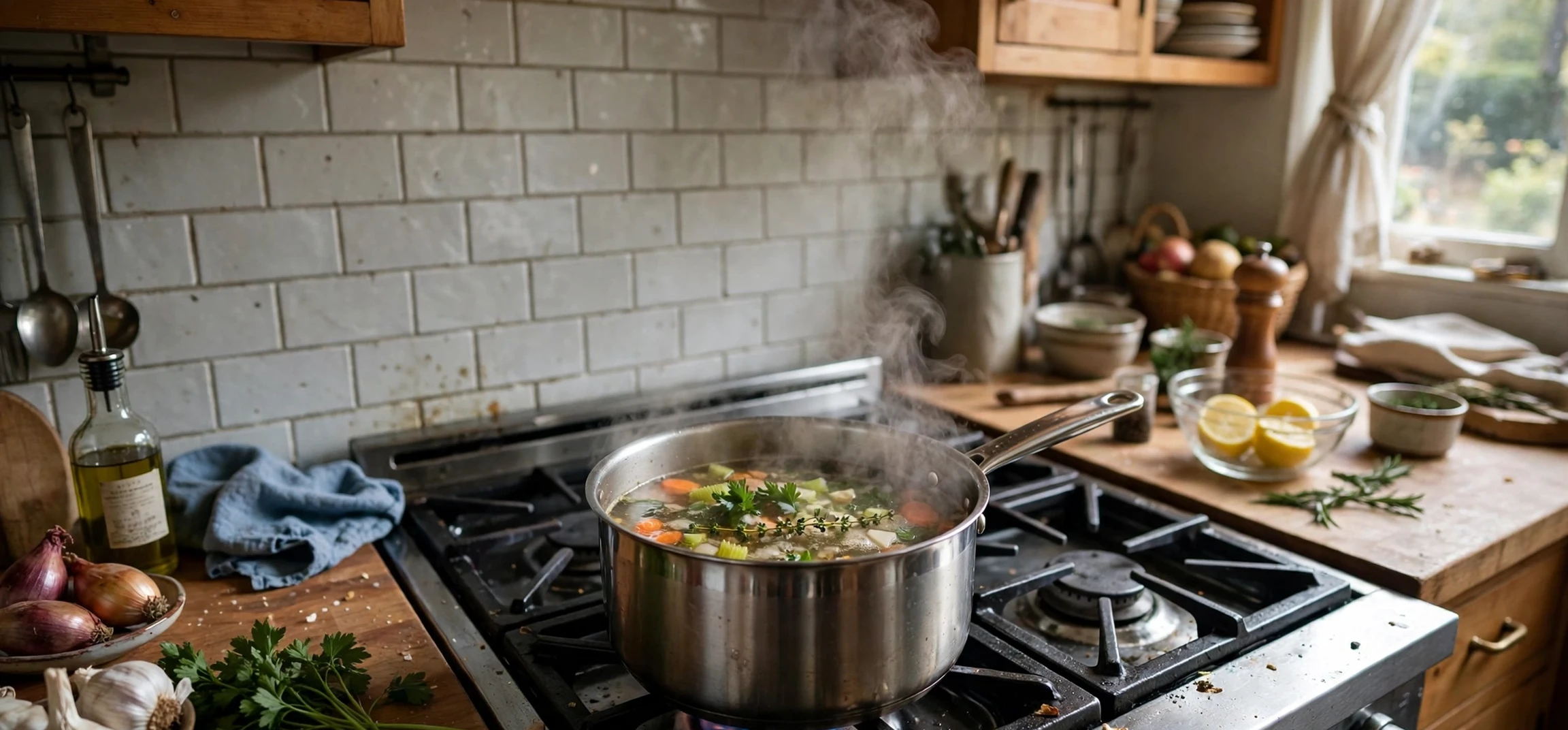
The simmering cooking method definition rests on three elements: liquid, gentle heat, and time. Food is submerged in, or at least mostly covered by, liquid such as water, stock, milk, or sauce, and that liquid is heated until it is hot enough to cook the food thoroughly but not so hot that it boils vigorously. Visually, a simmer shows small bubbles forming at the bottom of the pot and rising slowly, with only occasional, gentle movement at the surface. The surface may tremble or show a few lazy bubbles breaking, but it should not churn, foam aggressively, or splash. If the liquid is rolling and roiling, it has passed from a simmer into a boil.
Temperature gives a more precise version of the same idea. Water boils at 100 degrees Celsius at sea level, while a simmer is generally held between 82 and 96 degrees Celsius. Within that range, cooks often distinguish a gentle simmer, near the lower end, from a vigorous simmer, near the upper end, where bubbles are more frequent but still controlled. A gentle simmer suits delicate foods such as fish, eggs, and custards, while a vigorous simmer suits stews and stocks that benefit from a little more movement. In both cases, the simmering cooking method definition holds: the liquid is hot, active, and cooking, but it is not boiling.
Why Simmering Works So Well
Simmering works because gentle, sustained heat does several jobs at once. It breaks down connective tissue in meat slowly, turning collagen into gelatin, which gives stews and braises their rich, silky texture. It allows flavours to meld, as aromatics, spices, and main ingredients exchange compounds in the liquid over time. It cooks vegetables evenly without turning them to mush, provided the time is watched. And it reduces a sauce gradually, concentrating flavour as some liquid evaporates. A boil can do some of those jobs faster, but it does them roughly, which is why simmering is preferred for dishes where texture and clarity matter.
How to Recognise a Simmer
Recognising a simmer is a visual skill, and it improves with practice. Start by bringing the liquid to a boil, then reduce the heat until the vigorous bubbling subsides. What remains should be a calm surface with small bubbles rising intermittently. If you lift the lid, steam should rise steadily, but the liquid should not spatter. If you stir, the movement should settle quickly back into gentle bubbling. A thermometer, where one is available, can confirm the range, but most home cooks learn to judge by sight and sound: a simmer is quiet, with a soft, occasional bubbling, while a boil is noisy and constant.
Pot choice and burner control also affect the simmer. A heavy-bottomed pot distributes heat evenly and reduces hot spots that can cause local boiling. A lid, left slightly ajar, traps enough heat to maintain the simmer while allowing some evaporation, which is useful for reducing sauces. A lid fully closed will trap more heat and may push a simmer into a boil, so adjusting the lid is part of controlling the technique. If a simmer keeps creeping upward, move the pot partly off the burner, lower the heat further, or use a heat diffuser. Small adjustments, made early, are easier than rescuing a dish that has boiled too hard.
Simmering Versus Boiling and Poaching
Simmering sits between poaching and boiling on the scale of moist-heat cooking. Poaching is gentler still, usually between 70 and 82 degrees Celsius, with barely any bubbles, and it suits very delicate foods such as eggs and fish that would fall apart at higher heat. Boiling, at 100 degrees Celsius, is the most vigorous, with large, constant bubbles, and it suits foods that need fast, even cooking and can withstand agitation, such as pasta and hard vegetables. Simmering, in the middle, is the versatile default for soups, stews, sauces, and braises, because it cooks thoroughly while preserving structure.
The practical difference shows up in results. A stock simmered gently stays clear, because proteins and impurities are not churned back into the liquid, while a stock boiled hard turns cloudy. A stew simmered gently keeps meat pieces intact and vegetables distinct, while a stew boiled hard can shred meat and turn vegetables to pulp. A sauce simmered gently thickens evenly, while a sauce boiled hard can catch, splatter, and develop a harsh, overcooked flavour. Understanding the simmering cooking method definition therefore helps a cook choose the right heat for the right dish, rather than simply turning the burner to high and hoping.
| Method | Typical temperature | What it looks like | Best for |
|---|---|---|---|
| Poaching | About 70 to 82 degrees Celsius | Barely any bubbles | Eggs, delicate fish, fruit |
| Simmering | About 82 to 96 degrees Celsius | Small, slow bubbles | Soups, stews, stocks, sauces |
| Boiling | 100 degrees Celsius | Large, rolling bubbles | Pasta, hard vegetables |
Dishes That Depend on Simmering
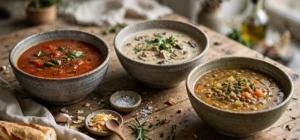
Stocks are the classic simmering dish, because a long, gentle simmer extracts flavour from bones, vegetables, and aromatics without clouding the liquid. A chicken or vegetable stock simmered for one to several hours, skimmed occasionally, develops depth that a fast boil cannot match. Stews and braises depend on simmering for tenderness: tough cuts of meat, which would be chewy if cooked quickly, become meltingly soft when simmered in liquid for an extended period. Curries and chilli also benefit, because simmering lets spices bloom, tomatoes break down, and flavours integrate into a cohesive sauce.
Sauces, soups, and beans show the same principle in different forms. A tomato sauce simmered for 30 to 60 minutes loses its raw edge and gains sweetness and body. A bean pot simmered gently cooks beans evenly without splitting every skin, while a hard boil can burst them. Even rice dishes and porridges, which begin with a boil, are usually finished at a simmer, with the lid on, so that the grains absorb liquid evenly without scorching. In each case, the simmering cooking method definition is the same, but the time and the desired endpoint change with the dish.
How Long Should a Simmer Last
There is no single simmering time, because it depends on the ingredient and the goal. A delicate sauce may need only 10 to 20 minutes, a soup may need 30 to 60 minutes, and a tough stew may need two to three hours. The best guide is the food itself: taste the sauce, check the tenderness of the meat, and look at the consistency of the liquid. A simmer is finished when the food is tender, the flavours have melded, and the liquid has reached the desired thickness. Relying on time alone, without tasting and checking, is a common beginner mistake, because ingredient size, pot shape, and burner strength all affect how quickly a dish reaches that point.
Practical Tips for a Perfect Simmer
Start with the right amount of liquid, because simmering reduces liquid slowly and a pot that starts too dry can scorch. Keep ingredients in pieces of similar size so they cook evenly, and avoid overcrowding a pot, which can lower the temperature unevenly and make stirring difficult. Skim the surface occasionally when making stocks and stews, removing foam and impurities for a clearer, cleaner flavour. Stir gently and not too often, especially for delicate dishes, because constant stirring can break food apart. Taste as you go, and adjust seasoning near the end, since flavours concentrate as liquid reduces.
Safety and patience are part of the technique. A simmering pot should never be left completely unattended for a long period, because liquid levels fall and a simmer can drift into a boil or a scorch if the heat changes. Use a timer as a reminder to check, keep handles turned inward, and lift lids away from the face to avoid steam. Those habits sound basic, but they are what separate a relaxed, controlled simmer from a rushed, uneven cook. Simmering rewards attention, not speed, and the simmering cooking method definition reminds cooks that gentle heat plus time does the work.
For more everyday cooking guidance on this site, readers may enjoy a healthy snack recipe guide and a home recipe guide, which complement the simmering basics covered here.
Simmering Cooking Method Definition: Mistakes to Avoid
Two mistakes show why the simmering cooking method definition matters in practice. The first is treating every bubble as a simmer, when a rolling boil is a different method with different results. The second is ignoring the simmering cooking method definition altogether and cooking everything on high heat, which can cloud stocks and toughen meat. A cook who remembers the simmering cooking method definition, that liquid is kept just below boiling with small slow bubbles, will check the pot, lower the heat, and let time work. In short, the simmering cooking method definition is not academic detail; it is the difference between a clear stock and a cloudy one, and between tender stew and shredded stew, so keeping the simmering cooking method definition in mind improves almost every pot on the stove.
Frequently Asked Questions
What is the simmering cooking method definition?
The simmering cooking method definition is cooking food in liquid kept just below boiling point, usually about 82 to 96 degrees Celsius, with small bubbles rising slowly and breaking gently at the surface.
What is the difference between simmering and boiling?
Boiling is vigorous, at 100 degrees Celsius, with large rolling bubbles, while simmering is gentle, below boiling, with small slow bubbles. Simmering preserves texture and clarity better for soups, stews, and sauces.
Should the lid be on or off when simmering?
It depends on the goal. A lid slightly ajar maintains a steady simmer while allowing some reduction. A fully closed lid traps more heat and may push the liquid toward a boil, while no lid increases evaporation and concentrates flavour faster.
How do I know when simmering is done?
Check the food, not only the clock. A simmer is done when the ingredients are tender, the flavours have melded, and the liquid has reached the thickness you want. Taste and test texture at intervals.
Conclusion
Simmering is a quiet skill with a large payoff, and the simmering cooking method definition explains why: by keeping liquid just below boiling, with small bubbles and gentle heat, a cook can build flavour, tenderise tough ingredients, clarify stocks, and thicken sauces without the damage of a hard boil. The simmering cooking method definition is simple to state, but mastering it takes practice in recognising the look, sound, and feel of a proper simmer, and in adjusting heat, lid, and time to suit each dish. Once that feel is learned, simmering becomes a default technique for soups, stews, sauces, and braises, and a reliable foundation for confident everyday cooking.