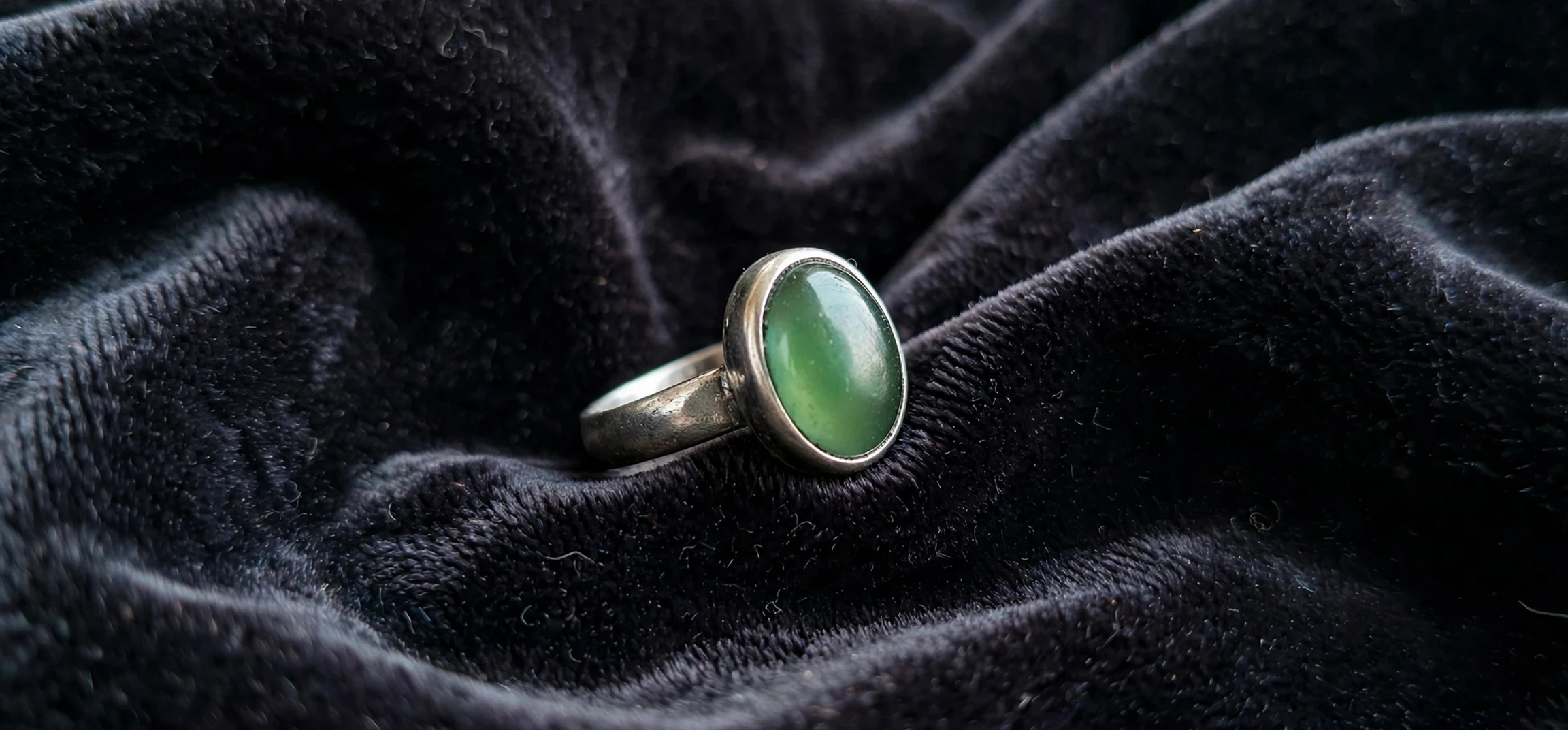
If you have ever glanced down and wondered about the green on a mood ring, you are asking one of the most common questions about these colour-changing novelties. In the traditional mood-ring colour chart, green is usually described as the colour of a calm, balanced, or relaxed state, sitting somewhere between the cooler blues associated with deep calm and the warmer yellows and oranges associated with excitement or restlessness. That is the popular interpretation, and it is the answer most charts give. It is important to be clear, though, that mood rings do not read emotions directly. They respond to temperature, and temperature is only loosely connected to how a person feels. So green on a mood ring is best understood as a fun, symbolic reading with a traditional meaning attached to it, not as a scientific measurement of your mood.
Mood rings became famous in the 1970s as fashion accessories with a playful twist, and they have remained popular ever since as gifts, party favours, and nostalgic collectibles. The stone is not a gemstone at all, but a liquid-crystal element sealed under a clear dome. Liquid crystals twist and change their structure as temperature changes, which changes the wavelengths of light they reflect, which is why the colour shifts. When your finger is at a typical comfortable temperature, the crystal often shows green, which is why green is also one of the most commonly seen colours. That simple fact explains a lot: green is often described as average, normal, or balanced partly because it appears when the ring is at an ordinary, comfortable temperature, and the chart writers then matched that ordinary state to an ordinary, balanced feeling.
Green on a Mood Ring: The Traditional Meaning
In most mood-ring charts, green on a mood ring is linked to feelings such as calm, contentment, relaxation, and balance. Some charts describe it as alert but at ease, others as peaceful, and others as a state of normal, everyday wellbeing. Darker greens are sometimes described as slightly more thoughtful or composed, while lighter, brighter greens are sometimes described as more cheerful or mixed with curiosity. These shades are not standardised, so one chart may call a particular shade one thing while another chart calls it something slightly different. The safest way to read green is as the middle of the spectrum: not stressed, not overexcited, not withdrawn, but settled. If you are wearing the ring while reading, chatting with a friend, or doing something you enjoy without pressure, green is exactly the colour you would expect to see under the traditional system.
It helps to place green in context with the rest of the chart. Blue is usually described as very calm, relaxed, or happy, and is often treated as the most positive colour. Violet and purple are often described as passionate, romantic, or deeply engaged. Amber and yellow are often described as tense, excited, or unsettled, depending on the chart. Brown, grey, and black are usually described as stressed, cold, or anxious, though black most often simply means the ring is cold or not being worn. Green sits in the centre of this story as the everyday calm colour, which is why so many people see it most of the time. If your ring is green for hours at a time, the traditional reading is that you are in a steady, comfortable state, and the physical explanation is that your finger temperature is steady and comfortable too.
Shades of Green and What Charts Claim
Some detailed charts split green into lighter and darker versions, and it is worth knowing how those versions are usually described so you are not confused by conflicting guides. Light green or yellow-green is sometimes described as a mix of calm and mild excitement, or as a state of alert curiosity. Mid-green, the most common shade, is usually described simply as calm, balanced, or relaxed. Dark green or teal-green is sometimes described as more settled, thoughtful, or quietly content, and teal shades that lean towards blue are often read as closer to the deep-calm end of the chart. None of these distinctions is measured or proven; they are traditions passed along by manufacturers and sellers. If two charts disagree about a shade, neither is more scientific than the other, and the difference usually reflects marketing choices rather than any real discovery about colour and emotion.
Green on a Mood Ring: The Science Behind the Colour
The science behind green on a mood ring is straightforward and has nothing to do with reading thoughts. The ring contains thermochromic liquid crystals, the same kind of technology once used in novelty thermometers and forehead temperature strips. These crystals are sensitive to small temperature changes, and as your skin temperature rises or falls by a degree or two, the crystal structure shifts and reflects different colours. Around normal skin temperature, roughly in the low to mid thirties in Celsius for a comfortable hand, the reflected colour is often green. Warmer fingers tend to push the colour towards blue and violet, while cooler fingers tend to push it towards amber, brown, and eventually black. That is why a ring can change colour when you come in from the cold, hold a warm drink, wash your hands, or simply sit still for a while.
This temperature link is also why mood rings can appear to track feelings, even though they cannot. Strong emotions can change blood flow and skin temperature slightly: stress can make hands cooler as blood moves towards the core, while relaxation can allow hands to warm up. So there is a grain of truth in the idea that a colour change can coincide with a change in state, but the connection is indirect, inconsistent, and easily overwhelmed by the environment. A cold room, a hot day, exercise, illness, or even the metal of the ring itself can change the reading far more than any emotion. Scientists and sceptics therefore describe mood rings as novelty items, not instruments. Green means your finger is at a temperature that produces green, and the traditional chart then invites you to interpret that as calm, which is a pleasant story rather than a diagnosis.
Why Green Appears So Often
Green is the most frequently seen mood-ring colour for a simple reason: it corresponds to the temperature range where most comfortable, indoor, resting hands sit. If you wear the ring all day in a normal room, you will probably see green more than any other colour, with blue appearing when you are warm and amber or brown appearing when you are cold. This also explains why a brand-new ring sometimes looks dark or black in the box: it is at room temperature and not in contact with warm skin, so it sits at the cold end of its range. Once you wear it for a few minutes, it warms up and moves through brown and amber towards green and blue. If your ring stays green all day, that is normal, not a sign that your emotions are stuck. It simply means your hand temperature has stayed in the green range, which is exactly what comfortable hands do.
Green on a Mood Ring Compared With Other Colours
Comparing green with its neighbours on the chart makes its traditional meaning clearer. Blue is usually presented as a step beyond green towards deeper relaxation or happiness, while violet is presented as a step further towards passion or intense feeling. On the other side, yellow-green or amber suggests the calm is breaking into excitement or mild tension, and orange and red suggest stronger agitation or energy. Brown and grey suggest stress or unease in the traditional reading, and black usually means the ring is too cold to register. Green therefore functions as the baseline: the colour of an ordinary good day. If you think of the chart as a story, green is the middle chapter where nothing dramatic is happening, and that is often a good place to be.
| Colour | Traditional mood-ring meaning | Likely temperature state |
|---|---|---|
| Violet or purple | Passionate, romantic, very engaged | Warm hands |
| Blue | Calm, relaxed, happy | Warm to comfortable |
| Green | Calm, balanced, content | Comfortable, average |
| Amber or yellow | Excited, tense, or unsettled | Cooling hands |
| Brown or grey | Stressed or anxious (traditional claim) | Cool hands |
| Black | Often just cold or unworn | Cold |
Remember that this table reflects beliefs and traditions attached to mood rings, not findings from psychology or medicine. Colour symbolism varies across cultures, and personal associations matter too: some people associate green with nature, growth, and freshness, which reinforces the calm reading, while others associate it with envy or illness, which does not. The chart is a cultural artefact, a piece of 1970s pop culture that has survived because it is fun and easy to use. Enjoy it in that spirit, share it with friends, and use it as a conversation starter, but do not use it to judge your own wellbeing or anyone else’s. If you are genuinely feeling stressed or unwell, a ring cannot tell you that, and talking to a trusted person or a professional is a far better step than checking a colour.
Green on a Mood Ring: Tips for Reading Your Ring
If you want the most enjoyable experience from your ring, wear it for several minutes before judging the colour, and compare readings in similar conditions rather than across very different environments. A reading taken indoors after sitting quietly is more comparable to another indoor reading than to one taken outside on a winter day. Clean the ring gently, avoid harsh chemicals, and store it away from extreme heat, which can damage the liquid-crystal element over time. Older rings may fade or stop changing colour as the seal ages, and that is normal wear rather than a message about your mood. If your ring is stuck on one colour, it has probably aged or been damaged, not become attuned to a permanent emotional state. Replacement rings are inexpensive, and a fresh ring will usually show the full range again.
For gift-givers, green is a reassuring colour to explain in advance: tell the recipient that green traditionally means calm and balanced, and that it is the colour they will probably see most often. That sets expectations honestly and avoids the awkward moment when someone sees brown on a cold day and worries they are stressed. Framing the ring as a novelty, a piece of retro fashion, and a fun talking point is more honest and more enjoyable than presenting it as a device that knows how someone feels. Children especially enjoy mood rings, and explaining the temperature science alongside the colour chart turns a simple accessory into a small science lesson about crystals, light, and body temperature. For more light-hearted explainers on this site, you might enjoy browsing related guides such as fun name collections and character name guides.
Green on a Mood Ring: Frequently Asked Questions
Is green on a mood ring a good colour?
Under the traditional chart, yes: green is described as calm, balanced, and content, which most people consider a positive, steady state. It is not the most excited or passionate colour on the chart, but it is the colour of an ordinary comfortable day, and that is a good baseline to return to.
Why is my mood ring always green?
Because your hand temperature usually sits in the range that produces green. Comfortable indoor hands spend most of their time in that range, so green is the expected default. Changes to blue or amber usually require a noticeable warming or cooling of the hands, such as exercise, a hot drink, or cold weather.
Are mood rings accurate?
Not as emotion detectors. They accurately reflect small temperature changes through liquid crystals, but temperature is only weakly and inconsistently related to emotion, and the environment affects it far more. Treat the colour chart as a traditional, belief-based interpretation rather than a scientific reading.
Part of the charm of the green on a mood ring is that it turns an ordinary moment into a small ritual: you glance down, see green, and remember the traditional story that green on a mood ring means calm and balance. Collectors often say that the green on a mood ring is their favourite colour to see, not because it is dramatic, but because it feels like a quiet confirmation that everything is steady. If you keep a note of when the green on a mood ring appears, you will probably find it appears most often during relaxed, everyday activities, which matches both the traditional chart and the temperature science. In that sense, the green on a mood ring is a gentle reminder to notice calm moments when they happen, rather than only noticing stress, and that small habit of noticing is worth more than any colour chart on its own.
Conclusion
So, what does the green mean on a mood ring? Traditionally, it means calm, balanced, relaxed, and content: the steady middle of the mood-ring colour story, between the deeper calm of blue and the restless energy of amber. Physically, it means your finger is at a comfortable temperature that makes the liquid crystals reflect green light. Both answers are true in their own way, but only the second is scientific, and the first is a cultural tradition that makes a novelty ring fun to wear. Enjoy green as a pleasant sign of an ordinary, comfortable moment, share the chart with friends, and remember that your real mood is something only you can know, not something a ring can measure. Green is the colour of a good, steady day, and that is a lovely thing for a small ring to celebrate.